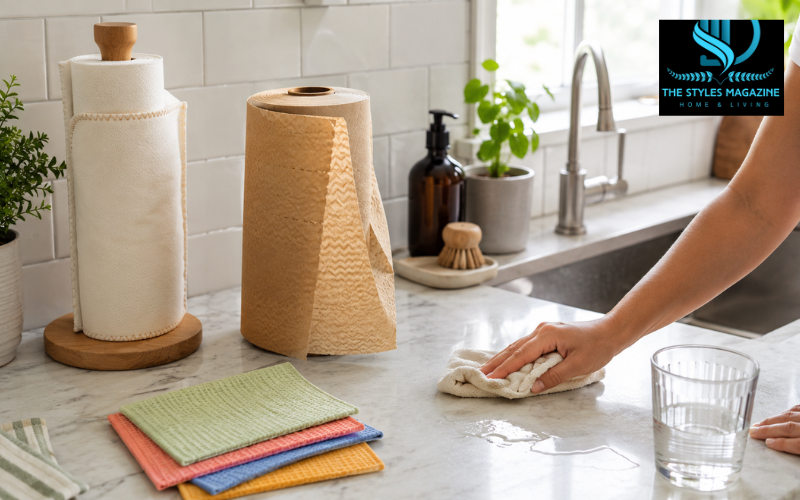
Reusable paper towels are washable cleaning cloths designed to handle many of the same everyday jobs as disposable kitchen rolls. People use them for wiping counters, drying hands, picking up spills, cleaning appliances, and dealing with quick household messes. Unlike a paper towel that is normally thrown away after one use, a reusable version can be rinsed or washed and used again.
Interest in reusable paper towels has grown because they can reduce the number of disposable sheets a household goes through and may lower repeat spending over time. They also come in several forms, so switching does not necessarily mean keeping a pile of old rags beside the sink. Some look like a traditional roll, some are soft fabric squares, and others are sponge-like cloths that become flexible when wet.
This guide explains the main types of reusable paper towels, the materials they are made from, where each type works best, how to wash and store them, what affects their lifespan, and what to check before buying.
Quick Guide: Reusable Paper Towels Comparison
| Type | Common Material | Best For | Washing | Typical Lifespan |
| UNpaper towels | Cotton flannel | Hands, spills, everyday cleaning | Machine washable | Often years with proper care |
| Bamboo reusable rolls | Bamboo-derived rayon, sometimes blended | Kitchen messes, wiping, quick cleanup | Rinse or machine wash, depending on product | Often dozens of uses per sheet |
| Swedish dishcloths | Cellulose + cotton | Counters, sinks, dishes, glass | Rinse or machine wash | Usually several months |
How to Choose Reusable Paper Towels
- Choose cotton flannel if you want soft, durable towels for regular household use.
- Choose bamboo roll-style towels if you prefer something similar to traditional paper towel rolls.
- Choose Swedish dishcloths for counters, dishes, sinks, and quick surface cleaning.
- Check the material, size, washing instructions, and sheet count before buying.
- Consider how easily the towels can be washed, dried, and stored in your home.
What Reusable Paper Towels Are
Reusable paper towels are durable cloths or absorbent sheets made to be cleaned and used repeatedly. The name covers several products rather than one single design. Some are made from cotton flannel and behave more like small kitchen towels. Others use bamboo-derived rayon or similar fabrics and are sold in a roll that looks familiar to people who normally buy disposable paper towels. Swedish dishcloths commonly use a cellulose-and-cotton blend and have a firmer, sponge-like feel when dry.
The biggest difference from standard paper towels is the cleaning cycle. Disposable sheets are designed for short-term use, while reusable options are made to survive repeated rinsing or washing. That means the owner needs a simple system for keeping clean towels ready and separating used ones until they are washed.
Products also differ widely in durability. A strong cotton flannel towel may last for years with reasonable care, while thinner roll-style sheets may be designed for dozens of uses. Swedish dishcloths are normally replaced when they become worn, permanently stained, slow to soften, or less useful for cleaning.
Why People Switch to Reusable Paper Towels
One of the clearest reasons is waste reduction. A household that uses washable cloths for routine spills, counter wiping, and hand drying can throw away fewer single-use paper towels. Reusable products still require materials, manufacturing, water, and energy for washing, so it is better to think of them as a way to reduce repeated single-use consumption rather than as something with no environmental impact.
Cost is another reason people make the switch. Reusable paper towels usually cost more upfront than one disposable roll, but the same towels can be used repeatedly. Whether they actually save money depends on their purchase price, lifespan, washing habits, and how many disposable sheets they replace.
There is also a convenience factor. Keeping a stack or roll within easy reach makes everyday cleanup simple. Some households continue using disposable towels for occasional jobs while choosing washable towels for water spills, crumbs, counters, drying hands, and routine kitchen cleaning. This can make the move toward reusable products easier without requiring an all-or-nothing change.
The Main Types of Reusable Paper Towels
Most reusable paper towels can be grouped into three useful categories: cotton flannel UNpaper towels, bamboo-based reusable rolls, and Swedish dishcloths.
Cotton flannel versions feel soft and cloth-like. They are generally machine washable and can often be stacked or rolled around a standard holder. Bamboo-based rolls are designed to provide more of the familiar look and feel of disposable kitchen towels. Swedish dishcloths are firm when dry, soften when wet, and work especially well for wiping hard surfaces and absorbing spills.
There is no single best type for every household. Someone who wants a long-lasting fabric towel may prefer cotton flannel. Someone who wants a lightweight sheet in a familiar roll format may prefer a bamboo-derived option. A person who mainly wipes counters, sinks, and dishes may find Swedish dishcloths more practical.
Understanding these differences before buying can prevent you from choosing a product that looks attractive but does not suit your normal cleaning routine.
Cotton Flannel UNpaper Towels
Cotton flannel UNpaper towels are fabric squares designed to replace many everyday uses of disposable paper towels. Marley’s Monsters, one of the better-known brands in this category, currently describes its UNpaper towels as single-ply 100% cotton flannel. The towels have sewn edges, naturally cling to one another, and can be rolled onto a tube without needing snaps. The company also states that their absorbency increases after the first few washes.
This style is useful for drying hands, wiping small spills, serving as a casual napkin, cleaning counters, and handling general kitchen work. Because the fabric is washable and relatively sturdy, it can suit households that do not mind putting used towels into their regular laundry.
Cotton flannel feels more like a small piece of fabric than a disposable paper sheet. That is useful if durability is the priority, but it may not appeal as much to someone who wants an almost identical replacement for traditional paper towels.
Flannel towels also need somewhere to go after use. A small basket, wet bag, or designated laundry container can keep used towels organized until wash day.
Bamboo Rayon Reusable Rolls
Bamboo rayon reusable rolls are designed for people who like the grab-a-sheet convenience of ordinary kitchen roll. They tend to be lighter and thinner than cotton flannel towels and may be rinsed, dried, and reused many times before they eventually need replacing.
It is important to read the material label rather than assuming every product described as “bamboo” has the same construction. Some use rayon derived from bamboo mixed with cotton. For example, one current Ecozoi listing describes a product made from 70% rayon from bamboo and 30% cotton and advertises up to 50 uses per sheet. Other current Ecozoi bamboo towel designs use different construction and make higher reuse claims.
This variation is why figures such as “50 uses” or “100 uses” should be treated as product-specific estimates rather than a guarantee for every bamboo reusable towel.
Bamboo roll-style sheets can be convenient for spills, kitchen counters, food-preparation cleanup, drying hands, and other jobs where a lightweight sheet feels easier to use than a thicker cloth. Their main tradeoff is lifespan: depending on the product, they may need replacement sooner than durable cotton fabric towels.
Swedish Dishcloths as a Reusable Paper Towel Alternative
Swedish dishcloths combine some of the qualities of a sponge with those of a thin cleaning cloth. A common material formula is 70% cellulose and 30% cotton. Papaya Reusables currently uses this blend, and Costco lists Swedish dishcloth sets made with the same basic combination of plant cellulose and cotton.
When dry, a Swedish dishcloth feels stiff. Once water is added, it quickly becomes soft and flexible. It can then be used to absorb spills or wipe surfaces before being rinsed, wrung out, and left to dry.
These cloths are especially useful for kitchen counters, tables, sinks, stovetops, bathroom surfaces, dishes, and other smooth areas. Their ability to be wrung out easily also makes them convenient for repeated cleaning throughout the day.
Their format is quite different from a standard roll, so they may not suit someone who wants a direct visual replacement for paper towels. They also wear out eventually. Papaya says many users compost its cloths after a few months of average use, although lighter use may allow them to last longer.
Reusable Paper Towels Material Guide
Reusable paper towels material plays a major role in softness, absorbency, drying time, washing needs, and durability.
Cotton flannel is soft, flexible, and designed for repeated washing. It works well for people who want a proper cloth that can remain in household rotation for a long time. It is comfortable for drying hands, using as a napkin, and cleaning ordinary spills. Current Marley’s Monsters products, for example, use 100% cotton flannel.
Bamboo-derived rayon creates a lighter sheet that can feel closer to a traditional paper towel. The exact fiber blend should always be checked because a product marketed as a bamboo towel may contain rayon derived from bamboo, cotton, or a combination of materials.
Cellulose-and-cotton Swedish dishcloths behave differently. They are sponge-like, hold liquid well, can be wrung out easily, and become firm again after drying. Costco’s current Swedish dishcloth listing, for example, specifies 70% cellulose and 30% cotton.
Choosing between these materials is easier when you start with the job you want the towel to perform.
Best Uses for Reusable Paper Towels Around the Home
Reusable paper towels work best when the material matches the task. Cotton flannel is a strong everyday choice for drying hands, wiping tables, absorbing small spills, replacing napkins, and general household cleanup. Its soft texture makes it comfortable for jobs where a rough cleaning cloth may feel unpleasant.
Bamboo roll-style sheets are convenient for quick kitchen messes, food-preparation cleanup, greasy marks, and situations where people naturally reach for a paper towel. Their familiar format can make the change from disposable rolls feel easier. Current Ecozoi product information lists spills, counters, drying hands and dishes, and kitchen cleanup among suggested uses.
Swedish dishcloths are particularly useful on hard surfaces. They work well for wiping kitchen counters, sinks, bathroom surfaces, tables, and dishes. Costco currently promotes its Swedish dishcloths as multipurpose products for dishes, counters, bathrooms, and kitchens.
Not every towel needs to handle every type of mess. Many households get better results by keeping different cloths for general kitchen cleaning, dishes, hand drying, and dirtier cleaning jobs.
Cleaning, Washing, and Caring for Reusable Paper Towels
Care instructions vary by material and brand, so the manufacturer’s directions should always come first. Correct washing can help reusable paper towels stay absorbent and useful for longer.
Cotton flannel UNpaper towels are commonly machine washable. Marley’s Monsters currently recommends washing its flannel towels in warm water with similar colors and drying them in a dryer. The company also notes that some shrinkage may occur because its fabric is not prewashed.
Bamboo-based towels vary more. Some versions are made for repeated machine washing, while thinner sheets may benefit from gentler handling. Because different products use different fiber blends, washing instructions should be checked before placing them in a hot wash or dryer.
Swedish dishcloths are easy to rinse after light use. Many versions can also be machine washed. Costco’s current cellulose-cotton dishcloth set is described as machine washable and quick drying.
Whichever type you use, avoid leaving a wet towel crumpled in a closed container. Rinse away food residue, remove excess water, and allow the towel to dry between uses. A simple system for collecting heavily used towels also makes laundry easier.
How Long Reusable Paper Towels Last and What They Cost
There is no single lifespan that applies to every reusable paper towel. Material quality, towel thickness, frequency of use, washing conditions, and the types of mess being cleaned can all affect how quickly a product wears out.
Cotton flannel is generally intended for long-term use. Marley’s Monsters says its UNpaper towels can last for several years with proper care, although actual results will naturally differ between households.
Bamboo roll products often advertise a certain number of uses for each sheet, but current claims vary significantly. One Ecozoi bamboo-rayon product advertises up to 50 uses, while another newer bamboo towel design advertises more than 100 uses.
Swedish dishcloths are generally replaced sooner than durable fabric towels. Papaya says many users replace or compost its cloths after two or three months of average wear, while lighter-duty use may extend that to six to nine months.
When comparing prices, do not look only at the initial pack price. Consider the number of towels included, expected washing life, and how often you are likely to use them. A more expensive cloth can provide better value if it survives much longer.
Reusable Paper Towels White, Printed, and Style Options
Reusable paper towels are available in far more styles than plain cleaning rags. Buyers can find neutral shades, reusable paper towels white enough for minimalist kitchens, dark colors, bright patterns, decorative flannel, and printed Swedish dishcloths.
White towels provide a clean and simple appearance and make it easy to see when a cloth needs washing. The downside is that food, coffee, sauces, and other stains may remain more noticeable. Dark shades and detailed prints can hide normal discoloration more effectively.
Printed cotton flannel towels can also be used as casual napkins, while decorative Swedish dishcloths can be hung or kept beside the sink without looking out of place. Current Etsy listings, for example, include reusable UNpaper towels in prints, color mixes, white sets, and roll-style packages.
Appearance is useful, but it should remain secondary to material, absorbency, durability, and ease of washing.
Popular Brands and Where to Buy Reusable Paper Towels
Reusable paper towels are now available through specialist brands, handmade marketplaces, and major retailers. Where you shop affects the range of materials and designs you are likely to find.
People searching for reusable paper towels Amazon can find bamboo rolls, Swedish dishcloths, microfiber options, cotton cloths, and branded products. Amazon currently carries listings for products such as Ecozoi bamboo reusable towels and Papaya Swedish dishcloth-style towels.
Searches for reusable paper towels Walmart return a similarly broad mix, including cotton, bamboo-style, microfiber, and other washable household cleaning cloths. Because many listings come from different sellers, checking the actual fiber content, pack size, dimensions, and care instructions is more useful than relying on the product title alone.
For shoppers interested in reusable paper towels Costco, availability can change by location and time. Costco currently lists Swedish dishcloth sets and also has a separate “Not-A-Paper Towel” product made from a polyester blend.
Etsy is a useful place to look for handmade cotton flannel products, custom prints, and UNpaper towel sets. Current listings include both individual packs and roll-style sets.
For people specifically researching reusable paper towels Papaya, the brand’s products are Swedish dishcloth-style sheets rather than cotton roll towels. Papaya currently uses a 70% cellulose and 30% cotton blend and offers multiple decorative styles.
How to Choose the Best Reusable Paper Towels for Your Needs
Start with the cleaning task instead of choosing a brand first. If you mainly need towels for hand drying, napkins, everyday spills, and general wiping, cotton flannel is a practical option. If you want something that feels closer to ordinary kitchen roll, bamboo-derived reusable sheets may make the change easier. If most of your cleaning involves counters, sinks, dishes, and other smooth surfaces, Swedish dishcloths may be more convenient.
Next, consider how you prefer to wash them. A household that already runs regular laundry loads may have no problem adding cotton towels to the wash. Someone who prefers to rinse a cloth, wring it out, and leave it near the sink may find Swedish dishcloths simpler.
Storage is worth thinking about as well. Cotton flannel sheets that cling together can be rolled onto a holder, while other cloths may be easier to keep folded in a basket or drawer. Swedish dishcloths are normally stored flat or hung where they can dry properly.
Price, durability, appearance, and ease of care should be considered together. Discussions about reusable paper towels Reddit and reviews on retailer sites can be useful for spotting practical concerns such as staining, odor, laundry buildup, texture, shedding, and whether a product actually reduces disposable towel use in everyday life. Personal reviews are best treated as individual experiences, while material specifications and washing instructions should be confirmed through the manufacturer or retailer.
The best reusable paper towels are therefore not necessarily the most expensive or the ones with the largest environmental claims. They are the ones that fit naturally into your household routine and are easy enough to keep using.
Conclusion
Reusable paper towels provide several practical ways to reduce dependence on disposable kitchen rolls while keeping everyday cleaning convenient. Cotton flannel UNpaper towels are well suited to people who want a durable, washable fabric option. Bamboo-based rolls offer a more familiar sheet-and-roll experience, while Swedish dishcloths are particularly useful for counters, sinks, dishes, and other hard surfaces.
The right choice depends on what you clean most often, how you prefer to wash and store your towels, and how much you want to spend upfront. By checking the actual material, care instructions, realistic lifespan, and intended use before buying, you can choose reusable paper towels that fit your household rather than simply choosing the product with the biggest sustainability promise.
FAQs
Are Reusable Paper Towels Worth It?
They can be worthwhile for households that regularly use disposable paper towels. Although they cost more initially, repeated washing and reuse may reduce ongoing purchases and household waste over time.
What Material Is Best For Reusable Paper Towels?
There is no single best material. Cotton flannel is soft and durable, bamboo-derived sheets feel closer to paper towels, while cellulose-cotton Swedish dishcloths work especially well for wiping hard surfaces.
How Often Should Reusable Paper Towels Be Washed?
Wash them whenever they become dirty, greasy, stained, or develop an odor. Lightly used Swedish dishcloths can often be rinsed between uses, while fabric towels usually go through regular laundry.
How Long Do Reusable Paper Towels Last?
Lifespan depends on material, quality, use, and care. Cotton towels may last years, while bamboo sheets may handle dozens of uses and Swedish dishcloths commonly last several months.
Can Reusable Paper Towels Completely Replace Disposable Ones?
For many everyday tasks, yes. However, some households still keep disposable towels for occasional jobs where washing a reusable cloth would be inconvenient or unsuitable.
Enjoyed it? Find more exclusive content on The Styles Magazine.
Disclaimer: This article provides general information about reusable paper towels. Materials, durability, washing instructions, lifespan, prices, and product availability can vary by brand. Always check the manufacturer’s care and product information before purchasing or washing.