Brown sugar is one of those pantry ingredients that can look perfectly fine one week and turn into a hard block the next. The main reason is moisture loss. Brown sugar contains molasses, which gives it its soft texture, rich flavor, and slight stickiness. When that moisture escapes into the surrounding air, the sugar crystals begin sticking together and eventually become hard.
Using airtight containers for brown sugar is one of the simplest ways to prevent this problem. A container with a dependable seal reduces exposure to outside air and helps the sugar hold on to the moisture already present in the molasses. Current baking guidance from King Arthur Baking also recommends transferring an opened bag of brown sugar to an airtight container or heavy-duty resealable bag.
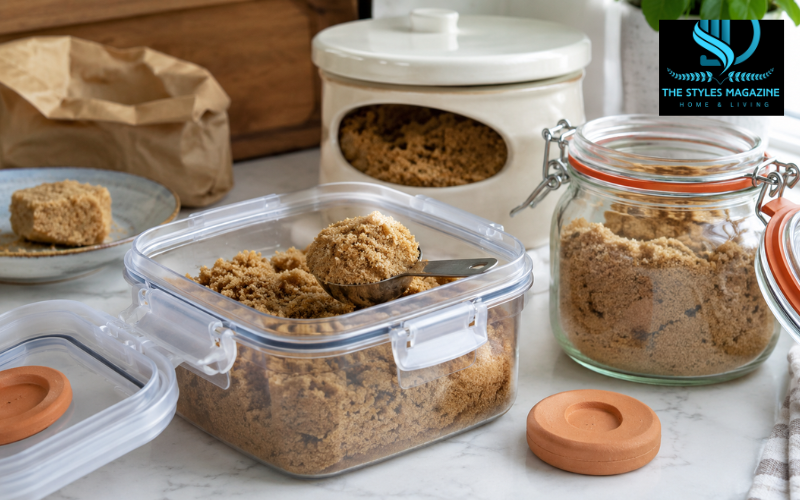
Some dedicated brown sugar containers go a step further by adding a terracotta moisture saver. These small clay discs slowly release moisture after being soaked in water. They can be useful, especially in dry conditions, but a terracotta disc is not a replacement for a poor lid. A genuinely airtight container can work well without one.
Depending on your kitchen, you can choose a dedicated brown sugar keeper, a glass jar, a lightweight plastic container, a larger container for bulk sugar, or a model with a built-in disc, spoon, or scoop.
Simple Brown Sugar Storage Steps
- Choose a food-safe container with a strong airtight gasket or seal.
- Make sure the container is completely clean and dry.
- Transfer the brown sugar and leave enough space for easy scooping.
- Close the lid firmly after every use.
- If using a terracotta disc, soak and maintain it according to the manufacturer’s instructions.
- Store the container in a cool, dry pantry away from excessive heat.
- Clean sugar crystals from the gasket regularly so the lid continues sealing properly.
Why Brown Sugar Hardens and Airtight Storage Matters
Brown sugar is usually made by combining refined sugar with molasses. The molasses adds flavor, color, and, importantly, moisture. This is why fresh brown sugar feels soft and packs together easily when pressed into a measuring cup.
The problem begins when the sugar is exposed to air for too long. Moisture from the molasses gradually evaporates, and the sugar crystals begin bonding together. Small clumps may form first, followed by a solid mass if the sugar remains exposed. King Arthur Baking explains that this loss of moisture is the reason soft brown sugar eventually becomes dry and hard.
A good airtight lid slows this process by limiting air exchange between the container and the surrounding pantry. Better Homes & Gardens similarly recommends storing brown sugar in an airtight container in a cool, dry place to help retain moisture.
It is also important to separate prevention from repair. An airtight container helps keep soft brown sugar soft. If the sugar has already hardened, it usually needs moisture to be added back before normal texture returns.
Decorative jars with loose wooden or lift-off lids may look attractive, but appearance alone does not mean the container is airtight. The actual quality of the seal matters much more.
What Makes a Good Brown Sugar Storage Container
The most important feature is a dependable airtight seal. Look for a silicone, rubber, or similar gasket that makes firm contact around the entire lid. The closing mechanism should apply enough pressure to maintain that seal.
Latching lids and clamp lids can work well because they physically pull the lid closed. Push-button systems can also be convenient when properly designed. Whatever style you choose, the lid should feel secure rather than simply resting on top.
The container should also be made from food-safe materials and should be large enough for the amount of brown sugar you normally buy. At the same time, there is little benefit in choosing an extremely oversized container for a small package.
A wide opening makes a noticeable difference in everyday use. Brown sugar often needs to be scooped, measured, and packed, so being able to fit a measuring cup inside is useful. Clear sides or easy-to-read volume markings can help you see when supplies are running low.
Easy cleaning matters too, especially around lid seals where sugar particles can collect. Other useful features include stackable shapes, built-in scoops, and terracotta moisture savers, but these should come after seal quality, size, and ease of use.
Best Airtight Containers for Brown Sugar: Quick Guide
There is no single container that suits every pantry. The best choice depends on how much sugar you buy, whether you prefer glass or plastic, and whether you want a moisture-saving accessory.
| Need | Practical Choice | Why It Works |
| Best dedicated keeper | Progressive ProKeeper+ | Airtight silicone seal, latch, clear body, and built-in terracotta saver |
| Best modular system | OXO POP with Brown Sugar Keeper | Stackable design with optional reusable terracotta accessory |
| Best glass option | Swing-top glass jar with rubber gasket | Simple, strong airtight seal without special accessories |
| Best lightweight option | Quality gasketed plastic container | Easy to lift, move, and stack |
| Best for a 2 lb bag | Progressive ProKeeper+ or OXO 1.7-qt setup | Designed around roughly this quantity |
| Best for bulk sugar | Large food-safe gasket container | More capacity with one secure seal |
| Best simple option | Airtight glass or plastic jar | Works without a moisture disc if the seal is strong |
The Progressive ProKeeper+ is a practical all-in-one choice because it combines an airtight silicone seal, easy-lift latch, visible measurements, and a built-in location for its terracotta saver. King Arthur Baking currently sells the container and describes the saver as accessible from the lid.
OXO takes a more modular approach. Its current Brown Sugar Keeper attaches to compatible POP lids. OXO recommends its 1.1-quart Small Square Short container for about 1 pound of brown sugar and the 1.7-quart Rectangle Short for about 2 pounds.
Rather than choosing only by reviews or popularity, focus on the seal, capacity, opening size, and how comfortably the container fits your pantry.
Brown Sugar Container With Disc: How Moisture Savers Work
A brown sugar container with disc usually includes a small piece of unglazed terracotta. Terracotta is porous, meaning it can absorb water when soaked and then slowly release some of that moisture inside a closed container.
The process is simple. The disc is soaked in water, excess surface moisture is removed, and the saver is placed inside the brown sugar container. In some products, it snaps into the underside of the lid. Other terracotta savers sit directly inside the container.
The moisture released from the disc helps replace some of what the brown sugar would otherwise lose over time. It works best in combination with a strong airtight seal because the container keeps that moisture from quickly escaping.
Instructions vary by manufacturer. For example, King Arthur’s current guidance for the ProKeeper+ recommends soaking its terracotta saver for 15 minutes, gently blotting it dry, placing it in the lid, and re-soaking it about every three months for best results.
OXO also instructs users to soak its Brown Sugar Keeper for 15 minutes, pat it dry, attach it beneath a compatible POP lid, and re-soak it as necessary. OXO advises against washing the disc with soap.
Always follow the directions supplied with your specific moisture saver rather than assuming every terracotta product is maintained in exactly the same way.
Glass Airtight Containers for Brown Sugar
Glass airtight containers for brown sugar are a good choice for people who want a simple container that is easy to see through and does not depend on a specialized storage system.
One of the most useful designs is a swing-top or wire-bail jar. These containers typically use a metal clamp to press the lid firmly against a rubber gasket. Serious Eats specifically recommends a well-sealed glass swing-top jar with a rubber gasket as a straightforward way to keep brown sugar soft.
Glass also makes it easy to see the amount of sugar remaining without opening the lid. It generally feels sturdy and can look attractive on an open pantry shelf.
The tradeoff is weight. A large glass jar filled with several pounds of brown sugar can become heavy, and glass requires more careful handling than plastic.
Pay close attention to the lid. A decorative glass jar with a loose bamboo or wooden top may not provide the same protection as a jar with a well-fitted gasket and strong closing mechanism.
If desired, a standalone terracotta saver can also be placed inside a suitable glass container. However, the quality of the airtight seal should remain the first priority.
Plastic Airtight Containers for Brown Sugar
Plastic airtight containers for brown sugar are popular because they are lightweight, easy to handle, and often designed to stack efficiently in a pantry.
Clear plastic is especially convenient because you can see how much sugar remains. Plastic containers are also less likely to break if dropped, making them practical for busy kitchens or high shelves.
Several closing systems are available. Some containers use side latches, while others use a button or locking mechanism in the lid. The specific style matters less than whether it creates a dependable seal.
Dedicated brown sugar keepers often use plastic because accessories can be built directly into the design. The current ProKeeper+, for example, has a clear body, airtight silicone seal, stainless-steel latch, volume markings, and a built-in well for its terracotta saver.
When comparing plastic containers, check that the material is intended for food storage and inspect how easily the lid and gasket can be cleaned. A complicated lid that traps sugar around the seal can become less effective if it is not maintained.
For many households, plastic offers a useful balance between durability, low weight, visibility, and pantry organization.
Large Airtight Containers for Brown Sugar and Bulk Storage
Large airtight containers for brown sugar make the most sense when you regularly purchase sugar in quantities larger than standard grocery-store packages.
Frequent bakers, large families, and people who buy baking ingredients in bulk may prefer a larger container because it reduces the need to refill smaller jars. However, buying the biggest container available is not always the best approach.
A bulk-storage container still needs a strong lid and reliable gasket. It should also have a stable base because several pounds of sugar can make a tall container easier to tip. A wide opening is useful when using larger measuring cups or scoops.
Comfort matters as capacity increases. Consider whether you will need to lift the entire container every time you bake. If so, a comfortable grip or manageable shape becomes more important.
Another option is to keep bulk sugar securely sealed in a larger storage container while maintaining a smaller everyday container near your baking area. This approach can be easier to handle while still protecting the reserve supply.
Choose capacity based on your real buying habits rather than pantry appearance alone.
Brown Sugar Containers With Spoon or Scoop
A brown sugar container with spoon or scoop can be convenient if you use brown sugar regularly for oatmeal, drinks, sauces, or baking.
Some designs include a scoop that clips into the lid, while others provide a removable spoon that sits inside or attaches to the outside of the container. An attached scoop is harder to lose, but it may also take up space inside the lid.
The most important rule is to keep the utensil clean and dry. Introducing water from a wet spoon is very different from the controlled moisture supplied by a properly used terracotta saver.
Consider how you normally measure brown sugar before paying extra for an accessory. If most recipes require measuring cups, a tiny built-in spoon may add little practical value.
A scoop holder can be helpful, but it should never come at the expense of the seal. When choosing between a container with an impressive accessory package and one with a better gasket and lid, the stronger airtight design is generally the more useful brown sugar storage solution.
Choosing the Right Container Size for Your Brown Sugar
Start with the amount of brown sugar you normally purchase rather than choosing a container based only on its listed volume.
If you usually buy approximately 1-pound packages, a smaller container can save pantry space while still leaving enough room for scooping. OXO currently recommends its 1.1-quart POP container with Brown Sugar Keeper for about 1 pound of brown sugar.
For households that normally buy a 2-pound package, a larger model is more practical. OXO recommends its 1.7-quart Rectangle Short setup for around 2 pounds, while Progressive’s dedicated 1.5-quart brown sugar keeper is marketed for a standard 2-pound bag.
You also need enough room to use the container comfortably. Filling it completely to the lid can make scooping difficult and may allow sugar to interfere with the sealing surface.
Before purchasing, measure the height and depth of your pantry shelf. A container can have the ideal capacity yet still be frustrating if it does not fit your cabinet.
The goal is a container large enough for your usual package with a little working space, but not unnecessarily oversized.
How to Use and Maintain an Airtight Brown Sugar Container
Even a good container performs better when it is used correctly. Before adding brown sugar, make sure the container and lid are completely clean and dry.
Check the gasket for crumbs, sugar crystals, or other debris. Material trapped along the sealing surface can prevent the lid from closing evenly. After each use, close the latch, clamp, or locking mechanism fully rather than leaving the lid loosely positioned.
Store the container in a pantry or cupboard away from unnecessary heat and major temperature changes. Current expert storage guidance recommends keeping brown sugar tightly sealed in a cool, dry location.
If the container uses a terracotta saver, follow its specific soaking schedule. Do not assume that adding more water will produce better results. The purpose is controlled moisture, not wet sugar.
After washing the container, allow every component to dry before refilling it. Periodically inspect removable seals, latches, and discs for wear or damage.
Simple maintenance helps ensure that the container continues doing its main job: limiting unwanted air exchange and keeping the sugar usable.
When Brown Sugar Is Already Hard
Moving rock-hard brown sugar into a new airtight container will help prevent further drying, but it will not necessarily make the sugar soft immediately. Moisture needs to be returned to the hardened sugar.
For a slow method, King Arthur Baking’s July 29, 2026 guidance recommends placing hardened brown sugar in an airtight container or resealable bag with a slice of soft sandwich bread. After about 24 hours, or at least overnight, the sugar absorbs moisture from the bread. The bread should then be removed and discarded.
A soaked terracotta brown sugar saver can also restore moisture more gradually. King Arthur explains that a soaked and blotted terracotta disc slowly releases moisture into hardened sugar.
If you need the sugar quickly, other methods are available. Better Homes & Gardens suggests warming a measured amount briefly in a microwave, checking it, and repeating carefully if necessary.
Once the brown sugar is soft again, transfer it to a dependable airtight container. Prevention is easier than repeatedly having to rescue a hardened block.
Finding Airtight Containers for Brown Sugar at Walmart or Nearby
If you are searching for airtight containers for brown sugar at Walmart, try several product terms rather than searching only the exact keyword. Useful searches include “brown sugar keeper,” “airtight pantry container,” “brown sugar storage,” and “terracotta brown sugar saver.”
As of August 2026, Walmart’s online listings include Progressive brown sugar keeper options with airtight lids, approximately 1.5-quart capacity, room for about 2 pounds of sugar, and included terracotta discs. Prices, sellers, shipping options, and local inventory can change, so checking the current product page or store availability before traveling is important.
When looking for airtight containers for brown sugar nearby, kitchenware stores, supermarkets, home-goods retailers, and department stores are also worth checking.
Shopping in person gives you one advantage: you can inspect the lid more closely. Look for a continuous gasket and a closure that feels secure. Check whether your hand or measuring cup fits comfortably through the opening.
Do not choose a container simply because its label says “sugar jar.” A plain food-storage container with an excellent airtight seal may protect brown sugar better than a decorative container designed mainly for appearance.
Conclusion
The best airtight containers for brown sugar do not need to be complicated. The essentials are a dependable seal, suitable capacity, easy access, food-safe construction, and a design you will actually close properly after every use.
Glass swing-top jars are useful for people who prefer sturdy, simple storage with a rubber gasket. Plastic containers are lighter and often easier to stack. Dedicated products such as the Progressive ProKeeper+ add convenient features like a terracotta saver, while modular systems such as OXO POP let you choose container capacity and add a brown sugar keeper when needed.
For people who buy larger quantities, a well-sealed bulk container may be more practical than several small jars. A spoon or scoop can also be convenient, but it should remain secondary to the quality of the lid and gasket.
Terracotta discs are useful for maintaining or restoring moisture, especially when brown sugar is stored for long periods, but they are an extra layer of protection rather than a substitute for airtight storage. A well-sealed container alone can be highly effective at limiting moisture loss.
Choose a container that matches the amount of brown sugar you normally buy and the space available in your kitchen. With proper storage and a good seal, brown sugar can stay soft, easy to measure, and ready when it is time to bake.
FAQs
What Is The Best Container For Keeping Brown Sugar Soft?
A container with a dependable airtight seal is the most important choice. Dedicated brown sugar keepers with terracotta discs can provide extra moisture control, especially in dry environments.
Do Brown Sugar Containers Need A Terracotta Disc?
No. A good airtight container can keep brown sugar soft without a disc. Terracotta savers provide additional moisture and may be useful for long-term storage or very dry conditions.
Is Glass Or Plastic Better For Brown Sugar?
Both can work well. Glass is sturdy and easy to clean, while plastic is lighter and easier to stack. The quality of the airtight seal matters more than the material.
What Size Container Is Best For Brown Sugar?
Choose a size based on the package you usually buy. Approximately 1- to 2-quart containers work for many standard packages, while larger containers are better for bulk storage.
Can An Airtight Container Soften Hard Brown Sugar?
An airtight container alone may not quickly soften sugar that is already hard. Moisture must usually be reintroduced first using an appropriate method, then the sugar should remain tightly sealed.
Enjoyed it? Find more exclusive content on The Styles Magazine.
Disclaimer: This article provides general information about storing brown sugar. Product features, sizes, prices, availability, and manufacturer care instructions may change over time. Always check the current product specifications and follow the manufacturer’s directions for containers and terracotta moisture savers.