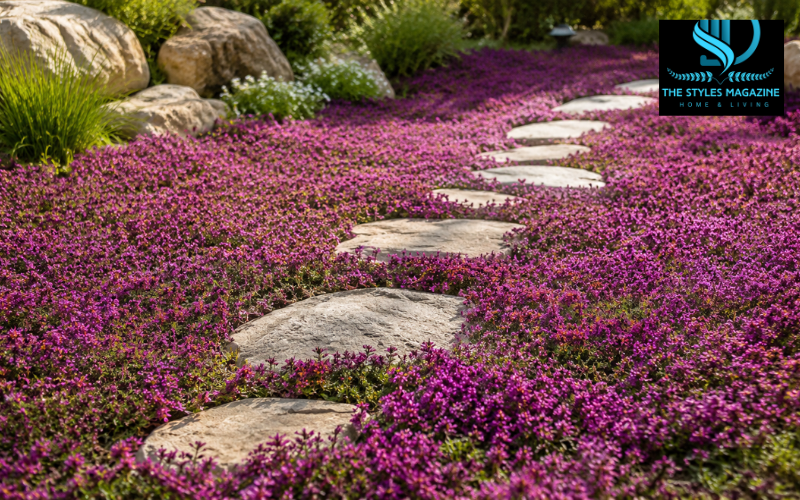
Red creeping thyme is a low, spreading perennial grown for its dense foliage, aromatic leaves, and rich reddish-pink to magenta flowers. Instead of growing upright like many herbs, it moves across the soil in a flat mat. That makes it useful around stepping stones, along paths, on dry banks, in rock gardens, and in small areas where traditional grass may be unnecessary.
Once established in a sunny, well-drained site, it handles dry periods and needs little mowing. Its flowers attract bees and butterflies, while the foliage releases an herbal scent when touched. It is not a perfect lawn replacement for every yard: heavy traffic, wet soil, deep shade, and poor preparation can all cause problems.
This guide explains how red creeping thyme grows, where it works best, how to choose between seeds and plugs, how to plant and maintain it, when it blooms, whether it is native or invasive, and what to check before buying.
Quick Guide Table
| Feature | Red Creeping Thyme |
| Botanical name | Commonly Thymus praecox ‘Coccineus’ |
| Plant type | Low-growing perennial groundcover |
| Typical height | About 2–4 inches |
| Sunlight | Full sun |
| Soil | Well-drained, sandy, rocky, or light soil |
| Bloom time | Late spring through summer, depending on climate |
| Flower color | Reddish-pink to magenta |
| Water needs | Moderate while establishing; low once established |
| Foot traffic | Light to moderate |
| Best uses | Paths, stepping stones, slopes, rock gardens, small lawn areas |
Simple Steps for Growing Red Creeping Thyme
- Choose a sunny location with at least several hours of direct sunlight.
- Remove grass and weeds before planting so young thyme does not face heavy competition.
- Improve drainage if the soil stays wet after rain.
- Plant plugs or small plants about 8–12 inches apart, depending on how quickly you want coverage.
- Water regularly at first, but avoid keeping the soil constantly wet.
- Reduce watering after establishment and lightly trim plants after flowering when needed.
What Red Creeping Thyme Is and How It Grows
The name red creeping thyme is used for several closely related forms of creeping thyme. One of the most common names in horticulture is Thymus praecox ‘Coccineus’. The Royal Horticultural Society also lists several older or alternative names connected with this plant, including forms previously sold under Thymus serpyllum. This is why nursery labels are not always identical even when plants look very similar.
Unlike common culinary thyme, which is usually grown mainly for harvesting leaves, red creeping thyme is valued first as an ornamental groundcover. Its stems spread horizontally and can root as they travel, gradually creating a low, connected mat. Depending on the exact species or cultivar, mature height may be only a few inches, while the plant spreads outward much farther than it grows upward.
The leaves are small and aromatic. During summer, clusters of tiny pink, red-pink, or magenta flowers can cover much of the foliage. This combination of low growth, fragrance, and flowers gives the plant its landscape appeal.
Red Creeping Thyme Plant Profile at a Glance
Red creeping thyme is best thought of as a small, woody-based evergreen or semi-evergreen groundcover. In mild climates, foliage can remain visible through winter. In colder or more exposed areas, it may look less attractive during winter and recover with spring growth.
Most selections stay very low, commonly around 2 to 4 inches tall, although some forms can become slightly taller. Spread also varies, so check the nursery description for the specific cultivar. The RHS describes ‘Coccineus’ as a creeping evergreen plant that forms a broad mat and carries dark pink to magenta flowers in summer.
For good growth, full sun and sharp drainage matter more than rich soil. Sandy, gritty, rocky, chalky, or light loamy soils are usually suitable if water can drain freely. Established plants tolerate drought better than newly planted ones. Light to moderate occasional foot traffic can be acceptable, especially around pavers, but repeated running, sports, or constant dog traffic can damage the mat.
Where Red Creeping Thyme Works Best in the Landscape
Red creeping thyme performs best in places that combine strong sunlight with free-draining soil. One of its classic uses is between stepping stones, where the stems can fill open joints and soften hard edges. It also works along the sides of paths, at the front of sunny borders, over stones, on dry slopes, and around rock gardens.
Its low growth is especially useful in narrow spaces where mowing would be awkward. A sunny strip beside a walkway, a small slope, or an open patch between larger plants may suit thyme better than conventional turf. Because the plant hugs the soil, it can create a finished look without blocking views or hiding nearby plants.
The aromatic foliage releases fragrance when brushed or lightly stepped on, while summer flowers add seasonal color. These qualities suit areas that are mainly decorative or crossed only occasionally.
Red Creeping Thyme Lawn: Benefits and Realistic Limitations
A red creeping thyme lawn appeals to gardeners who want less mowing and a more flower-filled ground surface. Once the plants knit together, they stay naturally short and can form a dense carpet. Established thyme also handles dry periods well, so a suitable site may need less regular irrigation than a high-maintenance grass lawn.
The important limitation is traffic. Creeping thyme can tolerate some walking, and certain forms are used between pavers or in low-use lawn areas. It should not be treated like hard-wearing sports turf. A yard used daily for football, active children, large dogs, or repeated foot traffic is likely to wear it down. NC State describes Thymus praecox as tolerant of moderate foot traffic rather than intensive use.
Establishment also takes patience. Young plants leave gaps where weeds can establish. Plugs give a more predictable start but cost more than seed, while seed is cheaper for large areas but may establish more slowly. Good drainage is essential; a thyme lawn in wet, compacted ground may fail. University of Minnesota guidance also stresses the importance of weed control during establishment.
Red Creeping Thyme Zones, Climate, Sun, and Soil
There is no single red creeping thyme zone range that fits every plant sold under this name. Different references place Thymus praecox ‘Coccineus’ and related creeping thymes within slightly different hardiness ranges. Missouri Botanical Garden, for example, lists ‘Coccineus’ around USDA Zones 4 to 8, while individual nursery selections may be labeled somewhat differently. The safest approach is to check the cultivar tag and compare it with your local winter temperatures.
Sunlight is equally important. Red creeping thyme flowers and grows most densely in full sun. A little light shade may not kill it, but too much shade usually results in thinner growth and fewer flowers. The RHS and NC State both recommend full sun for creeping thyme.
Soil should drain quickly after rain or watering. Thyme is naturally suited to lean, sandy, gritty, rocky, or chalky conditions. Heavy clay may require a raised or better-drained planting area. Constantly wet soil, especially in cool weather, greatly increases root-rot risk.
Is Red Creeping Thyme Native or Invasive?
Red creeping thyme is not native to North America. Thymus serpyllum is native to parts of northern Europe, western Asia, and northern Africa, while Thymus praecox is also of Old World origin, including parts of Europe and nearby regions. Gardeners seeking a strictly native groundcover should therefore compare it with suitable plants native to their own region.
The question “Is red creeping thyme invasive?” needs a careful answer. A plant can spread across the ground without automatically being classified as invasive. Red creeping thyme is naturally mat-forming, so it may move beyond the exact place where it was first planted. That spreading behavior alone does not prove that it is ecologically invasive.
Official invasive status depends on location and ecological impact. Check state, provincial, or national invasive-species guidance before planting, especially near natural areas. Edging, paths, or regular trimming can help contain unwanted spread.
Red Creeping Thyme Seeds vs. Red Creeping Thyme Plugs
Red creeping thyme seeds are usually the lower-cost option when covering a broad area, but they demand more patience. Tiny seedlings must compete with weeds, receive steady moisture during early growth, and survive long enough to create a continuous mat. Seed-grown plants may also be less uniform if the packet contains a species mixture or does not reliably reproduce a named cultivar.
Red creeping thyme plugs cost more per square foot, but they provide visible plants from the start and usually give more predictable coverage. University of Minnesota guidance notes that creeping thyme can be tricky to establish from seed, making plugs useful for smaller areas.
For a gardener who specifically wants the deep red-pink appearance associated with ‘Coccineus’, plant labeling matters. Check the botanical name and cultivar rather than relying only on a packet or listing that says “red thyme.” The RHS records several synonyms for ‘Coccineus’, which helps explain why plants can appear under different names in the nursery trade.
How to Plant Red Creeping Thyme Successfully
Successful planting begins before the thyme goes into the ground. Existing turf, perennial weeds, and tough weed roots should be removed as completely as practical. Thyme is low-growing, and young plants do not compete well with aggressive weeds during establishment.
Next, check drainage. Instead of making the soil very rich, focus on making sure excess water can move away. In heavy soil, a raised bed, slope, or better-drained position may be more successful than simply adding compost. Grit can help some planting mixes but will not cure badly waterlogged ground.
Plant plugs or potted thyme at roughly the same depth they were growing in their containers. Spacing of about 8 to 12 inches is a useful starting point, although the correct distance depends on plant size, budget, and how quickly coverage is wanted. The RHS recommends roughly 8 to 12 inches between thyme plants depending on the variety.
Firm the soil gently around each root ball and water after planting. Closer spacing costs more but closes gaps sooner; wider spacing saves money but leaves weeds more opportunity while the plants spread.
Watering, Feeding, Pruning, and Ongoing Care
Newly planted red creeping thyme needs more dependable moisture than an established mat. Water often enough to keep the root zone from drying severely while plants are settling in, but do not leave the ground constantly wet. As roots become established, watering can be reduced. Mature thyme is drought tolerant and usually needs extra water mainly during extended hot, dry periods.
Overwatering is one of the easiest ways to cause trouble. The Royal Horticultural Society warns that thyme roots can rot in damp conditions, particularly in winter. Good drainage should therefore be treated as part of watering care, not as a separate issue.
Feeding should be modest. Rich, heavily fertilized soil can encourage unnecessary soft growth without solving problems caused by shade or wet ground. In many gardens, little routine feeding is required.
After flowering, a light trim can help keep the mat compact and reduce woody, straggly stems. Avoid cutting deeply into old bare wood. Remove invading weeds and fallen leaves before they smother the low foliage.
Red Creeping Thyme Bloom Time and Pollinator Value
Red creeping thyme bloom time varies with climate, local weather, and the exact plant being grown. In many temperate gardens, flowering begins in late spring or early summer and continues for several weeks. NC State describes flowers on creeping-thyme species from roughly June into September, while the RHS describes ‘Coccineus’ as a summer-flowering selection.
At peak bloom, the tiny individual flowers can be so numerous that much of the green foliage is hidden beneath reddish-pink, deep pink, or magenta color. This seasonal transformation is one of the main reasons gardeners choose red creeping thyme rather than a plain evergreen groundcover.
The flowers also provide nectar for visiting insects. Bees and butterflies are commonly attracted to creeping thyme in bloom. For gardeners interested in pollinator-friendly landscapes, that is useful, but a thyme planting should not be considered a complete pollinator habitat by itself. Combining plants with different flowering seasons provides a more continuous food supply.
Common Red Creeping Thyme Problems and Growing Mistakes
Most serious red creeping thyme problems begin with the planting site. Persistently wet soil can lead to root rot, while deep shade can create thin growth and weak flowering. Heavy weed competition can slow establishment, especially when plugs are widely spaced or seed is used.
If a thyme mat is growing slowly, first check sunlight, drainage, weed pressure, and watering before adding fertilizer. More nutrients will not correct waterlogged soil or insufficient light. Woody or open centers often develop as plants age. Light trimming after flowering can help maintain a neater shape, and very old or sparse sections may eventually need renewal.
NC State reports few major insect or disease problems for Thymus praecox, although slugs can occasionally cause damage. Root rot is more likely when plants sit in poorly drained ground.
When several plants decline in the same patch, look for a shared site problem. A low spot that holds rain, compacted soil, shade from a growing tree, or irrigation aimed at nearby plants may explain the pattern better than a missing fertilizer.
Where to Buy Red Creeping Thyme and What to Check Before Buying
People wondering where to buy red creeping thyme have several options. Local nurseries and independent garden centers can be useful because plants are often selected for the regional climate. Specialist groundcover growers may offer trays of plugs for larger projects, while established online nurseries can provide access to cultivars that are difficult to find locally.
Seeds are usually the least expensive way to buy coverage, but they require the most time and attention. Small plugs balance faster establishment with a higher upfront cost. Larger pots cost more again, although each plant covers more ground sooner and can be easier to assess for health before planting.
Whatever format you choose, check the botanical name, cultivar, expected size, hardiness, and flower color. Healthy plants should show firm growth without obvious rot or severe pest damage.
Do not assume every product called “red creeping thyme” is genetically or botanically identical. The long history of alternative names around ‘Coccineus’ makes careful labeling especially valuable when a uniform lawn or flower color is important.
Conclusion
Red creeping thyme can create a striking low carpet where the conditions suit it. Its small aromatic leaves, spreading habit, summer flowers, and drought tolerance after establishment make it especially useful in sunny paths, rock gardens, dry borders, slopes, and lightly used lawn spaces.
Its success depends less on intensive maintenance than on choosing the right site from the beginning. Strong sun, quick-draining soil, realistic expectations about foot traffic, good weed control, and an appropriate choice between seed and plugs all matter. It is also important to check the hardiness and botanical label of the particular plant you buy, because “red creeping thyme” is used for more than one closely related form.
For a yard that receives heavy daily use or stays wet for long periods, traditional turf or another groundcover may be a better choice. But in a sunny, well-drained area where color, fragrance, and low growth matter more than heavy wear tolerance, red creeping thyme can be a practical and attractive alternative.
FAQs
Does Red Creeping Thyme Come Back Every Year?
Yes. Red creeping thyme is a perennial, so healthy plants normally return year after year within suitable hardiness zones. In colder climates, foliage may look less attractive during winter before new spring growth appears.
Can Red Creeping Thyme Replace A Grass Lawn?
It can replace grass in sunny, lightly used areas where heavy foot traffic is not expected. It works well for decorative lawns, paths, and small spaces but is unsuitable for sports or constant daily activity.
How Long Does Red Creeping Thyme Take To Spread?
The spreading rate depends on plant size, spacing, climate, and growing conditions. Plugs may take one or more growing seasons to form dense coverage, while plants spaced farther apart generally require more time.
Is Red Creeping Thyme Invasive?
Red creeping thyme naturally spreads through low-growing stems, but spreading does not automatically mean it is invasive. Invasive status varies by region, so gardeners should check local invasive-plant guidance before planting near natural areas.
Does Red Creeping Thyme Attract Bees?
Yes. Its small nectar-rich flowers attract bees, butterflies, and other pollinating insects during the blooming season. This makes it useful in pollinator-friendly landscapes when combined with other flowering plants.
Enjoyed it? Find more exclusive content on The Styles Magazine.
Disclaimer: The information in this article is provided for general gardening and educational purposes. Growing conditions, hardiness, plant size, bloom time, and performance can vary by cultivar, climate, soil, and location. Always check local growing recommendations, invasive-species guidance, and the botanical label of the red creeping thyme you purchase before planting.