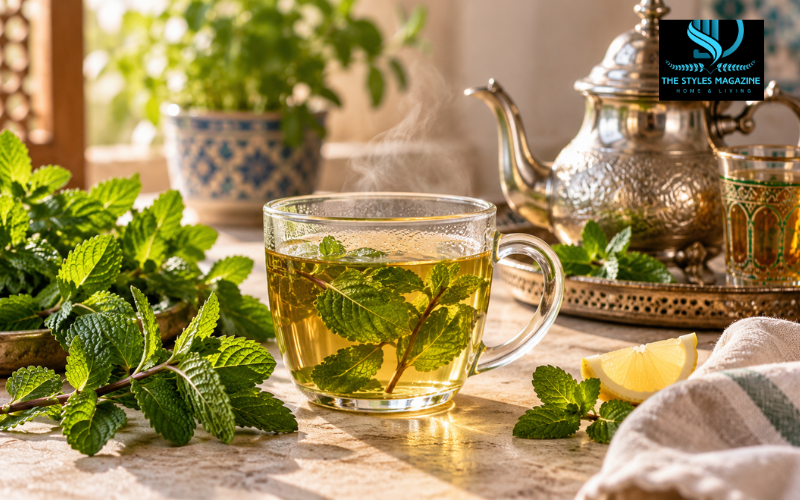
Mint tea can be a simple cup of fresh leaves and hot water, a convenient herbal tea bag, or a sweet green tea served in the Moroccan tradition. These drinks share a mint flavour, but their ingredients, caffeine levels, and brewing methods can be quite different.
For anyone making it at home, the main decisions are straightforward: choose your mint, decide whether to include tea leaves, and adjust the strength to suit your taste. Peppermint gives a stronger cooling sensation, while spearmint usually tastes softer and sweeter.
This guide explains how to prepare hot and iced versions, what to look for when buying a blend, and how to understand common mint tea benefits without confusing a pleasant everyday drink with a medical treatment.
Quick Answer:
Mint tea is a drink made by steeping fresh or dried mint leaves in hot water. Pure mint infusions are caffeine-free, while blends containing green or black tea usually contain caffeine.
Mint Tea Quick Guide
| Type | Main ingredients | Flavour | Caffeine |
| Peppermint tea | Peppermint leaves and water | Strong and cooling | Naturally caffeine-free |
| Spearmint tea | Spearmint leaves and water | Mild and gently sweet | Naturally caffeine-free |
| Moroccan mint tea | Green tea, fresh mint, and usually sugar | Fresh, rich, and sweet | Contains caffeine |
| Mint and black tea | Black tea and mint leaves | Bold and minty | Contains caffeine |
| Iced mint infusion | Pure mint infusion served chilled | Light and refreshing | Naturally caffeine-free |
How to Make Fresh Mint Tea
- Rinse approximately 2 tablespoons of loosely packed fresh culinary mint leaves.
- Gently bruise the leaves and place them in a heatproof cup.
- Add 250 ml of freshly boiled drinking water and cover.
- Steep for about five minutes, then taste and adjust the strength.
- Strain and enjoy plain, or add a little lemon or honey.
What Is Mint Tea?
Mint tea is a drink made by steeping mint leaves in water. When it contains only mint, it is an herbal infusion. It does not contain leaves from the tea plant used to make green, black, white, and oolong tea.
That distinction matters because pure mint is naturally caffeine-free. A blend containing green or black tea will usually contain caffeine, even if mint is the most noticeable flavour. Other ingredients, including additional herbs or flavourings, can also change what is in the cup.
An unsweetened infusion has very little energy, while sugar, honey, and syrups add sweetness and calories. Moroccan mint tea, for example, commonly combines mint with green tea and sugar. It should therefore be understood as a different drink from a plain peppermint infusion.
Check the ingredients rather than relying on the product name. “Mint” describes a flavour, but it does not tell you everything about the blend.
Peppermint and Spearmint: Choosing Your Flavour
Peppermint and spearmint are two familiar culinary mints used for tea. Both produce fragrant drinks, although their flavours are noticeably different.
Peppermint has a sharper, more cooling taste because of its menthol content. It suits people who enjoy a crisp mint flavour that remains noticeable in a plain, unsweetened cup. A strong brew can feel quite intense, so starting with a modest amount makes sense.
Spearmint generally has a gentler flavour, with a softer sweetness and less of peppermint’s pronounced cooling effect. It is often used in Moroccan preparations and works well with citrus or green tea.
Neither is automatically better. If peppermint feels too strong, try spearmint or combine the two. When growing mint for the kitchen, keep the plant label so you know which variety you are using. Choose a culinary variety intended for food rather than assuming every mint-like plant is suitable.
Fresh Leaves, Dried Mint, or Tea Bags
Fresh mint is a good choice when you enjoy a bright herbal aroma and have leaves available. It also lets you change the amount easily. However, leaf size, variety, and freshness affect the result, so a handful is less consistent than a measured portion.
Dried mint is easier to keep on hand and can produce a fuller flavour from a smaller quantity. Buy leaves sold for food or tea use, and store them in a sealed container away from heat, light, and moisture. Replace them when their aroma becomes weak.
Tea bags offer convenience and more consistent portions. Some contain only peppermint or spearmint; others include liquorice, citrus flavouring, green tea, or several herbs. Read the whole ingredient list.
For garden mint, use a confidently identified edible plant that has not been treated with unsuitable chemicals. Wash fresh leaves under running water and discard any that are mouldy or badly damaged.
A Simple Fresh Mint Tea Recipe
This mint tea recipe makes one generous cup. Use approximately 2 tablespoons of loosely packed fresh culinary mint leaves and 250 ml of freshly boiled drinking water. You can increase the leaves slightly after tasting your first brew.
Rinse the mint under running water. Gently bruise the leaves with the back of a spoon to help release their aroma; there is no need to crush them into a paste. Put them in a heatproof mug or small teapot.
Pour over the hot water and cover the cup with a suitable lid or saucer. Leave it for about five minutes, then taste carefully once it is cool enough to sip. For a stronger flavour, continue steeping for another few minutes.
Strain into a cup, or leave the leaves in if you prefer. Add lemon or a little honey only after tasting the plain drink.
Treat these quantities as a starting point rather than a fixed rule. If the flavour is weak, use more leaves next time. If it is overpowering, reduce the amount or shorten the steep. A covered cup also helps retain warmth and aroma while brewing.
Brewing with Dried Mint or Tea Bags
For dried mint, start with around 1 teaspoon of leaves per 250 ml of freshly boiled water. Place them in an infuser with enough space for the water to circulate, cover the cup, and steep for approximately five to ten minutes.
The ideal amount depends on how finely the mint is cut and how strongly you like it. Taste before adding more. Very small leaf fragments may need a fine strainer to keep them out of the finished drink.
For herbal tea bags, follow the packet directions first. One bag per cup is a common starting point, but bag sizes and blends vary.
Mint mixed with green or black tea needs different attention. Green tea can become bitter if brewed too hot or too long, while black tea usually tolerates hotter water. Use the blend’s instructions rather than applying a pure herbal brewing method to every product.
Moroccan Mint Tea and Its Serving Tradition
Moroccan mint tea is closely associated with hospitality and sharing. It commonly combines Chinese gunpowder green tea, fresh mint—often spearmint—and sugar. The balance varies between households and occasions, so there is no single recipe that represents every preparation.
Unlike a plain herbal infusion, this drink contains caffeine from the green tea. Its familiar sweetness also comes from added sugar, not from mint alone.
Traditional methods may include rinsing the green tea leaves, heating or simmering the mixture in a suitable teapot, and returning a poured glass to the pot to help mix the ingredients. For a home version, choose a tested Moroccan recipe because the proportions and heating steps differ from a simple fresh-leaf brew.
Tea is often poured from a height into small glasses, creating bubbles at the surface. The technique is part of its recognisable presentation, but it takes practice.
At home, use heatproof glasses on a stable tray and pour from a comfortable, controlled height. There is no need to imitate a dramatic pour with boiling liquid. You can reduce the sugar to suit your preference, while recognising that a less sweet cup will taste different from many traditional versions.
Turning Mint Tea into an Iced Drink
An iced version starts with the same basic infusion, but ice can quickly weaken the flavour. One solution is to use somewhat more mint when brewing. Another is to chill the tea first and add only a small amount of ice when serving.
For two glasses, try 500 ml of water with about 4 tablespoons of loosely packed fresh leaves, adjusting after tasting. Steep, strain, and transfer the tea to a clean, heat-safe container.
Allow it to cool briefly, then refrigerate promptly rather than leaving it on the counter for hours. Keep it covered and make small batches you can enjoy soon.
If using sugar or honey, stir it into the warm tea so it dissolves more easily. A prepared syrup also mixes readily into a cold drink.
Add lemon or lime shortly before serving for a brighter flavour. Start with a small squeeze: too much citrus can hide the mint. If including green tea, brew it according to its instructions before chilling.
Simple Ways to Adjust the Flavour
A good cup does not need many additions. Taste it plain first so you know whether the mint itself needs adjusting.
Lemon adds a fresh, tart edge. Honey rounds out the flavour with sweetness, while a thin slice of ginger brings warmth. Each changes the drink, so introduce one addition at a time rather than combining several strong flavours.
More leaves usually create a fuller mint taste. A longer steep can also strengthen the infusion, although extending it indefinitely will not necessarily improve the result. With green or black tea blends, excessive steeping may introduce bitterness.
If a cup is too strong, add a little hot water. If it tastes flat, fresh leaves may help more than extra sweetener. Water quality can also affect flavour, particularly when the water has a noticeable taste of its own.
Keep a rough note of the amount and steeping time you enjoy. That makes your preferred cup easier to repeat.
Mint Tea Benefits: Evidence and Everyday Value
The clearest mint tea benefits are practical. It contributes to fluid intake, offers variety alongside plain water, and provides a caffeine-free option when made entirely from mint leaves. Unsweetened, it can also replace a sugary drink without needing to taste like plain water.
Some people find a warm cup pleasant after a meal. That experience is worth describing honestly, but it does not prove that mint tea treats indigestion, bloating, or another digestive condition.
An important distinction is often missed in online advice: research on peppermint oil is not the same as research on peppermint tea. Certain peppermint oil preparations have been studied for digestive symptoms, including irritable bowel syndrome. A leaf infusion has a different composition and concentration, so those findings cannot simply be transferred to an ordinary cup. Research on peppermint leaves remains limited.
Claims that the drink “detoxes” the body, burns fat, cures illness, or guarantees better sleep go beyond what can reasonably be promised.
Enjoyment is still a useful benefit. A drink you like may make it easier to maintain a comfortable hydration routine or reduce caffeine. It does not need a dramatic health claim to deserve a place in your kitchen.
Caffeine, Sweeteners, and Evening Cups
Pure peppermint and spearmint infusions are naturally caffeine-free. This makes them an option for people who want a warm evening drink without adding caffeine.
However, Moroccan mint tea contains green tea, and many packaged mint blends include green or black tea too. Their caffeine levels depend on the ingredients, portion size, and brewing method. A mint flavour should never be taken as proof that a drink is caffeine-free.
An evening herbal cup may fit a relaxing routine, but mint tea is not an established treatment for insomnia. If drinking any liquid close to bedtime makes you wake to use the bathroom, have it earlier.
Sweeteners deserve similar attention. Honey, sugar, and syrups all add sugars, even when marketed as natural choices. Use enough to suit your taste rather than assuming more is beneficial. Honey must not be given to babies under one year old.
Safety and Sensible Precautions
Peppermint tea appears safe for most people in ordinary food amounts, but it will not suit everyone. Large amounts over long periods are less well studied, so more should not automatically be considered better.
People with acid reflux should pay attention to their response. Peppermint can worsen heartburn in some circumstances, and a drink that repeatedly triggers symptoms is worth avoiding. Persistent reflux or abdominal discomfort needs appropriate advice rather than repeated attempts to manage it with tea.
Allergies are another consideration. Stop drinking a product if it causes a suspected reaction, and seek urgent help for breathing difficulty or swelling of the mouth or throat. Blended teas may contain ingredients other than mint that matter to someone with an allergy.
During pregnancy or breastfeeding, ask a qualified healthcare professional about regular use, particularly strong infusions or blends containing several herbs. Check individual ingredients if taking medicines or managing a medical condition.
Essential oils should not replace leaves in this recipe. They are highly concentrated products with different safety considerations, and adding drops to hot water is not equivalent to brewing culinary mint.
Choosing a Mint Tea Brand or Café Drink
Choosing a mint tea brand starts with the ingredient list. Look for peppermint, spearmint, or a mixture of both if you want a straightforward herbal drink. If you prefer a blend, check what else it contains and whether those ingredients match your needs.
Packaging can help you compare portion sizes, brewing directions, and value per cup. An expensive blend is not automatically better, and terms such as “detox” or “wellness” do not establish a health benefit. Choose according to flavour and clear product information.
Café menus need the same careful reading. On its US menu, Starbucks describes Mint Majesty as a caffeine-free herbal blend containing spearmint, peppermint, and lemon verbena. Honey Citrus Mint Tea, by contrast, includes green tea and sweetened ingredients. These are different drinks despite sharing mint in their names.
Names, recipes, and availability can differ by country and location. UK readers should check the current local menu or ask staff about the tea base, caffeine, and added sweeteners.
Searches combining “mint tea” with Eagan, Sanger, or sushi may be seeking a particular business or local menu. Those searches should be checked separately rather than treated as names for recognised mint tea varieties.
Conclusion
Mint tea is easy to adapt once you understand what goes into it. Choose peppermint for a sharper cooling flavour, spearmint for a gentler cup, or a green tea blend when you want something closer to the Moroccan tradition.
Start with a modest amount of mint, follow a suitable steeping method, and taste before adding sweeteners. For iced tea, protect the flavour by chilling it before adding plenty of ice.
The most useful expectations are also the simplest: a refreshing drink, an enjoyable routine, and a caffeine-free choice when the ingredients are purely herbal. Check blends carefully, take sensible precautions, and let your own taste guide the final cup.
Frequently Asked Questions
Does Mint Tea Contain Caffeine?
Pure peppermint and spearmint teas are naturally caffeine-free. However, mint blends containing green or black tea usually contain caffeine. Check the ingredient list, especially when choosing Moroccan mint tea or a café drink.
What Are The Benefits Of Mint Tea?
Mint tea contributes to fluid intake and offers a flavourful, caffeine-free drink when made only with mint. Research on specific health benefits of the tea is limited, so claims about treating illnesses need caution.
Can You Use Fresh Mint Instead Of Tea Bags?
Yes, fresh culinary mint leaves work well. Rinse them, gently bruise them, and steep in hot water for around five minutes. Adjust the quantity and steeping time to match your preferred strength.
How Is Moroccan Mint Tea Different From Regular Mint Tea?
Moroccan mint tea usually combines green tea, fresh mint, and sugar. A plain mint infusion contains mint leaves and water. The Moroccan version therefore generally contains caffeine and tastes sweeter when prepared traditionally.
Can You Drink Mint Tea Before Bed?
Pure mint tea can suit an evening routine because it contains no caffeine. It is not a proven sleep treatment, and people whose reflux worsens after drinking it may prefer another beverage.
Enjoyed it? Find more exclusive content on The Styles Magazine.
Disclaimer: This article provides general information about mint tea and its preparation. It is not a substitute for medical advice, diagnosis, or treatment. Research on the health benefits of mint tea is limited, and individual reactions can vary. If you are pregnant, breastfeeding, taking medicines, or managing a health condition, ask a qualified healthcare professional about suitability. Check packaged ingredients for allergens and caffeine, and use food-safe culinary mint leaves rather than essential oils.