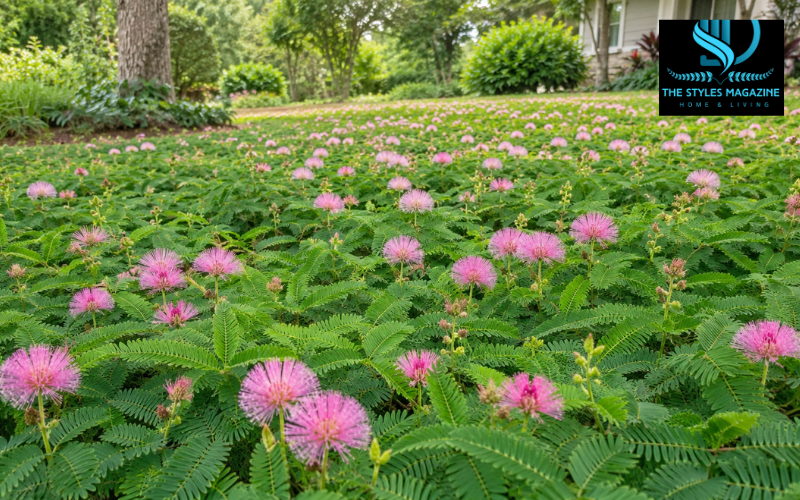
Mimosa strigillosa is a low-growing perennial in the legume family, Fabaceae. It spreads close to the ground instead of growing into a shrub or tree, which is one reason gardeners use it as a flowering ground cover. The plant is best known for its soft, fern-like leaves that fold after being touched and its rounded pink blooms that look like tiny powder puffs.
Common names include sunshine mimosa, powderpuff, herbaceous mimosa, and, in some places, sensitive plant. That last name can cause confusion because Mimosa pudica is also widely called sensitive plant. Mimosa strigillosa is a different species with a creeping, mat-forming habit and strong value in warm-climate landscapes.
This guide covers identification, native range, growing needs, lawn use, propagation, purchasing, wildlife value, and common questions about edibility and DMT claims.
Mimosa Strigillosa Quick Guide
| Feature | Quick Information |
| Scientific name | Mimosa strigillosa |
| Common names | Sunshine mimosa, powderpuff, herbaceous mimosa |
| Plant type | Low-growing perennial ground cover |
| Plant family | Fabaceae |
| Typical height | Usually only a few inches tall |
| Light | Full sun to partial shade |
| Soil | Well-drained sandy or loamy soil |
| Water needs | Moderate while establishing; drought tolerant afterward |
| USDA zones | Generally Zones 8–11 |
| Flowers | Pink to rose powderpuff-shaped blooms |
| Flowering period | Mainly spring through fall in warm climates |
| Foot traffic | Light or occasional traffic |
| Wildlife value | Supports bees, pollinators, and little sulphur butterflies |
| Propagation | Seeds, rooted stems, cuttings, and divisions |
| Lawn use | Suitable for lightly used ground-cover areas |
Quick Tips for Growing Mimosa Strigillosa
- Choose a sunny or lightly shaded location with good drainage.
- Remove strong weeds and competing grass before planting.
- Water regularly while new plants establish their roots.
- Allow spreading stems enough space to form a ground-cover mat.
- Reduce watering after the plants become well established.
- Mow only when necessary because mowing removes flowers.
- Edge spreading stems if they begin growing into nearby beds.
- Avoid using it in areas with frequent or heavy foot traffic.
Botanical Profile and Key Identification Features
The accepted scientific name is Mimosa strigillosa Torr. & A.Gray. It belongs to Fabaceae, the same broad plant family as beans, peas, clovers, and many other nitrogen-fixing plants. It is a long-lived perennial herb that survives from year to year where winter conditions are suitable.
Its leaves are compound and finely divided, giving them a light, feathery look. When disturbed, the small leaflets fold inward. The plant grows through low, trailing stems that move horizontally over the soil. These stems can form roots at their nodes, allowing one plant to gradually develop into a broad mat.
Mimosa strigillosa is generally unarmed and lacks the noticeable stem prickles found on many similar mimosa plants, although detailed botanical descriptions note that tiny prickles can occasionally occur. Its combination of creeping stems, touch-sensitive foliage, low height, and pink flower heads is especially useful for identification. Because names such as “mimosa” and “sensitive plant” are applied to several species, checking the scientific name is the safest way to confirm the plant.
Mimosa Strigillosa Native Range and Natural Habitat
The Mimosa strigillosa native range is much broader than Florida alone. Kew’s Plants of the World Online lists the species as native from the central and southeastern United States through parts of Mexico, with additional native populations extending through parts of South America to northern Argentina. In the United States, its native distribution includes Alabama, Arkansas, Florida, Georgia, Louisiana, Mississippi, Oklahoma, and Texas.
Within this range, sunshine mimosa occurs in open places such as prairies, grasslands, meadows, roadsides, forest openings, disturbed ground, and well-drained sandy sites. USDA information also associates the species with grasslands and other relatively open habitats.
A plant being able to grow in a region does not automatically make it native there. “Native” refers to its historical natural distribution, while “hardy” or “adapted” simply means it may survive under local conditions. Gardeners interested in native planting should therefore check regional plant databases or extension resources rather than assuming every warm climate is part of the plant’s natural range.
Sensitive Foliage, Pink Flowers, and Seasonal Appearance
One of the most memorable features of Mimosa strigillosa is the way its leaflets respond to touch. A light disturbance can cause the small leaflets to fold together quickly. This movement is also found in other Mimosa species and is produced by rapid changes in water pressure within specialized parts of the leaves.
The flowers are equally distinctive. Pink to rose-colored stamens form small rounded or slightly elongated flower heads held above the green foliage on slender stalks. From a distance, the blooms resemble miniature pink pom-poms. In warm climates, flowering commonly begins in spring and can continue through summer or fall, although exact timing varies with temperature and local growing conditions.
Sunshine mimosa does not look equally lush all year. In cooler parts of its growing range, it may die back or become dormant during winter. Even in milder areas, the foliage can become thin or less noticeable from late fall into early spring. Gardeners using it as a lawn substitute should expect this seasonal change rather than assuming it will provide dense green coverage throughout the year.
Growth Habit, Height, Spread, and Root Development
Mimosa strigillosa stays much lower than most ornamental shrubs. University of Florida sources commonly describe its foliage as only a few inches tall, with the flowers rising above it. Mature patches therefore look more like a low green carpet than a group of upright plants.
Its main growth is horizontal. Stems travel across the soil, and new roots can form where those stems contact the ground. This vegetative spread can fill a large open space once established. Fast coverage is useful on slopes or broad beds, but boundaries may be needed where spreading is unwanted.
Below ground, established sunshine mimosa develops deep and complex roots compared with many turfgrasses. That root development contributes to its ability to withstand dry periods once established and can make it useful for soil stabilization and erosion control.
Mimosa Strigillosa Benefits for Landscapes and Wildlife
The main Mimosa strigillosa benefits come from combining ornamental appeal with useful landscape functions. It remains low, produces colorful flowers over a long season in warm conditions, tolerates occasional mowing, and becomes fairly drought tolerant after its roots are established. These qualities make it appealing in landscapes where homeowners want to reduce the amount of conventional turf.
As a legume, sunshine mimosa can develop root nodules in association with nitrogen-fixing bacteria. These bacteria convert atmospheric nitrogen into forms that can enter the plant-soil system. This does not mean every planting will never require nutrients, but it can reduce the need for routine nitrogen fertilization compared with a heavily managed lawn. A soil test is still the better guide when nutrient problems are suspected.
The flowers also have wildlife value. Bees visit them for pollen and nectar, and the plant serves as a larval host for the little sulphur butterfly. Replacing part of a lawn with this flowering ground cover can therefore provide wildlife resources that closely mown turf usually lacks.
Using Sunshine Mimosa Strigillosa as a Lawn and Ground-Cover Alternative
Sunshine mimosa strigillosa works best as a turf alternative where appearance, flowering, and ecological value matter more than creating a hard-wearing play surface. It can fill sunny open areas, soften slopes, cover spaces between larger plants, and create a more natural-looking carpet along low-use areas of a yard.
The plant tolerates infrequent mowing and some light or occasional foot traffic. However, authoritative Florida guidance specifically notes that it does not tolerate heavy foot traffic well. That makes it a poor choice for a path used every day, an active play area, or a place where pets repeatedly run. Stepping stones or a separate path can protect the planting where regular access is needed.
There are trade-offs. Frequent mowing removes flowers, winter coverage may thin or disappear, and creeping stems can move into nearby beds unless edges are managed. For the right site, however, those limitations may be minor compared with the reduced mowing and added flowers.
Best Growing Conditions: Sun, Soil, Water, and Hardiness
Mimosa strigillosa performs well in full sun and can also tolerate partial sun or light shade. For a dense flowering ground cover, a bright site is usually the better choice. Too much shade may lead to looser growth and fewer flowers, especially where surrounding vegetation competes for light.
The species adapts to sandy and loamy soils and is frequently associated with well-drained ground. It can tolerate a useful range of moisture conditions once established, but newly planted mimosa should not be treated as drought-proof. Regular watering while new roots develop helps plants establish successfully.
University of Florida guidance places sunshine mimosa roughly in USDA Hardiness Zones 8A through 11, although local performance can vary within a zone. Freezing weather can damage or kill the top growth, especially toward the cooler edge of its range. In warmer areas, plants may remain partly green but still become thin during winter.
How to Plant and Establish Mimosa Strigillosa
Choose the planting area before thinking about fertilizers or soil amendments. The best location has good light, adequate drainage, room for horizontal spread, and little heavy foot traffic. Avoid placing sunshine mimosa directly beside a garden bed where spreading stems would be difficult to control.
Clear strong competing weeds and grasses so young plants are not forced to grow through dense existing vegetation. There is usually no reason to heavily enrich suitable garden soil before planting. If you are uncertain about fertility or soil pH, testing the soil provides better information than adding fertilizer by habit.
For establishing ground cover from divisions or nursery plants, UF/IFAS guidance recommends transplanting divisions about two to three feet apart. Closer planting can produce faster visual coverage but requires more plants. Water consistently while the transplants settle in. New runners and stems rooting into nearby soil show that establishment is underway. Once well rooted, watering can usually be reduced according to rainfall and soil conditions.
Growing Mimosa Strigillosa From Seeds, Cuttings, and Divisions
Mimosa strigillosa seeds have a hard outer coat that limits water entry and can delay germination. Research and USDA guidance show that mechanical scarification, which means lightly scratching or roughening the seed coat, can improve germination. The goal is simply to weaken the hard coating without damaging the seed inside.
Seed can be useful when covering a larger space economically or when container plants are difficult to obtain. It normally requires more patience than transplanting rooted material, however. Buyers should choose correctly labeled seed from a reputable native-plant or specialty supplier and follow appropriate storage and sowing instructions.
Vegetative propagation can be faster for home gardeners. Mimosa strigillosa readily produces stems that root at their nodes, and those rooted sections can be separated and replanted. Tip cuttings are another option. Divisions or container-grown plants are often easiest when dependable establishment and quicker coverage are priorities, while seed suits gardeners who are comfortable managing germination and seedlings.
Ongoing Care: Watering, Mowing, Pruning, and Fertilizing
Once established, Mimosa strigillosa is relatively low maintenance. Its established root system gives it useful drought tolerance, so mature patches generally require less attention than newly installed plants. Long dry spells may still require supplemental water, especially on very sandy sites.
Mowing is optional. The plant naturally stays low, but occasional mowing can create a more lawn-like appearance. Mowing also removes flower stalks, so it should be kept to a minimum if pink blooms and pollinator value are priorities. UF/IFAS specifically notes that the plant tolerates infrequent mowing but that flowers are lost when it is cut.
Pruning and edging can be more important than mowing. Creeping stems may enter nearby beds or cross boundaries, so trimming them before they root can keep the planting manageable. Fertilizer should also be used carefully. Because the plant is a nitrogen-fixing legume, routine high-nitrogen lawn feeding is generally unnecessary. A soil test can determine whether other nutrients are actually needed.
Mimosa Pudica vs Mimosa Strigillosa: How to Tell Them Apart
The Mimosa pudica vs Mimosa strigillosa comparison matters because both plants have touch-sensitive leaves and pinkish flower heads. They are separate species and behave differently in a landscape.
Mimosa pudica is the plant most widely known simply as the “sensitive plant.” Kew describes it as a straggling herb or subshrub that can grow considerably taller than sunshine mimosa and often has small prickles on its stems. It has also become a weed in many tropical areas outside its original range.
Mimosa strigillosa, in contrast, is mainly valued as a low, spreading ground cover. Its stems travel along the soil and root as they spread, gradually creating a mat.
Neither plant should be confused with the so-called mimosa tree, Albizia julibrissin. That species is a woody tree in the same broad plant family but belongs to a different genus. Checking for the scientific name Mimosa strigillosa on a plant label prevents most purchasing mistakes.
Before You Buy or Use It: Plants for Sale, Edibility, DMT Claims, and Misconceptions
When searching for Mimosa strigillosa for sale, shop by scientific name rather than common name alone. Look for a nursery or seed supplier that clearly identifies the species and, ideally, specializes in native or regionally appropriate plants. Confirm that sunshine mimosa suits your climate and intended space. Container plants and rooted divisions provide a faster start, while Mimosa strigillosa seeds may be more practical for some larger planting projects. Florida sources list native nurseries, native-plant sales, and seed suppliers among common sources for the species.
Searches for “Mimosa strigillosa edible” deserve caution. USDA information describes the plant as being used by livestock and wildlife, but animal forage use does not establish that a plant is safe or appropriate as human food. The reliable horticultural and botanical sources reviewed for this guide do not present sunshine mimosa as a standard human food plant. It should therefore not be eaten simply because an unsourced website or social-media post describes it as edible.
The same care is needed with searches for “Mimosa strigillosa DMT.” DMT has been documented in other members of the genus, including Mimosa tenuiflora. A recent scientific study, for example, specifically examined DMT extracted from M. tenuiflora. That finding cannot simply be transferred to M. strigillosa. Reliable evidence reviewed for this article does not establish sunshine mimosa as a DMT source, so claims that the two species have the same chemistry should be treated cautiously.
The larger lesson is simple: plants in the same genus can have very different chemistry, uses, and safety profiles. Correct identification matters for gardening, purchasing, and any claim involving consumption or plant compounds.
Conclusion
Mimosa strigillosa can be an attractive choice for gardeners who want a low-growing, flowering ground cover in a suitable warm climate. Its pink blooms, sensitive foliage, spreading habit, drought tolerance after establishment, nitrogen-fixing relationship, and value to bees and little sulphur butterflies give it benefits that ordinary turf does not provide.
It is not a perfect replacement for every lawn. Heavy foot traffic can damage it, winter may leave patches sparse or dormant, and its creeping stems need control near beds and property edges. It performs best where it has room to spread and where mowing can be kept to a minimum.
Before planting, consider your local climate, sunlight, soil drainage, winter appearance, and how the space is actually used. If those conditions are a good match, sunshine mimosa can turn a lightly used lawn area, slope, or open bed into a more colorful and biologically useful part of the landscape without demanding the intensive maintenance associated with conventional turf.
Frequently Asked Questions
Is Mimosa Strigillosa A Good Lawn Replacement?
Yes, Mimosa strigillosa can replace turf in lightly used sunny areas. It stays low, tolerates occasional mowing, and needs less water after establishment, but it does not handle heavy foot traffic well.
Does Mimosa Strigillosa Close Its Leaves When Touched?
Yes. Its small compound leaflets can fold after being touched or disturbed. This sensitive movement is one of the plant’s most recognizable characteristics and is also found in several related Mimosa species.
Is Mimosa Strigillosa Native To Florida?
Yes, Mimosa strigillosa is native to Florida, but its natural range is wider. It also occurs naturally in several southeastern and south-central U.S. states and extends into other parts of the Americas.
Can You Grow Mimosa Strigillosa From Seeds?
Yes. Mimosa strigillosa seeds can be grown successfully, although their hard seed coats may slow germination. Carefully scarifying the seed coat can help water enter and improve germination.
Is Mimosa Strigillosa Edible Or A Source Of DMT?
Reliable horticultural sources do not establish Mimosa strigillosa as a standard human food or confirmed DMT source. Claims about other Mimosa species should not automatically be applied to this plant.
Enjoyed it? Find more exclusive content on The Styles Magazine.
Disclaimer: The information in this article about Mimosa strigillosa is provided for general gardening, landscaping, and educational purposes. Growing conditions, plant behavior, winter survival, and native status can vary by location, climate, soil, and local regulations. Before planting, check guidance from your local extension service or native-plant authority. Information about edibility or plant compounds should not be treated as medical, dietary, or safety advice. Do not consume or otherwise use Mimosa strigillosa based solely on online claims; proper plant identification and reliable professional guidance are important.