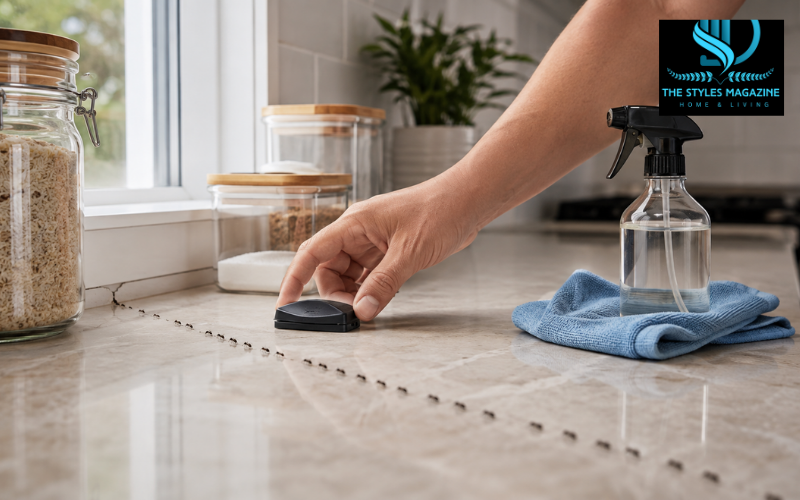
Seeing a line of ants across a kitchen counter can make the problem look simple: kill the ants you can see and the infestation is gone. In reality, those ants are usually workers searching for food or water. The nest, queens, and most of the colony may be hidden outdoors, under flooring, inside a wall void, beneath paving, or in another protected place.
That is why learning how to get rid of ants is less about killing individual workers and more about breaking the conditions that keep the colony connected to your home. The most reliable approach combines colony control, removal of food and water, cleaning of active trails, and sealing of entry points. UC IPM recommends combining these methods rather than depending on indoor sprays alone.
If your goal is to get rid of ants permanently, it helps to be realistic. You may be able to eliminate the colony causing the current problem, but no treatment can guarantee that new ants will never arrive. Long-term control comes from making your home harder to enter and less rewarding to explore.
For fast relief, remove visible ants and what attracted them. For longer-lasting results, locate their route, use the right treatment, reduce food and moisture, and prevent new entry.
Quick Guide: Best Ways to Get Rid of Ants
| Method | Best For | How Fast It Works | Reaches Colony? |
| Ant bait | Indoor and outdoor colonies | Several days | Yes |
| Vacuuming or wiping | Visible ants | Immediate | No |
| Soapy water | Ants and scent trails | Immediate | No |
| Ant spray | Quick knockdown | Minutes | Usually no |
| Sealing cracks | Preventing new ants | Long-term | Prevention |
| Removing food and water | Preventing repeat activity | Ongoing | Indirectly |
Step-by-Step Guide to Getting Rid of Ants
- Follow the ant trail to find where they are entering and what is attracting them.
- Remove food and water by cleaning crumbs, spills, pet food, and leaking moisture.
- Place slow-acting ant bait close to active trails where children and pets cannot reach it.
- Avoid spraying ants near bait, because workers need to carry the bait back to the colony.
- Clean old scent trails with soap and water after activity begins to decline.
- Seal cracks and gaps around doors, windows, pipes, walls, and foundations to help prevent another infestation.
Start by Finding Where the Ants Are Coming From
Before reaching for an ant killer, spend a few minutes watching the ants. Follow the trail in both directions. One end may lead to sugar, grease, pet food, a sink, or another attraction. The other may lead to a crack near a window, a gap under a door, plumbing around a cabinet, a baseboard, or an opening in the foundation.
Outdoors, look along foundation edges, paving cracks, planters, mulch, tree trunks, and places where branches touch the building. Ants commonly follow regular routes, so observing them can reveal much more than treating random spots. University of Minnesota Extension recommends following ants to help locate nests because treating the source is generally more effective than simply killing foraging workers.
Notice what they are feeding on. Some ants favor sweets, while others prefer greasy or protein-rich foods. Preferences can change during the season. Identifying the route and attraction makes it easier to choose a bait the ants will actually take and helps you remove competing food sources.
Identify the Type of Ant Before Choosing an Ant Killer
You do not need to become an insect expert, but basic identification can improve your results. Different ants have different nesting habits and food preferences, and a treatment that works well for one species may be less attractive to another.
Odorous house ants are small, dark ants often found around sweets and moisture. Pavement ants commonly nest beneath pavement, stones, slabs, and cracks. Other small house-invading ants may nest outdoors but travel inside for food.
Carpenter ants deserve special attention. They are usually larger than common nuisance ants and may be associated with damp or moisture-damaged wood. Signs can include repeated indoor activity, coarse wood debris near cracks, or a faint rustling sound from a hidden nest area. Carpenter ants do not eat wood like termites, but they excavate it for nesting. If you suspect a structural nest, finding and treating it is more important than repeatedly spraying workers.
How to Get Rid of Ants in the House Quickly
If you need to reduce ant activity right away, vacuum or wipe up visible workers instead of spraying the entire area. Clean crumbs, syrup, grease, drink residue, and other food from nearby surfaces. Wash dirty dishes, wipe sticky jars, close food containers, and remove accessible pet food.
Next, locate the main trail and place an appropriate ant bait where the ants are already traveling, following the product label. Do not spray ants that are actively feeding on bait. The workers need time to carry the bait back toward the nest and share it with other members of the colony.
This distinction matters when learning how to get rid of ants in the house quickly. You can often reduce the number you see within hours by cleaning and removing workers, but that does not mean the colony has been eliminated. Bait-based control takes longer because it is designed to reach ants you cannot see.
Use Slow-Acting Ant Baits to Reach the Colony
Ant bait combines an attractive food with an active ingredient. Worker ants collect it and carry it back to the nest, where food is shared with other ants. For this system to work well, the active ingredient must act slowly enough for workers to return before they die. UC IPM notes that properly used baits can provide more effective and longer-lasting control than sprays.
Baits come as liquids, gels, solids, granules, stakes, and enclosed stations. Enclosed bait stations can help limit accidental contact. Some ants prefer sugar-based bait, while others respond better to protein- or fat-based bait. If ants ignore one bait, changing the formulation or placement may work better than simply adding more of the same product. Ant preferences may also change during the year.
Place bait near active trails or nest areas as directed by the label, but keep it where children and pets cannot reach it. Check the bait regularly and replace or refill it when needed. Results are not instant. UC IPM notes that fewer ants may be seen after about 5 to 10 days in some situations, while complete control can take weeks or longer depending on the species, colony, bait, and competing food.
Ant Spray: When It Helps and When It Can Work Against You
Ant spray can kill exposed ants quickly, so it has a role when immediate knockdown is needed and the product is labeled for the location. The problem is that contact sprays usually reach only a small part of a colony. More workers may soon appear from the hidden nest.
Sprays can also interfere with a baiting program. If ants are killed or repelled before they collect the bait, less of it reaches the colony. For that reason, avoid spraying directly on bait stations, bait placements, or the ants feeding from them.
Broad spraying around floors, walls, or foundations is not the same as colony control. UC IPM warns that sprays may provide only temporary control and can create unnecessary environmental exposure.
If you use any pesticide, read the label before use, apply it only where the label allows, and follow all directions for storage and disposal. EPA guidance also recommends keeping children and pets away from treated areas as directed and keeping bait products out of their reach.
Home Remedies for Ants: What Helps and What Has Limits
Home remedies for ants can be useful, but they are often better for cleanup or short-term control than for eliminating a nest.
Soapy water is a simple option for wiping up visible ants and cleaning the chemical trail they leave on surfaces. A mild vinegar-and-water solution may also temporarily disrupt ant trails, but vinegar should not be treated as a dependable colony killer.
Borax or boric-acid baits can work because borates are used as active ingredients in ant baits. However, concentration matters. More is not automatically better. UC IPM reports that excessively strong borate solutions can become less attractive or repellent to some ants. A registered, ready-to-use bait is usually simpler and safer than experimenting with homemade mixtures.
Diatomaceous earth can kill insects by damaging or absorbing the protective material on their outer body, causing them to dry out. It works best while dry and undisturbed. It is still a dust, however, and can irritate the nose, eyes, skin, or airways if mishandled, so use only a product labeled for pest control and follow its directions.
Cinnamon, coffee grounds, cayenne, essential oils, and similar remedies may change ant movement for a short time, but they should not be confused with reliable colony elimination. University of Minnesota Extension specifically notes that several common herb and essential-oil remedies are not effective methods for getting rid of an ant colony.
You may also find how to get rid of ants Reddit discussions filled with borax recipes and personal success stories. These may offer practical observations, but online advice should not replace product labels or evidence-based guidance, especially around children, pets, or food areas.
How to Get Rid of Ants Overnight: What You Can Realistically Accomplish
You can make a noticeable difference overnight, but it is unlikely that a large colony will disappear completely by morning.
Start by removing exposed food, washing dishes, wiping sticky surfaces, sweeping crumbs, emptying food waste, and putting pet food away. Vacuum or wipe up the workers you see, then clean obvious trails. Once the area is clean, place suitable bait near active travel routes according to the label.
By morning, you may see fewer ants because the easy food sources are gone and visible workers have been removed. You may also see ants gathering around the bait. That can look like the problem is getting worse, but feeding activity is often necessary for bait to be carried back.
Avoid the temptation to spray those ants. Slow-acting bait needs time to move through the colony. Research-based guidance indicates that meaningful bait control commonly takes days or even weeks rather than hours.
So, if you are wondering how to get rid of ants overnight, aim for a major reduction in visible activity rather than an unrealistic permanent cure by the next morning.
Remove the Food and Water That Keep Ants Coming Back
Ant control becomes much easier when your home stops offering a dependable meal. Store sugar, cereal, flour, baking ingredients, snacks, and other attractive foods in clean, sealed containers. Wipe syrup and grease from cupboards and counters, rinse recyclables, clean trash containers, and deal with spills promptly.
Do not forget pet areas. Food left out for long periods can support regular ant traffic. Follow a sensible feeding routine and clean crumbs or residue around bowls.
Water matters too. Ants may be drawn to leaking faucets, damp cabinets, condensation, wet plant trays, or plumbing leaks. Repair leaks and dry persistent moisture where possible. EPA recommends removing food, water, and shelter as the first stage of household pest prevention.
These steps also make bait more attractive by reducing competing food sources and make future invasions less likely.
Erase Ant Scent Trails After You Control the Active Traffic
Ants communicate partly through chemical trails. When a worker finds a useful food source, other ants can follow the route. This is why a few ants can turn into a steady line across a counter or floor.
Once you have dealt with the immediate activity, clean the route with soap and water or an ordinary household cleaning method suitable for the surface. Focus on counters, floors, baseboards, window ledges, and the path between the food source and entry point. UC IPM specifically recommends cleaning invading ants and their trails with soapy water.
Be careful around bait placements. Do not soak bait or cover it with strong cleaners, repellents, or insecticide spray. If ants are feeding, let them continue carrying bait while you remove other food.
Trail cleaning is useful, but it is not a complete treatment by itself. It works best when combined with sanitation, baiting when needed, and sealing the route ants use to enter.
Seal Entry Points So Ants Have a Harder Time Getting Back In
After you understand the ants’ route, close the openings they use. Caulk cracks around windows, doors, baseboards, siding, and foundations. Seal gaps around plumbing, wiring, utility lines, and other penetrations where practical. Repair damaged screens and replace worn door or window seals.
Outside, trim branches and shrubs that touch the building. Ants can use vegetation as a bridge that bypasses ground-level barriers. Keep heavy mulch and leaf litter from building up directly against the foundation. These exclusion steps are recommended as part of preventing ants from repeatedly entering buildings.
If you are actively baiting ants along a known route, do not rush to block every opening before the ants have had a chance to collect the bait. Once activity drops, sealing those access points becomes an important part of long-term prevention.
How to Get Rid of Ants Outside Without Treating the Entire Yard
Ants are a normal part of outdoor ecosystems, and eliminating every ant in a yard is neither practical nor desirable. UC IPM notes that many ants are not pests and some can even play useful roles outdoors. The better goal is to control colonies that are entering the home, nesting in problem areas, or protecting plant pests that are causing damage.
To learn how to get rid of ants outside, follow outdoor trails to foundation edges, soil nests, paving cracks, plants, or other busy areas. If treatment is needed, use an outdoor ant bait or another product specifically labeled for the site and species, following all directions. Targeted treatment is usually more sensible than spraying the entire yard.
Remove fallen fruit and accessible food waste. If ants are constantly climbing plants, look for aphids, scale insects, mealybugs, or other pests that produce sweet honeydew. Ants often feed on this material and may protect those insects from natural enemies.
Trim vegetation away from the house and avoid piling excessive mulch against exterior walls. These simple changes can reduce both nesting opportunities and easy routes indoors.
When Ants Keep Returning: Signs It Is Time for Professional Help
Some infestations are difficult to solve without professional equipment or species-specific knowledge. Consider calling a licensed pest professional if ants continue returning despite careful baiting, sanitation, and exclusion, or if nests appear to be deep inside wall voids or other inaccessible areas.
Professional help is especially useful when large carpenter ants repeatedly appear indoors around damp or damaged wood, when you see wood debris that suggests nesting, or when you cannot confidently identify the species. Carpenter-ant nests can occur in hidden wall, floor, ceiling, or other structural spaces, making precise treatment difficult for homeowners.
Stinging ants, widespread infestations, or situations where pesticide use could create added risk are also good reasons to get expert help.
Look for a professional who uses an integrated pest management approach. That means identifying the pest, locating the source, correcting food, water, and entry problems, and using targeted bait or spot treatments when appropriate instead of automatically relying on routine broad spraying. EPA guidance similarly recommends finding and correcting the source of a pest problem and using targeted treatments when feasible.
Conclusion
The best answer to how to get rid of ants is not a single spray, powder, or home remedy. Start by identifying the ants and following their trail. Remove the food and water attracting them, use an appropriate slow-acting bait when colony treatment is needed, clean old trails, seal entry points, and keep watching for new activity.
An ant killer can be useful, but it is only one part of successful control. Lasting results come from dealing with the colony while also fixing the conditions that made your home easy to enter and rewarding to visit.
If ants appear again, investigate the new trail early. A few workers are much easier to manage than a well-established infestation, and early action gives you the best chance of keeping the problem small.
FAQs
What Is The Fastest Way To Get Rid Of Ants In The House?
Vacuum or wipe up visible ants, remove nearby food and spills, and place suitable ant bait along the active trail. This reduces immediate activity while helping target the hidden colony.
Can You Get Rid Of Ants Permanently?
You can eliminate an active colony and greatly reduce future infestations, but no method guarantees ants will never return. Long-term prevention requires removing food, controlling moisture, and sealing entry points.
What Kills The Entire Ant Colony?
Slow-acting ant bait is often the best option because worker ants carry it back to the nest and share it with other ants. Colony control may take several days or longer.
Does Vinegar Get Rid Of Ants?
Vinegar can help clean surfaces and disrupt ant scent trails, but it should not be relied on to eliminate an entire colony. Baiting and prevention usually provide more lasting control.
Why Do Ants Keep Coming Back After I Kill Them?
The ants you see are usually only workers. If the nest remains active and food, water, or entry points are still available, more workers can continue entering the home.
Enjoyed it? Find more exclusive content on The Styles Magazine.
Disclaimer: This article provides general information about how to get rid of ants and is not a substitute for professional pest-control advice. Always read and follow pesticide or ant-bait label instructions carefully, including directions for use, storage, and disposal. Keep pest-control products away from children, pets, food, and food-preparation areas as directed by the label. If you have a large, persistent, stinging, or suspected carpenter-ant infestation, consider contacting a licensed pest-control professional.