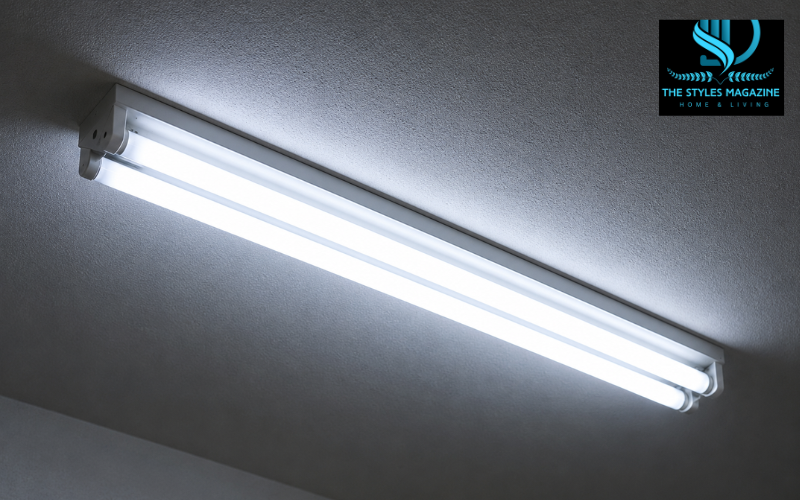
If you’ve ever flipped a switch in a garage, office, or classroom and been greeted by that familiar cool, even glow, you’ve experienced light from fluorescent tubes. This type of lighting has been part of everyday life for nearly a century, quietly lighting up schools, warehouses, hospitals, and kitchens. But fluorescent lighting is a mature technology, and it’s now being phased out in favor of LED lighting, which is more efficient and longer-lasting.
This article walks through what fluorescent light actually is, how it’s produced inside a tube, the different types and sizes you’ll come across, the fixtures that house them, and why 2026 is shaping up to be a turning point for this once-dominant lighting style. We’ll also cover how to choose a replacement, the basics of swapping out a bulb, and how to handle fluorescent tubes safely when it’s time to let them go.
Quick Guide: Fluorescent Tube Comparison Table
| Type | Diameter | Common Length | Typical Use | Efficiency |
| T12 | 1.5 inches | 48″, 96″ | Older offices, garages | Lower |
| T8 | 1 inch | 24″, 36″, 48″ | Offices, schools, retail | Moderate |
| T5 | 5/8 inch | 22″, 46″ | Modern commercial fixtures | Higher |
| CFL | Coiled/spiral | Screw-in sizes | Homes, lamps | Moderate |
| LED Tube | Same as T8/T5 | Matches replaced tube | Any of the above | Highest |
Step-by-Step: Replacing a Fluorescent Tube
- Turn off power at the switch (and breaker, if doing wiring work).
- Let the tube cool, then twist it a quarter turn and pull it out.
- Check the size and base type against the old tube before buying a replacement.
- Insert the new tube, lining up the pins carefully.
- Test the fixture — if flickering or buzzing continues, the ballast likely needs attention.
What Fluorescent Light Actually Is
In simple terms, fluorescent light is light created by passing electricity through a gas-filled tube rather than by heating a metal filament. This makes it fundamentally different from old-fashioned incandescent bulbs, which produce light by heating a thin wire until it glows.
Fluorescent lighting belongs to a family called “gas-discharge lighting.” Instead of relying on heat to create a visible glow, it relies on a chemical and electrical reaction happening inside a sealed glass tube. Because of this, fluorescent tubes stay much cooler to the touch than incandescent bulbs and use a lot less energy to produce the same amount of light.
You may have noticed that light from fluorescent tubes looks a bit different from sunlight or from a warm household bulb. That’s because the color makeup of fluorescent light isn’t a smooth, continuous spectrum like daylight. It’s made up of a few specific bands of color mixed together, which can sometimes make skin tones, food, or fabric colors look slightly “off” compared to natural light. This is a normal part of how the technology works, not a sign of a faulty bulb.
How Light from a Fluorescent Tube Is Produced
The process behind light from a fluorescent tube is more interesting than most people realize, even though it happens in a split second every time you flip the switch.
Here’s the basic sequence: electricity enters the tube and flows between two electrodes, one at each end. This electrical current excites a small amount of mercury vapor sealed inside the tube, along with an inert gas such as argon that helps the current flow smoothly. As the mercury atoms get excited by the electricity, they release energy in the form of ultraviolet (UV) light — which is invisible to the human eye.
That’s where the inside coating of the tube comes in. The interior glass wall is lined with a substance called phosphor. When the invisible UV light hits this phosphor coating, it “fluoresces,” converting the UV energy into visible light. This is actually where the technology gets its name.
This entire reaction needs to happen inside a sealed tube because the mercury vapor and gas mixture must be kept at a very specific, controlled pressure. If the tube is broken or punctured, the reaction stops working and the gases escape, which is also why broken tubes need to be handled carefully.
The Role of the Ballast in Fluorescent Fixtures
A fluorescent tube can’t just be plugged into a wall socket and switched on the way a regular incandescent bulb can. It needs help from a component called a ballast.
The ballast’s job is twofold: it provides the initial jolt of electricity needed to start the gas reaction inside the tube, and it then regulates the ongoing flow of current so the tube doesn’t draw too much power and burn out. Without a ballast, a fluorescent tube would either fail to light up at all or would overheat almost immediately.
There are two main types of ballasts. Magnetic ballasts are the older style, known for a faint humming sound and a slight flicker or delay when starting up. Electronic ballasts are newer, quieter, and start the tube almost instantly with far less flicker. Most fixtures installed in the last couple of decades use electronic ballasts.
A failing ballast can affect the quality of light from fluorescent fixtures in noticeable ways. You might see flickering, dimming, a buzzing sound, or tubes that take a long time to warm up. In many cases, people mistakenly replace the tube first, when the actual problem is a worn-out ballast.
Types of Fluorescent Light Bulbs
Not all fluorescent lighting looks or works the same way. There are a few common categories worth knowing about.
Linear fluorescent tubes are labeled with a “T” followed by a number, such as T5, T8, or T12. The number refers to the diameter of the tube, measured in eighths of an inch. So a T8 tube is 8/8 of an inch, or exactly one inch, in diameter, while a T12 is one and a half inches across. Generally speaking, thinner tubes like T5 and T8 are more energy-efficient than the older, thicker T12 tubes.
Compact fluorescent lamps, usually called CFLs, are the smaller, coiled or spiral-shaped bulbs designed to screw into a standard light socket, similar to an incandescent bulb. These became popular in the 1990s and 2000s as an early energy-saving alternative to incandescent bulbs, before LED bulbs became widely affordable.
There are also circular fluorescent tubes, sometimes found in older ceiling fixtures or desk lamps, which bend the tube into a ring shape instead of a straight line. Linear tubes remain the most common option in commercial and industrial settings, while CFLs were more popular in homes.
Common Fluorescent Light Bulb Sizes (Including 48 Inch)
If you’ve ever needed to replace a fluorescent tube, you know that getting the size right matters. Fluorescent tubes come in a range of standard lengths, and using the wrong one simply won’t fit or work properly in the fixture.
Some of the most common lengths include 24 inches, 36 inches, 48 inches, and 96 inches, though other sizes exist for specialty fixtures. The 48-inch tube is probably the most widely recognized size, since it’s the standard length used in a huge number of office ceiling panels, garage strip lights, and retail store fixtures. When people picture a classic fluorescent light fixture, they’re often picturing one built around a pair of 48-inch tubes.
To identify the right size for your fixture, check the label printed near the base of the old tube, which usually lists the type (like T8), the length, and sometimes the wattage. If the label is worn away, measuring the tube itself from end to end, including the pins, will give you the number you need.
Fluorescent Light Fixtures and Where They’re Used
Fluorescent tubes don’t work on their own — they need a fixture designed to hold them, supply power through the ballast, and often diffuse or direct the light.
A “troffer” is one of the most common fixture types, referring to the rectangular panel fixtures recessed into drop ceilings in offices, schools, and hospitals. Strip fixtures are simpler, exposed fixtures often seen in garages, basements, and storage areas, where appearance matters less than function. Recessed panel fixtures are similar to troffers but are built to sit flush with the ceiling for a cleaner look.
You’ll find light from fluorescent fixtures in a wide range of settings: offices, classrooms, garages, warehouses, retail stores, and parking structures are all classic examples. Fluorescent lighting became the default choice for these spaces because it offered even, wide-area coverage at a lower running cost than incandescent lighting.
One thing worth keeping in mind is fixture compatibility. Not every fixture accepts every type of tube, and some replacement bulbs (which we’ll get into later) require you to remove or bypass the existing ballast. Checking compatibility before buying a replacement can save a return trip to the store.
Energy Efficiency and Light Quality Compared to Other Bulbs
One of the biggest reasons fluorescent lighting became so popular in the first place is efficiency. Compared to incandescent bulbs, fluorescent tubes convert a much larger share of the electricity they use into visible light rather than wasted heat. This means lower electricity bills and less heat added to a room, which matters in large, heavily lit spaces like offices and stores.
That said, fluorescent light does have some quirks. As mentioned earlier, it produces what’s sometimes called a “discrete spectrum,” meaning the light is made of a few specific color bands rather than a smooth blend across the whole visible spectrum. This can affect how accurately colors appear under fluorescent lighting compared to daylight or high-quality LED lighting.
Fluorescent tubes also typically need a short warm-up period to reach full brightness, especially in cold environments, and older or failing tubes can develop a visible flicker. While this flicker is often too fast to notice consciously, some people report eye strain or headaches after long exposure, particularly with aging bulbs or ballasts.
Why Fluorescent Lighting Is Being Phased Out
Fluorescent lighting’s days are numbered, and there are a few clear reasons why.
The biggest issue is mercury. Every fluorescent tube contains a small amount of mercury vapor, which is essential to how the light is produced, but mercury is also a toxic substance that requires careful handling and disposal. As environmental standards have tightened, regulators have increasingly targeted mercury-containing products, including fluorescent lighting, for phase-out.
In the United States, a growing number of states have passed laws restricting the sale of fluorescent tubes and CFLs, with several bans taking effect around 2024 through 2026. These state-level rules generally push retailers and manufacturers to stop selling new fluorescent bulbs, even though existing fixtures can typically keep running until they fail. Manufacturers have responded by shifting their production lines almost entirely toward LED alternatives, which don’t contain mercury and last significantly longer.
Put simply, light from fluorescent tubes isn’t disappearing overnight, but it is steadily being replaced as regulations tighten and LED technology becomes the standard choice for new construction and renovations.
LED Light from Fluorescent: Making the Switch
For anyone with existing fluorescent fixtures, the most common replacement today is an LED tube, sometimes called an LED retrofit. These are designed to fit into the same sockets as traditional fluorescent tubes, but they produce light using LED technology instead of a gas reaction.
There are a few categories worth understanding. Type A LED tubes are ballast-compatible, meaning they work with the existing ballast already installed in the fixture, so installation is as simple as swapping the old tube for the new one. Type B tubes are ballast-bypass, meaning the ballast is removed or disconnected and the tube is wired to receive power directly, which usually improves efficiency further but requires a bit more rewiring work. Type A/B hybrid tubes are designed to work either way, functioning with the existing ballast at first and still working later if the ballast is removed or fails.
After switching, most people notice a difference in light quality right away. LED tubes tend to produce a steadier, more consistent light with less flicker, and they often render colors more accurately than older fluorescent tubes. On the cost side, LED tubes usually cost more upfront but use less electricity and last far longer, so the savings tend to build up over time rather than showing up immediately.
How to Choose the Right Fluorescent Light Replacement
Choosing a replacement doesn’t have to be complicated if you focus on a few key details.
First, match the tube size and base type to what’s already installed. This means confirming the length (such as the common 48-inch size), the diameter (T5, T8, or T12), and the pin configuration at the ends of the tube. Getting any of these wrong will mean the replacement doesn’t fit or doesn’t make proper contact in the socket.
Second, decide between a ballast-compatible option and a direct-wire option. If you want the simplest possible swap with no electrical work, a Type A ballast-compatible LED tube is usually the easiest path. If you’re comfortable doing a bit more work, or you’re having an electrician handle it anyway, a ballast-bypass option can offer better long-term efficiency since it removes a part that can eventually fail.
Third, consider whether it makes more sense to replace the whole fixture instead of just the bulb. If a fixture is old, physically damaged, or has a ballast that’s already failing, installing a brand-new LED fixture can sometimes be more cost-effective in the long run than repeatedly patching an aging setup.
Fluorescent Light Bulb Replacement: Step-by-Step Basics
Replacing a fluorescent tube is generally a simple task, but a few basic safety steps make the process smoother and safer.
Before doing anything, turn off the power to the fixture at the switch, and if you’re working on the wiring at all, at the breaker as well. Let the old tube cool down if it’s been in use, and handle it gently, since fluorescent tubes are made of glass and contain a small amount of mercury vapor.
The general replacement process involves removing the old tube, usually by twisting it a quarter turn and pulling it straight out of the sockets, then inserting the new tube in the same way, making sure the pins line up correctly. If you’re installing a ballast-bypass tube, this is the point where any necessary rewiring happens, ideally by someone comfortable working with electrical connections.
There are a few clear signs that a tube or ballast needs replacing. Flickering that doesn’t go away after the tube warms up, noticeable dimming compared to when the fixture was new, a persistent buzzing sound, or tubes that show dark rings near the ends are all common indicators. If a new tube doesn’t fix flickering or buzzing, the ballast is often the real culprit.
Fluorescent Light Safety, Disposal, and Handling Tips
Because fluorescent tubes contain mercury, handling and disposing of them properly matters more than it does with a standard incandescent bulb.
When handling tubes, avoid gripping them too tightly or applying pressure to the glass, and always hold them by the ends rather than the middle. It’s worth wearing gloves when replacing older or dusty tubes, both to protect your hands from broken glass and to avoid direct contact with any residue.
For disposal, fluorescent tubes should never simply go in the regular household trash in most areas, since this risks releasing mercury into the environment. Many hardware stores, recycling centers, and municipal waste programs offer dedicated fluorescent bulb recycling, and it’s worth checking local guidelines, since rules vary by location.
If a tube breaks, it’s best to clear the room for a few minutes to let any vapor disperse, then carefully sweep up the pieces rather than vacuuming them, since vacuuming can spread mercury particles into the air. Placing the broken pieces in a sealed bag or container before disposal is a simple extra precaution.
Conclusion
Light from fluorescent tubes has lit up homes, schools, and workplaces for generations, relying on a clever but aging process of electrified gas, invisible UV light, and a phosphor coating that turns it all into the glow we recognize. Understanding how that process works also helps explain why the technology is now stepping aside: the mercury at its core, combined with the rise of more efficient and longer-lasting LED alternatives, has pushed regulators and manufacturers alike toward a cleaner replacement.
For most people, this shift doesn’t require immediate action. Existing fluorescent fixtures can generally keep running until a bulb burns out or a ballast fails, and at that point, switching to an LED tube is a straightforward, practical option worth considering. Whether that transition happens today or a few years down the road, understanding how fluorescent lighting works — and why it’s changing — makes the process a little easier to navigate.
FAQs
What Does “Light From Fluorescent” Mean?
It refers to light created inside a gas-filled tube, where electricity excites mercury vapor to produce UV light, which a phosphor coating turns into visible light — unlike heat-based incandescent bulbs.
Why Does Fluorescent Light Look Different From Daylight?
Fluorescent light has a “discrete spectrum,” made of a few specific color bands rather than a smooth blend, which can make colors and skin tones appear slightly different than under natural sunlight.
Can I Replace A Fluorescent Tube With An LED tube?
Yes. LED tubes come in ballast-compatible (Type A), ballast-bypass (Type B), or hybrid versions, and can usually fit existing fixtures with minimal or no rewiring, depending on the type chosen.
Why Is Fluorescent Lighting Being Phased Out?
Fluorescent tubes contain mercury, a toxic substance requiring careful disposal. Tightening environmental regulations and state-level bans, alongside more efficient LED alternatives, are driving manufacturers away from fluorescent production.
What Should I Do If A Fluorescent Tube Breaks?
Clear the room for a few minutes, avoid vacuuming the debris, sweep it up carefully, and seal the pieces in a bag before disposing of them according to local recycling guidelines.
Disclaimer: This article is provided for general informational purposes only and does not constitute professional electrical, safety, or environmental advice. Fluorescent tubes contain mercury and should be handled, installed, and disposed of in accordance with local regulations and manufacturer instructions. For electrical work, fixture rewiring, or ballast replacement, consult a licensed electrician. Regulations regarding fluorescent lighting bans and phase-out timelines vary by state and are subject to change; readers should verify current rules with their local or state environmental agency.