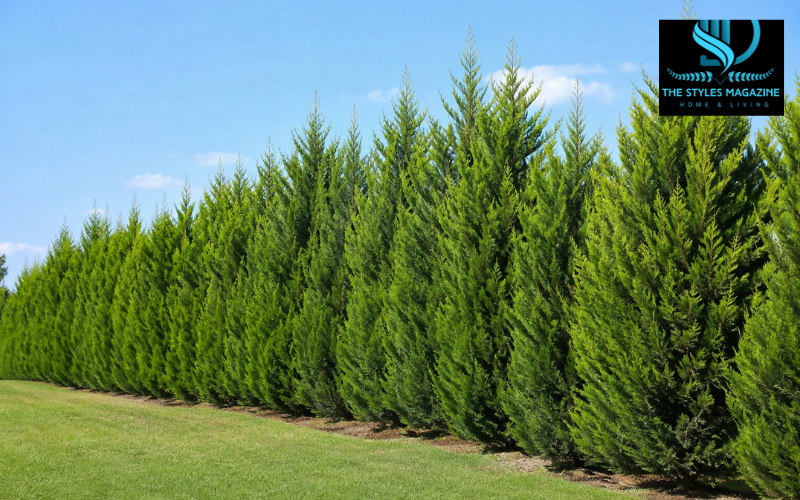
If you have ever driven through a neighborhood and admired a tall, dense wall of green running along a property line, there is a good chance you were looking at a leyland cypress. This tree has become one of the most popular privacy plants in the country, largely because it grows fast, stays green all year, and can turn an exposed backyard into a private one in just a few seasons.
But a leyland cypress is not a “plant it and forget it” tree. It grows so quickly that it needs some planning and ongoing care to stay healthy and well behaved. This guide covers everything you need to know: where the tree came from, how big it gets, how to plant and prune it, the problems it can run into, and how it compares to other popular privacy trees, so you can decide whether it is the right fit for your yard.
Quick Guide Table
| Feature | Details |
| Growth Rate | 3–4 feet per year |
| Mature Height | 60–70 feet |
| Mature Spread | 15–25 feet |
| Hardiness Zones | 6–10 |
| Sunlight | Full sun to partial shade |
| Soil Needs | Well-draining; adaptable to most types |
| Ideal Spacing | 6–10 feet apart |
| Lifespan | 25–30 years |
| Deer Resistance | Low to moderate (not deer-proof) |
| Common Threats | Seiridium canker, Cercospora blight, bagworms, spider mites |
Step-by-Step: Planting a Leyland Cypress Hedge
- Choose a sunny spot with well-draining soil in zones 6–10.
- Space trees 6–10 feet apart for a dense screen.
- Dig a hole as deep as the root ball and twice as wide.
- Set the tree level with the surrounding soil grade.
- Backfill and water thoroughly to remove air pockets.
- Mulch around the base, keeping mulch away from the trunk.
- Water deeply and consistently through the first growing season.
What Is a Leyland Cypress?
The leyland cypress has an interesting backstory. It is not a tree found in the wild. It appeared almost by accident in England in the late 1800s, when a Monterey cypress and a Nootka cypress (also called Alaska cedar) happened to cross-pollinate on the same property. The result was a hybrid combining the fast growth of one parent with the cold hardiness of the other.
Because it is a cross between two different species, the leyland cypress is sterile and does not produce viable seeds. Every tree you see today was grown from a cutting taken from another leyland cypress, not started from seed. That is actually good news for buyers, since it means every tree is genetically identical to its parent, so you know exactly what growth habit and appearance to expect.
You may see this tree listed under a few different botanical names, including Cupressus x leylandii and x Cupressocyparis leylandii. This comes down to ongoing scientific debate over classification, but for gardening purposes they all refer to the same plant. Whatever name is on the tag, you are getting dense, feathery, blue-green to dark green foliage and a naturally neat, pyramidal shape — a combination that made this tree a landscaping favorite for anyone wanting privacy without waiting decades.
Leyland Cypress Size and Growth Rate
Speed is the main reason people choose a leyland cypress. Under good conditions, it can add three to four feet of height every year, which is remarkably fast for an evergreen compared to many privacy trees that grow only six to twelve inches annually.
Left unpruned, a mature leyland cypress typically reaches sixty to seventy feet tall with a spread of fifteen to twenty-five feet — closer to the size of a mature oak than a hedge plant. Most homeowners do not want a screen that tall, which is why regular trimming plays such a big role in keeping the tree at a manageable height.
Most people see a solid, effective privacy screen within three to five years of planting, assuming proper watering and care during establishment. Growth often follows a “sleep, creep, leap” pattern: modest progress the first year while roots establish, a bit more the second year, and rapid growth from year three onward.
Leyland Cypress for Sale — What to Know Before You Buy
Leyland cypress trees are typically sold three ways: in containers, bare-root, or balled-and-burlapped. Container-grown trees are the most common and easiest for home gardeners, since the established root ball transplants with less shock and can go in the ground almost any time the soil isn’t frozen. Bare-root trees are cheaper and lighter but need to be planted quickly and handled more carefully. Balled-and-burlapped trees are larger, more mature specimens — a good option for a head start, though they cost more and are heavier to move.
For most homeowners, a smaller or medium container size actually establishes and catches up in height faster than an expensive, oversized specimen, simply because it experiences less transplant shock. A larger tree makes sense mainly if you need privacy quickly and are willing to pay for it.
Before buying, inspect the tree carefully. Foliage should be an even green or blue-green color without large brown, yellow, or thinning patches. Check the trunk base for cracking or damage, and if roots are visible, they should look white or tan and feel firm — not mushy or dark, which can signal root rot setting in before the tree ever leaves the nursery.
Planting a Leyland Cypress Hedge
The leyland cypress does best in USDA hardiness zones 6 through 10, covering most of the mid-Atlantic, the Southeast, the Gulf Coast, and parts of the Pacific Northwest and Southwest. It wants full sun to partial shade — too much shade will thin out the foliage and weaken its naturally dense form over time.
Soil is where this tree is impressively flexible, tolerating clay, sandy, loamy, acidic, and alkaline conditions without much fuss. The one thing it cannot tolerate is standing water, since waterlogged roots are one of the fastest ways to lose a tree to root rot. If your yard tends to hold water, plant on a slight mound or improve drainage first.
Spacing is one of the most important planting decisions. For a dense, continuous screen, space trees six to ten feet apart, trunk to trunk. Planting too closely might seem like a shortcut to instant coverage, but it backfires: crowded trees compete for light and airflow, weakening them and making them far more vulnerable to disease and pests later.
For the planting itself, dig a hole roughly as deep as the root ball and about twice as wide. Set the tree so the top of the root ball sits level with, or just slightly above, the surrounding soil, since planting too deep is a common cause of decline. Backfill with native soil, water thoroughly to settle out air pockets, and add mulch around the base, keeping it a few inches from the trunk to help retain moisture while roots establish.
Building a Leyland Cypress Wall for Privacy
Beyond a standard hedge, many homeowners want a true living wall of green. That look comes down to spacing and consistent pruning discipline. Trees planted on the tighter end of the recommended range, then shaped from a young age, tend to knit together into one solid mass rather than reading as individual trees — which is why starting the shaping process early matters more than letting trees grow however they want and correcting course later.
Most homeowners can expect a genuinely solid screen within three to five years, following that same slower-start, faster-finish growth pattern. If you need privacy sooner, or your space is too narrow for full-grown trees, pairing them with a fence or a fast-growing shrub layered in front can bridge the gap while the cypress matures. For most residential yards, though, a single well-spaced row is plenty.
Watering and Feeding Requirements
Getting a leyland cypress through its first year comes down to consistent, deep watering. New trees have not yet built the root system needed to find their own moisture, so they depend on you to keep the soil evenly moist without becoming soggy.
Once established, a helpful rule of thumb is about one gallon of water per week for every foot of tree height during dry spells, adjusted for rainfall and local climate. How you water matters as much as how much: soaker hoses or drip irrigation aimed at the root zone are better than overhead sprinklers, since keeping foliage dry reduces the risk of fungal problems that thrive in damp conditions.
Feeding needs are modest. Healthy soil, proper watering, and good spacing matter far more than fertilizer. If a tree needs a boost, a light application of balanced, slow-release fertilizer in early spring is usually enough — overdoing it pushes soft, weak growth that is more vulnerable to pests and disease rather than strengthening the tree.
Leyland Cypress Pruning Guide
Regular pruning is really the difference between a tidy, controlled leyland cypress and an unmanageable, overgrown one. Because it grows so fast, it needs shaping from a young age to stay dense rather than open and leggy.
Most homeowners prune once or twice a year, typically in late spring after the first flush of new growth and again in late summer, avoiding very hot or very wet weather. Trimming during dry conditions matters, since fungal diseases spread more easily on damp, freshly cut foliage.
A general rule is to avoid removing more than about a third of the green growth in one session, and to always leave some green foliage on any branch you cut. Unlike some conifers, a leyland cypress generally will not resprout from bare, leafless wood, so cutting too hard into old wood can leave permanent bald patches. Light, regular shaping beats infrequent, aggressive cuts. For long-term height control, it helps to start topping the main leader once the tree nears your desired height, rather than letting it climb unchecked and trying to bring it back down all at once.
Common Leyland Cypress Problems and How to Fix Them
For all its popularity, the leyland cypress has a few well-known vulnerabilities worth watching for. Seiridium canker is one of the more serious diseases, showing up as sunken, discolored patches and scattered reddish-brown dieback that can spread from the trunk outward. Cercospora needle blight typically starts in the lower, interior part of the tree, turning needles yellow or brown before they drop, usually in fall. Both are linked to stress, poor airflow, and damp conditions — which is exactly why proper spacing, well-draining soil, and pruning only in dry weather matter so much.
On the pest side, bagworms and spider mites are the most common culprits. Bagworms build small, cone-shaped bags out of foliage and can strip a tree bare surprisingly quickly, so it is worth checking periodically, especially in mid to late summer. Spider mites are harder to spot but leave fine webbing and a faded, stippled look to the needles, often during hot, dry weather.
Root rot is another concern, almost always tied to poor drainage or overwatering rather than any inherent weakness in the tree. Once it sets in, it is difficult to reverse, which makes prevention through good drainage far more effective than treatment after the fact. The best overall defense is simple: give trees room for airflow, avoid overhead watering, prune in dry weather, and watch for early warning signs like isolated dieback or thinning patches so small problems don’t spread through the whole tree.
Is Leyland Cypress Deer Resistant?
This is a common question for anyone planting near woods or in a semi-rural area, and the honest answer is more nuanced than a simple yes or no. Leyland cypress is not reliably deer resistant. While it is usually not a deer’s first choice, it can still get browsed, especially by hungry or curious deer.
The risk rises significantly in winter and during periods when natural food is scarce, when deer become far less picky and more likely to sample the soft, tender new growth — particularly on young trees. If deer pressure is a real concern, repellent sprays combining scent and taste deterrents can help, though they typically need reapplying every couple of weeks or after heavy rain. Physical barriers like temporary fencing or mesh offer more reliable protection for the first year or two, and rotating between deterrent methods helps since deer can grow accustomed to a single repellent over time. In areas with severe, constant deer pressure, it is worth knowing that some alternative privacy trees offer noticeably stronger natural resistance.
How Long Does a Leyland Cypress Live?
Compared to many conifers that live well over a century, the leyland cypress has a noticeably shorter lifespan. Most trees begin showing decline or structural weakness around twenty-five to thirty years, though this varies with growing conditions and how well the tree was cared for.
Part of the reason is the tree’s root system, which stays relatively shallow compared to its impressive height. As the canopy grows large atop a shallow root base, older trees become more prone to leaning or toppling, particularly in storms with strong winds or saturated soil. This is worth keeping in mind when planting near a house or driveway, and it is a good reason to periodically inspect mature trees.
Leyland Cypress and Property Line Considerations
Because it grows so quickly and reaches impressive heights, a leyland cypress has real potential to create tension between neighbors if it isn’t managed proactively. A modest six-foot privacy screen can, within a handful of years, grow tall and wide enough to block sunlight from a neighboring yard or garden, which is a common trigger for disputes.
The best way to avoid this is staying ahead of it with regular annual trimming, rather than waiting until a tree has grown far larger than intended. When planting near a shared boundary, check local regulations or HOA guidelines about setback distances, and have a friendly conversation with neighbors about long-term height expectations before the trees are already in the ground.
Leyland Cypress vs. Other Privacy Trees
The leyland cypress isn’t the only fast-growing evergreen worth considering, and it’s worth knowing how it compares to the alternative homeowners most often weigh it against: Thuja Green Giant arborvitae.
In raw growth speed, the two are fairly comparable, both capable of adding several feet a year once established. They differ more in long-term maintenance: leyland cypress develops a more open, feathery look without regular pruning, while Green Giant holds a tighter, more uniform shape with less frequent shaping. Green Giant also tends to be more resistant to common diseases and pests and handles a wider range of climates and shade conditions.
On the other hand, leyland cypress often edges out arborvitae in salt tolerance, making it a solid choice for coastal properties, and many gardeners simply prefer its softer, textured foliage. It also tends to need slightly less horizontal space at the base for the same eventual height.
Neither tree is objectively better across the board — the right choice depends on your site conditions, climate, how much pruning you’re willing to keep up with, and whether disease resistance or a particular look matters more to you. If you’re drawn to the fast growth and feathery texture of a leyland cypress and are prepared for the upkeep it requires, it remains an excellent, time-tested option for privacy screening.
Conclusion
The leyland cypress has earned its popularity honestly. Few trees match its combination of speed, density, and year-round greenery, which is exactly why it remains such a common sight along property lines and backyards. That fast growth comes with real responsibility, though. Getting the most out of a leyland cypress means giving it the right spacing and soil from the start, staying consistent with watering during establishment, keeping up with annual pruning, and watching for early signs of the diseases and pests it can be prone to.
Go in with realistic expectations, and this tree can reward you with an impressive, fast-growing privacy screen for a couple of decades. It isn’t entirely maintenance-free, but a little ongoing attention each year goes a long way toward keeping a leyland cypress healthy, attractive, and a good neighbor to everything around it — including the people living next door.
FAQs
How Fast Does A Leyland Cypress Grow?
It grows about 3 to 4 feet per year under good conditions, making it one of the fastest-growing evergreens used for privacy screening and windbreaks in home landscapes.
How Tall Does A Leyland Cypress Get?
Left unpruned, it typically reaches 60 to 70 feet tall with a 15- to 25-foot spread. Regular trimming keeps it at a more manageable, garden-friendly height.
Is Leyland Cypress Deer Resistant?
Not reliably. Deer usually avoid it but may browse the soft new growth, especially in winter when food is scarce. Repellents or fencing help protect young trees.
How Far Apart Should Leyland Cypress Trees Be Planted?
Space trees 6 to 10 feet apart for a dense, healthy privacy hedge. Closer spacing limits airflow and sunlight, increasing the risk of disease and pest problems.
How Long Does A Leyland Cypress Live?
Typically 25 to 30 years before showing decline. Its shallow root system can make older, taller trees prone to leaning or toppling in storms and saturated soil.
Enjoyed it? Find more exclusive content on The Styles Magazine.
Disclaimer: The information in this article is intended for general educational purposes only and reflects commonly accepted horticultural guidance at the time of writing. Growing conditions vary by climate, soil, and region, so results may differ. For tree health concerns, disease diagnosis, or major pruning decisions, consult a certified arborist or local extension office before taking action.