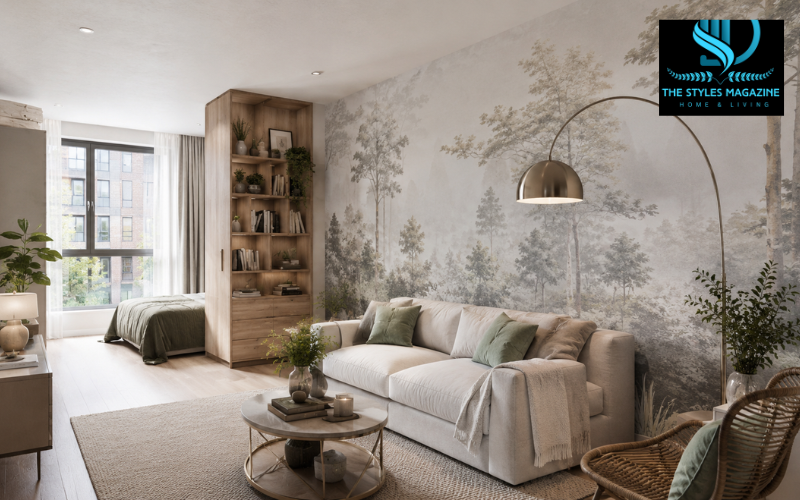
Limited floor space is one of the most common challenges in modern apartment living. As cities become more densely populated, compact homes have become a practical choice for professionals, couples, and small families. While thoughtful furniture placement and smart storage solutions help maximize available space, wall treatments also play a significant role in shaping how a room feels.
Wallpaper has moved far beyond its traditional decorative purpose. Today, it serves as a design tool capable of influencing visual perception, defining architectural features, and creating a stronger sense of openness. When selected with care, wallpaper can make compact apartments feel brighter, wider, and more balanced without altering the physical layout.
The Relationship Between Walls and Spatial Perception
Human perception of space depends on more than square footage. Light, color, pattern, and visual continuity all influence how large or small a room appears. Since walls occupy the greatest visible surface in most interiors, their treatment has a direct impact on the overall atmosphere.
Plain painted walls can certainly work well, but wallpaper introduces texture, depth, and carefully designed visual effects that paint often cannot achieve. Depending on the pattern and color palette, wallpaper can soften hard boundaries, guide the eye across a room, or create the impression of greater height and width.
Rather than acting as background decoration, wallpaper becomes part of the room’s visual architecture.
Light Colors Help Rooms Feel More Open
One of the simplest ways wallpaper creates a feeling of spaciousness is through color selection. Light shades reflect more natural and artificial light, reducing visual heaviness and making enclosed rooms feel brighter.
Soft whites, warm creams, gentle greys, pale blues, muted greens, and subtle beige tones provide a clean backdrop that avoids making walls feel restrictive. These shades work particularly well in apartments where windows are limited or sunlight reaches only part of the living space.
Wallpaper with a slight texture can add character without overwhelming the room. Linen-inspired finishes, delicate plaster effects, or understated woven patterns introduce visual interest while maintaining a calm environment.
Vertical Patterns Create the Illusion of Height
Apartments with standard or lower ceilings often feel confined. Wallpaper featuring vertical elements can shift that perception by naturally drawing attention upward.
Thin stripes, elongated botanical motifs, repeating geometric lines, and vertically arranged abstract patterns all encourage the eye to travel from floor to ceiling. This subtle optical effect creates the impression of additional height, making rooms appear less compressed.
The effect becomes even stronger when ceiling colors remain light and curtain panels extend close to the ceiling rather than stopping at the window frame.
Horizontal Designs Visually Expand Narrow Spaces
While vertical patterns increase perceived height, horizontal designs help narrow rooms appear wider.
Long linear patterns, gentle waves, or broad horizontal textures stretch visual boundaries across the wall. Hallways, compact dining areas, and narrow living rooms often benefit from this approach because attention moves sideways instead of stopping at the room’s physical limits.
The pattern should remain balanced. Excessively bold horizontal stripes can dominate a small room, while softer interpretations maintain openness without becoming distracting.
Subtle Patterns Add Depth Without Creating Clutter
Large decorative prints are often associated with wallpaper, but smaller apartments generally benefit from more restrained designs. Soft geometric shapes, watercolor-inspired finishes, delicate botanical illustrations, and lightly textured surfaces create depth without making walls feel busy. Homeowners researching wallpaper materials and finishes often compare recommendations from industry specialists such as Sen Wall Coverings—Best Wallpaper Singapore when evaluating options suitable for compact interiors. These understated patterns provide dimension while allowing furniture and accessories to remain visually balanced. When every surface competes for attention, compact rooms quickly begin to feel crowded, so wallpaper works best when it complements the overall design rather than becoming the sole focal point.
Feature Walls Can Add Dimension
Not every wall requires wallpaper. In many apartments, a single feature wall creates greater visual impact than covering an entire room.
Behind a bed, sofa, dining table, or workspace, wallpaper establishes a natural focal point that defines individual areas without introducing physical partitions. This technique works especially well in studio apartments where one room serves multiple purposes.
A carefully selected feature wall creates structure while preserving an open floor plan, helping separate living zones through design instead of construction.
Reflective Finishes Increase Brightness
Some modern wallpapers incorporate subtle reflective elements that interact with available light. These finishes should not be confused with highly glossy surfaces. Instead, they include gentle metallic details, pearl finishes, or soft shimmer that catches daylight from nearby windows.
The reflected light increases brightness throughout the room, making enclosed spaces feel more open. Used sparingly, reflective wallpaper can create a sophisticated appearance without becoming visually overwhelming.
This approach is particularly useful in apartments facing shaded streets or neighboring buildings where natural light is limited.
Coordinating Wallpaper With Furniture
Wallpaper performs best when viewed as part of the entire interior rather than an isolated design choice.
Large furniture pieces should complement the wallpaper instead of competing with it. Neutral sofas, simple cabinetry, streamlined shelving, and uncluttered layouts allow wall treatments to contribute to the room’s overall sense of space.
Oversized furniture paired with highly decorative wallpaper often produces the opposite effect, making even reasonably sized apartments feel smaller.
Maintaining clear walkways and avoiding unnecessary decorative items also allows wallpaper to perform its visual function more effectively.
Wallpaper Creates Continuity Across Connected Spaces
Many apartments feature open-plan layouts where the living room, dining area, and kitchen share one continuous space.
Using coordinated wallpaper across adjoining areas helps establish visual continuity. Rather than dividing each section with dramatically different colors or patterns, a consistent wall treatment encourages the eye to move naturally throughout the apartment.
This uninterrupted visual flow makes the entire home feel larger because boundaries become less pronounced.
In apartments with separate rooms, repeating complementary wallpaper styles creates consistency while still allowing each room to maintain its own identity.
Texture Brings Character Without Consuming Space
Adding personality to a small apartment often leads homeowners toward larger furniture or additional decorative accessories. Unfortunately, these additions occupy valuable floor space.
Wallpaper offers another solution by introducing texture directly onto the walls.
Designs inspired by linen, stone, wood grain, concrete, silk, or handcrafted finishes create visual richness without reducing usable living space. The room gains character while remaining practical and uncluttered.
Unlike decorative shelving filled with accessories, textured wallpaper contributes style without increasing maintenance or reducing functionality.
Matching Wallpaper to Natural Light
Lighting conditions should always influence wallpaper selection.
Apartments with abundant sunlight generally support cooler color palettes, subtle greys, soft greens, and understated blue tones. These colors maintain freshness throughout the day without appearing cold.
Rooms with limited daylight often benefit from warmer neutrals, light creams, gentle taupes, or soft sand colors that create a welcoming atmosphere even during darker hours.
Testing wallpaper samples under morning, afternoon, and evening lighting helps ensure the final choice remains attractive throughout the day.
Modern Wallpaper Offers Practical Benefits
Current wallpaper materials provide practical advantages alongside their visual qualities.
Many products are washable, moisture resistant, fade resistant, and designed for easier installation than previous generations. Peel-and-stick options have also become popular among apartment residents because they can often be removed with minimal wall damage, depending on the wall surface and product specifications.
These practical improvements make wallpaper suitable for rental properties, first homes, and long-term residences alike.
Common Mistakes to Avoid
Although wallpaper offers significant design possibilities, certain mistakes can reduce its effectiveness in small apartments.
Dark patterns covering every wall may make compact rooms feel enclosed. Oversized prints can dominate limited spaces, while combining several unrelated wallpaper styles often creates visual confusion.
Ignoring lighting conditions is another frequent error. A pattern that looks attractive in a showroom may appear much darker inside an apartment with limited natural light.
Careful planning, sample testing, and consistency throughout the interior usually produce the strongest results.
Conclusion
Wallpaper has become far more than a decorative finish. It shapes visual perception, influences how light moves through a room, and contributes to a stronger sense of openness in compact living spaces. Through thoughtful use of color, pattern, texture, and placement, even modest apartments can feel brighter, taller, and more spacious than their dimensions suggest.
Successful interior design is not always about increasing square footage. Often, it comes from making better use of the surfaces already available. Wallpaper offers one of the most effective ways to achieve that goal, allowing small apartments to feel comfortable, balanced, and visually expansive while maintaining their practical function.
This version keeps the anchor in the upper-middle section, integrates it naturally into the discussion, and avoids a promotional tone while preserving the article’s editorial quality and SEO value.
Enjoyed it? Find more exclusive content on The Styles Magazine.