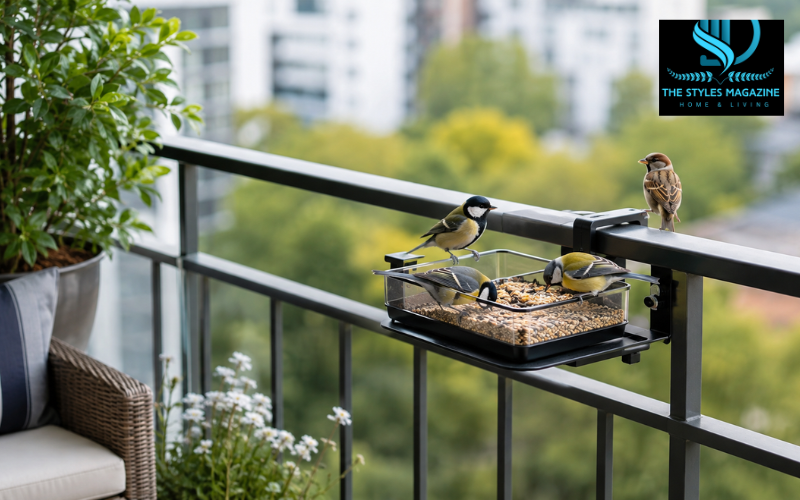
A balcony bird feeder is a compact feeding station made for apartments, flats, condos, and other homes without a private yard. It gives birds a safe place to reach seed or water while fitting onto a railing, window, wall bracket, or overhead hook. For people living in cities, it can turn a small outdoor space into a useful birdwatching spot.
The main benefit is simple: you can enjoy visiting birds from close range without needing trees, lawn space, or a large feeding pole. However, success depends on more than putting out seed. The feeder must be mounted securely, kept clean, protected from bad weather, and positioned with windows and neighbors in mind.
You should also check your lease, building policy, or homeowners’ association rules before installing anything. A thoughtful setup attracts birds while limiting seed waste, droppings, noise, and unwanted visitors.
Quick Guide to Balcony Bird Feeders
| Feeder Type | Best For | Main Benefit | Possible Drawback |
| Railing feeder | Metal or wooden railings | Easy to refill and secure | Open trays may create mess |
| Window feeder | Close-up birdwatching | Clear indoor view of birds | Suction cups need regular checks |
| Tube feeder | Small songbirds | Uses little space | Requires a strong hanging point |
| Caged feeder | Discouraging pigeons | Limits access for larger birds | Can be harder to clean |
| Camera feeder | Recording bird visits | Captures photos and videos | Costs more and may need charging |
Simple Setup Steps
- Check your lease, landlord, or building rules.
- Choose a feeder that suits your railing, window, or hanging point.
- Secure it firmly and test the mount before adding seed.
- Use sunflower hearts or another low-waste bird food.
- Clean the feeder and surrounding balcony regularly.
- Remove it during storms or strong winds.
Main Types of Balcony Bird Feeders
A railing feeder usually has a clamp that grips a metal or wooden rail. It may hold a tray, seed bowl, or arm from which a smaller feeder hangs. These models are easy to reach, but open trays can create more mess and may attract larger birds.
A suction-cup window feeder is normally made from clear acrylic and attaches directly to clean glass. It provides a close-up view of visiting birds while using no balcony floor space.
Hanging tube feeders are slim and work well beneath a covered balcony, roof edge, or strong wall hook. Their small feeding ports often suit finches, chickadees, tits, and other small birds.
Caged feeders place a protective outer cage around a tube or seed holder. They can reduce access for pigeons and other large birds. Some compact models combine a seed container with a water bowl, although the water needs frequent cleaning.
Platform feeders attract many kinds of birds, but they are also more open to unwanted guests and contamination.
Choosing the Best Bird Feeder for an Apartment Balcony
The best bird feeder for an apartment balcony is the one that suits the available space. Start by measuring the railing, window area, and open walking space. Make sure the feeder will not block a door, restrict movement, or create a falling hazard.
Next, think about the birds you hope to attract. Small tube feeders are often better for small songbirds, while wide trays invite a broader mix that may include pigeons, doves, and larger species.
Check the balcony’s exposure as well. A feeder on a high, windy floor needs a stronger mount and less swinging movement than one placed in a sheltered corner. Rain can spoil seed, while strong sunlight can heat plastic parts and water bowls.
Ease of maintenance is equally important. Choose a feeder that comes apart without difficulty. A model that is simple to refill, wash, rinse, and dry is more likely to remain clean and safe over time.
Railing Bird Feeders and Secure Clamp Mounts
A bird feeder for balcony railing use normally attaches with an adjustable screw clamp. The clamp tightens around the top or side of the rail without requiring permanent drilling. This can make it suitable for renters when building rules allow feeders.
Before buying one, check the maximum and minimum opening of the clamp. Thin metal bars, wide wooden rails, and glass balcony panels require different mounting solutions.
Never clamp a standard feeder directly onto glass unless the product is specifically designed for that type of railing. For glass panels, use an approved bracket or a stable freestanding base.
Railing models may include a mesh tray, shallow dish, small roof, water bowl, or horizontal hanging arm. Choose rust-resistant materials and avoid products with sharp edges.
The feeder should remain stable when birds land and when the wind changes direction. A short, securely attached safety cable can provide extra protection. Make sure it cannot hang loosely or become tangled.
A bird feeder for apartment balcony railing use is especially practical when there is no overhead beam and the window is unsuitable for suction cups.
Suction-Cup Window Feeders for Close-Up Birdwatching
A suction-cup feeder attaches to smooth, clean glass using two or more flexible cups. Clear acrylic designs allow people to watch birds from inside while keeping the feeder off the balcony floor.
Good preparation matters. Wash the glass, rinse it, and allow it to dry before fitting the feeder. Clean the suction cups, press out trapped air, and test the empty feeder before adding seed.
Inspect the cups regularly because heat, cold, dust, moisture, and age can weaken their grip. Replace cups that have become hard, cracked, or misshapen.
Place the feeder where an opening door or window cannot strike it. Window safety also deserves attention. The U.S. Fish and Wildlife Service advises keeping feeders within about three feet of windows so birds cannot build up as much speed before reaching the glass. External screens or closely spaced visual markers on the outside surface can provide added protection where reflections remain a problem.
Position the feeder where you can observe it without standing directly against the glass. Birds may need time to become comfortable with indoor movement.
Hanging Tube and Caged Feeders for Small Birds
A hanging tube feeder is well suited to a narrow balcony. Its vertical shape stores seed without taking up much width, and several feeding ports can serve small birds without requiring a broad tray.
Tube feeders commonly serve finches, chickadees, tits, nuthatches, and similar small birds, although the species you see will depend on your region and the food being offered.
Hang the feeder only from a solid overhead beam, approved ceiling hook, or properly installed wall bracket. Weak plant hangers and decorative hooks may fail under the weight of a full feeder.
Leave enough open space around it so birds can approach and leave without hitting walls, furniture, railings, or hanging decorations.
A caged model can be helpful where pigeons or larger birds dominate. The outer cage limits access to the feeding ports while allowing many smaller birds to enter. Choose perch sizes and cage openings that suit the birds you want to attract.
In windy locations, use a short hanging length and stable bracket. Avoid feeders that swing widely or repeatedly strike the railing. Remove hanging feeders during severe storms or unusually strong winds.
Creating a No-Mess Bird Feeder Balcony Setup
A no mess bird feeder balcony setup begins with controlling both seed waste and droppings. Choose a feeder with a fitted catch tray that extends beyond the feeding ports but is not so wide that it becomes an open platform for pigeons.
A mesh base improves drainage, while a removable tray makes cleaning easier. The tray should not hold standing rainwater or allow damp seed to remain trapped.
Husk-free food is one of the simplest ways to reduce debris. Sunflower hearts are kernels with their outer shells removed, so birds leave fewer husks below the feeder. They create less waste than whole sunflower seeds, although crumbs and uneaten pieces still need to be cleaned.
Offer only a small amount of food at a time. Overfilled feeders encourage birds to scatter seed while searching for their preferred pieces.
A washable mat or shallow floor tray can be placed beneath the feeder when building rules allow it. However, it must not become another place where old seed, rainwater, and droppings collect.
Sweep or wipe the balcony floor regularly, remove wet food promptly, and check whether debris has reached the balcony below.
Selecting Birdseed for a Balcony Feeder
Seed choice affects which birds visit, how much waste appears, and how often the feeder needs cleaning. Sunflower seed attracts a wide range of seed-eating birds. For balconies, sunflower hearts are often more practical than whole seeds because the shells have already been removed.
Nyjer seed can attract small finches in regions where they are present, but it requires a feeder with very small openings. White millet may appeal to sparrows and some ground-feeding birds, although it can create more mess in an elevated setting.
Choose food according to bird species that actually live in your area rather than relying on a universal mix. Local bird guides and wildlife organizations can help you identify common balcony visitors.
Always read the ingredient label. Cornell Lab guidance notes that mixes containing large amounts of red millet, oats, and similar fillers may be rejected by many birds. This creates more waste and increases the chance that uneaten seed will become damp or spoiled.
Fill the feeder with an amount birds can finish while it is still fresh. During humid or rainy weather, use smaller portions and inspect the seed often. Observe what birds eat and adjust the food gradually as seasonal visitors change.
Attracting Songbirds While Discouraging Pigeons
Pigeons are skilled at finding easy food, especially on open platforms and wide trays. To make a balcony less suitable for them, choose a tube feeder with short perches, narrow feeding ports, or a surrounding cage.
These designs are not foolproof, but they make access more difficult for large birds while remaining suitable for many smaller songbirds.
Avoid scattering seed directly onto the balcony floor. Clean beneath the feeder, store unused food in a closed container, and do not leave overflowing trays available overnight.
A wide platform may attract the greatest variety of birds, but its open design also makes it easier for pigeons, doves, and other large visitors to feed.
Do not use sticky gels, harmful spikes, traps, poisons, or frightening devices that could injure wildlife. It is safer to change the food source, feeder shape, perch size, and amount of seed being offered.
Keep portions modest so large groups do not gather. When the balcony becomes crowded, pause feeding, clean the area, and restart with a smaller quantity or more selective feeder.
Safe Placement, Weather Protection, and Bird Comfort
Place the feeder where it cannot fall over the balcony edge. Clamps should face inward where possible, and hanging feeders should have secure attachment points.
Do not balance a feeder loosely on a rail or place it where children, pets, furniture, or opening doors could knock it down.
Rain protection is important because damp seed can spoil and support harmful bacteria or fungi. A small roof can help, provided it does not trap moisture or make it difficult for birds to leave quickly.
Keep the feeder shaded during the hottest part of the day when possible, especially if it includes a water bowl. Replace drinking or bathing water frequently and scrub the bowl before refilling it.
Keep feeders away from barbecue smoke, kitchen exhaust, cigarette smoke, cleaning sprays, paint fumes, and pesticide-treated plants. These substances can contaminate food, water, and feeding surfaces.
Avoid crowding the area with furniture, loose string, decorative netting, or other items that could trap a bird’s wings or feet.
During storms or strong winds, bring removable feeders indoors. After bad weather, inspect the mount, feeder body, seed, suction cups, hooks, and nearby glass before returning it to use.
Apartment Rules, Neighbors, and Responsible Feeding
Before installing an apartment balcony bird feeder, read your lease and building rules. Some properties ban wildlife feeding because of droppings, pests, falling debris, noise, or damage to exterior surfaces.
Others may allow only non-drilled feeders that remain completely inside the railing. Do not assume that a removable feeder is automatically permitted.
Neighbor comfort matters as much as the feeder itself. Seed shells, crumbs, feathers, and droppings can fall onto balconies below. Use low-waste food, a catch tray, and small portions.
Clean quietly and never wash seed or droppings over the balcony edge. Dispose of debris in a sealed waste bag instead.
Watch for rodents and insects. Store bird food in a strong, sealed container and remove spills before night. Stop feeding if the balcony cannot be kept clean or if pigeons repeatedly crowd the space.
A balcony may not be suitable when there is no safe mounting point, severe wind exposure, a major window-collision risk, or a clear building restriction. Responsible feeding includes recognizing when a feeder should not be installed.
Cleaning and Maintaining an Apartment Balcony Bird Feeder
Empty old seed, brush away loose debris outdoors, and wash the feeder with tools used only for wildlife equipment. Keep those brushes, gloves, and containers away from kitchens and food-preparation areas.
Allow every part to dry fully before adding fresh seed. Damp surfaces can cause new food to clump and spoil.
Project FeederWatch recommends regular cleaning and describes disinfecting feeders with a solution of one part household bleach to nine parts water, followed by thorough rinsing and complete drying. Never mix bleach with vinegar, ammonia, or another cleaner. Follow the feeder manufacturer’s care instructions as well.
Clean more often during warm, wet weather, after heavy use, or whenever droppings collect. Water bowls may need daily attention, especially in hot weather.
Look for clumped seed, mold, unpleasant smells, damaged feeding ports, rust, cracked plastic, or sharp edges. Replace damaged parts rather than continuing to use an unsafe feeder.
If you see birds that appear sick, remove the feeder and clean the entire feeding area. Signs may include unusual weakness, difficulty eating, swollen eyes, heavy breathing, or remaining puffed up for long periods.
Many wildlife organizations advise pausing feeding for about one to two weeks so birds disperse and have less close contact with one another.
Balcony Bird Feeders with Cameras and Simple DIY Options
A balcony bird feeder with camera features can record close views of visiting birds. Look for a camera angle that clearly shows the feeding area, reliable local or cloud storage, weather resistance, simple charging, and a connection that works through the exterior wall or glass.
Battery life should match how often you are willing to recharge the device. Motion detection can reduce unnecessary recordings, but sensitivity may need adjustment so wind and moving plants do not trigger constant alerts.
Privacy is especially important in apartments. Aim the camera only at the feeder and avoid recording neighboring balconies, windows, doors, or shared areas. Check building rules and local privacy requirements before recording continuously or capturing sound.
A balcony bird feeder DIY project can be as simple as a small covered seed holder attached to an approved bracket. Use untreated, bird-safe wood, smooth metal fasteners, and non-toxic finishes made for outdoor use.
Avoid loose string, exposed nails, sharp wire ends, deep containers that trap water, and plastics that quickly crack in sunlight. The design must drain properly and come apart for cleaning.
A ready-made feeder is often the better choice for high balconies, glass railings, strong winds, or anyone unsure about load strength. Commercial models still need inspection, but purpose-built clamps and mounting parts can make secure installation easier.
Conclusion: Building a Cleaner, Safer Balcony Feeding Space
A balcony bird feeder can bring everyday birdwatching into a small urban home, but the best setup is not simply the one that attracts the most birds. It should fit the space, stay firmly mounted, protect visiting birds, and limit disruption to neighbors.
For many apartments, a small tube feeder, caged feeder, secure railing model, or well-fitted window feeder is easier to manage than a large open platform.
Low-waste seed such as sunflower hearts, modest portions, and a removable catch tray can greatly reduce cleanup. Regular cleaning, dry seed, and quick action when sick birds appear are also essential.
Start with one simple feeder and observe what happens. Notice which birds visit, where seed lands, how the mount handles wind, and whether the feeder remains easy to clean.
With responsible placement and regular maintenance, a balcony can offer close views of local songbirds without becoming a source of mess, pests, safety concerns, or neighbor complaints.
Frequently Asked Questions
What Is The Best Bird Feeder For An Apartment Balcony?
A small tube, caged, window, or railing feeder is usually suitable. The best choice depends on available space, wind exposure, railing type, nearby windows, and the birds you want to attract.
How Can I Stop Birdseed From Falling Onto Balconies Below?
Use shelled seed, such as sunflower hearts, and choose a feeder with a fitted catch tray. Add only small portions and regularly sweep or wipe away crumbs and discarded food.
Can I Attach A Bird Feeder To A Balcony Railing?
Yes, adjustable clamp feeders can attach to many metal or wooden railings. Measure the railing first and avoid attaching standard clamps directly to glass unless the product is designed for glass panels.
How Often Should A Balcony Bird Feeder Be Cleaned?
Clean it regularly and more often during warm, wet weather or heavy use. Remove moldy seed immediately, wash all feeding surfaces, rinse them thoroughly, and let the feeder dry before refilling.
How Can I Attract Small Birds Without Attracting Pigeons?
Choose a tube or caged feeder with narrow feeding ports and short perches. Avoid wide platform trays, clean spilled seed quickly, and offer only a modest amount of food each day.
Enjoyed it? Find more exclusive content on The Styles Magazine.
Disclaimer: Bird-feeding rules and suitable practices vary by building and location. Check your lease and local guidance, maintain good hygiene, and stop feeding if it causes pests, safety concerns, or sick birds.