When a dog is diagnosed with Intervertebral Disc Disease (IVDD), one word tends to come up in almost every veterinary conversation: rest. Not “take it easy for a few days” rest, but strict, disciplined, weeks-long confinement. For many owners, this is the hardest part of the entire recovery process — harder than the diagnosis itself, and often harder than any medication schedule.
Crate rest isn’t a suggestion; it’s a core part of the treatment plan. Understanding why it matters, and how to do it properly, can make a real difference in whether your dog makes a full recovery. It also helps to understand what IVDD actually is, why some dogs are more prone to it than others, and what the weeks and months after diagnosis really look like — not just the crate itself, but everything that surrounds it.
What Is IVDD, and Why Does It Happen?
Intervertebral Disc Disease is a degenerative condition affecting the cushioning discs that sit between each vertebra in a dog’s spine. These discs act as shock absorbers, allowing the spine to flex and move without the bones grinding against one another. Over time, or sometimes quite suddenly, the material inside a disc can bulge, herniate, or rupture, pushing into the space where the spinal cord runs. The result is pressure on delicate neural tissue, which can cause pain, weakness in the limbs, wobbly or uncoordinated movement, and in the most severe cases, complete loss of the ability to walk.
There are two broad types of IVDD that vets talk about. Type I tends to come on suddenly, often in smaller, chondrodystrophic breeds such as Dachshunds, Corgis, Beagles, and French Bulldogs, whose disc material degenerates earlier in life and becomes more prone to sudden rupture. Type II develops more gradually, usually in larger breeds, as the disc slowly bulges over months or years rather than rupturing all at once. Knowing which type your dog has, and how severe the compression is, shapes almost every decision that follows, from whether surgery is recommended to how long crate rest should last.
Genetics play a significant role, but they’re not the whole story. Excess weight puts additional strain on the spine, repeated jumping on and off furniture can accelerate disc wear, and even an awkward landing can be the final straw for a disc that was already compromised. None of this means an IVDD diagnosis is anyone’s fault, but understanding the contributing factors is useful once recovery begins, since some of these habits will need to change for good.
Why Crate Rest Is Non-Negotiable for IVDD
IVDD occurs when one or more of the cushioning discs between a dog’s vertebrae bulges, herniates, or ruptures, putting pressure on the spinal cord. That pressure is what causes pain, weakness, and in severe cases, paralysis. Whether your dog is being managed conservatively (without surgery) or is recovering post-surgery, the spine needs time and stability to heal without further disc movement or inflammation.
Even a few seconds of jumping, running, or twisting can undo weeks of careful management. This is why veterinarians consistently prescribe strict cage or crate rest — typically four to eight weeks, sometimes longer — as the backbone of recovery. A crate limits your dog’s ability to make the sudden, uncontrolled movements that put the spine at risk, essentially creating a safe, low-stimulation healing environment.
It helps to think of crate rest less as punishment and more as the canine equivalent of a cast on a broken leg: it removes both the temptation and the opportunity for the kind of sudden movement a fragile, inflamed disc can’t tolerate while it stabilizes.
Choosing the Right Crate for Recovery
Not every crate is suited to long-term recovery use. For a dog healing from IVDD, the crate should be:
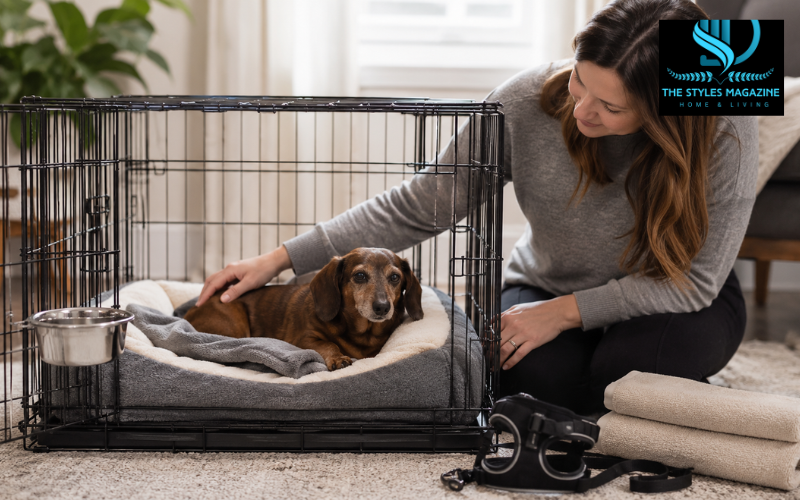
- Appropriately sized — large enough for your dog to stand, turn around, and lie down comfortably, but not so large that they have room to move around excessively or attempt small jumps.
- Sturdy and secure — a crate that won’t shift, wobble, or allow a determined dog to push their way out, especially important for larger or more active breeds.
- Easy to clean — accidents happen during recovery, particularly if bladder control is affected, so a crate that’s simple to wipe down or has a removable tray makes daily care much easier.
- Low-stress in design — solid-sided or partially covered crates can help reduce visual stimulation, which keeps anxious dogs calmer during long confinement periods.
A well-chosen crate isn’t just about restriction — it’s about creating a den-like space where your dog can feel safe while their body heals. For most dogs recovering from IVDD, a solid-sided plastic or covered wire crate strikes the best balance between security, visibility, and calm. Whatever style you choose, resist the urge to size up “for comfort” — a crate that’s too large gives your dog just enough room to build momentum for a jump or a fast pivot, exactly the movements you’re trying to prevent.
Setting Up the Crate for Comfort
Once you’ve got the right crate, thoughtful setup makes a big difference in how well your dog tolerates weeks of confinement:
- Use firm, supportive bedding rather than deep, sinking pillows, which can make it harder for your dog to reposition safely.
- Keep water easily accessible without requiring your dog to stretch or strain.
- Place the crate in a quiet, temperature-controlled area away from stairs, other pets, and high foot traffic.
- Cover part of the crate to reduce stimulation, especially if your dog tends to get excited by movement or noise nearby.
Beyond the basics, a few smaller details matter more than owners expect. A washable, non-slip mat underneath the bedding can prevent sliding when your dog shifts position, reducing the risk of an unsupported twist. Keeping a consistent daily routine around feeding, quiet time, and supervised breaks also makes the weeks more predictable for a dog who thrives on structure. Some owners keep a short daily log of appetite, bathroom habits, and behavior, since patterns that seem minor day to day can become meaningful over a full week.
Recognizing When Something’s Wrong
Even with perfect crate discipline, it’s important to monitor your dog closely throughout recovery. Watch for renewed pain, reluctance to reposition, changes in appetite, or any loss of bladder or bowel control. Research summarized by the Merck Veterinary Manual notes that the severity and progression of neurological signs are key factors veterinarians use to determine prognosis and the urgency of intervention, which is why any regression during the recovery period should prompt an immediate call to your vet rather than a wait-and-see approach.
Some warning signs are subtle and easy to miss in a dog who’s mostly confined and quiet anyway. A dog who suddenly seems reluctant to eat, who cries out when lifted for a bathroom break, or who drags a paw slightly when repositioning deserves a call to the vet even if nothing seems dramatically wrong. Trust your instincts — owners often notice subtle changes well before they show up on an exam, simply because they know their dog’s normal baseline so well. It’s always better to make a call that turns out unnecessary than to wait through a night of uncertainty.
Managing Bathroom Breaks Safely
One of the trickiest parts of crate rest is handling bathroom breaks without allowing any jumping or unsupported movement. The safest approach is to lift your dog directly out of the crate (avoid letting them jump down) and carry them to the designated bathroom spot, using a supportive harness for larger dogs who can bear some weight. Keep these outings as brief and calm as possible, and avoid walks, sniffing detours, or any interaction with other animals until your vet clears more activity.
For dogs recovering from more severe episodes, especially those with some hind-leg weakness, a rear-support sling can make bathroom breaks safer and less demanding for both of you, since it supports the dog’s weight without restricting their ability to relieve themselves. If your dog seems to strain, hesitate, or struggle to posture normally, mention it to your vet — changes in bladder or bowel function can be an important indicator of how the spine is healing.
Pairing Crate Rest With the Right Medical Plan
Crate rest works best as one piece of a broader treatment strategy, not a standalone fix. Depending on the severity of the disc damage, your veterinarian may recommend anti-inflammatory medication, pain management, muscle relaxants, or in more severe cases, surgical decompression. Recovery timelines and expected outcomes vary significantly depending on which path is appropriate for your dog’s specific situation.
Conservative management — medication and strict rest without surgery — is often recommended for dogs with milder symptoms, such as pain without significant weakness. Surgical decompression is typically considered when a dog has significant weakness, loss of coordination, or paralysis, particularly if pressure on the spinal cord seems severe enough that time alone won’t resolve it. Neither path is inherently “better” in the abstract; the right choice depends on your dog’s specific neurological exam findings and any imaging done, which is why this decision is best made with your veterinarian or a veterinary neurologist.
If you want a clearer picture of what these options actually involve and how vets decide between conservative management and surgery, MedcoVet has published a detailed guide to IVDD in dogs treatment that walks through the decision-making process step by step — a genuinely useful reference to bring into your own conversations with your vet.
Keeping Your Dog Mentally Engaged During Confinement
Weeks of restricted movement can wear on a dog’s mental state just as much as their physical one. Boredom and frustration can lead to whining, attempts to escape, or general distress, none of which help the healing process. Low-impact enrichment — puzzle feeders, frozen lick mats, gentle scent games placed within reach, and calm training cues like “settle” or “touch” — can keep your dog’s mind occupied without requiring physical activity.
Spending quiet time near the crate, talking softly, or offering gentle grooming (where appropriate) also helps reduce stress and reinforces that confinement doesn’t mean isolation. Rotating a small selection of safe chew toys, changing up puzzle feeder difficulty every few days, and even simply reading aloud or having the television on in the background can help break up the monotony of long weeks in a small space. For dogs who are particularly food-motivated, splitting daily meals into several smaller, slow-feeder sessions rather than two large bowls can add a meaningful amount of mental stimulation over the course of a day without any physical risk.
It’s also worth preparing yourself, the owner, for the emotional weight of this period. Watching an active, playful dog confined to a crate for weeks on end is genuinely difficult, and many owners describe feeling guilty even though they’re doing exactly what their dog needs. Recognizing that this discomfort is a normal part of the process — and that it’s temporary — can make it easier to stay consistent even on the hardest days, particularly around week two or three, when the initial urgency of diagnosis has faded but the finish line still feels far away.
Life After the Crate: Transitioning Back to Activity
Once your veterinarian clears your dog for more movement, resist the urge to return to normal life all at once. Most recovery plans call for a gradual, staged return to activity: short, slow leash walks before longer ones, controlled movement before free play, and stairs or furniture access only once your vet is confident the spine has stabilized. Physical rehabilitation, including techniques like controlled underwater treadmill work, gentle range-of-motion exercises, or guided physiotherapy, is increasingly recommended during this transition phase, since it helps rebuild muscle strength and coordination in a controlled way rather than leaving your dog to test their own limits unsupervised.
This transition period is also the time to think seriously about long-term changes that reduce the risk of a repeat episode. Ramps or steps for furniture and vehicles, weight management if your dog carries extra pounds, harnesses instead of neck collars to reduce strain on the spine when walking, and keeping an eye on slippery flooring at home can all meaningfully lower the odds of a second disc injury, particularly in breeds already prone to IVDD.
The Conclusion
Crate rest can feel restrictive and even a little heartbreaking to enforce, especially with a dog who’s used to running, jumping, and playing freely. But it’s one of the most effective tools available for giving an IVDD-affected spine the stability it needs to heal. Combined with the right medical treatment plan, thoughtful crate setup, and close monitoring, strict confinement gives your dog the best possible chance at returning to a full, active, pain-free life.
The weeks of discipline are temporary. The payoff — a dog who can run, play, and move comfortably again — is worth every bit of the effort.
Enjoyed it? Find more exclusive content on The Styles Magazine.