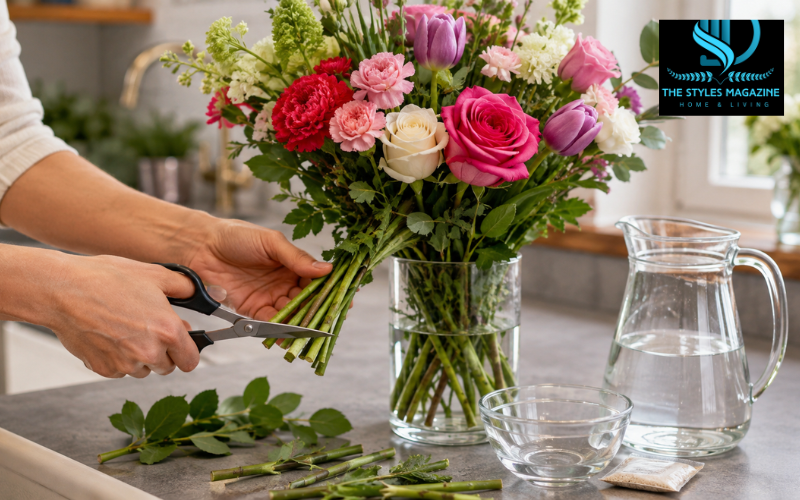
Fresh flowers can brighten a room instantly, but once they are cut from the plant, they no longer have roots supplying them with a steady flow of water and nutrients. From that point, their freshness depends heavily on how they are handled and cared for.
If you want to know how to make flowers last longer, the most important steps are surprisingly simple. Keep the stems hydrated, use a clean vase, remove foliage from the water, trim the stems correctly, use flower food when available, and keep the arrangement away from excess heat.
Many popular flower-care tricks promise dramatic results, but basic care usually matters more than complicated homemade remedies. Bacteria in dirty water can block stems, while heat can speed up moisture loss and natural aging.
A good routine starts before the flowers even enter the vase. Clean equipment, fresh water, healthy stems, and the right display location can all help a bouquet stay attractive for longer. The exact vase life will depend on the flower variety, freshness at purchase, and growing conditions, but proper care gives cut flowers the best possible chance.
Quick Guide: How to Make Flowers Last Longer
| Care Step | What to Do | Why It Helps |
| Clean the vase | Wash with warm, soapy water | Reduces bacteria |
| Trim stems | Cut about ½–1 inch from the ends | Improves water uptake |
| Remove lower leaves | Keep foliage above the waterline | Prevents decay in water |
| Change water | Refresh every 2–3 days or sooner if dirty | Keeps the vase environment cleaner |
| Use flower food | Follow packet instructions | Supports hydration and freshness |
| Choose a cool spot | Avoid direct sun, heaters, and hot appliances | Slows moisture loss and aging |
| Remove fading blooms | Take out wilted or rotting flowers | Keeps the arrangement cleaner |
Simple Step-by-Step Guide
- Wash and rinse the vase thoroughly.
- Trim about ½–1 inch from each suitable stem.
- Remove leaves that would sit below the water.
- Fill the vase with fresh water and correctly mixed flower food if available.
- Place the bouquet in a cool area away from direct sunlight and heat.
- Check the water level every day.
- Replace the water every 2–3 days, or sooner if it becomes cloudy.
- Remove fading flowers and re-trim stems when necessary.
The Simple Formula Behind Longer-Lasting Cut Flowers
Cut flowers stay fresh only while they can continue taking up enough water to support their petals and leaves. Once water movement becomes limited, flowers may begin to droop, dry out, discolor, or lose petals.
One common problem is bacterial growth in the vase. Microorganisms multiply in dirty water and can build up around the cut ends of stems. This can make it harder for the flowers to absorb water properly.
Heat also matters. Warm rooms generally increase water loss and speed up the natural aging process. Flowers kept in a cooler indoor area will often stay presentable longer than flowers exposed to strong sunlight or a nearby heater.
Stem condition is equally important. A damaged, dried, or blocked stem cannot move water as efficiently as a freshly cut one.
There is no single number of days that applies to every bouquet. Roses, tulips, carnations, chrysanthemums, lilies, and other flowers naturally have different vase lives. The goal of good flower care is not to stop aging completely, but to slow avoidable deterioration.
Start With a Clean Vase and Fresh Tools
A clean vase is one of the easiest ways to help cut flowers last longer. Even if a vase looks clean, residue from an older bouquet can remain inside and encourage bacterial growth once fresh water is added.
Wash the vase thoroughly with warm water and dish soap before using it. Pay attention to the bottom and inside edges, where old plant material or residue may collect. Rinse it well so no obvious soap remains.
Your cutting tools should also be clean. Sharp scissors, floral shears, secateurs, or a suitable clean knife can make a neater cut than a dull tool.
Avoid crushing or squeezing the stems while cutting them. Damaged tissue may make water uptake more difficult.
Starting with clean tools also reduces the chance of transferring dirt and microorganisms directly onto the fresh stem ends. This small preparation step takes only a few minutes, but it creates a much better environment for your flowers from the beginning.
Trim and Condition the Stems the Right Way
Before placing fresh flowers in a vase, trim approximately half an inch to one inch from the bottom of the stems. A fresh cut removes the part of the stem that may have dried out during transport or storage.
For many common cut flowers, making the cut at a slight angle is useful because it prevents the entire stem end from resting flat against the bottom of the vase. It may also provide a larger exposed surface for water uptake.
Use a sharp, clean tool and make a smooth cut rather than crushing the stem.
When you completely change the vase water a few days later, check the stem ends again. If they look discolored, soft, dry, or blocked, trim off another small section before returning the flowers to fresh water.
Different flowers can respond differently to conditioning. Woody stems, hollow stems, bulbs, and soft herbaceous stems do not always need identical treatment. When dealing with an unusual or expensive variety, following care advice specific to that flower is better than applying aggressive cutting techniques to every stem.
Remove Leaves and Debris Below the Waterline
Before arranging the flowers, remove any leaves that would sit below the surface of the water. Foliage above the waterline can remain, provided it is healthy and does not make the arrangement overcrowded.
Leaves submerged in water begin to break down. As plant material decomposes, it contributes to a dirtier vase environment and can encourage faster microbial growth.
Check the arrangement regularly for fallen leaves, loose petals, broken stem pieces, or flowers that have started to rot. Remove this material rather than allowing it to remain in the water.
You do not need to strip every leaf from a bouquet. The aim is simply to keep unnecessary plant material out of the vase water.
This step is especially useful in dense mixed bouquets, where smaller leaves can easily become hidden below the waterline. Keeping the water free from decomposing debris supports better hygiene and makes routine vase care much easier.
How to Make Flowers Last Longer in Water
Learning how to make flowers last longer in water mainly comes down to maintaining a clean and reliable water supply.
Check the vase every day. Some flowers can drink surprisingly quickly, especially during the first day or two after being arranged. Make sure the cut ends of the stems remain below the water level.
A practical routine is to replace the water every two to three days. However, do not wait for a fixed schedule if the water becomes cloudy, develops an unpleasant smell, or contains visible debris. In those cases, change it sooner.
During a full water change, remove the flowers temporarily, wash or rinse the vase thoroughly, refill it with fresh water, and inspect the stems. Re-cutting a small amount from the bottom can help expose a fresh surface for water uptake.
Avoid simply topping up dirty water again and again. Adding clean water to an increasingly dirty vase does not remove the bacteria or decomposing material already present.
Consistent water care is one of the most dependable ways to extend the useful life of a bouquet.
Flower Food: What It Does and How to Use It
Commercial flower food is designed to do more than simply feed cut flowers.
A typical floral preservative contains a source of sugar for energy, an ingredient that helps create a suitable water environment, and a component that limits excessive microbial growth. Together, these ingredients support water uptake and help flowers continue functioning after they have been cut.
If your bouquet comes with a flower-food packet, read the instructions and mix it with the recommended amount of water. Do not assume that making the solution stronger will work better. Incorrect concentration can reduce its effectiveness and may harm sensitive flowers.
If you need more solution later, use another packet if one is available and prepare it according to the label.
Properly formulated commercial flower food is generally more dependable than guessing at combinations of household ingredients because its components are intended to work together in controlled proportions.
Flower food is helpful, but it cannot compensate for poor care. Dirty water, submerged foliage, badly damaged stems, or excessive heat can still shorten vase life.
How to Make Flowers Last Longer in a Vase Without Food
You can still take good care of flowers if you do not have commercial flower food.
The most important steps are to use a very clean vase, fill it with fresh water, make clean cuts on the stems, remove leaves below the waterline, and replace the water regularly. Good hygiene becomes especially important when no commercial preservative is being used.
Many household remedies appear online, including sugar, soda, aspirin, coins, vinegar, lemon juice, and small amounts of bleach. Results can vary, and using incorrect amounts may create new problems instead of helping the flowers.
Sugar alone, for example, can provide carbohydrates, but it can also support microbial growth if the water is not properly managed. This is one reason a balanced commercial flower preservative should not be treated as identical to plain sugar water.
Chemical mixtures also require caution. Never mix chlorine bleach with vinegar, lemon juice, or another acidic cleaner or ingredient. Combining chlorine bleach with acids can release dangerous chlorine gas.
When in doubt, plain fresh water combined with excellent vase hygiene is a sensible and simple approach.
The Best Place to Keep a Vase of Flowers
Where you place your bouquet can affect how quickly it fades.
Choose a relatively cool indoor location with good indirect light rather than strong direct sunlight. Avoid placing the vase beside radiators, fireplaces, heating vents, hot appliances, or other sources of constant warmth.
Higher temperatures can increase moisture loss and speed up natural flower aging. Strong drafts may also dry delicate petals more quickly.
Another factor is ripening fruit. Fruits such as apples and bananas can release ethylene, a natural plant hormone involved in ripening and aging. Some cut flowers are sensitive to ethylene and may age more quickly when exposed to enough of it.
For that reason, it is sensible to keep your bouquet away from a bowl of ripening fruit, especially if you are trying to maximize vase life.
A stable, cool location away from direct heat and strong sunlight is usually better than a bright windowsill or warm kitchen counter.
How to Make Flowers Last Longer in a Bouquet
The right way to care for a bouquet depends partly on how it was prepared.
If you receive loose or hand-tied flowers, remove packaging that prevents proper arranging, inspect the stems, trim them, and place them in a clean vase with fresh water.
For a bouquet already arranged in a vase, focus on maintaining the water level, removing damaged material, and changing the water when necessary.
Some arrangements are placed in floral foam rather than standing directly in a vase of water. In this case, keep the foam properly hydrated according to the florist’s care instructions. Avoid repeatedly pulling stems out of the foam because this can weaken the arrangement and may create air spaces around the stems.
As the bouquet ages, individual blooms may fade before the others. Remove flowers that are badly wilted, rotting, or dropping large amounts of material.
Removing spent blooms helps the remaining bouquet look fresher and makes it easier to keep the arrangement clean.
How to Make Flowers Last Longer Before You Give Them
If you are preparing flowers as a gift, freshness before delivery matters just as much as care after they reach the recipient.
Start with flowers that look healthy. Avoid stems with badly damaged foliage, slimy areas, excessive browning, or petals that are already collapsing. Depending on the flower, partially closed buds may continue opening after purchase.
Give the flowers plenty of water before wrapping or transporting them. Freshly cut stems should have time to hydrate before they spend any period away from a vase.
Keep the prepared bouquet in a cool indoor location until you are ready to leave. Do not place it in direct sun or next to a heater while waiting.
Vehicles can become extremely warm, even when the outside temperature feels comfortable. Avoid leaving fresh flowers sitting unnecessarily inside a parked car.
If possible, minimize the time between preparing the bouquet and giving it to the recipient. Good hydration and cool handling help the flowers arrive in better condition.
How to Make Flowers Last Longer Without Water for Short Periods
Cut flowers are generally better off in water, so keeping them dry should be limited to short periods such as transport, photography, ceremonies, or gift delivery.
Before the flowers need to be out of water, allow the stems to hydrate properly. Starting with well-hydrated flowers gives them a better chance of staying firm during a short dry period.
Keep the bouquet away from strong sunlight, hot air, heaters, and windy conditions. Heat and airflow can increase moisture loss from petals and leaves.
The amount of time flowers can tolerate without water varies widely. Delicate blooms may wilt much faster than tougher varieties, so there is no universal safe time limit.
Return the stems to clean water as soon as practical. If the cut ends have begun drying, trim a small section from the bottom before placing them back in the vase.
For longer journeys, keeping the stem ends supplied with moisture is better than intentionally transporting the bouquet completely dry.
Roses, Sugar, and Other Common Flower-Care Questions
A common question is how to make roses last longer with sugar. Sugar can provide cut flowers with a source of carbohydrates, but adding sugar alone to vase water is not the same as using properly prepared flower food.
Commercial floral preservatives are designed to balance nutrition with other functions, including managing water conditions and controlling microbial growth. If sugar is added without good hygiene or microbial control, it may also encourage bacteria to multiply.
Other popular tricks include adding aspirin, coins, soda, vinegar, or bleach to the vase. Some homemade mixtures are based on ideas used in commercial preservatives, but getting the concentration wrong can make them unreliable. Mixing household chemicals can also be dangerous.
Different flowers also have different needs. Roses may respond differently from tulips, lilies, chrysanthemums, or carnations. Tulips, for example, continue growing and moving after cutting, while some flowers are naturally much longer-lasting than others.
For this reason, there is no single household trick that can guarantee a longer life for every bouquet. Clean water, healthy stems, good hygiene, proper flower food, and cooler conditions remain the most dependable starting points.
Conclusion
Knowing how to make flowers last longer does not require a complicated collection of hacks. The most useful routine is built around a few consistent habits.
Start with a clean vase and sharp tools. Give every suitable stem a fresh cut, remove leaves that would sit below the water, and keep the arrangement supplied with clean water. Use commercial flower food according to its instructions when it is available, and check the bouquet regularly for fading flowers or plant debris.
The display location matters too. Keeping flowers away from direct sunlight, strong heat, and ripening fruit can help slow unnecessary aging.
Most importantly, pay attention to the condition of the bouquet rather than relying only on a fixed schedule. If the water becomes dirty, change it. If the stem ends deteriorate, trim them. If individual blooms begin to rot, remove them.
Flowers will naturally fade eventually, and different varieties last for different lengths of time. However, careful daily maintenance can help you enjoy a cleaner, healthier-looking bouquet for as long as the flowers naturally allow.
Frequently Asked Questions
How Often Should You Change Flower Water?
Change vase water about every two to three days. Replace it sooner if it becomes cloudy, develops an odor, or contains fallen leaves and other plant debris.
Does Sugar Make Flowers Last Longer?
Sugar can provide energy to cut flowers, but sugar alone does not control bacteria or balance the water. Properly mixed commercial flower food is generally a more reliable option.
How Do You Make Flowers Last Longer Without Flower Food?
Use a clean vase, fresh water, freshly trimmed stems, and remove all foliage below the waterline. Change the water regularly and keep the flowers somewhere cool.
Should Flowers Be Kept In Sunlight?
No. Cut flowers generally last better in a cool location away from strong direct sunlight, radiators, heating vents, and other heat sources that can increase water loss.
Can Flowers Last Longer Without Water?
Cut flowers should remain hydrated whenever possible. For short periods such as transport, hydrate them well beforehand, keep them cool, and return the stems to fresh water as soon as practical.
Enjoyed it? Find more exclusive content on The Styles Magazine.
Disclaimer: This article provides general cut-flower care information. Vase life varies depending on flower variety, freshness, temperature, water quality, and previous handling. Follow florist or grower instructions for flowers that require special care, and never mix chlorine bleach with vinegar, lemon juice, or other acids.