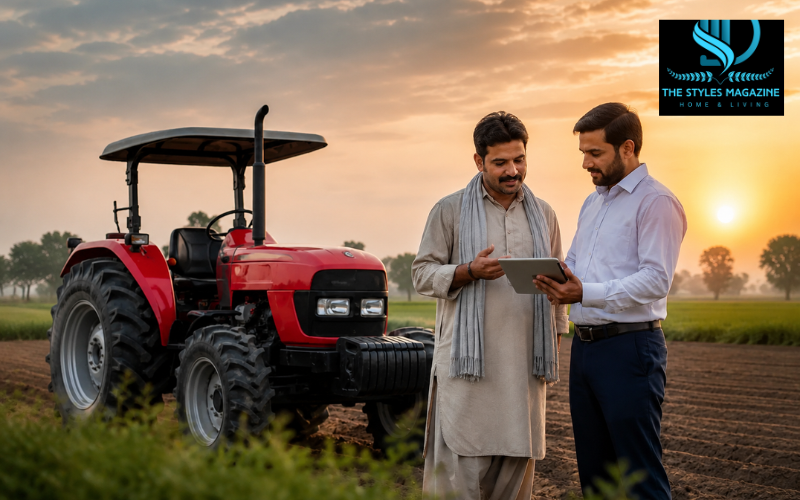
Agriculture has always been the backbone of civilization, but the tools that power it have evolved dramatically over the past century. Today, the tractor stands as the single most transformative piece of equipment in modern farming — a machine that has redefined what one person, one farm, and one season can accomplish. As the industry continues to advance, the relationship between farmers and their equipment dealers has become just as critical as the machinery itself. Understanding the types of tractors available, their applications, and where to source them responsibly is essential knowledge for any serious agricultural operation.
The Expanding Universe of Tractor Types and Their Applications
Not all tractors are created equal, and choosing the wrong machine for a specific task can cost a farm significant time and money. The modern agricultural market offers a wide spectrum of tractor categories, each engineered for distinct environments and workloads. Utility tractors, for instance, are among the most versatile options available, suitable for general-purpose tasks like mowing, tilling, and hauling. They typically fall in the 45 to 140 horsepower range, making them a practical choice for mid-sized farms.
Row crop tractors, on the other hand, are specifically designed with narrow profiles and high ground clearance to navigate between planted rows without damaging crops. These machines are indispensable for corn, soybean, and cotton operations. At the larger end of the spectrum, articulated four-wheel-drive tractors deliver immense pulling power for large-scale tillage and planting across expansive acreage. For those managing orchards, vineyards, or compact plots, compact and sub-compact tractors offer maneuverability without sacrificing capability. According to a comprehensive overview of different types of tractors, their applications, and benefits, matching the right machine to the right task is the single most important decision a farmer can make when investing in equipment.
Technology Driving the Next Generation of Farm Equipment
The tractor of today bears little resemblance to the iron workhorses of the mid-twentieth century. GPS-guided precision agriculture has transformed how farmers plant, fertilize, and harvest. Modern tractors are equipped with telematics systems that monitor engine health, fuel consumption, and operational efficiency in real time. Auto-steer technology reduces operator fatigue during long planting seasons while simultaneously improving row accuracy to within centimeters.
Precision Agriculture and Data Integration
Precision agriculture platforms now allow tractors to communicate directly with farm management software, creating a seamless loop of data that informs every decision from seed placement to harvest timing. Variable rate technology enables machines to apply inputs — whether fertilizer, herbicide, or seed — at rates that vary across a field based on soil sampling data. This not only reduces waste but also maximizes yield potential in every square foot of productive land. The integration of artificial intelligence and machine learning into tractor systems is no longer a distant concept; it is actively being deployed across commercial farming operations worldwide.
Sustainable Power and Alternative Fuels
Sustainability has become a central concern in agricultural equipment design. Manufacturers are investing heavily in hybrid and fully electric tractor prototypes, while biodiesel compatibility has become a standard feature in many diesel-powered models. The push toward cleaner energy in farming aligns with broader environmental goals, including reducing carbon emissions from one of the world’s largest industrial sectors. Interestingly, the intersection of agriculture and renewable energy extends beyond the field itself — innovations like self-cleaning street lights powered by palm oil illustrate how agricultural byproducts are being repurposed to fuel sustainable infrastructure, a concept that resonates deeply with the farming community’s growing environmental consciousness.
The Role of Equipment Dealers in Modern Farming Success
Owning the right tractor is only half the equation. The dealer relationship — built on trust, expertise, and after-sale support — determines whether a machine performs at its peak for years or becomes a costly liability. A knowledgeable dealer does far more than process a sale. They assess a farm’s specific operational needs, recommend appropriate horsepower and attachment configurations, and provide ongoing maintenance support that keeps equipment running through the most demanding seasons.
Parts availability and service response time are equally critical. When a tractor breaks down during planting or harvest, every hour of downtime translates directly into lost yield and revenue. This is why farmers increasingly prioritize dealers with robust service departments, certified technicians, and comprehensive parts inventories over those offering simply the lowest sticker price.
H&R Agri-Power: A Trusted Name in Agricultural Equipment
For farmers across the mid-South and surrounding regions, H&R Agri-Power has established itself as one of the most respected agricultural equipment dealerships in the country. With multiple locations spanning Kentucky, Tennessee, and beyond, the company offers an extensive inventory of new and pre-owned tractors, combines, hay equipment, and precision agriculture technology. Their team of experienced agronomists and equipment specialists works directly with farmers to identify solutions that align with both operational goals and budget realities, ensuring every purchase delivers long-term value rather than short-term convenience.
Service, Support, and Community Commitment
What distinguishes H&R Agri-Power from competitors is not merely the breadth of their inventory but the depth of their commitment to the farming communities they serve. Their service departments are staffed by factory-trained technicians capable of diagnosing and resolving complex mechanical issues quickly. Seasonal maintenance programs, extended warranty options, and flexible financing solutions further reduce the burden on farm operators who must manage tight margins and unpredictable weather cycles. The dealership’s reputation has been built over decades of consistent, honest service — a foundation that continues to attract new customers while retaining loyal ones across generations of farming families.
Choosing the Right Equipment Partner for Long-Term Growth
The decision to invest in agricultural equipment is never trivial. A tractor purchase represents a significant capital commitment that will influence a farm’s productivity for a decade or more. Farmers must evaluate not only the specifications of the machine itself but also the reliability of the dealer, the availability of parts and service, and the long-term trajectory of the manufacturer’s technology roadmap.
As farming operations grow more complex and data-driven, the value of a trusted equipment partner becomes increasingly apparent. Dealers who invest in their own technical training, who maintain strong manufacturer relationships, and who genuinely understand the rhythms of agricultural life are the ones best positioned to support farmers through both prosperous seasons and challenging ones.
Conclusion: Agriculture’s Future Is Built on the Right Foundations
Modern agriculture sits at a remarkable intersection of tradition and technology. The tractor remains the cornerstone of farm productivity, but its capabilities have expanded far beyond what earlier generations could have imagined. Selecting the right type of machine, embracing precision agriculture tools, and partnering with a dealer who offers genuine expertise and reliable support are the pillars upon which successful farming operations are built. Whether managing a family farm or overseeing a large commercial operation, the choices made around equipment and dealership relationships will define productivity, profitability, and sustainability for years to come.
Enjoyed it? Find more exclusive content on The Styles Magazine.