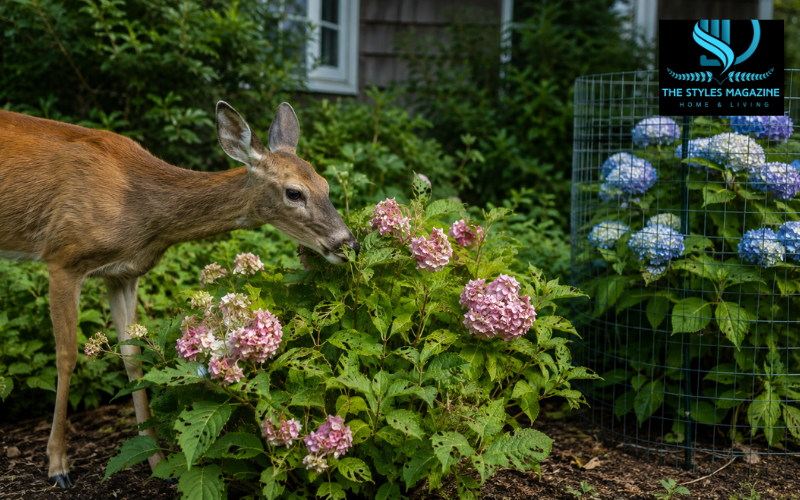
Yes, deer do eat hydrangeas. They comshoots, flower buds, and open blooms. A hungry deer can remove much of a plant’s fresh growth in a single night, sometimes leaving behind bare stems and very few flowers.
Hydrangeas should therefore be treated as vulnerable plants rather than truly deer-resistant shrubs. Rutgers University rates several popular types—including bigleaf, climbing, oakleaf, panicle, and smooth hydrangeas—as plants that may occasionally suffer severe deer damage. The exact level of damage depends on the local deer population, available food, weather, and the plant’s location. wsing does not always kill an established hydrangea. However, it can ruin the flowering display for an entire season, especially when deer remove buds from varieties that bloom on older stems. Understanding when deer are most active, which hydrangeas are at greater risk, and how to recognize browsing can help you protect your shrubs before serious damage occurs.
Quick Guide: Deer Damage to Hydrangeas
| Hydrangea type | Deer risk | Blooming habit | Possible result of damage |
| Bigleaf hydrangea | High | Mostly old wood | Lost buds may mean no flowers that season |
| Oakleaf hydrangea | High | Old wood | Browsing can remove developing flower buds |
| Panicle hydrangea | Moderate to high | New wood | May recover after early damage |
| Smooth hydrangea | Moderate to high | New wood | Can regrow, but repeated browsing reduces blooms |
| Mountain hydrangea | Moderate | Old and sometimes new wood | Textured leaves may be less appealing, but not deer-proof |
| Limelight hydrangea | Moderate to high | New wood | Deer can eat shoots, leaves, and developing flower clusters |
Why Hydrangeas Attract Hungry Deer
Hydrangeas produce the type of growth deer often find appealing. Fresh leaves are soft and full of moisture, while young stems are easier to bite than hard, woody branches. Developing flower buds can also provide an attractive food source during spring and early summer.
A deer’s food choices are not always predictable. A hydrangea that remains untouched one year may be heavily damaged the next. Deer are more likely to test garden plants when natural food becomes limited, when their population is high, or when cold weather and deep snow make other plants difficult to reach. University of Minnesota Extension notes that stressful environmental conditions can increase deer damage and that deer often return to places where they have successfully fed before. cation matters as well. Hydrangeas growing beside woods, quiet property lines, or regular deer paths are often more exposed than shrubs planted close to a busy doorway or outdoor seating area. Even hydrangeas described as less preferred may be eaten when deer are hungry enough.
Signs Deer Have Been Eating Your Hydrangeas
Deer browsing usually leaves rough, torn damage rather than neat cuts. Deer lack upper front teeth, so they pull and tear vegetation instead of cutting it cleanly. Leaves may look shredded around the edges, and damaged stems often have jagged ends. notice that whole flower heads have disappeared or that new shoots have been stripped from the upper and outer parts of the shrub. In severe cases, the plant may appear normal one evening and nearly bare the following morning.
Small insect holes usually look very different. Insects may create scattered holes, skeletonized areas, spots, or narrow feeding trails without removing entire shoots. Pruning cuts are also smooth and normally appear in planned locations, while deer damage is uneven and random.
Other clues include hoofprints in soft soil, deer droppings near the plant, flattened vegetation, or damage to nearby shrubs at a similar height. Sudden overnight loss of large leaf sections is another strong sign of animal feeding. eer Damage Affects Hydrangea Growth and Flowers
Light browsing may only remove a few leaves or stem tips. A healthy, established hydrangea can often replace this growth, especially if its roots are strong and it receives suitable water and light.
Complete defoliation is more serious. When most leaves are removed, the plant loses part of its ability to produce energy. It must use stored resources to grow replacement foliage, which can slow its development and reduce flowering. Repeated browsing may weaken the shrub over time.
The loss of flower buds is often the most noticeable result. A hydrangea may remain alive and eventually produce new leaves, yet fail to bloom because the buds were eaten. University of Maryland Extension warns that hungry deer may eat tender hydrangea foliage and flower buds throughout the year when plants are not protected. drangeas are especially vulnerable because they have fewer established stems and smaller root systems. Regular browsing can prevent them from reaching a mature size. Older shrubs generally recover more successfully, although repeated severe damage can still reduce their strength and appearance.
Hydrangea Types Most Vulnerable to Deer
Deer can eat all commonly grown hydrangea types, but the effect of browsing may differ according to the plant’s leaves, flower buds, and blooming pattern.
Bigleaf hydrangeas, or Hydrangea macrophylla, are at particular risk when deer remove their older stems. Many traditional bigleaf varieties form flower buds on old wood, meaning stems produced during a previous growing season. Losing those buds may leave the shrub without flowers that year.
Oakleaf hydrangeas also bloom mainly on old wood. Their large leaves and early growth may be attractive to deer in spring. Although established plants can survive browsing, the loss of older stem tips can remove developing flowers.
Smooth hydrangeas generally bloom on new wood. They may still lose leaves, stems, and flower buds to deer, but a plant browsed early in the season sometimes has enough time to produce replacement growth.
Mountain hydrangeas have smaller leaves than many bigleaf varieties, and some have a slightly more textured surface. They may receive less attention in certain gardens, but they should not be treated as deer-proof.
Panicle hydrangeas produce flowers on new growth and are known for their cone-shaped flower clusters. They can recover from some early damage, but deer may continue eating the replacement shoots and developing blooms. Rutgers places bigleaf, oakleaf, smooth, climbing, and panicle hydrangeas in the same “occasionally severely damaged” category, showing that none should be planted without protection in a high-pressure area. er Eat Hydrangea Paniculata and Limelight Hydrangeas?
Deer do eat Hydrangea paniculata. They may browse its tender leaves, young branch tips, and developing flower clusters. North Carolina State University’s Plant Toolbox specifically notes that panicle hydrangeas may be damaged by deer. t is not a separate hydrangea species. It is a popular cultivar of Hydrangea paniculata, valued for its large, cone-shaped flowers that begin with a greenish color and change as they mature. Limelight hydrangeas are also susceptible to deer damage. Limelight and other panicle hydrangeas flower on new wood, they may still bloom after minor browsing early in the growing season. However, recovery is not guaranteed. If deer return repeatedly or remove shoots after flower buds have started forming, flowering may be delayed or greatly reduced.
New-wood flowering makes panicle hydrangeas more forgiving than some old-wood types, but it does not make them deer-resistant. Protecting the first flush of spring growth is important because those stems will eventually carry the season’s flowers.
What Hydrangeas Do Deer Not Eat?
There is no hydrangea that deer will never eat. Plant resistance ratings describe general feeding preferences, not a promise that a shrub will remain untouched. Rutgers emphasizes that no plant is completely deer-proof and that results vary with local deer numbers and weather conditions. hydrangea is sometimes described as less attractive because its foliage has a thicker or more textured feel than the smooth, tender leaves of other types. Even so, it may still be sampled, particularly where deer regularly enter gardens.
Some gardeners also report less damage on certain climbing hydrangeas because much of their mature growth can rise above normal browsing height. This does not protect the lower stems and leaves, however. Rutgers rates climbing hydrangea as occasionally severely damaged, so it should not be considered a reliable solution for deer-heavy landscapes. perience is often more useful than a general label. Ask nearby gardeners, nurseries, or a regional extension service which plants deer usually avoid in your area. A hydrangea that receives little damage in one neighborhood may be a regular target somewhere else.
Do Deer Eat Hydrangeas in the Fall?
Deer may continue eating hydrangeas in the fall. They can browse remaining leaves, soft stem tips, late flowers, and exposed buds. Panicle hydrangeas may still carry flowers during late summer and fall, while other types may hold leaves until cooler weather causes them to drop.
Browsing pressure can increase as wild plants decline and natural food becomes less available. Deer that discover an unprotected hydrangea may also return to it during winter or the following spring.
Fall is a good time to prepare physical protection. Place a wire cage around individual shrubs before heavy browsing begins, making sure it is far enough from the branches that deer cannot reach through the openings. Check netting for loose sections that could trap wildlife, and repair any gaps in perimeter fencing.
Continue following product directions when using repellents. Some products need to be reapplied after heavy rain or after the plant produces unprotected growth. Do not wait until the leaves have been completely removed before beginning protection.
Do Deer Eat Hydrangeas in Winter?
Hydrangeas lose their leaves during winter in colder climates, but this does not mean deer will ignore them. Deer may eat twigs, branch tips, exposed flower buds, and occasionally bark when preferred food is limited. Winter shortages can force deer and rodents to feed on parts of trees and shrubs they may avoid during warmer months. rowsing can be especially harmful to hydrangeas that bloom on old wood. Buds formed during the previous season may be sitting on the stems throughout winter. When deer remove the stem tips, they may also remove the following year’s flowers.
Snow can change the height at which damage occurs. Deep snow raises deer above ground level, allowing them to reach branches that are normally too high. Protective cages should therefore be tall enough for the expected winter conditions.
Wire enclosures, sturdy shrub guards, and properly secured netting can reduce damage. Avoid wrapping netting tightly against the branches, because deer may still bite foliage or buds through it. A barrier works best when it creates space between the animal and the plant.
Old-Wood vs New-Wood Hydrangeas After Deer Damage
Knowing whether a hydrangea blooms on old or new wood can help you estimate its chances of flowering after deer damage.
Old wood refers to stems that grew during a previous season. Traditional bigleaf hydrangeas and oakleaf hydrangeas commonly form flower buds on these older stems. If deer eat the bud-bearing tips during fall, winter, or early spring, the shrub may produce healthy leaves but few or no flowers.
New wood refers to growth produced during the current season. Panicle hydrangeas, including Limelight, and smooth hydrangeas generally flower on new wood. These types may replace shoots lost during winter or very early spring and still form flowers later. Penn State Extension confirms that panicle hydrangeas flower on new wood, while oakleaf hydrangeas flower on old wood. ern bigleaf hydrangeas can bloom on both old and new wood. These reblooming varieties may have a better chance of producing later flowers after early buds are lost. Even so, severe or repeated browsing can remove the new flowering shoots as well.
Avoid immediately cutting a damaged plant to the ground unless that pruning method is suitable for its type. First identify the hydrangea and check whether the remaining stems contain live buds.
Physical Barriers That Protect Hydrangeas
Physical barriers provide the most dependable protection because they prevent deer from reaching the plant. For a large property or garden, a well-built perimeter fence can protect many shrubs at once. University of Minnesota Extension recommends an eight-foot fence to prevent deer from jumping over it. al wire cages are often more practical when only a few hydrangeas need protection. Use strong mesh and place it far enough from the outer branches to stop deer from reaching through. Secure the cage to the ground so it cannot be pushed aside.
Lightweight netting can provide temporary protection, but it must be installed carefully. Loose or poorly visible netting can catch on animals, garden tools, or people. Keep it tight, inspect it regularly, and remove or adjust it as the shrub grows.
Small protective enclosures may work well around a garden bed. In limited spaces, even shorter barriers can sometimes discourage deer because they do not have enough room to land safely. However, a standard tall fence is more dependable where deer pressure is heavy.
Visibility also matters. Dark mesh often blends into the landscape better than bright metal fencing. Whatever material you select, leave enough space for air circulation and normal plant growth.
Repellents, Companion Plants, and Motion Deterrents
Deer repellents work by giving plants an unpleasant smell or taste. They may reduce browsing, but they do not create a permanent barrier. Apply them to fresh growth before serious damage begins, and always follow the label instructions. Some products must be reapplied after heavy rain or as new leaves emerge.
Changing repellents occasionally may help prevent deer from becoming used to one smell. University of Minnesota Extension also recommends using repellents as part of a wider plan rather than treating them as the only defense. ctivated sprinklers can startle approaching deer with a sudden spray of water. They are humane and can work well near garden entrances or known deer paths. Motion lights and noise devices may also help, although deer sometimes learn to ignore a deterrent that never changes.
Fragrant or textured plants such as lavender, sage, ornamental alliums, and some aromatic herbs may make a planting area less inviting. However, companion planting does not form a protective wall. Deer can step around these plants to reach a hydrangea.
The strongest approach combines several methods. A cage or fence can provide direct protection, while repellent and a motion sprinkler discourage deer from returning to the area.
Deer, Rabbits, and Azaleas: Identifying the Real Culprit
Rabbits can eat hydrangeas, especially young plants and low branches, but their damage normally appears closer to the ground. Rabbits have sharp front teeth and may leave smoother, angled cuts on smaller stems. Deer usually tear vegetation, producing rough ends, and can browse much higher. make the feeding height less obvious because rabbits can stand on the snow’s surface. Look for small round droppings, tracks, and bark damage near the lower stems. Deer leave larger tracks and may remove leaves or branches across the upper part of the shrub.
Deer also eat azaleas. North Carolina State University describes azaleas as plants that are frequently damaged by deer. If both your hydrangeas and nearby azaleas have suddenly developed ragged, missing growth, deer are a likely cause. ing the animal matters because protection must match the threat. A low wire fence may stop rabbits but remain easy for deer to step over. A taller enclosure or wider protective zone is usually needed for deer.
Conclusion: Keeping Hydrangeas Healthy and Blooming
So, do deer eat hydrangeas? Yes. Deer can browse the leaves, tender stems, buds, and flowers of nearly every commonly grown hydrangea type. No variety can be considered completely dependable in an area with heavy deer activity.
Damage is especially disappointing on bigleaf and oakleaf hydrangeas because they often carry flower buds on old wood. Panicle and smooth hydrangeas may recover more easily from early browsing because they bloom on new growth, but repeated feeding can still prevent them from flowering.
The best time to act is before deer establish a feeding habit. Protect spring growth as it appears, prepare cages or fencing before fall and winter shortages, and inspect plants regularly for torn leaves, missing buds, tracks, and droppings.
For dependable results, combine a physical barrier with correctly applied repellent and a changing motion deterrent. The right plan will depend on your hydrangea type, the season, and the level of deer pressure in your neighborhood. Early, consistent protection gives your shrubs the best chance to remain healthy and produce a full display of flowers.
Frequently Asked Questions
Do Deer Eat Hydrangeas At Night?
Yes, deer often visit gardens from dusk through early morning. Sudden overnight loss of leaves, shoots, or flower heads, along with hoofprints or droppings, usually suggests deer activity.
Will Hydrangeas Grow Back After Deer Eat Them?
Healthy, established hydrangeas can usually produce replacement leaves and shoots. However, they may not bloom that season if deer remove flower buds, especially from varieties that flower on old wood.
Do Deer Eat Limelight Hydrangeas?
Yes, deer can eat Limelight hydrangeas. Limelight is a panicle hydrangea that blooms on new growth, so it may recover from early browsing, but repeated damage can reduce flowering.
Do Deer Eat Hydrangeas In Winter?
Deer may browse hydrangea twigs, stem tips, bark, and exposed buds during winter when other food is limited. Winter damage can remove the following season’s flowers from old-wood varieties.
What Is The Best Way To Protect Hydrangeas From Deer?
A strong wire cage or tall deer fence offers the most reliable protection. Repellent sprays and motion-activated sprinklers can provide additional help when used consistently with a physical barrier.
Enjoyed it? Find more exclusive content on The Styles Magazine.
Disclaimer: This article provides general gardening information. Deer behavior and plant damage vary by region, season, weather, and food availability. Always follow product labels when using repellents or protective materials.