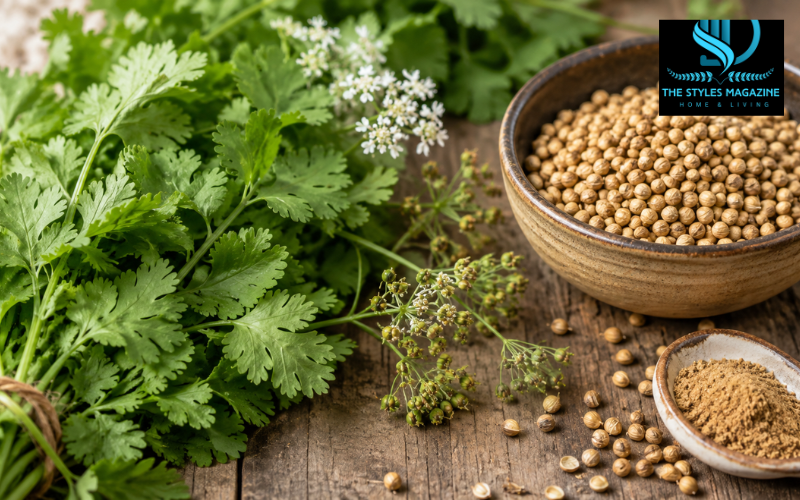
The coriander vs cilantro difference is easier to understand than it first appears. Both ingredients come from the same annual herb, Coriandrum sativum. In North American cooking, “cilantro” normally means the plant’s fresh green leaves and tender stems, while “coriander” usually means the dried fruits commonly sold as seeds or ground spice. In British English and many other regions, the leaves are called coriander, and the spice is labeled coriander seed.
Although they share one plant, they do not taste or behave alike. Cilantro is fresh, bright, citrus-like, and sometimes strongly pungent. Coriander seed is warmer, nuttier, earthier, and slightly sweet. The leaves are commonly added raw or near the end of cooking, while the seeds can be toasted, ground, or cooked for longer periods.
This guide explains the naming confusion, appearance, flavor, uses, nutrition, substitutions, relationship to parsley, and proper storage of both ingredients. By the end, you should be able to read an international recipe and know which form of the plant it requires.
Coriander vs Cilantro at a Glance
| Feature | Cilantro | Coriander |
| Plant part | Fresh leaves and tender stems | Dried fruits commonly called seeds |
| Appearance | Soft, green, lobed leaves | Small, round, tan pieces |
| Flavor | Bright, grassy, citrusy, and pungent | Warm, earthy, nutty, floral, and mildly sweet |
| Aroma | Fresh and sharp; soapy to some people | Fragrant, warm, and lightly citrus-like |
| Texture | Soft leaves with crisp stems | Firm whole; fine and dry when ground |
| Common uses | Salsa, chutney, tacos, salads, soups, and curries | Curries, spice blends, stews, pickles, and baking |
| When to add | Usually near the end or after cooking | Usually earlier in cooking |
| Direct substitute? | No | No |
The key difference is that one acts as a fresh herb and the other as a dried spice. Replacing one with the other usually changes the intended taste, aroma, and texture of a dish.
How to Choose the Right Ingredient
- Choose cilantro when a recipe needs a fresh, bright, herbal finish.
- Choose coriander seeds when a dish needs a warm and lightly citrusy spice.
- Use ground coriander when you want the flavor to spread evenly through a sauce or curry.
- Check the recipe’s country of origin because “coriander” may refer to fresh leaves outside North America.
- Do not substitute the leaves and seeds directly, as their flavors are very different.
One Plant, Two Very Different Ingredients
Coriandrum sativum is an accepted species in the Apiaceae family, which also includes parsley, carrots, and celery. It is an annual plant, so it completes its life cycle in one growing season. It first produces leafy growth, followed by taller flowering stems, small flowers, and finally round fruits that dry and are collected for cooking.
The young leaves and soft stems are used as cilantro or fresh coriander. The flowers are also edible, although they are less common in everyday meals. Once the fruits mature and dry, they become what grocery stores and recipes call coriander seeds.
Botanically, “coriander seed” is not a perfectly exact term because the round piece is a dry fruit containing the actual seed. In normal cooking, however, “seed” is the accepted and useful term. A Pakistani university plant profile also describes the harvested material as dried fruit.
Why the Names Change Around the World
The naming difference is regional rather than botanical. In the United States and much of Canada, cilantro means the fresh leaves and stems, while coriander normally means the dried seed or powder. Cambridge defines cilantro in American usage as the leaves of the coriander plant.
In the UK, Ireland, much of Europe, Australia, and several other regions, “coriander” can mean the whole plant or its fresh leaves. Recipes usually write “coriander seeds” when they mean the dried spice. Therefore, a British recipe asking for “fresh coriander” wants what an American grocery store would label cilantro.
South Asian recipes often use “dhania” or a local variation of the word. Depending on the context, it may mean the plant, its leaves, or its seeds. Oxford notes that “dhania” in Indian English can refer to either the leaves or seeds used in cooking. Clear recipes may say fresh dhania, dhania leaves, coriander powder, or whole coriander seeds.
Look at the amount and preparation for clues. A bunch, handful, or chopped garnish normally means fresh leaves. A teaspoon of powder or small round pieces means coriander spice.
Coriander vs Cilantro Taste and Aroma
The coriander vs cilantro taste difference is large enough to surprise many cooks. Fresh cilantro has a lively green flavor that may seem citrusy, grassy, peppery, or sharply herbal. Heat reduces its fresh character, which is why it is often added shortly before serving.
Whole coriander seeds have a warmer and rounder taste with earthy, nutty, floral, and gentle citrus notes. Crushing the seeds releases more aroma. Light toasting can make the flavor deeper and warmer, but overheating may cause bitterness.
Ground coriander offers the same general character in a form that mixes easily into sauces, curries, doughs, and spice rubs. Because more of its surface is exposed, it releases flavor quickly but also loses its aroma faster during storage. Whole seeds generally remain fragrant longer.
The leaves and seeds taste different because their main aroma compounds occur in different balances. Research links aldehydes with cilantro’s distinctive smell, while linalool is a major aroma component associated with coriander seed.
Cooking with Fresh Cilantro Leaves and Stems
Fresh cilantro appears in Mexican, Latin American, South Asian, Middle Eastern, Chinese, and Southeast Asian cooking. It adds freshness to salsa, guacamole, chutney, tacos, salads, noodle bowls, rice, soups, lentils, and curries.
For a strong fresh flavor, add chopped cilantro during the final minutes of cooking or immediately before serving. Hot processing can reduce its aroma, as university guidance for preparing salsa also notes. Some recipes cook cilantro for longer, especially when it is blended into a sauce, but the finished flavor will be softer and less bright.
The tender stems are edible and flavorful. Chop them finely for chutneys, sauces, soups, marinades, and curry bases instead of throwing them away. Thicker lower stems may be more fibrous, so mince them well or use them in blended dishes.
Cilantro is especially important in foods such as pico de gallo, green chutney, taco fillings, broth-based noodle soups, and many rice dishes, where its aroma provides the final fresh lift.
Cooking with Whole and Ground Coriander Spice
Coriander spice is used in curries, spice blends, marinades, rubs, stews, sausages, pickles, breads, and cakes. Its mild warmth pairs well with cumin, fennel, chili, turmeric, cinnamon, cardamom, and black pepper.
Whole seeds are useful when a recipe needs texture, slower flavor release, or freshly ground spice. Lightly toast them in a dry pan until fragrant, then allow them to cool before crushing or grinding. Watch them closely because scorched seeds can develop an unpleasant bitter taste.
Ground coriander is convenient and blends smoothly into liquids and dry seasonings. It is often added early enough to spread throughout the dish. In curries, it may be stirred briefly into warm oil with other spices, a method commonly known as blooming. The oil should not be so hot that the powder burns.
Buy an amount you can use while it remains aromatic. If ground coriander has almost no scent when rubbed between your fingers, it will contribute very little flavor. Whole seeds generally keep their aroma longer than ground coriander because less of their surface is exposed to air.
Can Coriander and Cilantro Replace Each Other?
Cilantro and coriander are not direct substitutes. Ground coriander cannot supply the soft green texture and bright finish of fresh leaves. Cilantro cannot provide the warm, dry spice flavor expected from coriander seed.
When cilantro is unavailable, flat-leaf parsley can provide a similar appearance but a milder taste. Parsley mixed with a little lime or lemon juice may work as a garnish, although it will not duplicate cilantro’s aroma. Mint, Thai basil, or culantro may suit particular dishes, but each has its own strong flavor.
When coriander seed or powder is missing, cumin can add earthiness, while fennel or caraway can provide warm aromatic notes. A small blend of cumin and fennel may be closer than either spice alone, but it remains an approximation. Use these stronger spices carefully so they do not dominate the dish.
Choose the substitute according to the ingredient’s purpose: use a fresh herb when the recipe needs brightness and a dry spice when it needs warmth. Parsley may work when appearance matters more than exact flavor, but it is not a true replacement for cilantro.
Coriander vs Cilantro vs Parsley
The coriander vs cilantro vs parsley comparison can be confusing because cilantro and flat-leaf parsley sometimes look alike. Cilantro usually has softer, more rounded lobes and a lighter appearance. Flat-leaf parsley is often darker green with sharper, more pointed edges. Curly parsley is easier to recognize because of its tightly curled, frilly leaves.
Smell is usually the quickest test. Rub or tear one leaf between your fingers. Cilantro gives off a strong citrusy, pungent aroma that some people describe as soapy. Parsley smells milder, greener, and more grassy. Cilantro also tends to feel softer, while mature parsley can feel slightly firmer.
Coriander and parsley belong to the same plant family, but they are separate species. Parsley is mainly sold as a fresh herb. Coriander may mean fresh leaves or dried spice depending on the country. In a grocery store, “fresh coriander” may mean cilantro, while “coriander” in the spice aisle nearly always means seed or powder.
Parsley can replace cilantro when color matters more than flavor, but it is not an equal swap when the herb is central to the dish.
Coriander vs Cilantro Benefits and Calories
Fresh cilantro and dried coriander seed have different nutritional profiles because one is a water-rich leaf and the other is a concentrated dry spice. USDA-linked data list raw cilantro at about 23 calories per 100 grams. A cup is much lighter than 100 grams and provides roughly 4 calories. Coriander seed contains about 298 calories per 100 grams, but a typical teaspoon provides only around 5 calories.
Fresh cilantro provides vitamin K and smaller amounts of vitamin A-related compounds, vitamin C, folate, potassium, and other nutrients. Because it is often eaten as a small garnish, its total nutritional contribution to a meal may be modest.
Coriander seeds contain fiber, plant oils, protein, and minerals such as iron, magnesium, calcium, and manganese. Serving size remains important. Nutrition tables based on 100 grams can make a spice look like a major nutrient source, although most people use only a teaspoon or two. One teaspoon provides about 0.8 gram of fiber in USDA-linked data.
Both forms contain plant compounds that have been studied for antioxidant and other biological activity. However, findings from laboratory research or concentrated extracts do not prove that normal culinary amounts can prevent or treat disease. Cilantro and coriander are best viewed as flavorful ingredients that contribute dietary variety, not as medical treatments.
Why Cilantro Tastes Like Soap to Some People
The soapy reaction is real, but it is not caused by added soap, farm chemicals, or poor washing. Cilantro naturally contains aldehydes, which are a group of aroma compounds. Some similar compounds appear in scented products, helping to explain why certain people make the connection with soap.
Genetics can influence how strongly someone detects these aromas. A large genome-wide study found a variant near a group of smell-receptor genes associated with reporting a soapy cilantro taste. OR6A2 was identified as a strong candidate because it responds to several cilantro-related aldehydes.
However, common genetic variants explained only a small part of the trait. There is no single gene that completely decides whether someone will like cilantro. Familiarity, culture, repeated exposure, and personal experience may also shape food preferences.
Coriander vs cilantro Reddit discussions sometimes present the issue as a simple love-it-or-hate-it gene. The scientific evidence is more nuanced: genes can influence perception, but they do not fully determine personal preference.
Using less cilantro, chopping it finely, or mixing it with lime, yogurt, avocado, or another rich ingredient may soften the flavor. These approaches are worth trying, but they cannot guarantee that the soapy note will disappear.
Buying, Preparing, and Storing Both Ingredients
Choose cilantro with bright green leaves and firm stems. Avoid bunches with widespread yellowing, dark wet patches, heavy wilting, slime, or a sour smell.
Wash cilantro under cool running water to remove soil, then dry it well. For refrigerator storage, trim the stem ends and place them in a jar with a small amount of water. Cover the leaves loosely and change the water when it becomes cloudy. Another option is to wrap the dry herb in a slightly damp paper towel and place it inside a container. University of California guidance also recommends keeping cut cilantro stems in water in the refrigerator.
Cilantro can be frozen, but it will not remain crisp after thawing. Freeze chopped herb in a sealed container or in an ice-cube tray with water or oil. Use the frozen herb in sauces, soups, curries, and other cooked dishes rather than as a fresh garnish. Frozen herbs generally become limp because ice crystals damage their cell structure.
Keep whole and ground coriander in tightly closed containers away from heat, sunlight, steam, and moisture. A cool, dry cupboard is better than a shelf directly above the stove. Whole seeds usually hold their aroma longer than ground powder. Judge quality by smell: fragrant coriander is still useful, while dull powder will add little to a recipe.
Conclusion: Choosing the Right Ingredient for Your Recipe
The coriander vs cilantro difference comes down to plant part, regional language, and culinary purpose. Both come from Coriandrum sativum, but fresh leaves and dried fruits produce very different results. North American recipes usually call the leaves cilantro and the spice coriander. British and many international recipes call the leaves coriander and specify coriander seeds when they mean the spice.
Choose cilantro or fresh coriander when a dish needs a bright, green, citrus-like finish. Choose whole or ground coriander when it needs warm, earthy, and lightly sweet spice. They are not interchangeable simply because they come from the same plant.
Check the recipe’s form, amount, and timing. A chopped handful added at the end normally means leaves. A teaspoon that is toasted, ground, or cooked with other spices means coriander seed. Once that distinction is clear, choosing the right ingredient becomes simple.
Frequently Asked Questions
Are Coriander And Cilantro The Same Thing?
Coriander and cilantro come from the same plant. However, in North America, cilantro refers to the fresh leaves and stems, while coriander normally means the dried seeds or ground spice.
Does Coriander Taste The Same As Cilantro?
No. Cilantro tastes fresh, grassy, citrusy, and sometimes soapy. Coriander seeds have a warmer, earthier, nuttier, and slightly sweet flavor that works well in cooked dishes and spice blends.
Can I Use Coriander Instead Of Cilantro?
Coriander seeds or powder cannot directly replace fresh cilantro. Use parsley, mint, or another suitable fresh herb when cilantro is unavailable, depending on the flavor and style of the dish.
Is Cilantro The Same As Parsley?
No. Cilantro has softer, rounded leaves and a stronger citrusy aroma. Parsley usually has sharper leaf edges and a milder, grassy flavor, although the two herbs can look similar.
Why Does Cilantro Taste Like Soap?
Cilantro contains natural aroma compounds called aldehydes. Genetic differences may make some people more sensitive to these compounds, causing them to notice a strong soapy or unpleasant flavor.
Enjoyed it? Find more exclusive content on The Styles Magazine.
Disclaimer: This article provides general culinary and nutritional information. It is not medical advice and should not be used to diagnose, treat, or prevent any health condition.