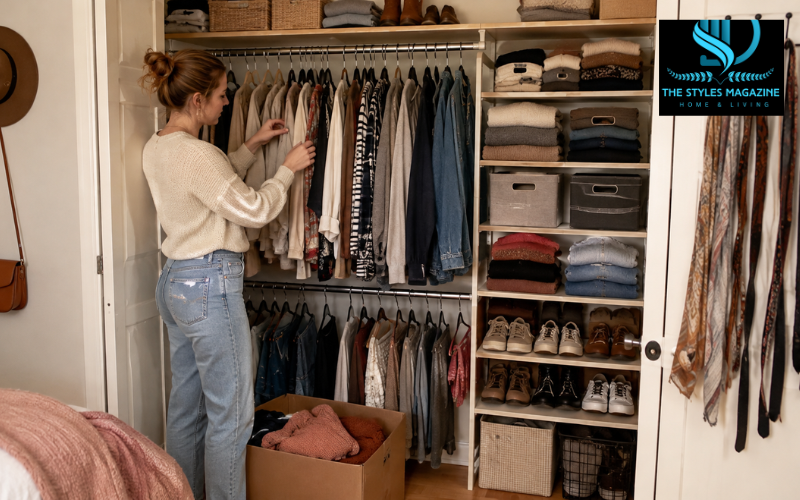
The best way to organize a closet on a budget is to start with what you already have. Before buying bins, shelves, or a full closet system, remove clutter and decide what truly deserves space. This simple step can save money because you are not paying to store clothes, shoes, or accessories you no longer use.
A good budget closet makeover is more about smart use of space than expensive products. You can often create a noticeable improvement by grouping similar items, adding a second hanging level, using vertical space, folding clothes more efficiently, and repurposing boxes or baskets already in your home. The goal is to make the closet easier to use every day, not simply prettier.
This guide covers practical ideas for hanging clothes, shoes, shelves, drawers, accessories, small bedrooms, DIY upgrades, and low-cost modular systems.
Quick Guide Table
| Closet Problem | Budget-Friendly Solution | Best For |
| Too many clothes | Declutter before organizing | Reducing overall clutter |
| Limited hanging space | Add a second rod | Shirts, skirts, short jackets |
| Messy shelves | Use dividers or small bins | Sweaters and folded clothes |
| Shoes covering the floor | Add a low or vertical shoe rack | Small closets |
| Loose accessories | Use hooks, rings, or small trays | Belts, scarves, jewelry |
| Unused upper space | Add stackable containers | Seasonal items |
| Small drawers | Try file folding | T-shirts and casual clothes |
Simple Step-by-Step Guide
- Empty the closet so you can see the entire space.
- Sort your belongings into keep, donate/sell, relocate, and discard groups.
- Clean the closet before putting anything back.
- Measure shelves, rods, walls, and floor space before buying organizers.
- Group similar items together, such as shirts, shoes, bags, and accessories.
- Use vertical space with extra rods, shelves, hooks, or stackable bins.
- Reuse boxes and baskets before spending money on new storage.
- Keep everyday items within easy reach and seasonal items higher up.
- Review the closet regularly so clutter does not build up again.
Declutter Before Spending Money on Organizers
Start by taking everything out of the closet. An empty closet makes it easier to see how much storage you actually have and what has been taking up unnecessary space. It also gives you a chance to check forgotten corners, crowded shelves, and items hidden behind other belongings.
Sort everything into four basic groups: keep, donate or sell, relocate, and discard. Keep items that fit, are in usable condition, and still serve a real purpose. Clothing that is damaged beyond repair can leave the closet, while items that belong elsewhere in the home should be moved to their proper place.
Look closely at duplicates and things you rarely wear. You do not have to remove something only because it has not been used recently, but it should have a clear reason for staying.
Before returning anything, wipe the shelves and rods and clean the floor. Once the closet holds fewer items, you may find that you need far fewer organizers than expected.
Measure the Closet and Set a Realistic Budget
After decluttering, measure the space before buying anything. Record the closet width, depth, floor-to-shelf height, available hanging length, door clearance, and any unused areas above or beside the main rod. If you plan to add drawers, shelves, or a shoe rack, check that doors and clothing will still move freely.
Next, take inventory of what you already own. A spare basket, small drawer unit, sturdy box, extra hooks, or unused shelf can sometimes solve a storage problem at no extra cost.
Set a simple spending limit and divide improvements into three groups: free changes, inexpensive DIY changes, and purchases that solve a real problem. For example, moving a shelf may cost nothing, while a second rod or a few hooks may be worth a small purchase.
Measure first and shop last. This prevents common budget mistakes such as buying containers that do not fit or purchasing a large system when only one problem area needs attention.
Create Simple Zones for Clothes and Everyday Essentials
A closet is easier to maintain when every type of item has a clear place. Group shirts with shirts, pants with pants, dresses with dresses, and keep sweaters, shoes, bags, belts, and other accessories in their own areas. This simple zoning method helps you find what you need without moving half the closet around.
Place the things you wear most often between about waist and eye level, where they are easiest to reach. Less-used items can go higher, lower, or toward the back. Seasonal clothing can be stored in clearly marked containers when it is not needed.
These wardrobe organization ideas do not require matching bins or expensive labels. A handwritten label on a reused box can work just as well. What matters is that the system is easy to understand.
Try to avoid creating too many tiny categories. A closet should support your daily routine, so use broad, practical zones that you can maintain even when you are in a hurry.
Double Hanging Space Without an Expensive Closet System
Many closets waste space below shirts, blouses, short jackets, and skirts. If most of your hanging clothes are short, adding a second rod below the existing one can greatly increase usable hanging space without installing a full closet system.
A fixed rod can work well when you own the home and want a permanent solution. A removable hanging bar or suitable tension-based option may be better for renters or anyone who does not want to drill. Always make sure the rod is designed to support the expected weight.
Cascading hangers can also help in a narrow closet by allowing several garments to hang vertically. They are most useful for lightweight clothing and should not be overloaded.
Do not double-hang the entire closet if you own long dresses, coats, or jumpsuits. Leave one full-height section for those pieces. The best layout depends on what you actually wear, so divide the hanging area according to your wardrobe rather than copying a standard design.
Maximize Vertical Space From Floor to Ceiling
When a closet feels small, look upward before looking for more furniture. The space above the main shelf is often useful for lightweight, seasonal, or rarely used items. Stackable containers can make tall shelf openings more practical, especially when large gaps would otherwise remain empty.
Unused wall areas can hold hooks for hats, bags, belts, or lightweight accessories. The back of the door may also work for a hanging organizer if it does not block the door, shelves, or clothing.
The floor can provide useful storage too. A low shoe rack, short stack of bins, or baskets can keep items contained while leaving hanging clothes clear.
Keep daily essentials within comfortable reach. High shelves are useful, but they should not become a place where frequently needed items disappear. If you need a step stool, use the upper area for things you access only occasionally.
Using height well is especially important in small closets because it increases storage without taking over more bedroom floor space.
Low-Cost Shelves, Bins, and DIY Storage Hacks
You do not need a matching set of containers to create an organized closet. Sturdy shoe boxes can become open bins for small items, while baskets from other rooms can be reused for scarves, sleepwear, or accessories. If you want a cleaner look, simple labels can make mismatched containers easier to use.
Shelf dividers are helpful when folded jeans, sweaters, or towels tend to fall into one another. You can also place small boxes inside drawers to create separate areas without buying a dedicated drawer organizer.
For accessories, plastic shower curtain rings can be clipped onto a strong hanger to hold lightweight scarves or belts. Small trays, pill organizers, or divided craft boxes may work for jewelry, depending on the size of the pieces.
Tension rods can sometimes create simple shoe or accessory storage in a suitable narrow space. Before trying any DIY idea, check that it is stable and will not damage the closet surface. The cheapest solution is only useful if it works safely.
Organize Shoes, Bags, Belts, Scarves, and Jewelry
Accessories often create clutter because they are small, irregular in shape, and easy to pile together. Give them simple storage based on how often you use them.
Keep everyday shoes near the floor or entrance of the closet where you can see them quickly. If floor space is limited, a narrow vertical shoe rack or stackable shoe storage can use height more effectively. Avoid stacking loose shoes in deep piles because pairs become difficult to find.
Bags are easier to maintain when they are upright on a shelf or hung from suitable hooks. Do not overload a single hook with heavy bags. Belts and scarves can hang from rings, hooks, or a multipurpose accessory hanger where they stay visible.
Jewelry works best in small divided spaces. Reused trays or small compartment boxes can prevent earrings and chains from becoming mixed together.
Before buying a special organizer for every accessory, test a simple multipurpose solution. One low-cost item that solves several storage problems can be better value than many single-purpose products.
Use Smart Folding to Save Drawer and Shelf Space
How you fold clothes can affect both space and visibility. Vertical, or file, folding works well for many T-shirts, casual tops, pajamas, and similar items. Instead of stacking one shirt on top of another, the folded pieces stand side by side so you can see more of them at once.
Keep similar clothing together inside each drawer or bin. Small boxes or drawer dividers can stop folded items from sliding into one another, but you can also reuse small cardboard boxes if they fit well.
Bulky knitwear usually stores better folded than hung. Hanging heavy sweaters for long periods can change their shape, so a shelf or drawer may be the better choice.
On the hanging side, turn hanger hooks in the same direction. This small habit gives the rail a cleaner look and makes clothes easier to move through.
The goal is not perfect folding. Choose a method that lets you see your clothing, put it away quickly, and keep the space manageable.
Bedroom Closet Designs for Small Spaces
Bedroom closet designs for small spaces should focus on function before decoration. A small reach-in closet may work best with two short hanging levels on one side, a narrow section for long clothes, shelves above, shoe storage below, and hooks wherever they do not block access.
The back of a door can provide useful space for shoes, accessories, or lightweight items, but only if the organizer allows the door to close properly. Renters can often use removable hooks, freestanding racks, or non-permanent hanging accessories instead of drilling.
When researching small closet makeover ideas, pictures and before-and-after examples can be useful for inspiration. However, copy the storage principle rather than the exact design. A layout that works for a wide closet may not work in a shallow one.
Measure your own space, identify the items causing the biggest problem, and build around those needs. A small closet can be very functional when every shelf, rod, and container has a clear purpose.
How to Build a Closet on a Budget Without a Full Remodel
If you are wondering how to build a closet on a budget, remember that you may not need to rebuild the whole space. If your current closet has only one rod and one shelf, a few basic upgrades may create most of the benefits of a custom installation.
Simple wall-mounted shelves, track shelving, extra rods, wood boards with suitable brackets, or modular components can add useful storage without rebuilding the entire closet.
Start with the area that creates the biggest problem. If shoes cover the floor, improve shoe storage first. If folded clothes have nowhere to go, add shelves. If the hanging rail is crowded but there is empty space below short garments, add another hanging level.
Reuse existing hardware when it is strong, secure, and suitable for the new plan. Reusing a shelf or rod can free more of the budget for parts you truly need.
Beginner-friendly closet makeovers should stay within your skills. Shelves and simple storage hardware may be manageable for many people, but structural changes, major wall alterations, or electrical work require the right knowledge and may need a qualified professional.
IKEA Closet Makeover Ideas for a Controlled Budget
An IKEA closet system can make sense when you want a more coordinated or adjustable setup but do not want to pay for fully custom cabinetry. It is still important to compare the cost with simpler options first. A few basic shelves, rods, and reused bins may be enough for a closet that already has a workable structure.
IKEA currently offers the PAX wardrobe system and the AURDAL storage system. PAX is designed around customizable wardrobe combinations and has a planning tool, while AURDAL offers adjustable closet components and its own planner for creating different storage combinations.
Before planning an IKEA closet makeover, measure the room and closet carefully, including ceiling height, wall width, depth, doors, trim, and obstacles. Decide what needs hanging space, shelves, drawers, or shoe storage before choosing components.
A modular system is useful only when it solves your actual storage needs. Do not buy extra pieces simply to fill every inch. A well-planned low-cost setup can sometimes be more practical than a larger system.
Keep the Closet Organized Without Spending More
A budget closet makeover works best when you do not have to repeat it every few months. The easiest way to protect your progress is to make the storage system simple enough to maintain.
Return clothes, shoes, and accessories to their assigned zones after use. If a category starts overflowing, treat that as a sign to review the items instead of immediately buying another container.
A one-in, one-out habit can help when clothing begins to build up again. When you bring home a new item, consider whether an older piece can be donated, sold, recycled where appropriate, or discarded if unusable.
A short monthly check is often easier than a major yearly cleanout. Straighten folded piles, return misplaced items, and remove anything you already know you no longer want.
Seasonal rotation can also free useful space. Store clean, dry off-season clothing in suitable containers under the bed or in another safe storage area. Recheck what you already own before purchasing more closet organizers.
Conclusion
The best way to organize a closet on a budget is not to begin with shopping. Start by removing what you no longer need, measuring the space, and deciding how your remaining belongings should be stored. Those steps show you where a small investment can make a real difference.
Use vertical space, create clear clothing zones, fold items so they stay visible, and make simple upgrades such as a second rod, hooks, shelves, or reused containers. For a small bedroom, focus on making every part of the closet useful without making it difficult to reach.
DIY additions or an IKEA closet system can be worthwhile when they solve a specific storage problem, but they are not required for an organized space.
A successful budget closet should match your wardrobe, your available space, and your daily habits. When the system is simple to maintain, the closet is more likely to stay useful long after the makeover is finished.
FAQs
What Is The Cheapest Way To Organize A Closet?
Start by decluttering and reusing boxes, baskets, shelves, and hooks you already own. Adding inexpensive dividers or a second hanging rod can improve storage without requiring a full closet system.
How Can I Organize A Small Closet With Too Many Clothes?
Remove clothes you no longer wear, group similar items together, use double hanging space, file-fold suitable clothing, and move seasonal items to higher shelves or another storage area.
Do I Need To Buy Closet Organizers?
No. Many closets can be improved with existing baskets, shoe boxes, hooks, and shelves. Buy organizers only when they solve a specific problem that cannot be handled with what you already have.
How Can I Make A Cheap Closet Look More Organized?
Keep similar items together, use consistent folding and hanger placement, label containers, remove visible clutter, and choose a few simple storage solutions instead of filling the closet with unnecessary organizers.
Is an IKEA Closet System Good For A Budget Makeover?
It can be useful if you need adjustable or coordinated storage, but it may cost more than simple DIY shelves, rods, and bins. Compare your needs and budget before choosing a full system.
Enjoyed it? Find more exclusive content on The Styles Magazine.
Disclaimer: This article provides general closet organization and budget-planning ideas. Costs, available space, storage needs, and installation requirements vary by home. Always measure carefully and follow manufacturer instructions when installing shelves, rods, hooks, or modular closet systems.