The lemon balm plant (Melissa officinalis) is a fragrant perennial herb best known for its fresh, lemon-like scent. It belongs to the mint family and grows into a leafy, bushy plant that returns for several years when conditions suit it. Its soft green leaves can be used in food and drinks, while its small summer flowers provide nectar for bees and other pollinators.
Lemon balm is also popular because it is generally easy to grow. It can live in garden beds, herb gardens and containers, and it can also be grown indoors if it receives enough light. However, it is a vigorous plant, so gardeners may need to control its spread.
This guide explains how to identify lemon balm, plant and care for it, grow it from seed, keep it indoors, harvest the leaves, control unwanted growth and choose a healthy plant to buy. It also looks at common lemon balm plant benefits and separates traditional herbal uses from what current research actually tells us.
Quick Answer:
A lemon balm plant (Melissa officinalis) is a fragrant perennial herb in the mint family. It has lemon-scented edible leaves, attracts pollinators, and grows well in gardens, containers, or bright indoor spaces.
Quick Guide Table
| What to Check | What Lemon Balm Needs | Recommended Action |
| Sunlight | Full sun to partial shade | Choose a bright spot with some protection from extreme heat |
| Soil | Fertile, well-drained soil | Avoid areas where water regularly collects |
| Water | Moderate moisture | Water young and container plants regularly without waterlogging |
| Spreading | Can self-seed and spread through rhizomes | Use containers or remove flowers before seeds mature |
| Harvesting | Young, fresh leaves | Cut shoot tips regularly to encourage new leafy growth |
| Winter care | Hardy but dislikes very wet soil | Keep roots well drained during colder, wetter months |
Helpful Steps for Growing Lemon Balm
- Choose a sunny or partially shaded position with good drainage.
- Plant at the same depth it was growing in its nursery pot.
- Water regularly while the plant becomes established.
- Harvest or trim the stems often to encourage fresh growth.
- Remove faded flowers if you want to reduce self-seeding.
- Grow lemon balm in a container if you are concerned about unwanted spreading.
What Is a Lemon Balm Plant?
The botanical name of lemon balm is Melissa officinalis. It belongs to the Lamiaceae family, the same plant family that includes mint, basil, rosemary and many other aromatic herbs.
It is a herbaceous perennial, meaning it can live for several years but its top growth usually dies back during colder months before fresh shoots return. In the UK, the RHS describes lemon balm as fully hardy. Mature plants commonly form rounded, leafy clumps, with flowering stems that can reach about 90 cm to 1 metre tall.
Kew lists its native range as extending from the Mediterranean region into Central Asia. It has since been introduced and grown in many temperate parts of the world, including Great Britain and North America.
Gardeners value the plant for its scent, edible leaves, easy care and pollinator-friendly flowers.
Lemon balm should not be confused with bee balm. Lemon balm is Melissa officinalis, while plants commonly called bee balm usually belong to the genus Monarda. Although both belong to the mint family and may attract bees, they are different plants. Wisconsin Extension also warns about this common mix-up.
How to Identify Lemon Balm Leaves, Stems, and Flowers
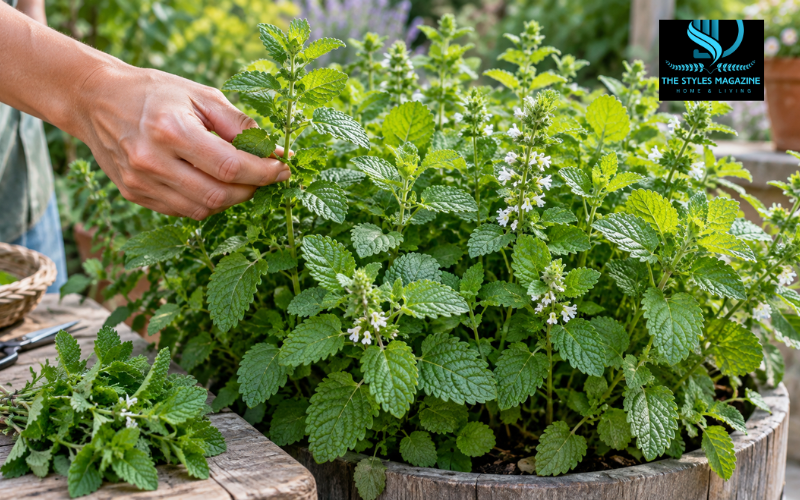
A healthy lemon balm plant has bright to medium-green leaves with a slightly wrinkled surface. The leaves are usually oval or somewhat heart-shaped, with toothed or scalloped edges. When you gently rub or crush a leaf, it releases a clear lemon-like fragrance.
Like many members of the mint family, lemon balm has square stems. The plant develops many branching shoots and can eventually form a broad clump.
Does lemon balm plant flower? Yes. Small flowers appear during summer. They are usually creamy white, although they can sometimes have pale pink, yellowish or purple tones. The flowers are not large or showy, but they are rich in nectar and attractive to bees.
If you are searching for the lemon balm plant in Spanish, common names include toronjil and melisa. Other regional names also exist, so the exact common name may vary between Spanish-speaking countries. Kew records several Spanish names for Melissa officinalis, including toronjil, melisa and limonera.
The Best Growing Conditions for Lemon Balm
Lemon balm grows well in either full sun or partial shade. In the UK, a sunny or lightly shaded position normally works well. Some decorative yellow-leaved varieties can look better in light shade because strong sunlight may affect their colour.
The plant is adaptable to different soil types, but good drainage is important. It can grow in clay, loam, chalky or sandy soil provided the roots are not left sitting in water. The RHS recommends protecting lemon balm from excessive wet conditions during winter.
The soil can be kept moderately moist while a young plant becomes established. Once growing strongly in the ground, lemon balm usually needs less attention than plants kept in containers.
A herb bed, sunny border, raised bed or large container can all provide suitable conditions. Avoid very wet areas where rainwater remains around the roots for long periods.
How to Plant Lemon Balm Outdoors
Spring is an ideal time to plant lemon balm outdoors, although established plants can be planted at other times when the ground is workable and conditions are not extreme. Seedlings raised indoors should first be gradually introduced to outdoor conditions before being planted permanently.
Choose a place with sun or partial shade and soil that drains freely. Dig a planting hole roughly large enough to hold the root ball comfortably. Place the plant at about the same depth it was growing in its original pot, refill the hole and water it well.
If you are planting several plants, allow enough room for each one to develop into a broad clump. Wisconsin Extension suggests spacing young plants around 16 to 18 inches apart.
A large container is often the easiest choice when space is limited or you do not want lemon balm moving into nearby areas. The RHS recommends containers at least 25 cm wide and deep for growing lemon balm.
Lemon Balm Plant Care Through the Growing Season
Good lemon balm plant care is fairly simple. Newly planted specimens should be watered regularly enough to prevent the soil from completely drying while their roots become established. Established plants growing in open ground are more tolerant of short dry periods.
Container plants need more attention because potting compost loses moisture faster. Water when needed, but make sure excess water can drain freely.
Lemon balm generally does not require heavy feeding when planted in reasonable garden soil. Too much fertiliser can encourage excessive soft growth without necessarily improving the flavour of the leaves.
After flowering, the plant can start to look untidy. Cutting it back encourages a fresh flush of leafy shoots and also helps reduce self-seeding. Old dead stems can be removed before new spring growth appears.
Lemon balm is usually trouble-free, but problems can occur. NC State lists powdery mildew, leaf spot, leaf blight and grey mould among possible diseases. Constantly wet soil may also lead to root problems.
Yellowing, wilting, weak growth or badly marked leaves can indicate unsuitable watering, poor drainage, disease or another growing problem.
Growing a Lemon Balm Plant Indoors
A lemon balm plant indoor setup can work, particularly when the plant has access to plenty of natural light. Choose a bright window and turn the pot occasionally so growth remains balanced.
Use a container with drainage holes and a good-quality, free-draining potting mix. Do not leave the pot standing in water. Instead, water when the upper part of the compost starts to feel dry, then allow excess water to escape.
Indoor lemon balm benefits from good airflow and regular trimming. Cutting back long shoots encourages a more compact plant and gives you fresh leaves to use.
If roots fill the container or growth becomes weak despite suitable care, the plant may need a larger pot or fresh compost.
Lemon balm is naturally a hardy outdoor perennial, so indoor growing is not always necessary in the UK. Some gardeners simply keep a plant close to the kitchen for convenient harvesting, while maintaining other plants outside.
Growing Lemon Balm Plant Seeds and Other Propagation Methods
Growing lemon balm plant seeds is an inexpensive way to start new plants. Seeds can be sown indoors in spring in trays or small pots filled with seed compost. Cover them only lightly. According to the RHS, germination can take up to about three weeks.
Seeds can also be sown outdoors from late spring into early summer once conditions are suitable. Wisconsin Extension recommends starting indoor seeds about four to six weeks before the final spring frost in colder climates.
Once seedlings are large and strong enough to handle, they can be moved into individual pots or planted outside after being gradually hardened off.
Established plants are particularly easy to propagate by division. Lift a mature clump in spring or autumn, separate it into smaller sections with healthy roots and shoots, and replant them.
Soft young shoots can also be used as cuttings from spring into early summer. Lemon balm stems may even produce roots when placed in water before being transferred to compost.
For named cultivars, division or cuttings are often better than seed because seedlings may not keep exactly the same characteristics as the parent plant.
Lemon Balm Flowers and Their Value to Pollinators
Lemon balm usually flowers in summer. Its small pale flowers appear around the upper parts of the stems and may seem modest compared with colourful ornamental flowers.
For pollinators, however, they can be valuable. Both the RHS and Wisconsin Extension describe lemon balm flowers as nectar-rich and attractive to bees. The genus name Melissa itself comes from a Greek word associated with the honeybee.
Whether you allow the flowers to remain depends on your garden plans. Leaving some flowers benefits visiting insects and allows you to enjoy the plant’s natural flowering cycle.
However, lemon balm can self-seed freely. If you do not want seedlings appearing nearby, cut off faded flowering stems before mature seeds are released.
A practical approach is to allow some flowers for pollinators while removing them before they have a chance to scatter large amounts of seed.
Controlling Lemon Balm Before It Spreads Too Far
One of the few challenges of growing lemon balm is its vigorous growth.
The plant can expand through underground rhizomes and also produce new plants from seed. NC State describes it as capable of spreading aggressively through both methods.
In a large informal garden, this may not cause much concern. In a small border containing slower-growing plants, however, an unmanaged clump can eventually take up more space than intended.
Growing lemon balm in a large pot is one of the simplest ways to restrict its roots. In open ground, regularly remove unwanted shoots and seedlings. Cut back flowering stems before seeds ripen if you want to reduce self-seeding.
Older clumps can be lifted and divided every few years. This keeps their size manageable and also gives you healthy new sections to replant.
Regular harvesting helps too. Lemon balm responds well to cutting, so controlling its size does not mean sacrificing useful foliage.
Harvesting, Storing, and Using Lemon Balm Leaves
Lemon balm leaves can be harvested regularly through spring and summer. Young, tender leaves generally have the freshest flavour and strongest pleasant aroma.
Use clean scissors to cut shoot tips or individual stems rather than stripping every leaf from one part of the plant. Leaving enough healthy growth allows it to recover quickly.
Fresh leaves work well in herbal tea, fruit dishes, salads and desserts. They can also be used in small amounts with chicken, fish and other dishes where a gentle lemon flavour suits the recipe. The RHS recommends using young leaves as fresh as possible for the best flavour.
Leaves can also be dried. Spread clean stems or leaves in a dry, well-ventilated place away from direct sun, then store the fully dried leaves in an airtight container.
Keep in mind that dried lemon balm usually has a weaker fragrance than fresh leaves. Wisconsin Extension likewise notes that drying reduces much of the plant’s aroma.
If you mainly want lemon balm for cooking, regular light harvesting also keeps the plant producing fresh leafy shoots.
Lemon Balm Plant Benefits and Important Safety Considerations
The most straightforward lemon balm plant benefits are found in the garden. It provides fragrant edible leaves, nectar-rich flowers for bees, attractive green foliage and a dependable supply of fresh leaves during the growing season.
Lemon balm also has a long history of traditional herbal use. It has been associated with relaxation, digestive comfort and sleep, but traditional use should not automatically be treated as proof that the plant can diagnose, prevent or treat a medical condition.
There has been clinical research into lemon balm extracts and anxiety. A systematic review and meta-analysis published in 2021 found improvements in anxiety and depression measures in the included trials, but the researchers also highlighted major differences between studies, a small number of trials and the need for better-quality evidence.
The European Medicines Agency also has a herbal monograph covering traditional medicinal use of lemon balm leaf in areas including mild mental stress, sleep and gastrointestinal complaints, while its page shows that the monograph has been undergoing periodic review.
This does not mean that ordinary garden leaves, tea, supplements, concentrated extracts and essential oils are interchangeable. Their strength and composition can be very different.
Anyone who is pregnant, breastfeeding, taking medicines, managing a health condition or considering concentrated lemon balm supplements should seek advice from an appropriate healthcare professional. Essential oils should also be used according to proper product guidance rather than treated like ordinary edible leaves.
Where to Buy a Lemon Balm Plant, Seeds, and Healthy Starter Plants
If you are wondering where to buy lemon balm plant stock, the standard form of Melissa officinalis is widely available. The RHS notes that gardeners can commonly find it as either seeds or young plants. Specialist herb nurseries may also offer cultivars such as ‘All Gold’, ‘Aurea’ or lime-scented forms.
A young starter plant is useful when you want an established herb quickly. Seeds are usually cheaper and can produce several plants, although they take longer to reach harvestable size.
When buying a plant, look for healthy green foliage, firm stems and signs of active new growth. Avoid plants with badly yellowed leaves, heavy spotting, mould, obvious pests or severely waterlogged compost. Check the label for the botanical name Melissa officinalis so you know you are buying true lemon balm.
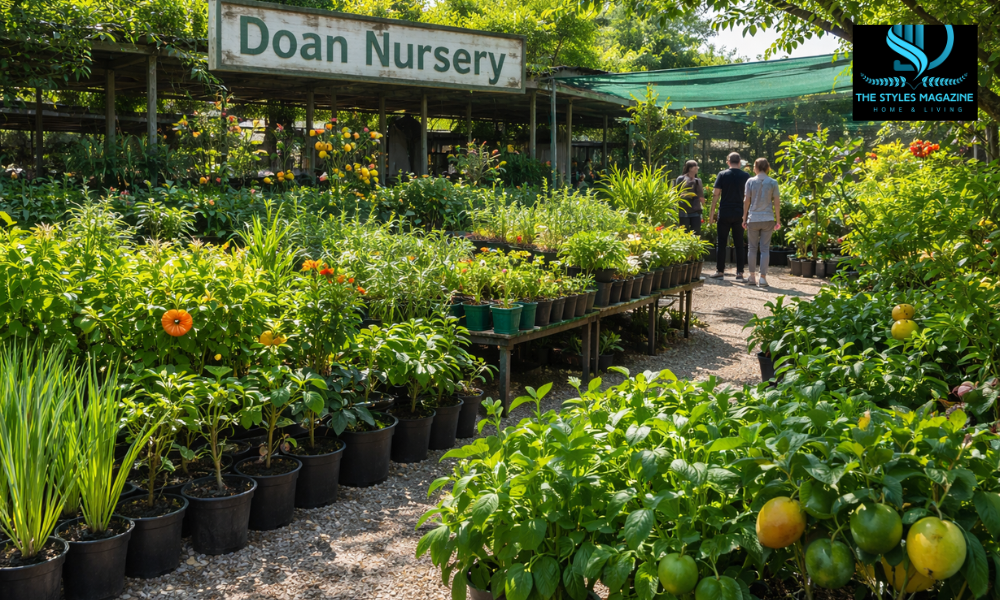
For a lemon balm plant near me, check local garden centres, independent nurseries and herb specialists. Availability can be seasonal, so checking stock before travelling is sensible.
You may also find that a neighbour or gardening friend already grows lemon balm. Established clumps are easy to divide, making it one of the simpler herbs to share.
Conclusion
The lemon balm plant is a useful choice for gardeners who want a fragrant, edible and easy-to-grow perennial herb. Its lemon-scented leaves can be harvested through much of the growing season, while its small summer flowers provide nectar for bees.
Successful growing mainly comes down to giving the plant enough light, good drainage and sensible watering. Regular harvesting and cutting back keep the foliage fresh, while containers, deadheading and occasional division can help control unwanted spreading.
Lemon balm can grow in garden beds, raised beds and pots, and it can also be kept indoors when it receives sufficient light and suitable care. Because it is vigorous, it is worth choosing its planting position carefully from the beginning.
For most home gardeners, a single healthy plant can provide plenty of leaves. Give it enough room—or keep it contained—and lemon balm can remain a practical and attractive part of a herb garden for years.
FAQs
Does A Lemon Balm Plant Come Back Every Year?
Yes. Lemon balm is a perennial herb, so established plants can return for several years. In colder weather, the top growth may die back before fresh shoots appear again in spring.
Can Lemon Balm Grow Indoors?
Yes. Lemon balm can grow indoors when it receives plenty of bright light. Use a container with drainage holes, avoid overwatering, and trim the plant regularly to keep growth compact.
Does Lemon Balm Plant Flower?
Yes. Lemon balm normally produces small white or pale flowers during summer. The flowers contain nectar that attracts bees and other pollinators, but they can also lead to self-seeding.
How Do You Stop Lemon Balm From Spreading?
Grow lemon balm in a container, cut back flowering stems before seeds mature, remove unwanted seedlings early, and divide established clumps when they become too large for their space.
What Are Lemon Balm Leaves Commonly Used For?
Fresh lemon balm leaves are commonly used in herbal teas, fruit dishes, salads, desserts, and selected savoury recipes. Their gentle lemon scent and flavour are strongest when the leaves are fresh.
Enjoyed it? Find more exclusive content on The Styles Magazine.
Disclaimer: This article is provided for general gardening and informational purposes only. Information about traditional or potential health uses of lemon balm should not be treated as medical advice or as a substitute for professional healthcare guidance. Effects may vary depending on the preparation, dose, medicines, and individual health conditions. Anyone considering supplements, concentrated extracts, or essential oils should follow appropriate product guidance and consult a qualified healthcare professional when necessary. This content is independently written for reader education and is not intended as paid promotion, advertising, or an endorsement of any specific product or seller.