Learning how to plant lavender is mostly about understanding what the plant does not like. Lavender grows naturally in sunny, relatively dry conditions, so it performs best when its roots receive plenty of air and excess water can drain away quickly. A bright location and good drainage usually matter more than rich soil or frequent feeding.
Most lavender needs at least six hours of direct sunlight each day, and eight hours is even better where the climate allows. Soil should drain freely after rain or watering. Constantly damp ground can damage the roots and crown, especially during cool weather. Lavender generally prefers soil that is not overly fertile and tends to perform poorly in heavy, waterlogged conditions.
You can start lavender with a nursery plant, grow it in a container, sow seeds, or make new plants from cuttings. Buying a healthy young plant is usually the quickest option for beginners, while cuttings offer a reliable way to reproduce an existing plant. Seeds require more patience.
Once established, lavender is naturally drought-tolerant. A newly planted lavender, however, still needs enough water to develop a healthy root system. The goal is not to keep it constantly moist, but to help it establish without allowing its roots to remain soggy.
Quick Guide Table
| Planting Method | Best For | Main Requirement | Key Tip |
| In the ground | Garden beds and borders | Full sun and well-drained soil | Keep the crown near its original soil level |
| In pots | Patios, balconies, heavy-soil gardens | Drainage holes and free-draining mix | Never leave the pot standing in water |
| From seeds | Gardeners starting new plants | Light, warmth, and patience | Germination can be slow and uneven |
| From cuttings | Reproducing an existing lavender | Healthy shoots and draining propagation mix | Use non-flowering shoots when possible |
| Indoors | Bright indoor spaces | Strong natural or supplemental light | Keep away from dark, constantly damp areas |
Quick Step-by-Step Guide to Planting Lavender
- Choose the right variety for your climate and winter conditions.
- Find a sunny location that receives about six to eight hours of direct sunlight.
- Check the drainage and avoid areas where water collects after rain.
- Dig a hole wider than the root ball, but do not make it unnecessarily deep.
- Remove the plant carefully and gently loosen tightly circling roots.
- Set the lavender at its previous growing depth, keeping the crown above buried soil.
- Backfill and firm gently, without heavily compacting the soil.
- Water after planting, then allow the soil to begin drying before watering again.
Start With the Right Lavender Plant
Choosing the right type of lavender can make a major difference to long-term success. English lavender, or Lavandula angustifolia, is among the most cold-tolerant choices and is widely grown in borders and containers. Lavandin, Lavandula × intermedia, includes vigorous hybrids such as ‘Grosso’ and ‘Provence’ and is also widely grown outdoors.
Spanish and French lavender names can sometimes be confusing because common names vary between regions. Plants sold as Lavandula stoechas are recognizable by the petal-like bracts above their flower heads. These types are generally less tolerant of severe winter cold than English lavender, so they may be better suited to warmer climates or containers that can be protected in winter. Always check the botanical name and hardiness information on the plant label.
When comparing lavender plants for sale, look for plants with compact growth, healthy grey-green or green foliage, and no obvious blackening, wilting, mold, or soft stems around the base. Check that the compost is not permanently waterlogged.
For a beginner, a nursery-grown plant is normally the simplest starting point. Seeds take longer, while cuttings are useful when you already have access to a healthy lavender plant.
The Best Time to Plant Lavender
Spring is generally the safest time to plant lavender outdoors. Wait until the danger of severe frost has passed and the soil has started warming. This gives the plant a full growing season to develop roots before it faces cold and wet winter weather.
The exact planting date depends on your climate rather than a fixed calendar date. In areas with late frosts, planting may need to wait until later in spring. In warmer regions with mild winters, fall planting can also work, provided the plant has enough time to establish before cold or very wet conditions arrive. Utah State University notes that fall-planted lavender needs a good establishment period before winter.
Avoid planting young lavender into cold, saturated winter soil. Even hardy varieties can struggle when the roots remain wet for long periods. In places with wet winters, spring planting is particularly useful because the plant can establish during warmer and generally more favorable conditions.
Container-grown lavender gives you slightly more flexibility because pots can be moved into a sheltered location when necessary.
Choose a Sunny, Well-Drained Location
A suitable location is one of the most important parts of understanding how to plant lavender in the ground. Choose an open area that receives at least six to eight hours of direct sunlight on most days. Strong light helps lavender develop compact growth and produce plenty of flowers.
Air circulation also matters. Lavender should not be squeezed tightly between larger shrubs or planted where dense vegetation keeps the foliage damp. Give each plant enough room to reach its expected mature width. The correct spacing varies considerably between compact English cultivars and large lavandins, so use the mature dimensions on the plant label rather than applying one spacing measurement to every variety.
Avoid low parts of the garden where rainwater gathers after storms. If your soil drains slowly, consider a raised bed, gently sloping area, berm, or mound. Raising the root zone can help excess water move away more quickly.
In hot climates, local growing conditions may influence placement, but good light and excellent drainage remain central requirements.
Prepare the Soil Before Planting
Lavender does not need rich, heavily fertilized soil. It generally prefers relatively lean, loose soil that allows water to drain freely. Sandy, gravelly, and well-drained loamy soils often work well. English lavender commonly performs well around neutral to slightly alkaline soil conditions, although tolerance varies somewhat among species and local conditions.
If you are unsure about your soil, a soil test is more useful than adding lime or fertilizer automatically. Avoid changing soil pH simply because lavender is often described as liking alkaline conditions.
Heavy clay presents a bigger problem because it can remain saturated around the roots. Rather than digging a small hole and filling it with a completely different material, improve drainage across a wider planting area or use a raised bed or mound. A highly amended hole surrounded by dense clay can sometimes hold water instead of allowing it to escape.
Do not place a layer of gravel at the bottom of the planting hole as a drainage shortcut. Proper drainage needs to occur through the surrounding soil or through a genuinely raised planting area. Extension guidance for shrubs similarly advises against putting gravel beneath the root ball simply to improve drainage.
How to Plant Lavender in the Ground
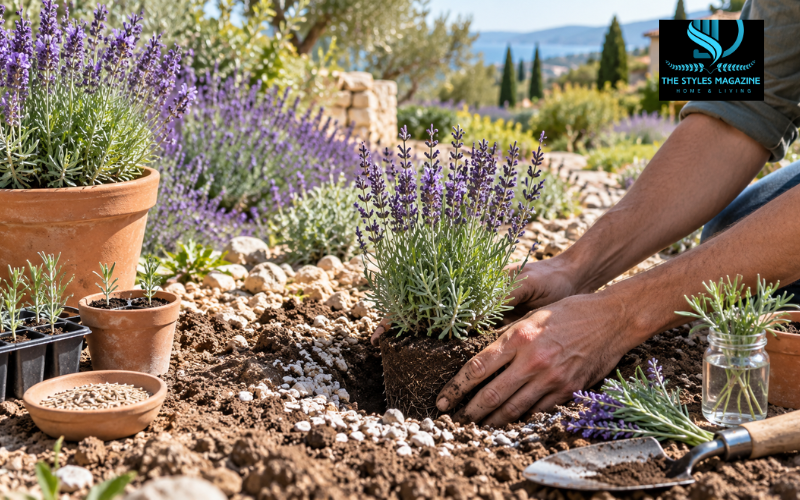
Before planting, check the nursery pot. If the root ball is very dry, water it and allow excess moisture to drain. Prepare a planting hole wider than the root mass so the roots have loose soil around them, but avoid digging unnecessarily deep.
Carefully remove the lavender from its container. If roots are tightly circling the outside of the root ball, gently loosen some of them with your fingers. Do not pull the root system apart aggressively.
Set the plant into the hole at approximately the same depth it was growing in its nursery container. The crown, where the stems meet the roots, should not be buried under additional soil. In a site where drainage is a concern, positioning the root ball slightly high can be safer than sinking it below the surrounding grade.
Return the soil around the roots and gently firm it without compacting it heavily. Water after planting so the soil settles around the root system.
Spacing should reflect the mature size of the cultivar. A small edging lavender needs less room than a broad lavandin. For hedging, plants may be positioned closer together, while individual specimens benefit from enough room for airflow and their natural spread.
Growing Lavender in Pots
Growing lavender in pots is a useful alternative if garden soil is heavy, the climate is very wet, or you only have a patio or balcony. The container must have open drainage holes so excess water can leave freely.
Choose a pot that gives the roots adequate growing space without placing a small plant in a huge volume of wet compost. For established lavender, the RHS suggests containers around 30–40 cm, or roughly 12–16 inches, in diameter. The appropriate size still depends on the cultivar and current root ball.
Use a free-draining potting mix rather than dense garden soil. Coarse grit or similar material can be mixed through suitable potting compost to increase drainage. Keep the plant at the same depth it was growing previously.
There is no need to create a thick layer of gravel or stones underneath the potting mix. Gravel at the bottom does not make an otherwise poorly drained container drain properly and can leave saturated potting mix above it. Drainage holes and an appropriate growing medium are more important.
After planting, place the pot outdoors in a sunny, open location.
How to Plant Lavender Seeds
Gardeners wondering how to plant lavender seeds should expect a slower process than starting with nursery plants or cuttings. Seeds can be started indoors before the outdoor planting season, often around eight to ten weeks before the expected last frost.
Use clean trays or small pots filled with a light, free-draining seed-starting mix. Lavender seed is small, so follow the depth instructions provided for the particular variety. Some guidance recommends very shallow sowing, while germination may improve for certain lavender seeds after a period of cold, moist treatment known as cold stratification.
Keep the seed-starting medium lightly moist rather than soaked and provide suitable warmth and light. Germination can be uneven and may take several weeks, so do not discard the tray too quickly.
Once seedlings are large enough to handle, move them into individual containers if necessary. Before planting outdoors, gradually expose young plants to outdoor sunlight, wind, and temperature changes over several days.
Remember that seeds collected from named cultivars may produce plants that differ from the parent. If you want an exact copy of a particular lavender, cuttings are generally more dependable.
Growing Lavender From Cuttings
Growing lavender from cuttings is one of the most reliable ways to create new plants, particularly when you want the new lavender to match the parent plant. Plants produced from cuttings are clones of the plant from which the stem was taken.
Choose healthy shoots without signs of pests, disease, or rot. Non-flowering shoots are usually preferred because their energy is directed toward vegetative growth rather than flower production. Softwood and semi-ripe cuttings can be taken during the growing season, commonly from early to midsummer depending on climate and plant growth.
Remove the lower leaves so a bare section of stem can be placed into a clean, well-draining propagation mix. Rooting hormone may be used, although it is not always necessary. Keep the medium lightly moist but never saturated.
Place the cuttings in bright conditions without exposing unrooted stems to stressful, intense heat. Some humidity helps prevent excessive moisture loss, but airflow is still useful.
When roots have developed well, transfer the young plants into their own pots. Allow them to establish a stronger root system before planting them permanently in the garden.
Watering Lavender After Planting
Lavender may be drought-tolerant when mature, but that does not mean a newly planted specimen should immediately be left completely dry. New roots need access to moisture while they expand into the surrounding soil.
Water after planting and continue checking the soil during the establishment period. Instead of watering automatically every day or following a rigid schedule, feel the soil and consider recent weather. Let excess water drain and avoid keeping the root zone continually saturated.
Once an in-ground lavender has established a strong root system, it usually needs much less supplemental water. Established plants can tolerate dry periods far better than constantly wet soil.
Container plants are different because their roots have access to a limited amount of potting mix. Pots can dry quickly during hot, windy summer weather and therefore require more frequent checking.
Wilting in genuinely dry soil may indicate a need for water, while wilting accompanied by persistently wet soil can point to root stress. Always check moisture before assuming a struggling lavender needs another drink.
How to Care for Lavender Plants in Pots
Good lavender plant care in pots starts with drainage and sunlight. Check the potting mix regularly during warm weather because containers dry faster than garden beds. When watering is needed, water thoroughly and let the extra water escape through the drainage holes.
Do not leave lavender standing for long periods in a saucer filled with water. Constant moisture around the roots increases the risk of decline and root rot.
Container lavender should receive strong sunlight and good air circulation. Avoid feeding it heavily. Lavender naturally performs well in relatively low-fertility conditions, and excessive fertilizer can encourage soft leafy growth instead of the compact habit gardeners usually want.
Pruning helps keep established plants tidy and reduces woody, sprawling growth. Timing depends somewhat on climate and lavender type. A light trim after flowering is common, while gardeners in colder climates may delay more significant trimming until spring. Avoid cutting deeply into old, leafless wood because many lavender plants do not regrow well from it.
In cold or very wet winters, move containers to a protected outdoor position or other suitable sheltered location, depending on the hardiness of the variety.
Growing Lavender in Pots Indoors
Although lavender is naturally suited to outdoor conditions, growing lavender in pots indoors is possible when enough light is available. Light is usually the biggest challenge.
Place the plant beside the brightest suitable window you have. University of California Master Gardeners recommends at least five to six hours of bright window light for indoor lavender. Supplemental LED or other suitable grow lighting can help when natural daylight is limited.
For successful indoor lavender plant care, use a container with drainage holes and a free-draining mix. Water only when the plant actually needs it, and never allow the pot to remain waterlogged. Reasonable airflow around the foliage is also helpful.
A lavender receiving too little light may develop long, weak growth and produce fewer flowers. Warm rooms combined with low light can be particularly difficult for the plant.
If a potted lavender spends summer outdoors and winter indoors, make the move gradually when possible. Check the foliage for insects before bringing it inside, then place it in the sunniest suitable location rather than a dark corner of the room.
Common Lavender Planting Mistakes That Cause Problems
Many lavender problems begin with the planting site rather than the plant itself. Deep shade, dense wet soil, and frequent watering create conditions that lavender is poorly adapted to tolerate.
Planting too deeply is another avoidable mistake. Keep the crown near its original soil level instead of burying the lower stems. Likewise, do not rely on gravel placed under a planting hole or at the bottom of a container to correct poor drainage. Improving the entire growing environment is more effective.
Rich soil and frequent fertilizer are not necessary for most lavender. Too much feeding may produce excessive soft growth, while poor spacing can reduce airflow and leave foliage damp for longer.
Another common problem is buying a lavender simply because its flowers are attractive without checking whether it can survive the local winter. English lavender and many lavandins generally tolerate colder conditions better than tender French or Spanish types.
Finally, do not treat every lavender the same. A young plant, established border plant, indoor container, and outdoor pot all lose water at different rates. Check the soil and growing conditions instead of relying on one watering schedule.
Conclusion
Learning how to plant lavender successfully comes down to a few important choices made at the beginning. Select a variety suited to your climate, give it plenty of sunlight, make sure water can drain freely, keep the crown at the correct level, and water carefully while the roots establish.
The exact method will vary depending on whether you are learning how to plant lavender in the ground, growing it in a container, starting seeds, or producing new plants from cuttings. Climate matters too. A gardener dealing with heavy rainfall and clay soil will need a different approach from someone gardening in a warm, dry area.
Lavender usually performs best when it is not over-cared for. Once the roots are healthy and established, excessive watering, rich fertilizer, and constant attention can cause more problems than they solve. Give the plant the sunny, well-drained conditions it prefers, then allow it to develop naturally into a strong, fragrant, long-lasting part of the garden.
Frequently Asked Questions
What Is The Best Month To Plant Lavender?
Spring is usually the best season to plant lavender, once severe frost risk has passed and the soil is warming. This gives new plants enough time to establish strong roots before winter.
Does Lavender Grow Better In Pots Or In The Ground?
Lavender can grow successfully in either. Garden planting works well in sunny, freely draining soil, while pots are especially useful where garden soil is heavy, poorly drained, or frequently wet.
How Much Sunlight Does Lavender Need?
Lavender generally performs best with at least six hours of direct sunlight each day. More sunlight can encourage compact growth and flowering, provided the plant receives enough water while becoming established.
How Often Should Newly Planted Lavender Be Watered?
Water newly planted lavender when the soil begins to dry rather than following a fixed daily schedule. The roots need moisture to establish, but constantly wet soil can encourage root and crown problems.
Can Lavender Be Planted Directly From Seed?
Yes, lavender can be grown from seed, but germination may be slow and uneven. Starting seeds indoors before the outdoor planting season usually gives gardeners better control over moisture, light, and temperature.
Enjoyed it? Find more exclusive content on The Styles Magazine.
Disclaimer: This article is provided for general gardening and educational purposes only. Lavender-growing results can vary depending on the variety, climate, soil type, rainfall, sunlight, and local growing conditions. Planting, watering, pruning, and winter-care recommendations may need to be adjusted for your region. When dealing with unusual soil conditions, plant disease, or persistent growing problems, consider seeking advice from a local horticultural extension service, nursery, or qualified gardening professional.