So, how long do mattresses last? For most people, a useful starting point is about 7 to 10 years. That does not mean every mattress suddenly becomes unusable on its seventh or tenth birthday. Some wear out earlier, while a well-made mattress that is properly supported and cared for may remain comfortable longer. Consumer Reports says most mattresses should stay in good condition for roughly seven to 10 years, but how the bed actually feels and performs is also important.
A mattress’s lifespan depends on its materials, build quality, how often it is used, the weight it supports, the bed frame or foundation beneath it, and how it is maintained. A guest-room mattress may age very differently from a mattress used every night by two adults.
The best time to replace a mattress is therefore based on condition and support, not age alone. Below, we look at expected lifespan by mattress type, common warning signs, Purple and Tempur-Pedic guidance, independent durability testing, and simple ways to help a mattress last longer.
Quick Signs It May Be Time to Replace Your Mattress
- Permanent sagging or deep body impressions
- An uneven or overly soft sleeping surface
- Waking up with new or increasing stiffness or discomfort
- Noticeably reduced support
- Broken or noisy internal components
- Sleeping more comfortably on another supportive bed
- Collapsed or weakened mattress edges
Average Mattress Lifespan by Type
Different mattress constructions age in different ways. The ranges below are practical estimates, not guarantees. Current independent durability guidance places traditional innersprings at the shorter end and latex at the longer end, while noting that the quality of every layer can make a meaningful difference.
| Mattress Type | Typical Lifespan Range | Main Materials | Common Reasons It Wears Out |
| Memory foam | About 6–10 years | Memory foam and support foam | Softening, body impressions, loss of support |
| Innerspring/spring | About 5–8 years | Steel coils with thinner comfort layers | Sagging, coil fatigue, compressed padding |
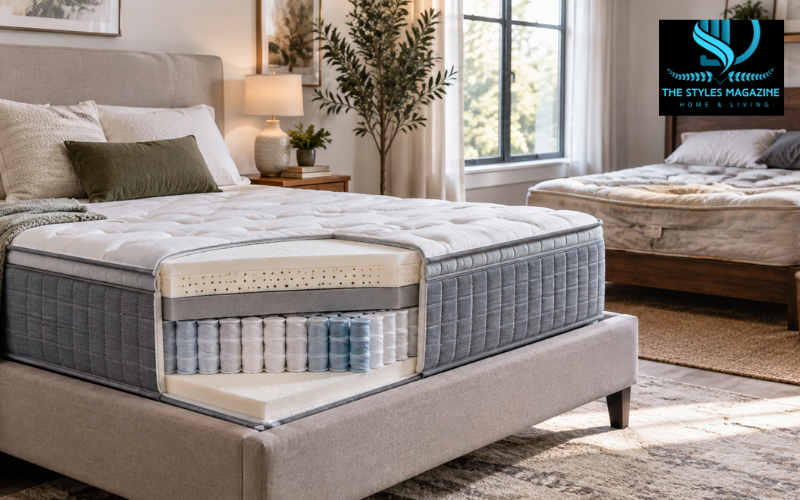
| Hybrid | About 6–10 years | Pocketed coils with foam or latex layers | Worn comfort layers, impressions, reduced support |
| Latex | About 8–12+ years | Natural or synthetic latex | Gradual softening, loss of shape, wear in mixed-material layers |
A high-quality mattress can outlast these averages, while a poorly made one can fail much sooner. The label alone—whether it says foam, hybrid, spring, or latex—does not tell you everything about durability.
What Determines How Long a Mattress Lasts
The materials inside the mattress are one of the biggest factors. In foam beds, denser, better-quality foams generally resist early softening and deep impressions better than lower-quality foams. In spring and hybrid beds, coil design and strength matter, but the comfort layers sitting above the coils can sometimes wear out first.
Body weight and how the bed is used also affect wear. A mattress supporting two people every night usually receives more stress than one used by a single lighter sleeper. Sleeping in the same position and the same area night after night can also concentrate pressure in particular parts of the bed.
Support underneath the mattress is equally important. A weak frame, widely spaced slats, or inadequate center support may allow the mattress to bow. In some cases, using an unsuitable foundation can also affect warranty coverage. Moisture, spills, dirt, and poor maintenance can shorten useful life as well. When the manufacturer recommends rotation, following those instructions may help distribute wear more evenly.
How Long Memory Foam Mattresses Last
A good memory foam mattress commonly lasts around 6 to 10 years, although quality makes a large difference. Current Sleep Foundation durability estimates place the average for all-foam mattresses at around six to seven years, while better-built models may remain supportive for longer.
Foam density and overall quality often matter more than simply seeing the words “memory foam” on a product label. Over time, memory foam can become softer and may develop lasting body impressions where your hips and shoulders usually rest.
A lower-cost foam mattress made with less durable materials may soften earlier, while a better-quality model can maintain its shape and support for years. Research comparing mattress materials also identifies foam density as an important part of memory foam durability.
If you are wondering how long a memory foam mattress lasts, do not judge it only by age. Lie down in your normal sleeping position and notice whether your body still feels evenly supported, whether you sink much farther than you once did, and whether the mattress returns to an even surface after you get up.
How Long Spring Mattresses Last
Traditional spring or innerspring mattresses generally have a shorter average lifespan, often around 5 to 8 years. Current durability guidance puts many traditional innersprings at approximately 5.5 to 6.5 years on average.
The coil system matters, but so do the layers above it. Springs may gradually lose some of their ability to return to their original position, while padding and foam can compress. Common signs of aging include sagging, uneven areas, squeaking or other new noises, and a surface that feels flatter or less cushioned than it used to.
So, how long do spring mattresses last in real homes? Some remain comfortable beyond the average, especially when they are well constructed and properly supported. Others need replacement sooner.
A spring mattress does not need to have a visibly broken coil to be worn out. If its padding has compressed or the support feels noticeably uneven, the mattress may no longer be performing properly even though the springs are still intact.
Memory Foam vs. Spring: Which Usually Lasts Longer?
When comparing whether memory foam mattresses last longer than spring mattresses, memory foam has a small average advantage. Sleep Foundation currently reports an average lifespan of roughly six to seven years for foam mattresses compared with around 5.5 to 6.5 years for traditional innersprings.
The way the two mattress types age is different. Memory foam tends to soften and can develop body impressions. Innerspring mattresses may begin to sag as padding compresses and coils gradually lose some of their original strength.
Neither material is automatically more durable in every situation. A well-built spring mattress can outlast a poor-quality foam model, just as durable, higher-quality foam can outperform a cheaply constructed spring mattress.
When comparing durability, look beyond the mattress category. Consider the quality of the comfort layers, the strength of the support system, the manufacturer’s care instructions, and the warranty conditions.
Hybrid and Latex Mattress Lifespans
Hybrid mattresses combine a coil support system with thicker comfort layers made from foam, latex, or sometimes both. Many remain usable for around 6 to 10 years, depending heavily on their construction. Current independent estimates place the average hybrid somewhat lower, around 6.5 to 7.5 years, but individual models can perform beyond that range.
The coils may still feel strong while the softer materials on top begin to compress or form impressions. For this reason, the lifespan of a hybrid can depend as much on its comfort layers as on the metal coil system underneath.
Latex has a strong reputation for durability. Independent guidance currently places latex mattresses around 7.5 to 8.5 years on average, with durable natural-latex constructions capable of remaining usable longer. Latex also generally performs better for durability than memory foam.
It is important to distinguish a mattress made mainly from latex from one containing only a thin latex comfort layer. In a mixed-material mattress, another less-durable layer may determine when the bed stops feeling supportive.
How Long Purple Mattresses Last
Purple mattresses use the company’s GelFlex Grid as a key comfort layer. Depending on the model, the Grid is combined with support foam, additional comfort foam, or coil systems. Purple describes the Grid as an adaptive layer that flexes under concentrated pressure while supporting other areas of the body.
Purple’s 2026 mattress-lifespan guidance says mattresses in general commonly last 7 to 10 years. For its own products, Purple says its mattresses should last at least 10 years with proper care. Its current limited mattress warranty also applies for 10 years from the original purchase date for qualifying purchases.
That warranty period should not be treated as a promise that every owner will experience exactly the same comfort for 10 years.
As a Purple mattress ages, watch for noticeable changes in support, persistent impressions, foam deterioration, uneven areas, or a clear decline in comfort. Those signs provide more useful information than simply counting how many years you have owned the mattress.
How Long Tempur-Pedic Mattresses Last
Tempur-Pedic’s current guidance says its mattresses typically last 8 to 12 years with regular nightly use and proper care, while some customers report using them for longer. Actual lifespan can still vary with use, support, care, and individual sleeping habits.
Tempur-Pedic also provides a current 10-year limited mattress warranty against covered manufacturing defects. The warranty is separate from the mattress’s expected useful lifespan. For example, current warranty terms explain that normal changes in softness or personal comfort preference are not necessarily covered defects.
If you own an older Tempur-Pedic, focus on performance instead of automatically replacing it at a particular age. A 10-year-old mattress that remains even, comfortable, and supportive may still be serving its purpose better than a younger mattress that has developed deep sagging, excessive softness, or poor support.
Mattress Lifespan and Warranty Are Not the Same Thing
Three time periods are often confused: useful lifespan, warranty length, and sleep trial. Useful lifespan describes how long a mattress continues to provide suitable comfort and support. A warranty covers certain defects under specific conditions. A sleep trial is the limited period after purchase during which the seller may allow a return or exchange.
A 10-year, 20-year, or even “lifetime” warranty does not mean the mattress will feel new for that entire period. Warranty terms commonly exclude ordinary wear, personal changes in comfort preference, accidental damage, stains, liquid exposure, or problems caused by improper support.
Before relying on a warranty, read its conditions carefully. Check how deep an indentation must be before it qualifies as a defect, what kind of foundation or bed frame is required, whether physical damage can affect eligibility, and whether coverage applies only to the original buyer.
For example, Tempur-Pedic’s current warranty includes specific mattress-support requirements and a measurable indentation standard for certain covered defects. Purple’s current warranty similarly covers defined defects for eligible original purchases rather than guaranteeing a particular comfort lifespan.
Lab Testing and Real-Owner Experience Tell Different Parts of the Story
Independent testing can help show how a mattress holds up under controlled conditions. Consumer Reports says its current mattress durability assessment looks at how well a mattress maintains its original shape, height, firmness, and support after eight years of simulated use.
Consumer Reports also says most mattresses should remain in good condition for about seven to 10 years, although the actual condition of the bed remains an important reason for deciding when to replace it.
Laboratory testing is useful because mattresses can be assessed under more consistent conditions. Real-owner experiences provide another perspective, but they are less controlled. Reddit discussions about how long mattresses last often contain people reporting very different lifespans, even for similar types of beds.
Those differences are understandable. Body weight, mattress model, foundation, room conditions, sleeping position, maintenance, and personal comfort expectations can all change the result.
When reading Reddit discussions or other owner reviews, give more weight to reports that identify the exact mattress model, how old it is, how often it was used, what foundation was underneath it, and what physical signs of wear appeared.
The most useful picture comes from combining independent testing, manufacturer specifications and warranty terms, and detailed long-term owner experience rather than relying entirely on one source.
Signs Your Mattress May Need Replacing
Age is only one clue. The strongest warning sign is a lasting change in how the mattress performs. Permanent sagging, deep body impressions, an uneven surface, excessive sinking, collapsed edges, or broken and noisy internal parts can all suggest that a bed is wearing out.
Your body may sometimes notice the difference before your eyes do. If you regularly wake with new or worsening stiffness or discomfort, and you consistently feel better after sleeping on another supportive mattress, your current bed may no longer be meeting your needs. Independent replacement guidance also identifies noticeable sagging, stiffness, and sleeping better elsewhere as reasons to examine an older mattress more closely.
Movement can become another clue. If you suddenly notice much more of your partner’s movements than you did when the mattress was newer, its ability to manage motion may have changed.
Changes in your own needs matter too. A major change in body weight, an injury, or different support requirements can make a mattress that once felt suitable less comfortable.
Most importantly, one serious performance problem can matter more than the mattress’s calendar age. A six-year-old mattress that sags badly may need attention sooner than an older mattress that still feels even and supportive.
How to Help a Mattress Last Longer
Good care cannot make a poorly built mattress last forever, but it can reduce unnecessary wear. Start with the foundation or bed frame recommended by the manufacturer. Check slats, legs, and center supports occasionally so that the mattress is not sagging because the structure beneath it has weakened.
A mattress protector can help keep sweat, spills, and dirt away from internal layers. Deal with moisture promptly and follow the manufacturer’s cleaning instructions rather than soaking the mattress or using unsuitable cleaning products.
Rotate the mattress when its manufacturer recommends doing so. Do not automatically flip a modern mattress. Many current mattresses are designed with specific comfort layers on top and are not intended to be turned upside down. Mattress-care guidance recommends following the individual manufacturer’s instructions because rotation and flipping requirements vary by design.
It also helps to avoid repeatedly putting heavy, concentrated pressure on the same edge and to follow model-specific care instructions so you do not accidentally affect warranty coverage.
When replacement becomes necessary, the best mattress for long-term use is not automatically the most expensive mattress in the store. Look for suitable support, durable construction, appropriate materials, a design that suits your sleeping needs, and clear information about care and warranty coverage.
Conclusion
For most people asking how long do mattresses last, 7 to 10 years is a sensible general guide. Memory foam, spring, hybrid, and latex mattresses can have different expected lifespans, and individual models may fall above or below the average.
Materials, construction quality, body weight, nightly use, foundation support, and maintenance all influence how quickly a mattress ages. Instead of replacing a mattress simply because it has reached a certain birthday, pay attention to how well it is still doing its main job.
Sagging, reduced support, lasting body impressions, persistent discomfort, and noticeably poorer sleep are stronger reasons to consider replacement than age by itself.
If an older mattress remains even, supportive, comfortable, and in good condition, reaching seven, eight, or even 10 years does not automatically mean it is finished. The right time to replace it is when its condition and performance show that it is no longer giving you the support and comfort you need.
FAQs
How Often Should You Replace A Mattress?
Most mattresses are replaced after about 7 to 10 years, but there is no fixed deadline. Replace yours sooner if it develops sagging, poor support, or persistent comfort problems.
Can A Mattress Last 20 Years?
Some durable mattresses, especially high-quality latex models, may remain usable for many years. However, 20 years is longer than typical, so comfort, support, hygiene, and physical condition should be checked carefully.
How Long Does A Memory Foam Mattress Last?
A quality memory foam mattress commonly lasts around 6 to 10 years. Foam density, construction quality, sleeper weight, foundation support, and maintenance can significantly affect its actual lifespan.
How Long Do Spring Mattresses Last?
Traditional spring mattresses commonly last around 5 to 8 years. Over time, coils and padding may lose support, resulting in sagging, uneven areas, noise, or reduced comfort.
Is A 10-year-old Mattress Too Old?
Not necessarily. A 10-year-old mattress may still be usable if it remains supportive and comfortable. However, significant sagging, body impressions, discomfort, or structural wear are good reasons to consider replacement.
Enjoyed it? Find more exclusive content on The Styles Magazine.
Disclaimer: The mattress lifespan ranges in this article are general estimates and should not be treated as guaranteed replacement dates. Actual durability can vary depending on mattress materials, construction quality, body weight, frequency of use, bed-frame support, maintenance, and manufacturer recommendations. Warranty periods also do not guarantee that a mattress will remain equally comfortable for the entire warranty term. If you experience persistent pain, sleep problems, or other health concerns, consider speaking with a qualified healthcare professional rather than relying solely on mattress replacement advice.