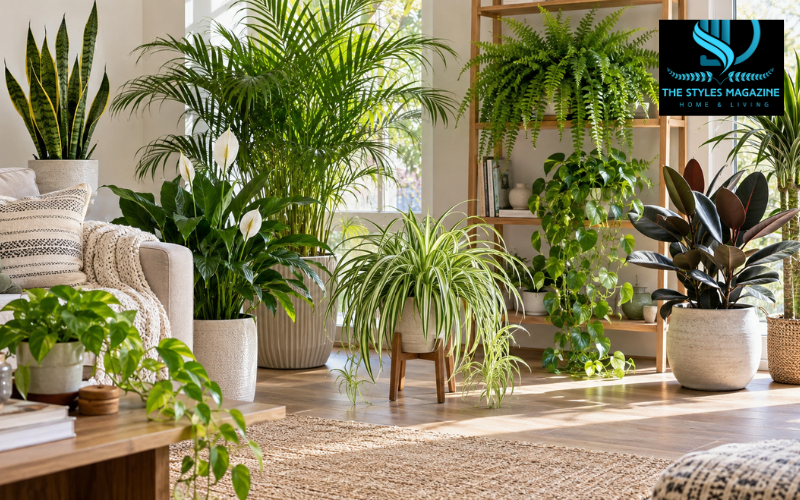
Indoor plants can make a room feel greener and more comfortable, which helps explain the interest in the best indoor plants for air quality. Many houseplants have been studied for their ability to interact with certain gases in controlled settings. However, a few pots cannot clean an entire home.
Indoor air can contain dust, pollen, smoke particles, mold spores, and gases known as volatile organic compounds, or VOCs. VOCs can come from paints, cleaning products, furnishings, building materials, and other household sources. Good indoor air quality depends mainly on controlling pollution at its source, bringing in clean outdoor air when appropriate, managing moisture, and using effective filtration when needed. The U.S. EPA continues to recommend source control, ventilation, and filtration as the main strategies for improving indoor air.
In this guide, the term “air-purifying plant” is used in the common, everyday sense. You will find low-maintenance options, plants that tolerate lower light, choices that suit bedrooms, and several plants that are safer around cats and dogs. The goal is to help you choose attractive houseplants without presenting them as a substitute for ventilation, moisture control, or a proven air cleaner.
Quick Checklist for Choosing the Right Indoor Plant
- Check your light: Choose snake plant, pothos, or some dracaenas for lower-light areas.
- Consider maintenance: Snake plant, spider plant, and pothos are easier for beginners.
- Think about pets: Spider plant, areca palm, and Boston fern are safer choices for cats and dogs.
- Match the room: Use larger plants such as areca palm in living rooms and compact plants in bedrooms or offices.
- Avoid overwatering: Constantly wet soil can encourage root problems, fungus gnats, and unwanted microbial growth.
- Keep expectations realistic: Houseplants can complement a healthy home but should not replace ventilation or effective air filtration.
What Science Really Says About Air-Purifying Indoor Plants
The idea of air-cleaning houseplants became famous after NASA research published in 1989. The study tested plants and root-zone systems against chemicals such as benzene, formaldehyde, and trichloroethylene in sealed chambers. It helped popularize the phrase NASA air purifying plants. Many modern “NASA top 10 air purifying plants” lists grew from this research, but they should not be read as rankings for real-home filtration.
The setting matters. A sealed chamber is very different from a bedroom or living room where air is continually exchanged. A later peer-reviewed review of 12 plant studies found that ordinary numbers of potted plants remove VOCs far too slowly to compete with typical building ventilation.
Plants are still worthwhile for greenery and comfort, and some release water vapor through transpiration. But they are living décor, not mechanical filters. For cleaner indoor air, source control, ventilation, sensible humidity, and appropriate filtration remain the practical priorities.
Best Indoor Plants for Air Quality at a Glance
The ten choices below balance easy care, indoor suitability, and their connection with air-quality discussions. The table is not a scientific ranking of cleaning power.
| Plant | Scientific Name | Light | Watering | Care Level | Pet Safety | Good Placement | Why Choose It |
| Snake plant | Dracaena trifasciata | Low to bright indirect | Let soil dry | Easy | Toxic | Bedroom, office | Tough and compact |
| Spider plant | Chlorophytum comosum | Medium to bright indirect | Moderate | Easy | Non-toxic | Bedroom, shelf | Beginner-friendly |
| Golden pothos | Epipremnum aureum | Low to bright indirect | Let soil partly dry | Easy | Toxic | Shelf, hanging basket | Very adaptable |
| Peace lily | Spathiphyllum spp. | Medium indirect to shade | Lightly moist | Moderate | Toxic | Living room | Attractive flowers |
| Areca palm | Chrysalidocarpus lutescens (syn. Dypsis lutescens) | Bright indirect | Evenly moist | Moderate | Non-toxic | Larger rooms | Lush tropical form |
| Boston fern | Nephrolepis exaltata | Bright indirect | Moist soil | Moderate to high | Non-toxic | Bright bathroom | Loves humidity |
| Rubber plant | Ficus elastica | Bright indirect | Partial drying | Easy to moderate | Not pet-safe | Bright corner | Large, bold leaves |
| Corn plant | Dracaena fragrans | Moderate filtered | Moderate | Easy to moderate | Toxic | Hallway, office | Upright growth |
| Madagascar dragon tree | Dracaena reflexa var. angustifolia | Bright indirect | Partial drying | Moderate | Toxic | Narrow corner | Space-efficient |
| Janet Craig dracaena | Dracaena fragrans ‘Janet Craig’ | Moderate to lower light | Moderate | Easy to moderate | Toxic | Office, living room | Dense foliage |
Snake Plant — A Tough Choice for Bedrooms and Busy Homes
Snake plant, now commonly classified as Dracaena trifasciata and formerly known as Sansevieria trifasciata, is one of the easiest houseplants to live with. It was among the plants connected with NASA’s indoor-air research and remains a common recommendation for people who want low-maintenance indoor plants for clean air.
Its upright leaves tolerate fairly low light, though growth is stronger in brighter indirect light. Use well-drained soil and let the potting mix dry between waterings; overwatering is the main risk.
Snake plants use CAM photosynthesis, allowing them to take in carbon dioxide at night and store it for use when light is available. This is sometimes simplified into “produces oxygen all night,” but oxygen-producing photosynthesis depends on light. CAM plants capture and store carbon dioxide during the darker part of their daily cycle rather than performing full light-driven photosynthesis at night.
That is why snake plant often appears in guides to air purifying plants for bedroom use, although the real advantage is easy care rather than measurable nighttime room purification. Pet owners should know that the ASPCA lists snake plant as toxic to cats and dogs.
Spider Plant — Easy Care with a Pet-Friendly Advantage
Spider plant, Chlorophytum comosum, is excellent for beginners. Its arching leaves suit hanging baskets and shelves, while mature plants often produce plantlets that are easy to propagate.
It prefers medium to bright indirect light but is adaptable and can tolerate shade better than many decorative houseplants. Keep the soil lightly moist during active growth, but avoid leaving the roots waterlogged. It can also handle short dry periods, which makes it forgiving if you occasionally forget to water.
For households with pets, spider plant has another advantage. The ASPCA lists it as non-toxic to both cats and dogs. That does not mean pets should be encouraged to chew the leaves, but it is a more suitable choice than pothos, peace lily, snake plant, or dracaena where curious animals can reach the foliage.
Golden Pothos — A Reliable Pick for Lower-Light Rooms
Golden pothos, Epipremnum aureum, is popular because it grows with very little fuss. Its heart-shaped leaves trail attractively from shelves and hanging planters, and the vines can also be trained to climb. It prefers bright, indirect light but can survive for long periods in lower-light conditions.
Let the potting mix dry somewhat between waterings and make sure the container drains well. Overwatering is more likely to cause trouble than a short dry spell. Pruning long vines helps the plant stay fuller, and stem cuttings root easily in water.
Golden pothos also appears in plant-based indoor air research, but its practical value is mainly its adaptability. The ASPCA lists it as toxic to cats and dogs because calcium oxalate crystals can irritate the mouth and digestive tract.
Peace Lily — Elegant Foliage with a Strong NASA-Study Reputation
Peace lilies, from the genus Spathiphyllum, are frequently included on lists of NASA air-purifying plants because controlled studies examined their interaction with several VOCs. Their glossy green leaves and white flower-like spathes also make them one of the more decorative choices for indoor spaces.
Peace lilies prefer indirect light and can cope with fairly shaded conditions, although better light generally supports stronger flowering. Keep the soil moist but not soggy and allow some drying between waterings. They appreciate warm, stable indoor conditions.
Their chamber-study history should not be confused with room-scale air cleaning; their best role is as attractive, shade-tolerant houseplants.
Homes with pets or small children need extra care. Peace lilies contain insoluble calcium oxalates. If chewed, they can cause painful mouth irritation, drooling, vomiting, and difficulty swallowing in pets, so place them safely out of reach or choose a non-toxic alternative.
Areca Palm — A Large, Pet-Friendly Plant for Living Spaces
Areca palm, now accepted by Kew as Chrysalidocarpus lutescens and still widely sold as Dypsis lutescens, brings a soft tropical look to larger rooms. Its clusters of stems and feathery fronds make it useful where a small tabletop plant would look lost.
Indoors, it performs best in bright, indirect light and generally prefers warm conditions. Water often enough to prevent the growing mix from becoming completely dry, but do not leave the roots sitting in water.
Because plants lose water through their leaves, an areca palm adds some moisture to nearby air. The effect varies with plant size and room conditions, so it is not a substitute for a humidifier when precise humidity control is needed.
The ASPCA lists areca palm as non-toxic to cats and dogs, making it one of the better large plants for pet-owning households.
Boston Fern — A Humidity-Loving Option for the Right Room
Boston fern, Nephrolepis exaltata, looks best when its long fronds can arch freely from a stand or hanging basket. It suits homes that can provide bright, indirect light, consistently moist soil, and relatively high humidity.
A bright bathroom can be a good location if the room receives enough natural light. Kitchens and other humid areas may also suit it. Its soil should not dry completely, but constant saturation can encourage root problems. Watering usually needs adjusting as growth and indoor conditions change.
Boston fern needs more attention than snake plant or pothos. The ASPCA lists it as non-toxic to cats and dogs, making it a useful option for readers seeking the best indoor plants for air quality and safe for pets, provided its humidity needs suit the home.
Rubber Plant — A Bold Indoor Plant for Bright, Indirect Light
Rubber plant, Ficus elastica, is valued for its large, glossy leaves and upright, tree-like shape. A healthy specimen can become a strong focal point in a living room, office, or bright corner without taking up as much floor width as a spreading palm.
Bright, indirect light is ideal, although it can handle partial shade. Use well-drained potting mix, water regularly during active growth, and avoid keeping the soil constantly wet. Rubber plants can reach several feet indoors, so give them enough headroom.
Rubber plants often appear in indoor-pollutant discussions, but passive potted plants do not clean a normal room as effectively as ventilation or filtration.
The plant releases milky sap if its leaves or stems are damaged. NC State also identifies Ficus elastica as a problem plant for cats and dogs, so it is better kept away from pets that chew foliage and from young children who may handle broken stems.
Dracaena — A Versatile Choice for Homes with Limited Space
Dracaenas are useful where you want height without a very wide plant. Three attractive choices are corn plant, Dracaena fragrans; Madagascar dragon tree, Dracaena reflexa var. angustifolia; and the compact ‘Janet Craig’ form of Dracaena fragrans. Together, these complete the ten choices in this guide.
Several dracaenas have a connection with indoor-air research, but their everyday strengths are upright growth and manageable care. Corn plants prefer bright to moderate filtered light. Madagascar dragon trees like bright indirect light but tolerate less, while ‘Janet Craig’ handles typical indoor conditions well.
Water dracaenas moderately and allow the potting mix to dry somewhat rather than keeping it constantly wet. Their narrow growth makes them useful in offices, halls, and room corners.
Dracaenas are not pet-safe. The ASPCA lists Dracaena species as toxic to cats and dogs, so households with plant-chewing pets should consider spider plant, Boston fern, or another verified non-toxic species instead.
Matching the Right Air-Quality Plant to Your Home
The best plant is the one that can stay healthy in the conditions you actually have. For beginners, snake plant, spider plant, and golden pothos are among the easiest choices. If you are looking for the best indoor plants for air quality and low light, snake plant, pothos, and selected dracaenas can cope better than sun-hungry plants, although no houseplant thrives in complete darkness.
For readers comparing the best indoor plants for oxygen and clean air, the important point is that no ordinary houseplant meaningfully oxygenates or filters an entire room. For a bedroom, snake plant and spider plant are still practical because they are compact and easy to manage.
If you have a large living room, areca palm or rubber plant can provide more visual impact. For homes with cats or dogs, spider plant, areca palm, and Boston fern are among the safer choices according to ASPCA listings.
Always check the exact botanical name when pet safety matters. Common names can be confusing. For example, different plants may be sold under similar “rubber plant” or “palm” names even though their pet-safety profiles differ.
Also consider humidity and your routine. A Boston fern may struggle in a dry room where a snake plant is comfortable. Matching the plant to the home matters more than following a generic top-ten list.
Air-Purifying Plant Myths That Can Hurt Indoor Air Quality
The biggest myth is that a few houseplants can replace an air purifier. Research does not support that idea in ordinary homes. Plants removed VOCs in sealed experimental chambers, but real rooms have much larger volumes and continuous air exchange. If particle or gas removal is a priority, use methods designed and proven for that purpose.
Another myth is that more plants automatically mean cleaner air. Many pots also mean more watering and damp growing media, so poor moisture control can create its own problems.
Claims about plants that purify the air from mold are especially misleading. A plant does not fix a mold problem in a building. Mold control requires finding and correcting the moisture source, drying wet areas, and cleaning or removing affected material as appropriate.
The EPA recommends keeping indoor humidity below 60 percent and, where possible, around 30 to 50 percent. Excess humidity encourages conditions in which mold and other biological contaminants can grow.
Overwatering can also keep potting mix constantly damp and encourage unwanted microbial growth or fungus gnats. Water each plant according to its needs rather than trying to increase humidity by keeping every pot wet.
The healthiest approach is balanced: enjoy plants for their beauty and comfort while relying on source control, ventilation, moisture management, and suitable filtration to address indoor air pollution.
Conclusion
The best indoor plants for air quality are not miniature HEPA filters. They are attractive living additions that can fit into a broader plan for a pleasant, well-managed home. Snake plant and pothos are excellent for low-maintenance care, spider plant and Boston fern offer pet-friendly options, areca palm suits larger spaces, and peace lily, rubber plant, and dracaenas provide distinctive shapes and foliage.
The famous NASA research remains an important part of the story, but its chamber results should be kept in context. In real homes, meaningful air-quality improvements come mainly from reducing pollutant sources, using clean ventilation when possible, controlling excess moisture, and using appropriate air filtration when needed.
Choose a plant that matches your light, space, watering habits, and pet-safety needs. A healthy plant that suits your home is a better choice than one selected only because it appears on a list of “air-purifying” plants.
FAQs
What Are The Best Indoor Plants For Air Quality?
Snake plant, spider plant, pothos, peace lily, areca palm, Boston fern, rubber plant, and dracaena are popular choices because they grow well indoors and have been widely studied or discussed for indoor-air benefits.
Do Indoor Plants Actually Purify The Air?
Plants can interact with certain airborne compounds under controlled conditions, but normal household quantities do not clean indoor air as effectively as ventilation, source control, or a suitable mechanical air purifier.
What Is The Best Indoor Plant For A Bedroom?
Snake plants are popular for bedrooms because they are compact, tolerate lower light, and need little watering. Spider plants are another practical option, especially for homes with cats or dogs.
Which Air-purifying Indoor Plants Are Safe For Pets?
Spider plants, areca palms, and Boston ferns are commonly listed as non-toxic to cats and dogs. Always verify the exact botanical species before bringing a new plant into a pet-friendly home.
Can Indoor Plants Remove Mold From The Air?
Indoor plants should not be used as a mold treatment. Mold problems require moisture control, proper cleaning, and sometimes professional remediation. Overwatering houseplants may actually increase moisture around the growing area.
Enjoyed it? Find more exclusive content on The Styles Magazine.
Disclaimer: The information in this article is provided for general educational and home-gardening purposes. Indoor plants may offer aesthetic, comfort, and limited environmental benefits, but they should not be considered replacements for proper ventilation, moisture control, source reduction, or effective air-filtration systems. Plant toxicity and care requirements can vary by species, so households with pets or young children should verify the exact plant variety before purchase. For persistent mold, poor indoor air quality, or health concerns related to indoor pollutants, consult an appropriate qualified professional.