Every undergraduate student knows the quiet panic of staring at a blank document at 2:00 AM. You have your assignment prompt open in one tab, twenty open browser tabs of academic journals in another, and a cursor blinking mockingly on a white screen. The research phase feels massive, messy, and entirely overwhelming. You might spend hours reading abstracts, highlighting PDFs, and taking disorganized notes, only to realize you still have no clear idea how to bridge the gap between raw data and a finished draft.
This friction is what educators and academic researchers call the writing bottleneck. When heavy writing assignment help and structural guidance are missing, students often hit a wall during the transition from gathering information to organizing and synthesizing it. Navigating higher education requires more than just raw effort—it demands a repeatable system for managing heavy coursework without burning out before finals week.
The Anatomy of a Writing Bottleneck
To fix a problem, you first have to understand where things break down. Most undergraduate writing struggles do not start at the keyboard. They start weeks earlier during the research phase.
When students dive into a major research project without a clear roadmap, they typically fall into one of three common traps:
- The Information Swamp: Downloading fifty PDFs because they look interesting, resulting in cognitive overload and decision fatigue.
- The Outline Void: Jumping straight from rough notes into writing long-form paragraphs without a logical structural skeleton.
- The Synthesis Gap: Quoting sources extensively without adding original critical analysis or connecting the dots between competing arguments.
The Cost of Disorganized Research
| Research Stage | Common Pitfall | Resulting Bottleneck |
| Discovery | Saving sources without proper citation or thematic tagging | Wasting hours trying to relocate a crucial quote during drafting |
| Outlining | Relying on chronological notes instead of thematic argument flow | Drafts that feel disjointed, repetitive, or missing a clear thesis |
| Drafting | Writing and editing simultaneously | Stalling out on sentence-level perfection before the core argument is formed |
Overcoming these hurdles means shifting your mindset from passive reading to active, modular information management. When you break a massive research assignment into smaller, digestible operational chunks, the anxiety begins to lift.
Phase 1: Curating Sources Without Drowning
The first step to beating a bottleneck is changing how you interact with scholarly literature. If you treat research like a treasure hunt where you collect every shiny object you see, you will drown in your own notes.
Instead, adopt a triage mindset. When reading a peer-reviewed paper or book chapter, do not read it from cover to cover right away.
- Look at the abstract, introduction, and conclusion first.
- Ask yourself one simple question: Does this directly answer my core research question?
If the answer is no, close the tab ruthlessly.
For students balancing multiple classes, part-time jobs, and extracurricular activities, finding the time to properly vet and organize sources can feel nearly impossible. When a semester’s demands pile up, utilizing expert writing assignment help can help students manage their time and balance multiple deliverables effectively, ensuring they don’t fall behind on foundational research stages.
Phase 2: Building the Bridge Between Research and Writing
Once you have your core handful of high-quality sources, the next hurdle is turning those notes into coherent prose. This is where many students hit a brick wall. You understand the concepts in your head, but translating them into formal academic English feels awkward and forced.
A great way to dissolve this friction is to stop trying to write linearly. You do not have to write the introduction first. In fact, professional writers often write the introduction last, after the body paragraphs have already established the core argument.
Structuring Your Argument
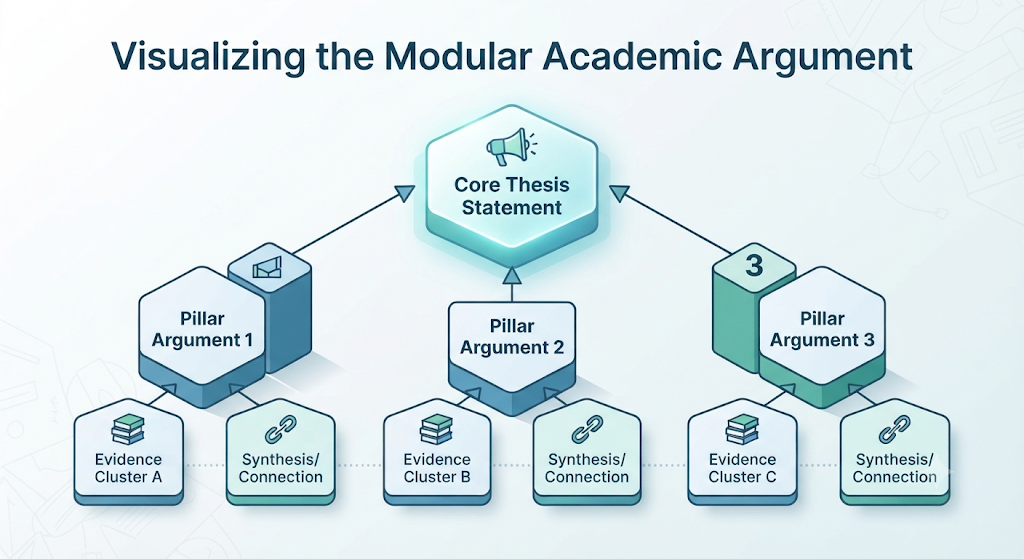
Focus on building a modular outline. Break your paper down into distinct pillars:
- The Counter-Argument: What would a skeptic say about your thesis? Address this early to strengthen your credibility.
- The Evidence Cluster: Group your sources by theme rather than by author name.
- The Synthesis: Explain why these sources agree or disagree, rather than just summarizing what each author said.
If you find yourself struggling to structure complex arguments or format your bibliographies correctly, exploring reliable avenues for research paper help online through Myassignmenthelp can give students a clearer framework for synthesizing peer-reviewed sources and formatting citations according to academic standards.
Phase 3: Drafting Through the Resistance
When you finally sit down to write the actual draft, give yourself permission to write badly. The internal critic is the ultimate enemy of momentum. Your first draft is meant to be crude, messy, and full of half-formed sentences. You cannot edit a blank page, but you can always revise a terrible paragraph.
Set a timer for twenty-five minutes and commit to writing without stopping—no backspacing to fix typos, no checking citations. Just let your thoughts flow onto the screen. Once the timer goes off, take a five-minute break. You will be amazed at how much progress you can make when you separate the drafting phase from the editing phase.
Frequently Asked Questions
Q: What is a writing bottleneck in academic research?
Ans: A writing bottleneck occurs when a student gets stuck between the research phase and the drafting phase. It is usually caused by having too many unorganized sources, lacking a clear outline, or trying to edit and write at the same time.
Q: How can I stop getting overwhelmed by too many research sources?
Ans: Adopt a triage approach. Read abstracts and conclusions first to determine if a source is truly relevant to your thesis. Keep a running annotated bibliography so you remember why you saved each article.
Q: Should I write my essay introduction first?
Ans: Not necessarily. Many students find it easier to write the body paragraphs first, where the core arguments and evidence are established, and then write the introduction and conclusion last.
Q: How do I handle proper citation formatting during the drafting stage?
Ans: Keep a dedicated document or reference management tool open while you pull notes. Tag every quote and paraphrase with its exact page number and source metadata immediately so you do not waste hours retracing your steps during final proofreading.
About The Author
My name is Ruby Walker, and I am a senior academic consultant and digital content strategist at MyAssignmentHelp. With over a decade of experience in higher education advisory roles, I specialize in helping undergraduate and postgraduate students bridge the gap between rigorous examination preparation and advanced research design.
njoyed it? Find more exclusive content on The Styles Magazine.