A fresh bouquet can brighten a room immediately, but cut flowers naturally begin to decline once they are separated from the plant. They no longer have roots supplying a steady flow of water and nutrients, so their condition depends heavily on how they are handled after cutting.
Learning how to keep cut flowers fresh is mostly about helping the stems take up water while reducing the conditions that encourage bacteria and early aging. A clean vase, fresh water, properly trimmed stems, suitable flower food, and a cool location can all make a noticeable difference.
Flowers also need regular attention after they are placed in a vase. Water can become contaminated, stem ends may become less effective at taking up water, and leaves or petals may begin to decay. Current horticultural guidance recommends keeping containers clean, removing foliage below the waterline, re-cutting stems, using floral preservative when available, and keeping arrangements away from excessive heat.
With a few simple habits, many bouquets can remain attractive for several days and sometimes considerably longer, although the exact vase life depends on the flower species, its freshness when purchased, and how it was handled before reaching your home.
Quick Guide Table
| Care Step | What to Do |
| Clean the vase | Wash thoroughly before adding flowers |
| Trim stems | Cut about 1 inch at an angle |
| Remove leaves | Keep foliage above the waterline |
| Use flower food | Follow packet directions |
| Change water | Replace every 2–3 days or when cloudy |
| Choose a cool spot | Avoid direct sunlight and heat |
| Avoid fruit | Keep flowers away from ripening produce |
Simple Steps to Keep Cut Flowers Fresh
- Wash the vase and fill it with fresh water.
- Trim the stems with clean, sharp shears.
- Remove leaves below the waterline.
- Add commercial flower food if available.
- Check and change the water regularly.
- Re-trim stems every few days.
- Keep the bouquet cool and away from ripening fruit.
Start With a Clean Vase and Fresh Water
One of the simplest ways to keep cut flowers looking good is to start with a thoroughly clean vase. Even when a vase appears clean, residue from an earlier bouquet may contain microorganisms that can multiply once fresh stems are placed in water.
Wash the vase with hot or warm soapy water and remove any visible residue from the inside. A bottle brush can help reach narrow areas. Rinse it well before adding flowers. Penn State Extension’s 2026 guidance similarly recommends cleaning vases thoroughly before putting a fresh arrangement into them.
Fill the clean vase with fresh water. For many ordinary bouquets, clean room-temperature water works well, unless the florist provides different instructions for a particular flower. University of Minnesota Extension also recommends clean, room-temperature water for fresh bouquets.
Do not simply add new flowers to old vase water. Starting with clean water reduces the amount of decaying plant material and contamination surrounding freshly cut stems.
Trim the Stems Before Putting Flowers in Water
Before arranging your bouquet, trim approximately half an inch to an inch from the bottom of each stem. If the flowers have spent time out of water during transportation, making a fresh cut is especially useful.
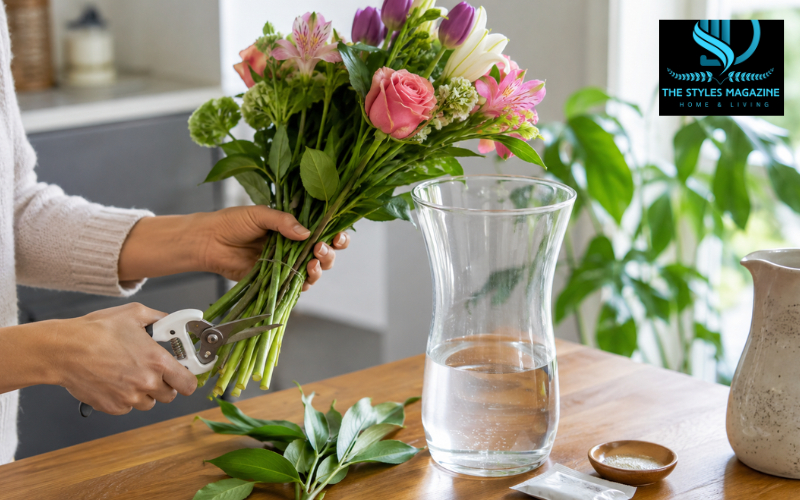
Use a sharp, clean floral knife or pair of pruning shears. A clean cut exposes fresh stem tissue and helps the flower take up water. Dull tools may squeeze or damage softer stems rather than cutting them neatly.
For most common cut flowers, make the cut at an angle. The Royal Horticultural Society recommends re-cutting stems with a clean, angled cut and using sharp tools to avoid crushing them. University of Minnesota Extension similarly recommends trimming about an inch from the stems at an angle before placing flowers in water.
Put the freshly cut stems into prepared water without leaving them sitting dry for a long period. Some flowers have special stem-care requirements, so florist instructions should take priority when they are supplied.
Remove Leaves Below the Waterline
Before putting the flowers into the vase, look at where the water level will reach. Remove leaves that would otherwise remain submerged.
Leaves sitting underwater gradually break down. This creates organic material in the water and can encourage microbial growth, which may contribute to cloudy water and poorer conditions around the stem ends.
You do not need to strip every leaf from the flower. Healthy foliage above the waterline can usually remain unless removing some leaves improves the appearance of the arrangement. The important point is to prevent leaves and other plant material from sitting underwater.
Both the RHS and Iowa State University Extension recommend removing lower foliage from cut-flower stems because submerged leaves decay and reduce water quality.
Check the vase as the bouquet ages as well. If a leaf falls into the water or a flower head begins to decay, remove it rather than allowing it to remain in the arrangement.
Use Flower Food the Right Way
Commercial flower food is usually the most reliable additive to use in vase water. The small packet included with many supermarket or florist bouquets is designed specifically for cut flowers.
Floral preservatives help provide flowers with usable carbohydrates while also helping maintain cleaner vase water. The RHS notes that proprietary cut-flower food both feeds flowers and contains treatment intended to reduce bacterial problems. Iowa State Extension recommends commercial floral preservative over common household substitutes.
Follow the instructions printed on the packet. More flower food is not necessarily better. A packet designed for a certain amount of water should be mixed at approximately that concentration rather than poured into a much smaller vase.
If you replace the water later and have additional flower food, prepare a fresh solution according to its directions. Good flower food works alongside clean-vase practices; it should not be used as a replacement for changing dirty water.
What to Put in Water to Keep Flowers Fresh
If you are wondering what to put in water to keep flowers fresh, commercial floral preservative is generally the simplest first choice. It is formulated for the needs of cut flowers rather than adapted from a household product with another purpose.
Different parts of a floral preservative serve different roles. Flowers need a small source of energy after being separated from their plant, while water conditions also need to remain suitable for good uptake and limited microbial growth.
Household alternatives such as sugar, vinegar, lemon juice, soda, aspirin, coins, and bleach appear frequently in flower-care tips. However, evidence and extension recommendations are not completely consistent across every homemade method. Iowa State Extension advises that commercial preservative performs better than homemade additions and notes that plain clean water is the better second choice when preservative is unavailable.
Therefore, avoid assuming that adding several household ingredients will automatically improve your bouquet. Correct amounts and clean water matter more than creating a complicated mixture.
How to Keep Cut Flowers Fresh Without Flower Food
You can still practice good flower care even when you do not have a packet of floral preservative.
The best approach for how to keep cut flowers fresh without flower food is to concentrate on the fundamentals. Wash the vase carefully, use fresh water, trim the stems with clean tools, remove submerged foliage, and replace the water regularly.
Iowa State Extension specifically recommends clean water without additives as the second-best option when commercial floral preservative is unavailable.
This is useful because it means you do not have to search your kitchen for several ingredients simply to keep a bouquet alive. Fresh, clean water combined with careful maintenance can be more sensible than using an incorrectly prepared homemade solution.
Check the water every day. Some bouquets drink quickly, particularly during the first day or two, so make sure the stem ends remain submerged. If the water becomes cloudy or develops an unpleasant smell, replace it rather than waiting for a scheduled water-change day.
Change the Water and Re-Trim the Stems Regularly
Putting flowers into a vase correctly is only the beginning. Regular maintenance is one of the most important parts of how to keep flowers alive longer in a vase.
Check the water level daily and replace the water completely every few days. Change it sooner if it becomes cloudy, discolored, or unpleasant-smelling. The RHS recommends changing vase water and re-cutting stems every two to four days, while other extension guidance emphasizes changing cloudy water promptly.
When changing the water, take the flowers out temporarily and trim a small amount from the bottom of the stems with a clean, sharp tool. This creates a fresh cut surface.
If the inside of the vase feels slippery or has visible residue, wash it before refilling it. Simply pouring clean water on top of old water leaves much of the existing debris behind.
Also remove wilted blooms and damaged foliage as the arrangement ages. This keeps the bouquet tidier and prevents decaying material from falling into the water.
Keep Flowers Fresh in the Right Location
Where you display a bouquet can affect how quickly it fades. In general, cut flowers last better in cooler conditions than in hot rooms.
Avoid placing the vase in strong direct sunlight or beside radiators, fireplaces, heaters, or appliances that produce significant heat. The RHS recommends keeping flower arrangements in a cooler part of the room away from sources of heat.
Warm conditions speed many of the processes involved in flower aging and can increase water loss. Mississippi State University Extension notes that high temperatures can cause flowers to use stored resources more quickly and make it harder for them to replace the water they lose.
A bright room is fine for enjoying your flowers, but they do not need to sit in intense sun all day. A cooler table, shelf, or countertop away from heating equipment is usually a better choice.
Avoid extreme cold as well, especially for tropical flowers, which may have warmer storage requirements than common temperate cut flowers.
Keep Cut Flowers Away From Ripening Fruit
A beautiful bouquet may look natural beside a bowl of apples or bananas, but separating flowers from ripening fruit is usually better for vase life.
Many fruits release ethylene as they ripen. Ethylene is a natural plant hormone involved in ripening and aging. Some flower species are particularly sensitive to it, and exposure can speed petal wilting, flower drop, or other signs of aging.
Research and professional flower-handling guidance show that flowers such as carnations, snapdragons, freesia, and many roses can be sensitive to ethylene.
Not every flower responds to ethylene in exactly the same way, but keeping bouquets away from ripening produce is a simple precaution. The RHS also recommends keeping cut-flower arrangements away from ripe fruit.
If possible, choose a table or display area separate from your fruit bowl, especially when bananas, apples, pears, peaches, or other rapidly ripening produce is present.
How to Keep Flowers Fresh Overnight
If you are trying to decide what to put in water to keep flowers fresh overnight, remember that water additives are only part of the picture. Temperature can also influence how quickly cut flowers age.
For many common bouquets, moving the vase to a cooler part of the house overnight may help. University of Minnesota Extension notes that overnight refrigeration can help extend the life of cut flowers.
However, a home refrigerator is not ideal for every bouquet. Many ordinary temperate cut flowers tolerate cold storage, while tropical flowers such as orchids, anthuriums, and birds-of-paradise generally need warmer conditions and can suffer chilling damage if kept too cold.
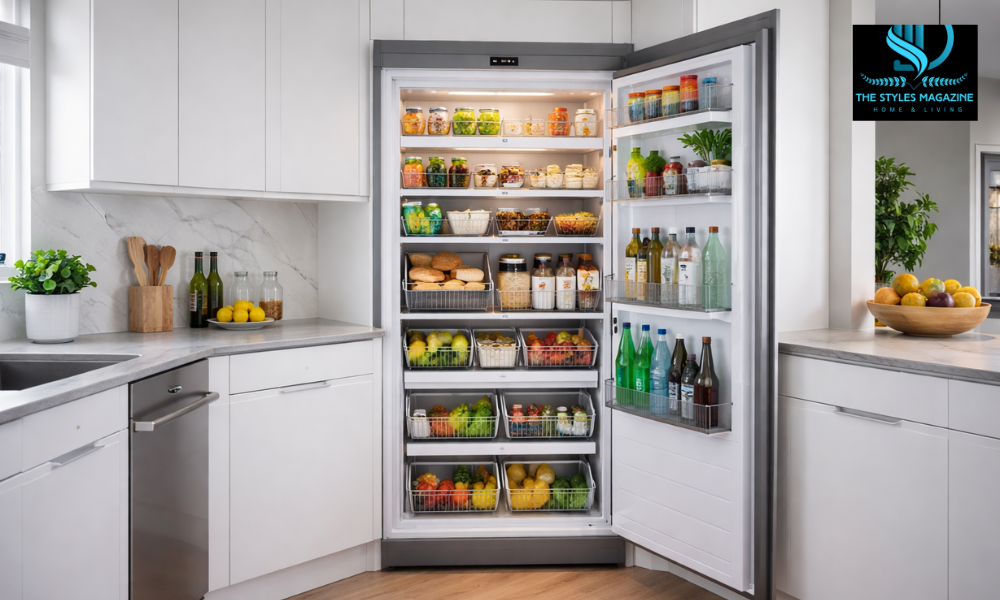
If you do refrigerate suitable flowers overnight, keep them away from fruits and vegetables that may produce ethylene. Do not allow delicate petals to touch freezing surfaces at the back of the refrigerator.
For everyday home care, simply moving flowers into the coolest suitable room overnight is often easier than repeatedly refrigerating a large arrangement.
DIY Flower Care: Vinegar, Sugar, and Other Home Remedies
Searches for how to keep cut flowers fresh DIY often lead to recipes containing sugar, vinegar, lemon juice, soda, or bleach. These ideas usually attempt to copy some of the functions of commercial flower food.
Sugar is intended to provide a source of energy, while an acidic ingredient such as vinegar may change the water’s pH. The RHS provides a simple homemade option using water, vinegar, and sugar but also states that homemade preservative is unlikely to be as effective as a proprietary cut-flower product.
For people researching how to keep flowers fresh in a vase with vinegar, this is an important distinction. Vinegar should not be treated as a guaranteed trick that will make every flower last longer. Other extension guidance goes further and recommends commercial floral preservative or plain clean water rather than relying on home mixtures.
Be especially cautious with recipes involving bleach. Do not casually combine household chemicals in vase water, and never mix household bleach with vinegar, lemon juice, acidic cleaners, or other cleaning products. The CDC warns that mixing bleach with other cleaners can release dangerous vapors, and acids can cause chlorine gas to be released.
For most households, commercial flower food used according to its label—or simply clean water with good flower care—is the safer and more predictable approach.
Common Mistakes That Make Cut Flowers Wilt Faster
Many bouquets fade early because of small care mistakes rather than a lack of special ingredients.
Leaving leaves below the waterline is a common problem because those leaves eventually decay. Using a vase that still contains residue from an earlier arrangement can also create poor water conditions from the start.
Another mistake is continuing to top up visibly dirty water instead of replacing it. Adding fresh water helps maintain the level, but cloudy or bad-smelling water should be discarded and replaced with clean water.
Damaging stems with dull cutting tools may also reduce good water uptake. Use a clean, sharp blade or shears and make fresh cuts whenever the stems need refreshing.
Location matters too. Strong heat, prolonged direct sun, and nearby ripening fruit can shorten the useful display life of many flowers.
Finally, avoid treating every flower exactly the same. Roses, tulips, lilies, daffodils, orchids, woody branches, and tropical flowers can have different handling needs. If your florist provides specific care instructions, follow those rather than applying a general home remedy to every bouquet.
Conclusion
The best approach to how to keep cut flowers fresh is not a single secret ingredient. It is a combination of simple habits that help flowers stay hydrated while keeping their vase environment clean.
Begin with a washed vase and fresh water. Trim the stems with sharp, clean tools, remove any leaves that would sit below the waterline, and use commercial flower food according to the directions when it is available. Check the water often, replace it when needed, re-trim the stems every few days, and remove flowers or foliage that have begun to decay.
Keep the bouquet in a comfortable, cool location away from strong heat and ripening fruit. Overnight cooling can be useful for suitable flowers, but very cold refrigeration is not appropriate for every species.
If you want to know how to keep cut flowers fresh at home or how to keep flowers alive longer in a vase, consistent basic care is usually more important than experimenting with numerous household additives. Clean water, healthy stems, sensible temperatures, and regular attention give your flowers the best chance of staying attractive for as long as their natural vase life allows.
FAQs
How Often Should I Change Water For Cut Flowers?
Change the vase water every 2–3 days, or sooner if it becomes cloudy or smells unpleasant. Fresh water helps reduce bacteria and supports better water uptake.
What Can I Put In Water To Keep Flowers Fresh?
Commercial flower food is usually the best option. If it is unavailable, clean fresh water and good vase care are generally more reliable than experimenting with homemade mixtures.
How Can I Keep Cut Flowers Fresh Without Flower Food?
Use a clean vase, fresh water, freshly trimmed stems, and remove submerged leaves. Change the water regularly and keep the arrangement away from heat and direct sunlight.
Does Vinegar Keep Flowers Fresh In A Vase?
Vinegar is sometimes used in DIY flower-food mixtures to adjust water acidity, but it is not a guaranteed solution. Commercial flower food or properly maintained clean water is more dependable.
Should Cut Flowers Be Refrigerated Overnight?
Some cut flowers may benefit from cooler overnight conditions, but refrigeration is not suitable for every species. Tropical flowers can be sensitive to temperatures that are too cold.
Enjoyed it? Find more exclusive content on The Styles Magazine.
Disclaimer: Flower vase life varies by species, freshness, storage, and previous handling. Follow florist-specific care instructions when provided, and avoid mixing household chemicals in flower water.