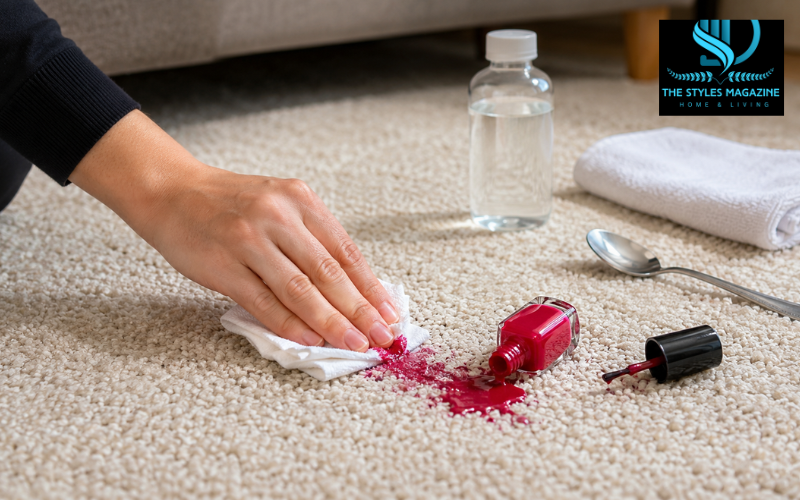
A nail varnish spill can look disastrous because the liquid contains colour, resins, and fast-drying ingredients that cling to carpet fibres. Once it begins to harden, the stain may sit around individual strands and become harder to lift with ordinary soap and water. The good news is that many small spills can be improved or removed if you act carefully and use the right method.
So, how do you get nail varnish out of carpet safely? The first step is to identify whether the varnish is still wet or has already dried. Wet varnish should be blotted before it spreads, while dried varnish usually needs to be loosened and lifted before any cleaner is applied. In both cases, rubbing or soaking the area can make the problem worse.
Carpet colour and material also matter. A cleaner that works on a pale synthetic carpet may fade a dark carpet or damage wool. Always use small amounts, work slowly, and test any product in a hidden spot first. If the carpet is valuable, handmade, or difficult to identify, professional advice may be safer than experimenting.
Quick Guide Table
| Situation | Best Approach | Important Caution |
| Fresh, wet spill | Blot with a white cloth from the outside inward | Do not rub or spread the varnish |
| Dried nail varnish | Lift flakes with a blunt spoon, then vacuum | Avoid pulling or cutting carpet fibres |
| Synthetic carpet | Try patch-tested rubbing alcohol or non-acetone remover | Never pour cleaner directly onto the carpet |
| Wool or delicate carpet | Blot gently and contact a professional cleaner | Strong solvents may damage fibres or dyes |
| White or pale carpet | Consider 3% hydrogen peroxide for leftover colour | Patch-test because it may bleach the carpet |
| No nail polish remover | Use rubbing alcohol, followed by mild washing-up liquid | Do not mix several cleaning chemicals |
| After stain removal | Rinse lightly, blot dry, air-dry, and vacuum | Avoid soaking the carpet or backing |
The First Steps for Wet and Dried Nail Varnish
For a wet spill, place a clean white paper towel or cloth over the varnish and press gently. Lift the towel straight up, move to a clean section, and repeat. Do not wipe from side to side, as this spreads the colour across a larger area. Work from the outside edge towards the centre so the stain stays contained.
If there is a thick puddle, use the edge of a blunt spoon to lift away some of the liquid before blotting. Avoid pressing the spoon down into the pile. The aim is to remove surface varnish without forcing it towards the backing.
For dried nail varnish, gently break up the raised surface with a blunt butter knife or spoon. Work slowly so you do not cut or pull the carpet fibres. Vacuum the loose flakes before applying a liquid cleaner. Removing as much dry material as possible gives the cleaning solution less varnish to dissolve.
Do not rush into using strong chemicals. First remove what you can physically, then inspect the remaining mark under good light.
Check the Carpet Material and Colour First
Before choosing a treatment, check the carpet label, care guide, purchase paperwork, or manufacturer’s website if available. Synthetic carpets such as nylon or polyester often tolerate careful spot cleaning better than wool, silk, or other natural fibres. However, even synthetic carpet can have dyes, adhesives, or backing materials that react badly to solvents.
Wool carpets need extra care because harsh products, too much rubbing, and excess moisture can affect their texture and colour. Handmade and antique carpets may also use dyes that are not colourfast. In these cases, it is best to contact a carpet-cleaning professional rather than risk leaving a pale patch or damaged pile.
Always patch-test your chosen cleaner. Apply a tiny amount to a clean white cloth and dab an area hidden beneath furniture or inside a cupboard. Wait until it dries before checking for fading, colour transfer, stiffness, or any change in texture. A quick test can prevent a small varnish stain from becoming a larger area of permanent damage.
Supplies to Gather Before Cleaning
Having everything ready helps you work carefully without leaving the stain untreated. You will usually need clean white cloths or paper towels, a blunt spoon, a vacuum cleaner, cold water, mild washing-up liquid, and a dry towel.
Depending on the carpet and the patch-test result, you may also use non-acetone nail varnish remover or rubbing alcohol. Cotton buds can help with very small marks because they allow you to control where the cleaner goes. A soft brush may be useful after the carpet has fully dried, but it should not be used to scrub wet varnish.
Use white cloths rather than coloured ones because dye from a towel can transfer to a damp carpet. Open a nearby window for ventilation, keep cleaning products away from flames, and follow the safety directions on the product label.
How to Remove Nail Varnish with Non-Acetone Remover
Non-acetone nail varnish remover is often chosen because it is usually less aggressive than pure acetone. However, “non-acetone” does not automatically mean safe for every carpet. It still contains solvents that may affect colour, backing, or adhesive, so patch testing remains essential.
After removing the surface varnish, place a small amount of remover on a clean white cloth or cotton bud. Do not pour it directly onto the carpet. Dab the stain gently, starting at the edge and moving inward. Hold the cloth against the mark for a few seconds, then lift it to see whether colour has transferred.
Move to a clean part of the cloth after every few dabs. Reusing a stained section may put varnish back onto the carpet. Continue slowly until little or no pigment transfers. It is better to repeat a light treatment than to soak the carpet in one attempt.
Stop immediately if the carpet dye appears on the cloth, the fibres become sticky, or the area starts to lighten. Once the varnish has lifted, remove the cleaning residue with a mild washing-up liquid solution and cold water.
How to Get Nail Polish Out of Carpet with Rubbing Alcohol
Rubbing alcohol can be a useful alternative when nail varnish remover is unavailable or unsuitable. It may help break down the dried product so it can transfer onto a cloth. As with any solvent, it should be used sparingly and tested first.
Dampen a white cloth or cotton bud with rubbing alcohol. The cloth should be moist, not dripping. Dab a small section of the stain and wait briefly before blotting with a dry part of the cloth. Continue in small areas so you can watch for fading or texture changes.
If pigment transfers, keep changing to a clean section of cloth. Do not scrub, twist, or press hard. These actions can spread the varnish and damage the pile. For a stubborn spot, several controlled treatments are safer than using a large amount at once.
After the colour stops transferring, rinse the area lightly. Mix a few drops of mild washing-up liquid with cold water, dab it onto the treated spot, and blot with a fresh damp cloth. This helps remove loosened varnish and alcohol residue.
How to Get Nail Polish Out of Carpet Without Nail Polish Remover
If you need to know how to get nail polish out of carpet without nail polish remover, rubbing alcohol is usually the most practical household alternative. It can loosen the varnish without relying on acetone, although it still needs a patch test.
A mild washing-up liquid solution can help clean the residue left after blotting, but soap and water alone may not dissolve varnish that has already hardened. It is most useful for fresh marks after the excess product has been lifted, or as a rinsing step after another cleaner.
For a very small fresh spill, repeated blotting may remove more than expected before any solvent is needed. Take your time and keep switching to clean cloths. The less varnish left on the surface, the easier the final cleaning stage becomes.
Never mix several household chemicals in an attempt to make a stronger cleaner. Mixing products can create harmful fumes, damage carpet dyes, or leave sticky residue. Choose one tested method, rinse it away, and allow the area to dry before deciding whether another treatment is needed.
Using Hairspray on a Nail Varnish Stain
Some advice on how to get nail polish out of carpet with hairspray comes from older hairspray formulas that contained a high level of alcohol. That alcohol could sometimes help loosen nail varnish. Modern formulas vary widely, and some contain oils, conditioners, fragrances, or sticky ingredients that may leave a second stain.
If you decide to try hairspray, check that alcohol appears high on the ingredient list and patch-test it first. Spray a small amount onto a white cloth rather than covering the carpet directly. Dab the varnish carefully and blot with a clean section as the colour lifts.
Do not use repeated heavy sprays. Too much product may spread through the pile and reach the backing. Once treatment is complete, clean the area with diluted washing-up liquid to remove hairspray residue, then blot with cold water.
Rubbing alcohol is generally easier to control because you know which active cleaner you are applying. Hairspray should be viewed as a backup method rather than the first choice.
How to Get Nail Polish Out of Carpet with Baking Soda
Baking soda is often recommended for household stains, but it does not dissolve dried nail varnish on its own. Its main value is absorbing some moisture from a very fresh spill or helping manage odour after cleaning. It should not be treated as a complete stain remover.
For a fresh spill, first lift and blot as much varnish as possible. A small amount of baking soda may then be sprinkled over damp residue to absorb moisture. Allow it to sit briefly, then vacuum it carefully. Do not rub the powder into the carpet, as this can push varnish and fine particles deeper into the pile.
After vacuuming, treat the remaining colour with a patch-tested cleaner such as rubbing alcohol or non-acetone remover. Baking soda should not be mixed randomly with solvents or other cleaning chemicals. Apply each product separately and rinse the area between treatments.
When people search for how to get nail polish out of carpet with baking soda, they often expect a simple powder-only solution. In reality, it is most useful as a supporting step, not the main method for breaking down the varnish.
Does Hydrogen Peroxide Get Nail Polish Out of Carpet?
Hydrogen peroxide may help lighten a remaining coloured mark, but it is not suitable for every carpet. A 3% household solution can act as a mild bleaching agent, which means it may remove carpet dye along with the stain.
It should only be considered for white or very pale, colourfast carpets after a hidden patch test. Apply a tiny amount to a white cloth or cotton bud and dab the mark carefully. Do not pour it onto the carpet or leave the area soaked.
Avoid hydrogen peroxide on dark, bright, patterned, wool, antique, or delicate carpets. Even when the product appears safe during a quick test, it may continue to lighten the area as it dries. Check the test spot after it has dried completely.
So, does hydrogen peroxide get nail polish out of carpet? It may reduce leftover colour in some cases, but it is not a universal solution. For most coloured carpets, a tested solvent and careful blotting are safer first steps.
Rinsing, Drying, and Restoring the Carpet Fibres
Once the nail varnish has stopped transferring, the carpet still needs to be rinsed. Cleaning products left in the fibres can attract dirt, create stiffness, or leave a visible ring.
Mix a few drops of mild washing-up liquid with cold water. Lightly dampen a clean white cloth and dab the treated area. Follow with another cloth dampened with plain cold water to remove the soap. Use as little moisture as possible, especially if the stain is close to the backing.
Press a dry towel firmly over the spot to absorb water. You can place a clean, heavy object on top of the towel for a short period, but protect the object from moisture. Replace the towel if it becomes wet.
Allow the carpet to air-dry completely. Keep people and pets away from the area while it is damp. Once dry, vacuum gently to lift the fibres and blend the cleaned spot with the surrounding carpet. Do not judge the final result while the carpet is still wet, as damp fibres often appear darker.
Common DIY and Reddit Tips That Can Make the Stain Worse
Online advice can be useful, but not every popular method suits every carpet. One of the most damaging mistakes is scrubbing the stain. Scrubbing spreads the varnish, roughens the fibres, and may create a larger patch that is harder to hide.
Another common mistake is pouring acetone, remover, alcohol, or peroxide directly onto the floor. Excess liquid can carry dissolved varnish deeper into the pile and may damage the backing or adhesive. It can also create a ring around the original stain.
Hot water should be avoided because it may affect carpet dyes and does not reliably dissolve nail varnish. Coloured towels can also transfer dye, especially when used with solvents. White cloths make it easier to see whether the varnish or the carpet colour is lifting.
Reddit discussions may suggest vinegar, window cleaner, shaving foam, hairspray, baking soda mixtures, or other household products. Before following any such tip, check the carpet care instructions and test the product. A method that worked on one synthetic carpet may damage wool or a different dye.
When Professional Carpet Cleaning Is the Safer Choice
Professional help is sensible when the carpet is wool, silk, antique, handmade, or made from an unknown fibre. A trained cleaner can identify the material and select a treatment that is less likely to cause fading or texture damage.
You should also call a professional if the spill is large, has been present for a long time, or has soaked through to the backing or underlay. Deep varnish may keep returning to the surface as the carpet dries, appearing as though the stain has come back.
Stop home treatment if the fibres feel sticky, hard, melted, or rough, or if carpet colour transfers to your cloth. Continuing after signs of damage may make repair more difficult.
Professional cleaning cannot guarantee complete removal, especially when strong varnish dye has permanently changed the carpet colour. However, it may improve the stain while reducing the risk of damage from repeated DIY treatments.
Conclusion: A Careful Method Gives the Best Result
How do you get nail varnish out of carpet without making the stain worse? Start by treating the spill according to whether it is wet or dry. Blot fresh varnish, lift dried flakes carefully, and use only a small amount of a cleaner that has passed a hidden patch test.
Non-acetone remover or rubbing alcohol may help on many synthetic carpets, while hairspray and baking soda have more limited roles. Hydrogen peroxide should be reserved for suitable white or very pale carpets because it can lighten colour.
Work slowly, blot instead of rubbing, and rinse away cleaning residue with cold water and mild washing-up liquid. Allow the carpet to dry fully before deciding whether another treatment is needed. Older or deeply set stains may not disappear completely, and valuable or delicate carpets are often safest in professional hands.
FAQs
Can Nail Varnish Be Completely Removed From Carpet?
Fresh nail varnish can often be removed with careful blotting and a suitable cleaner. Older stains may leave some colour behind, especially if the varnish has reached the carpet backing.
Can I Use Acetone On Carpet?
Pure acetone is risky because it may fade carpet dye, weaken synthetic fibres, or damage the backing. A patch-tested non-acetone remover or rubbing alcohol is usually a safer option.
Does Baking Soda Remove Nail Polish From Carpet?
Baking soda may absorb moisture from a fresh spill, but it does not dissolve dried nail varnish. A tested solvent is normally needed to lift the remaining pigment.
Will Hairspray Remove Nail Varnish From Carpet?
Alcohol-based hairspray may loosen some stains, but modern formulas can leave sticky residue. Test it first, use only a small amount, and rinse the area afterwards.
Should I Use Hot Or Cold Water?
Use cold water when rinsing the treated carpet. Hot water does not reliably remove nail varnish and may affect carpet dyes, spread residue, or make the damaged area more noticeable.
Enjoyed it? Find more exclusive content on The Styles Magazine.
Disclaimer: Always patch-test cleaners in a hidden area first. Carpet materials and dyes vary, so seek professional cleaning advice for wool, delicate, valuable, large, or deeply soaked stains.