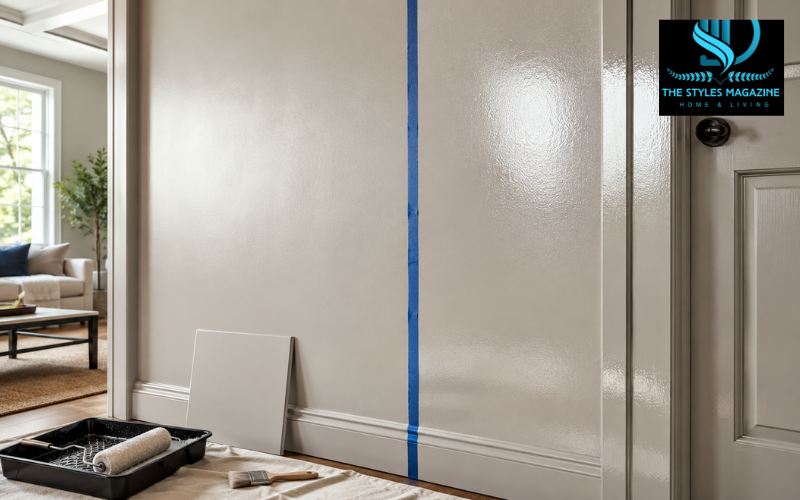
Choosing between satin and semi-gloss paint may seem like a small decision, but it can change how a room looks, how easy the surface is to clean, and how well the finish holds up over time. Both finishes have some shine, yet they reflect light at different levels. Satin gives walls and woodwork a soft, smooth glow, while semi-gloss creates a brighter and more noticeable shine.
The best option depends on where the paint will be used. A busy hallway needs a finish that can handle marks and wiping. A bathroom needs protection from moisture. A living room may look better with less glare, especially if the walls are not perfectly smooth. Doors, cabinets, and baseboards often need a tougher surface because they are touched and cleaned more often.
In most homes, satin works well on larger wall areas because it balances appearance and washability. Semi-gloss is usually more suitable for trim, doors, cabinets, and damp or heavily used spaces. However, modern paint formulas have improved, so the product line matters as well as the sheen. Some newer satin paints provide stronger stain and moisture resistance than older formulas.
Satin vs Semi Gloss at a Glance
| Feature | Satin Paint | Semi-Gloss Paint |
| Sheen | Soft, pearl-like glow | Brighter, more reflective shine |
| Durability | Strong enough for normal household wear | Better for heavy use and frequent cleaning |
| Washability | Easy to wipe when a quality product is used | Usually handles repeated scrubbing better |
| Moisture resistance | Good in suitable formulas | Generally stronger in damp or splash-prone areas |
| Hiding flaws | Better at softening small imperfections | More likely to highlight dents and brush marks |
| Texture and look | Smooth, warm, and subtle | Slicker, sharper, and more polished |
| Cost | Varies by brand and formula | Varies by brand and formula |
The biggest practical difference in the satin vs semi gloss comparison is the balance between softness and protection. Satin gives a more relaxed appearance and hides minor wall flaws more effectively. Semi-gloss reflects more light, stands up well to cleaning, and creates a harder-looking finish.
For most interior walls, satin is the safer all-round choice. For bathroom trim, kitchen cabinets, doors, baseboards, and other surfaces that receive frequent contact, semi-gloss is often more practical. Sherwin-Williams places satin below semi-gloss on its reflectivity scale and notes that higher-sheen finishes generally offer stronger stain resistance and easier cleaning.
Quick Selection Tips
- Choose satin for large interior walls and surfaces with minor imperfections.
- Choose semi-gloss for doors, cabinets, baseboards, and moisture-prone spaces.
- Use satin when you want less glare in a bright room.
- Use semi-gloss when easy cleaning and durability are the main priorities.
- Test both finishes in the room’s actual lighting before painting everything.
The Main Difference in Sheen and Appearance
Satin paint has a low-to-medium sheen that is often described as soft, velvety, or pearl-like. It reflects enough light to keep a surface from looking flat, but the shine is usually gentle. This makes satin feel warm and comfortable on bedroom, hallway, and family-room walls.
Semi-gloss has a clearer and brighter shine. It reflects more light and creates a cleaner, sharper look. On doors, trim, and cabinets, this extra shine can help architectural details stand out. It can also make painted surfaces feel more finished and polished.
The mood created by each finish is different. Satin tends to feel calm and understated, so it works well in relaxed living spaces. Semi-gloss feels more formal and crisp. Used across a large wall, it may appear too shiny for some people, but on smaller accent surfaces it can create useful contrast. Official sheen guides place semi-gloss above satin and below full gloss in light reflection.
How Lighting Changes the Look of Each Finish
Paint sheen does not look the same in every room. Natural daylight, ceiling lights, lamps, and even the direction of a wall can affect how much shine you notice. Satin usually spreads reflected light more softly, while semi-gloss produces brighter highlights.
In a sunny room with large windows, semi-gloss walls can create strong glare, especially on walls facing the light. Satin is often more comfortable in these spaces because it gives a mild glow without turning every bright area into a reflection. In a darker room, semi-gloss can bounce some light around, but it may also reflect lamps in uneven patches.
Room size matters too. A semi-gloss finish on every wall in a small room can feel busy because the shine changes as you move. Satin usually gives a more even appearance across large surfaces. Sherwin-Williams also notes that high-sheen surfaces draw attention to the wall itself and may create excessive glare under strong artificial lighting.
Durability, Cleaning, and Everyday Maintenance
Semi-gloss is widely chosen for hard-working surfaces because it usually resists stains, moisture, and repeated cleaning better than lower-sheen finishes. Fingerprints, cooking marks, and splashes are easier to wipe from a smooth semi-gloss surface. This is useful on doors, cabinets, trim, and areas around sinks.
Satin is still washable and durable enough for many homes. A good-quality satin wall paint can handle normal scuffs, fingerprints, and occasional wiping in hallways, family rooms, and children’s bedrooms. It also avoids the sharper glare of semi-gloss, making it easier to use across a full room.
It is important not to judge durability by sheen alone. Modern paint formulas can improve stain resistance and washability even in lower sheens. Sherwin-Williams, for example, explains that certain current product lines use film-forming technology to improve resistance to staining, burnishing, and water marks in matte, satin, and semi-gloss finishes. The product’s intended use and cleaning instructions therefore matter as much as its sheen name.
Surface Imperfections and Preparation Requirements
Satin is more forgiving when a wall has small dents, repaired patches, light texture, or slight roller marks. Its softer reflection does not remove these flaws, but it makes them less noticeable. This is one reason satin is often preferred for older walls that are in reasonable condition but not perfectly smooth.
Semi-gloss reflects light more directly, so bumps, scratches, brush lines, and uneven repairs may stand out. The brighter the light, the easier these defects are to see. A semi-gloss finish can look excellent on smooth trim or cabinets, but it may make a poorly prepared wall look worse.
Preparation should match the chosen finish. Clean the surface, fill holes, sand raised repairs, remove dust, and use primer where needed. For semi-gloss, spend extra time checking the surface from different angles under strong light. Manufacturer guidance also warns that the higher the sheen, the smoother the surface should be when appearance matters.
Satin vs Semi Gloss for Bathroom Walls and Trim
Bathrooms bring together moisture, cleaning, and appearance, so there is no single answer for every surface. Satin can work well on bathroom walls when the room has good ventilation and the paint is specifically designed to resist moisture and mildew. It gives the walls a softer look and reduces glare from mirrors and bright vanity lights.
Semi-gloss is often preferred for bathroom trim, doors, cabinets, and areas that are likely to be touched or splashed. Its smoother, more reflective surface is usually easier to wipe and less likely to hold water marks. In a poorly ventilated bathroom, semi-gloss may offer a practical advantage, although proper ventilation and preparation remain essential.
Current Sherwin-Williams guidance says that either satin or semi-gloss can be suitable where moisture resistance is needed, and the company also offers bathroom-focused satin products. This shows why the formula should be checked rather than assuming every satin paint is unsuitable for bathrooms.
Choosing Between Satin and Semi Gloss for Interior Walls
For family rooms, bedrooms, hallways, and foyers, satin is usually the more balanced choice. It has enough sheen to make cleaning easier than with flat paint, yet it remains soft enough for large wall areas. In children’s rooms, satin can handle common fingerprints and light scuffs without creating an overly shiny appearance.
Semi-gloss walls may be useful in very busy areas that require frequent washing, but they are less forgiving. They can show roller marks, old repairs, and uneven drywall. They may also feel too reflective in rooms with large windows or many lights.
For most homeowners comparing satin vs semi gloss for walls, satin offers the better mix of comfort, cleanability, and flaw concealment. Semi-gloss is better treated as a special-purpose wall finish rather than the default for every room.
Semi Gloss and Satin on Doors, Cabinets, and Baseboards
Doors, cabinets, and baseboards receive more direct wear than walls. Hands touch doors and cabinet fronts, cooking grease settles on kitchen surfaces, shoes strike baseboards, and vacuum cleaners bump lower trim. Semi-gloss handles these conditions well because it creates a smooth finish that is easy to wipe.
It also adds visual separation between walls and trim. For example, satin walls paired with semi-gloss white baseboards create a clean difference in shine even when the colors are similar. The trim looks sharper without making the whole room glossy.
Satin can still be used on doors and cabinets when a softer, furniture-like look is preferred. A high-quality satin enamel may provide enough durability for lightly used areas. However, busy kitchens, family entrances, and children’s spaces often benefit from the extra washability of semi-gloss. Current manufacturer ranges commonly offer satin and semi-gloss options for doors, trim, and cabinetry.
Satin vs Semi Gloss Black and White Paint
Dark colors make changes in sheen easier to notice. With satin vs semi gloss black paint, satin often gives a deep, smooth appearance with controlled reflection. Semi-gloss black looks bolder and more polished, but it can show fingerprints, dust, scratches, and uneven preparation more clearly.
White paint behaves differently because it already reflects a large amount of light through its color. Satin white usually looks soft and clean on walls, while semi-gloss white appears brighter and crisper on doors, trim, and cabinets. In a sunny room, semi-gloss white may produce noticeable glare. In a dim area, it can help painted details stand out.
Neither color changes the basic performance of the sheen, but dark and light shades can change how strongly the finish is perceived. Testing is especially important with black, deep navy, bright white, and other colors that make reflections or surface flaws obvious.
Satin vs Semi Gloss Wood Finish
On wood, satin produces a natural-looking finish that allows grain and texture to remain visible without strong reflections. It suits furniture, wall paneling, interior doors, and decorative woodwork where a calm and smooth appearance is wanted. It can also make older wood look more forgiving because minor scratches are less obvious.
Semi-gloss gives wood a brighter, more finished look. It is often chosen for painted doors, trim, cabinets, and furniture that needs regular cleaning. The extra reflection can make detailed molding or carefully prepared wood grain look richer, but it can also reveal sanding marks and uneven brushwork.
For stained wood, the sheen usually comes from a clear protective topcoat rather than the stain itself. The best choice depends on how much shine you want, how often the item is handled, and how smooth the prepared surface is.
Satin vs Semi Gloss Polyurethane
Paint adds color and protection, while polyurethane is usually a clear topcoat used to protect wood. Satin and semi-gloss polyurethane are available in different formulas, including water-based and oil-based products, and they dry to different levels of shine.
Satin polyurethane gives floors, furniture, cabinets, and woodwork a softer appearance. It tends to hide light scratches, dust, and normal wear more effectively. Semi-gloss polyurethane reflects more light and can make wood grain appear stronger, but marks may be more visible.
The sheen does not automatically tell you whether a polyurethane is suitable for floors. Use a product labeled for the specific surface. Minwax, for example, offers floor-rated polyurethane in satin, semi-gloss, and gloss, while warning that some other clear finishes are not intended for floors.
Satin vs Semi Gloss vs Eggshell and Gloss
On the common sheen scale, flat or matte has the least reflection, followed by eggshell, satin, semi-gloss, and gloss. Eggshell is softer than satin and often hides wall flaws more effectively, but it may not be as washable. Satin offers a middle ground for walls that need some durability.
Semi-gloss sits above satin and is better suited to trim, doors, cabinets, and moisture-prone areas. Full gloss has the strongest reflection and can be highly durable, but it demands careful preparation because it highlights nearly every defect.
Eggshell may be the better choice for low-traffic living rooms or adult bedrooms where a low sheen is preferred. Satin suits busier walls. Semi-gloss works well on high-contact features, while gloss is best reserved for smooth statement surfaces or carefully finished woodwork. Manufacturer categories can overlap slightly, so one company’s satin may look closer to another company’s eggshell or low-lustre finish.
Satin vs Semi Gloss Sherwin-Williams and Final Selection Factors
When comparing satin vs semi gloss Sherwin-Williams products, do not assume every paint line will create exactly the same appearance. Paint makers measure sheen, but the final result can vary with the formula, color, number of coats, application method, wall texture, and lighting. Even finish names are not perfectly identical across brands.
Before buying enough paint for the full project, apply samples to the actual surface. View them in daylight, at night, and from several angles. A sample board is helpful, but testing the real wall or trim gives a more accurate result because texture affects reflection.
Choose satin when you want a gentle glow, easier flaw concealment, and reliable washability on larger wall areas. Choose semi-gloss when moisture, frequent touching, repeated cleaning, or a crisp trim appearance matters most. Also consider the room’s ventilation, the condition of the surface, the amount of traffic, and whether you prefer a subtle or polished finish.
Conclusion: Selecting the Right Finish for Your Space
The satin vs semi gloss decision is mainly a choice between a softer appearance and stronger reflection. Satin is the more forgiving option for many interior walls because it offers a smooth glow, reasonable washability, and less glare. It is well suited to bedrooms, family rooms, hallways, foyers, and many well-ventilated bathrooms.
Semi-gloss is usually the stronger choice for doors, cabinets, baseboards, trim, and surfaces exposed to moisture or frequent cleaning. Its shine creates a crisp appearance and a practical surface, but it requires better preparation because flaws are easier to see.
There is no need to use one finish everywhere. Many successful interiors use satin on the walls and semi-gloss on the trim. Before making the final choice, test a small area with the exact paint, color, and application method you plan to use. Seeing both finishes in the room’s real lighting is the simplest way to avoid an expensive change later.
Frequently Asked Questions
Is Satin Or Semi-gloss Better For Walls?
Satin is usually better for interior walls because it provides a soft glow, offers reasonable washability, and does not highlight dents, patches, or uneven texture as strongly as semi-gloss.
Should I Use Satin Or Semi-gloss In A Bathroom?
Satin can work on well-ventilated bathroom walls when the paint is moisture-resistant. Semi-gloss is often better for doors, trim, cabinets, and areas exposed to frequent splashes.
Which Is Easier To Clean, Satin Or Semi-gloss?
Semi-gloss is generally easier to clean because its smoother and more durable surface handles moisture, fingerprints, stains, and repeated wiping better. Satin is still suitable for normal household cleaning.
Does Semi-gloss Show More Imperfections Than Satin?
Yes. Semi-gloss reflects more light, which can make dents, brush marks, repairs, and uneven surfaces easier to notice. Satin has a softer sheen that helps reduce their visibility.
Is Satin Or Semi-gloss Better For Wood?
Satin gives wood a soft and natural appearance, while semi-gloss creates a brighter finish with stronger washability. Semi-gloss is often preferred for frequently handled doors, cabinets, and trim.
Enjoyed it? Find more exclusive content on The Styles Magazine.
Disclaimer: This article provides general painting guidance. Results may vary by paint brand, product formula, surface condition, preparation, lighting, and application method.