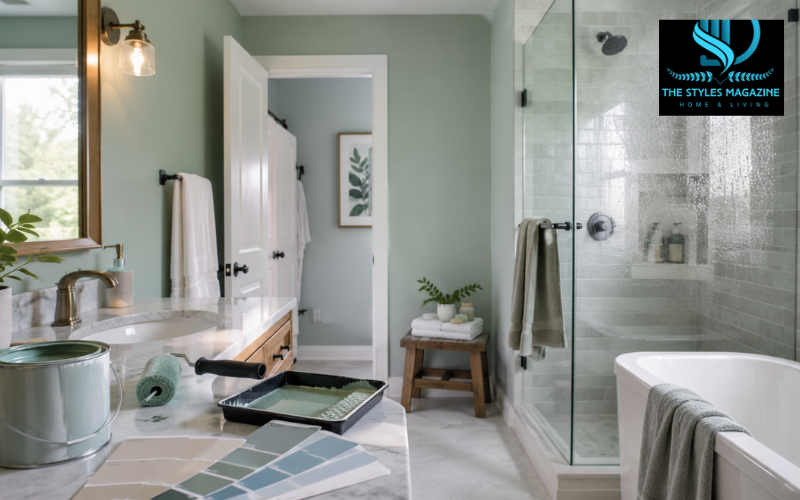
Bathroom paint has a harder job than paint used in most rooms. It regularly faces steam, water droplets, temperature changes, soap residue, and frequent cleaning. In a full bathroom, warm showers leave condensation on the walls and ceiling. If the coating is not suitable for that environment, it may eventually stain, peel, bubble, or develop mold and mildew on the paint film.
Choosing bathroom paint is therefore about more than finding an attractive color. The finish must be washable, the formula should cope with moisture, and the surface needs careful preparation. Ventilation also matters. A bathroom with an effective exhaust fan and a window places less stress on paint than a small room where steam remains trapped.
The right choice depends on how the space is used. A powder room without a shower can handle a wider range of finishes, while a busy family bathroom needs stronger moisture resistance and easier cleaning.
Quick Bathroom Paint Guide
| Bathroom Need | Recommended Choice | Best For |
| Strong moisture protection | Semi-gloss finish | Busy bathrooms with showers |
| Softer, modern appearance | Satin finish | Most bathroom walls |
| Low-sheen finish | Bathroom-rated washable matte | Well-ventilated bathrooms |
| Easy-to-clean surfaces | Satin or semi-gloss enamel | Doors, trim, and cabinets |
| Small bathroom color | Warm white, pale blue, or soft green | Making compact spaces feel brighter |
| Mold and mildew protection | Mildew-resistant bathroom formula | Humid or poorly ventilated rooms |
What to Look for in the Best Bathroom Paint
The best bathroom paint should form a durable coating that tolerates normal humidity and occasional splashes without softening or losing its appearance. Look for terms such as moisture resistant, washable, scrubbable, and mildew resistant on the label. These details are more useful than assuming every interior paint will perform equally well.
Washability is important around sinks, toilets, towel rails, and light switches, where fingerprints, water marks, and cosmetic residue collect. A strong coating allows gentle cleaning without leaving shiny patches or removing color.
Mold- and mildew-resistant additives help protect the dried paint film, but they cannot repair leaks, improve poor airflow, or remove existing mold. Low-VOC and low-odor formulas may also make application more comfortable, though the room should still be ventilated while painting and drying.
Choosing Bathroom Paint for Moisture and Humidity
Steam cools when it touches walls, mirrors, and ceilings, creating condensation. If airflow is weak, that moisture can remain on the surface. Repeated wetting and drying places pressure on the coating, especially around a bathtub or shower.
Standard interior paint may be acceptable in a well-ventilated powder room, but a full bathroom benefits from paint rated for humid or moisture-prone spaces. Bathroom-specific products and high-quality washable interior paints create a tougher surface. Some manufacturers now offer moisture-resistant technology in lower-sheen finishes, so a bathroom no longer has to look highly glossy.
Paint alone cannot control moisture. An exhaust fan that sends air outside, an open window where practical, and regular drying of wet surfaces all help. The EPA describes moisture control as the key to controlling mold and advises running the bathroom fan or opening a window during showers.
Satin vs. Semi-Gloss Bathroom Paint
Satin and semi-gloss are the finishes most often used on bathroom walls. Satin has a soft glow that reflects some light without looking polished. It is normally washable, works well across large wall areas, and is more forgiving of small dents, patches, and uneven drywall.
Semi-gloss creates a brighter, more reflective surface. It usually handles moisture and repeated wiping better than lower-sheen paint, making it useful near sinks, showers, doors, and trim. Its drawback is that the shine can highlight wall imperfections, especially under strong lighting. Lowe’s currently describes semi-gloss as suitable for high-moisture spaces and notes that satin can be scrubbed clean in moisture-prone rooms.
For many rooms, satin offers the best balance of appearance and performance. Semi-gloss is practical for very humid bathrooms, children’s bathrooms, weakly ventilated spaces, or surfaces cleaned frequently. However, formula quality matters: a premium satin bathroom product may perform better than a basic semi-gloss paint.
Can Flat or Matte Paint Be Used in a Bathroom?
Traditional flat paint is usually a poor choice for a full bathroom because it shows water marks and can be difficult to clean. It may work in a lightly used powder room without a shower, but a washable formula is safer than basic builder-grade flat paint.
Modern matte coatings have changed the situation. Specialized bathroom products can provide a low-sheen appearance while remaining scrubbable and suitable for humid conditions. Benjamin Moore Aura Bath & Spa, for example, is currently sold as a matte bathroom paint for high-humidity spaces and is described as scrubbable, low odor, and resistant to mold and mildew on the coating.
This does not mean any matte paint is suitable for steam. Check the exact product’s technical information for bathroom use, humidity performance, washability, and mildew resistance. When those details are missing, satin or semi-gloss remains the safer option.
Best Bathroom Paint Options by Surface
Bathroom walls generally need a washable acrylic or water-based interior coating made for moisture-prone rooms. Satin is a common wall choice, while semi-gloss may suit splash areas. The ceiling needs equal attention because steam rises and may remain above the shower. A bathroom-rated matte, satin, or mildew-resistant ceiling coating can help reduce spotting and peeling.
Trim, doors, and cabinets usually need a harder enamel-style finish. Satin or semi-gloss is easier to clean and better for edges that are touched often. Cabinets also need careful degreasing, light sanding or deglossing, and a suitable bonding primer when the existing finish is slick. Behr currently recommends semi-gloss for trim, doors, and other surfaces that need a reflective, scuff-resistant finish.
New drywall, bare plaster, repaired patches, stains, and porous areas may require separate primer. Paint-and-primer products simplify some projects, but they do not replace a dedicated primer when stains must be blocked or adhesion is uncertain.
Bathroom Paint Colors That Work in Different Spaces
Bathroom paint colors affect how bright, calm, clean, or dramatic the room feels. Soft blues and greens can create a relaxed mood, while creamy white, beige, taupe, and warm khaki feel comfortable rather than stark. Current 2026 color direction includes softened blues, grounded greens, and warm neutrals, continuing the interest in restful, nature-inspired rooms.
Deeper colors can also work well. Navy, charcoal, forest green, and dark blue-green add contrast and make pale tile, stone, or metallic fixtures stand out. Dark paint is not limited to large bathrooms, but it needs enough light and thoughtful placement. Current bathroom color collections include both gentle pastels and deep blues, showing that either approach can suit the space.
Consider fixed features before choosing a shade. Tile, flooring, countertops, cabinets, and fixtures may have warm or cool undertones. A color that looks balanced on a paper chip can appear different beside cream tile or blue-gray flooring, so testing a real sample is essential.
Bathroom Paint Colors for a Small Bathroom
Popular bathroom paint colors for a small bathroom include warm whites, pale neutrals, soft blue-grays, gentle greens, and light beige. These shades reflect light and reduce strong visual boundaries, helping a compact room feel open. Warm white is often softer than a sharp cool white, particularly under warm artificial lighting.
A small bathroom does not have to be pale. A deep shade can create depth when used with intention. Try it on the vanity wall while keeping other surfaces lighter, or use it throughout the room and balance it with a large mirror, bright lighting, light tile, and simple accessories. Current small-bathroom color inspiration includes both bright whites and darker earthy shades, rather than limiting compact spaces to one color family.
The ceiling color also changes the sense of space. Using the wall shade or a lighter version creates a smooth transition. A strongly contrasting white ceiling can look crisp, but against very dark walls it may visually shorten the room.
How Lighting Changes Bathroom Paint Colors
Natural daylight changes from morning to evening. A north-facing window may make colors look cooler, while warm afternoon light can bring out beige or red undertones. Windowless bathrooms depend on artificial lighting, so bulb temperature and brightness strongly affect the result.
Warm bulbs can make white paint appear creamier and blue paint slightly greener. Cooler bulbs sharpen blue and gray but may flatten warm neutrals. Sheen matters too: semi-gloss reflects stronger highlights, satin creates a softer glow, and matte absorbs more light.
Test samples on at least two walls. View them beside the tile, vanity, mirror, and flooring during the day and under the lights used at night. Current Behr color guidance also recommends testing a wall swatch in the actual room and lighting before choosing.
Comparing Popular Bathroom Paint Brands
When comparing premium and budget paint, look beyond the gallon price. Consider coverage, likely coat count, washability, drying instructions, available sheens, mildew resistance, odor, and primer requirements. Premium paint may provide stronger hide or easier cleaning, but a budget product can still work well on a properly prepared surface.
Sherwin-Williams Duration Home is a current option for moisture-prone rooms. The manufacturer describes it as having moisture-resistant technology, washability, and a quick return to service in bathrooms. It is available in several sheens, including lower-sheen finishes for people who do not want glossy walls.
For shoppers considering bathroom paint from Behr, the current Behr Premium Plus and Behr Ultra lines offer different performance levels. Behr says Premium Plus semi-gloss resists mildew, moisture, and wear, while Behr Ultra offers added scuff resistance and sheens suited to walls, doors, and trim.
Benjamin Moore Aura Bath & Spa is a specialized premium matte option. Zinsser Perma-White is another bathroom-focused choice; Rust-Oleum describes it as washable, scrubbable, stain resistant, and moisture resistant, with a five-year mold- and mildew-proof paint-film guarantee subject to its terms.
Buying Bathroom Paint at Lowe’s and Other Retailers
When shopping for bathroom paint at Lowe’s or another retailer, filter products by surface, finish, and performance. A label saying “interior paint” is not enough. Read the product description and technical sheet to confirm that the selected sheen is recommended for bathrooms or moisture-prone areas.
Compare the same finish across several product lines. Check mildew resistance, recoat time, and the required wait before shower moisture or scrubbing. Lowe’s current guidance says higher-gloss sheens generally repel moisture better and identifies mildew-resistant products as useful for bathrooms.
Sample containers help with color testing, but the sample finish may not match the final sheen. Tint options, stock, returns, and custom-color rules can vary, so check the local store’s terms before purchasing more paint than needed. Do not choose only by price or an appealing color name.
Preparing and Painting Bathroom Walls Properly
Preparation is as important as choosing the best bathroom paint for moisture. Remove dust, soap film, hairspray, and oily residue so the coating can bond. Existing mold should never simply be covered. The EPA advises cleaning mold and drying the surface before painting because paint placed over mold is likely to peel.
Scrape loose paint, smooth rough edges, fill cracks, and replace damaged caulk. Find the cause of peeling or staining. Plumbing leaks, roof problems, and constantly damp walls must be repaired before decorating. Allow washed and repaired areas to dry fully.
Use suitable primer on bare drywall, porous patches, stains, glossy finishes, or surfaces with uncertain adhesion. Follow the product directions for temperature, ventilation, drying, and recoating. Apply two even finish coats when required instead of one heavy coat.
After the final coat, avoid heavy steam until the stated return-to-service time has passed. Waiting periods vary. Zinsser Perma-White currently advises waiting 24 hours before using a nearby shower and seven days before scrubbing, while other formulas may require different timing.
Common Bathroom Paint Mistakes to Avoid
The biggest mistake is painting over a damp, dirty, or mold-affected surface. New paint may hide the issue briefly, but it cannot fix the moisture source. Another error is choosing ordinary flat paint for a frequently used shower room simply because it hides wall flaws.
Skipping primer can lead to uneven color, stain bleed, and poor adhesion on patched drywall, bare material, or glossy old paint. Likewise, “paint and primer in one” does not remove the need for cleaning, repairs, sanding, or a separate stain-blocking or bonding primer where required.
Finally, do not rush the bathroom back into service. Paint may feel dry before it has enough resistance for steam, splashes, or washing. Follow the exact label instead of using one waiting period for every product. Running the fan and limiting hot showers during early curing can help protect the finish.
Conclusion: Choosing Bathroom Paint with Confidence
Long-lasting bathroom paint depends on the right formula, finish, color, and preparation. Choose a washable coating clearly rated for humid spaces. Satin provides a soft, balanced wall finish, semi-gloss offers strong cleaning and moisture performance, and specialized bathroom matte paint provides a lower-sheen alternative.
Let the room guide the decision. A ventilated powder room has different needs from a windowless family bathroom used for daily showers. Judge colors beside the tile and fixtures under the lighting used each day. Before buying, compare product specifications rather than relying only on price or brand. Test the color, prepare the walls carefully, and allow the coating enough time to dry and cure. These steps will help the bathroom stay cleaner, brighter, and better protected for longer.
FAQs
What Is The Best Paint Finish For A Bathroom?
Satin is a practical choice for most bathroom walls because it is washable and softly reflective. Semi-gloss offers stronger moisture resistance and is useful in busy or poorly ventilated bathrooms.
Can Regular Interior Paint Be Used In A Bathroom?
Regular paint may work in a powder room, but full bathrooms need washable, moisture-resistant paint. Check the label to confirm the formula is suitable for humid or moisture-prone spaces.
What Bathroom Paint Color Makes A Small Room Look Bigger?
Warm white, pale beige, soft blue, and muted green can reflect more light and make a small bathroom feel open. Always test colors under the room’s actual lighting.
Does Bathroom Paint Prevent Mold?
Mildew-resistant paint can help protect the dried paint surface, but it cannot fix leaks, poor ventilation, or existing mold. Moisture problems should be corrected before painting begins.
How Long Should Bathroom Paint Dry Before Showering?
Drying and curing times vary by product. Many paints need at least 24 to 72 hours before heavy steam exposure, so always follow the manufacturer’s instructions carefully.
Enjoyed it? Find more exclusive content on The Styles Magazine.
Disclaimer: This article provides general painting advice. Product performance, drying times, and application requirements may vary, so always follow the manufacturer’s label and safety instructions.