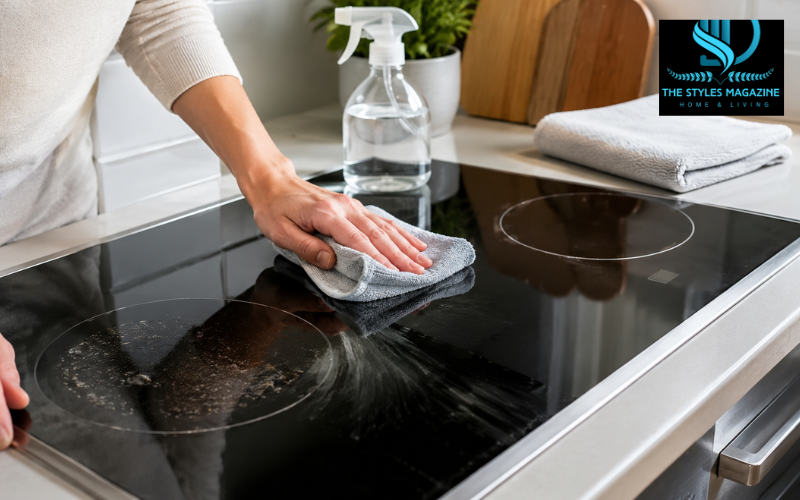
A smooth glass stovetop can make a kitchen look clean and modern, but grease, boiled-over food, water marks, and burnt rings are easy to notice on its shiny surface. Learning how to clean a glass stovetop correctly helps remove these marks without leaving scratches, cloudy patches, or cleaner residue behind.
The right method depends on what is on the cooktop. Fresh splatters and fingerprints usually need only mild dish soap or white vinegar. Dried food may need to be softened with a warm, damp towel. Thick, burnt-on residue may require a cleaner and scraper made specifically for ceramic-glass cooktops.
Before using any product or tool, read the care section of your appliance manual. Glass cooktops do not all have the same surface treatment. For example, many traditional ceramic-glass cooktops allow an approved scraper, while some newer easy-clean surfaces specifically warn against using one. Manufacturer instructions should therefore take priority over general cleaning advice.
Quick Guide: Best Method for Each Type of Mess
| Type of Mess | Best Cleaning Method | Recommended Time |
| Fingerprints and light grease | White vinegar and microfiber cloth | 2–5 minutes |
| Fresh food splatters | Warm water and mild dish soap | 5 minutes |
| Dried or baked-on food | Baking soda and a hot, damp towel | 15–20 minutes |
| Cloudy film or metal marks | Ceramic-glass cooktop cleaner | 5–10 minutes |
| Hard black burnt rings | Approved cooktop scraper and cleaning cream | 10–20 minutes |
| Sugary spills or melted plastic | Follow the appliance manual immediately | As soon as possible |
Let the Stovetop Cool and Assess the Buildup
Begin by turning off every burner and removing the cookware. For normal grease, crumbs, dried sauce, and food splashes, wait until the stovetop is completely cool. Cleaning a very hot surface can cause burns, make some cleaners dry too quickly, and spread the mess rather than remove it.
Once the surface is cool, look closely at the buildup. A greasy film or fingerprints will need a different method from a thick black ring around a heating zone. Also check for cracks, chips, or deep scratches. Do not apply pressure to damaged glass. A cracked cooktop should be inspected by a qualified appliance professional before it is used again.
Sugary spills and melted plastic are important exceptions to the usual cooling rule. Hot sugar can stick firmly to ceramic glass and may leave permanent pits if it cools in place. Some manufacturers advise turning off the burner, wearing oven mitts, and carefully moving the spill to a cooler part of the surface with an approved scraper while the glass is still warm. Follow your model’s manual closely because this procedure involves a hot surface.
Cleaning Supplies That Are Safe for Glass Cooktops
You do not need a large collection of products to clean a glass stove properly. Keep a few soft microfiber cloths, clean towels, mild liquid dish soap, warm water, distilled white vinegar, and a non-abrasive sponge or cooktop-safe pad nearby.
Baking soda can be useful for softening some baked-on food, although it must be rinsed away thoroughly. For more difficult stains, choose a cream or polish that clearly states it is suitable for ceramic-glass cooktops.
A glass cooktop scraper may also be helpful, but only when the appliance manufacturer approves its use. The blade should be clean, sharp, even, and free from rust or damage. Never assume that an ordinary kitchen knife or random razor is a safe replacement.
Avoid steel wool, rough scouring pads, stiff brushes, and abrasive cleaning powders. These products may leave fine scratches that become more visible each time light reflects across the cooktop.
How to Clean a Glass Stove Top Daily
Daily cleaning is the easiest way to prevent small spills from becoming hard, black stains. After cooking, allow the glass to cool. Brush away crumbs with a dry microfiber cloth rather than wiping them through grease, as dragging hard particles across the surface may cause marks.
Dampen a clean microfiber cloth with warm water and add a small drop of mild dish soap. Wipe the glass gently, paying attention to greasy areas and fresh splatters. There is usually no need to scrub hard when the mess has not been heated repeatedly.
Follow with another cloth dampened only with clean water. This removes soap that could otherwise leave streaks or create a film when the cooktop is heated again. Finish by drying and buffing the surface with a clean microfiber towel.
This simple routine takes only a few minutes. Cleaning after each cooking session prevents food from being reheated and burned onto the glass, making future deep cleaning much easier.
How to Clean a Glass Stove Top With Vinegar
Distilled white vinegar works well on fingerprints, light grease, mild water spots, and dull surface film. Make sure the stovetop is cool, then spray a small amount of vinegar across the marked area. The glass should be lightly damp rather than completely soaked.
Allow the vinegar to sit briefly, then wipe it away with a soft microfiber cloth using gentle circular motions. Turn the cloth to a clean side as it picks up grease. Buff the surface with a second dry cloth to remove streaks and restore the shine.
When learning how to clean a glass stove top with vinegar, it is important to understand its limits. Vinegar is useful for everyday care, but it may not remove thick carbonized food or several layers of burnt grease. Repeatedly scrubbing with vinegar is less effective and potentially harder on the surface than switching to an approved method for heavy residue.
Do not mix vinegar with chlorine bleach or other strong household chemicals. Use it alone, or as part of the baking-soda method described below.
How to Clean Burnt-On Food With Baking Soda
For baked-on sauce, grease, or food that has dried into a hard patch, begin by spraying the cooled surface lightly with white vinegar. Sprinkle a thin, even layer of baking soda over the affected area.
Soak a clean towel in hot water mixed with a small amount of dish soap. Wring it out carefully so it remains warm and damp but is not dripping. Place the towel over the baking soda and leave it there for about 15 to 20 minutes. The trapped warmth and moisture help rehydrate the dried food, while the baking soda helps loosen greasy residue.
Remove the towel and use it to wipe the area gently. A non-abrasive cooktop pad can be used if necessary, but avoid forceful scrubbing. Repeat the soaking step if part of the stain remains.
Finally, wipe the stovetop several times with a clean, damp cloth. Baking soda left behind can dry into a white, chalky film, so rinse carefully before buffing the glass dry. Appliance guidance commonly recommends non-abrasive pads and gentle pressure when dealing with stubborn buildup.
How to Clean a Glass Stove Top Without Baking Soda
Baking soda is not essential. Some people prefer to avoid it because its powdery residue can take several wipes to remove.
To clean without baking soda, place a warm, damp cloth over dried food and let it sit until the residue softens. Wipe away as much as possible with mild dish soap and a microfiber cloth. Repeat the soaking process instead of pressing harder.
For marks that remain, apply a small amount of non-abrasive ceramic-glass cooktop cleaner. Follow the label directions, as some products should be worked into the surface and allowed to dry to a light haze before buffing.
This method is especially useful for greasy stains, cloudy areas, and cooked-on residue that does not respond to vinegar. A dedicated cooktop cream also tends to rinse or polish away more cleanly than a thick homemade paste.
Removing Hard, Black Crusty Rings With a Cooktop Scraper
A hard black ring may form when food repeatedly boils over and burns around a heating area. If your manufacturer permits scraping, use only a tool designed for ceramic-glass cooktops.
Apply a small amount of cooktop cleaning cream to the stain so the area is not dry. Hold the scraper at about a 45-degree angle and slowly push the blade beneath the burnt layer. Keep the blade low and flat against the glass. Do not stab at the residue, scrape sideways with a blade corner, or use sudden force.
Use a clean, sharp blade with straight, smooth edges. A rusty, chipped, bent, or dull blade may catch on the surface. Wipe away loosened debris regularly so you can see what remains.
Several major appliance manufacturers recommend a cooktop scraper for heavy residue, and some specify an angle of about 45 degrees. However, other models have special surfaces on which scraping is not recommended. This is why checking the exact manual is essential before starting.
After the crust has been removed, wipe the area with a damp cloth and apply a small amount of ceramic-glass polish. Buff with a clean, dry cloth until no product residue remains.
Handling Sugary Spills, Melted Plastic, and Special Stains
Sugar-based liquids, syrups, candy mixtures, and melted plastic can bond tightly to hot ceramic glass. They may cause permanent discoloration or pitting if they are allowed to cool on the cooking zone.
Turn off the burner immediately and move the pan safely. Consult the manual for your model. When instructed, wear heat-resistant oven mitts and use the approved scraper to move the spill from the hot zone to a cooler area. Remove the softened material with paper towels, taking care because both the spill and glass may still be hot. Leave any remaining residue until the cooktop has cooled. Do not turn the burner on again until the material is completely gone.
White or cloudy spots may be mineral deposits caused by water drying on the glass or moisture left on the bottom of a pan. Vinegar may help with light deposits, while a ceramic cooktop cleaner is usually better for stubborn marks. Clean, dry pan bottoms help prevent these stains.
Shiny silver or gray marks may be metal transferred from cookware rather than actual scratches. Try a manufacturer-approved cooktop cream before assuming the glass is permanently damaged. If a mark catches your fingernail or appears below the surface, seek professional advice rather than continuing to scrub.
Using Commercial Glass Cooktop Cleaner and Polish
Commercial ceramic-glass cleaner is helpful when ordinary soap and vinegar cannot remove stubborn film, metallic marks, or cooked-on grease. Check that the product is specifically labeled for glass or ceramic cooktops. General kitchen cleaners may contain ingredients that leave a haze or damage the finish.
Apply only the amount directed on the label. Usually, a few small drops are enough. Spread the cleaner with a soft cloth, paper towel, or approved cleaning pad. Work gently over the affected areas rather than coating the entire appliance with a thick layer.
Some creams are designed to dry into a light haze. Once dry, buff the surface with a clean cloth until it feels smooth and looks clear. Remove all cleaner before using the stovetop again.
Commercial cleaner may work better than vinegar on heavy grease because it is made to lift cooked-on residue and polish ceramic glass. Manufacturer cleaning instructions commonly combine an approved scraper, a few small drops of cooktop cleaner, and final polishing with a clean cloth.
Oven Cleaner and Toothpaste: Are These Methods Safe?
People sometimes search for how to clean a glass stove top with oven cleaner, but standard oven cleaner should not be treated as a routine cooktop product. Oven cleaners are made for the interior surfaces of certain ovens, not automatically for smooth cooking glass. Their strong ingredients may discolor surrounding trim, damage markings, or leave difficult residue.
Only use an oven cleaner on the stovetop when the appliance manufacturer clearly states that the exact product is allowed. When the manual does not approve it, choose mild dish soap or a ceramic-glass cleaner instead.
Cleaning a glass stove top with toothpaste is another popular household hack, but it is unreliable. Toothpaste formulas differ widely. Whitening pastes may contain polishing particles, gels may leave sticky residue, and strongly colored or flavored products can create more cleanup. A toothpaste that seems gentle on teeth is not necessarily tested for a glass cooktop finish.
Using a purpose-made product is safer than experimenting with unknown abrasives. It also makes it easier to follow clear directions and avoid accidental dull patches.
Cleaning Mistakes That Can Scratch or Damage the Glass
One of the most common mistakes is scrubbing harder when a stain does not lift immediately. Soaking and repeating a gentle method is safer than applying heavy pressure.
Never use steel wool, harsh scouring pads, unsuitable abrasive powders, knives, or damaged blades. Do not use a scraper on a dry surface or hold it upright, as the blade edge or corner may dig into the glass. Remove all cleaning residue before turning the burners on.
Cookware can also damage the surface. Avoid sliding heavy pans across the cooktop. Lift them when changing position, and check that their bottoms are clean, dry, flat, and free from rough edges. Whirlpool advises lifting cookware rather than sliding it to reduce scratching, while other manufacturers also stress appropriate flat-bottom cookware for even contact.
Most importantly, do not ignore model-specific instructions. A method that is approved for one ceramic cooktop may not be suitable for another surface.
Preventing Burnt-On Buildup and Keeping the Surface Clear
The best way to avoid stubborn stains is to clean small messes before they are cooked again. Wipe the stovetop after each use once it is safe to touch. Pay special attention to oil droplets and thin rings around heating zones, which can become darker with repeated heating.
Keep the bottoms of pots and pans clean and dry. Avoid overfilling pans, and lower the heat when liquids begin to boil rapidly. These habits reduce spills and limit mineral deposits.
Lift cookware rather than dragging it. Use pans with smooth, flat bottoms that are in good condition. If food boils over, deal with it as soon as the cooktop can be cleaned safely, except for sugar or melted plastic that may require immediate model-specific action.
Keep an approved cooktop cleaner, a microfiber cloth, and—when permitted—a suitable scraper nearby. Having the correct tools makes it less tempting to reach for a rough sponge or harsh chemical during a difficult cleanup.
Conclusion: A Cleaner Glass Stovetop Without Unnecessary Damage
Knowing how to clean a glass stovetop is mainly about matching the method to the mess. Mild dish soap or vinegar is usually enough for daily grease and fingerprints. A warm towel and baking soda can soften dried food, while a ceramic-glass cleaner may be better for stubborn film. Heavy burnt rings may require an approved scraper, but only when the appliance manual allows it.
Gentle daily care is more effective than waiting until several layers of food have burned onto the surface. Use soft materials, rinse away every cleaner, and avoid excessive pressure or untested household hacks.
With regular wiping, clean cookware, and the right tools, a glass stove top can remain smooth, clear, and easier to maintain without unnecessary scratching or damage.
Frequently Asked Questions
What Is The Safest Way To Clean A Glass Stovetop?
Allow the stovetop to cool, remove crumbs, and wipe it with mild dish soap and a microfiber cloth. Use only non-abrasive products and follow your appliance manual for stubborn stains.
Can Vinegar Damage A Glass Stove Top?
Distilled white vinegar is generally suitable for removing light grease, fingerprints, and water spots from a cooled stovetop. Avoid mixing it with bleach or relying on it for thick burnt residue.
How Do I Remove Burnt Food From A Glass Stovetop?
Cover the burnt area with baking soda and a hot, damp towel for 15–20 minutes. Wipe gently, rinse well, and use an approved scraper only when your appliance manual permits it.
Can I Use Oven Cleaner On A Glass Stovetop?
Do not use general oven cleaner unless the stovetop manufacturer specifically approves it. Strong oven-cleaning chemicals may damage markings, surrounding trim, or the cooktop’s surface finish.
Why Does My Glass Stovetop Look Cloudy After Cleaning?
Cloudiness may come from soap residue, minerals, burnt grease, or cookware marks. Wipe with clean water, dry thoroughly, and use an approved ceramic-glass cleaner for marks that remain.
Enjoyed it? Find more exclusive content on The Styles Magazine.
Disclaimer: Always follow your appliance manufacturer’s care instructions. Test cleaners carefully and avoid using scrapers, strong chemicals, or abrasive products unless they are approved for your stovetop.