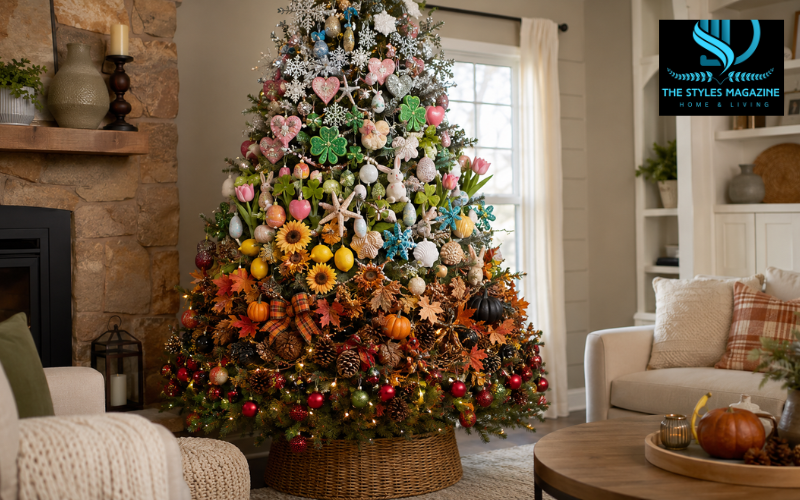
A year round Christmas tree is an artificial tree that stays on display after the holiday season and changes its look throughout the year. Instead of packing it away in January, you decorate it for winter, Valentine’s Day, spring, summer, autumn, birthdays, and other special occasions.
The aim is not to make your home look like Christmas every day. The tree becomes a flexible decorating feature. Snowflakes can become hearts in February, flowers in spring, seashells in summer, and pumpkins in autumn. Christmas ornaments return in December.
Reusable ribbon, flowers, garlands, photographs, and signs can reduce waste and expense. A monthly themed Christmas tree can also become a family activity. A neutral base, organized storage, and a realistic schedule keep the project enjoyable.
Quick Guide to Year Round Christmas Tree Types
| Tree Type | Best For | Main Benefit | Consider Before Buying |
| Pre-Lit Tree | Quick monthly updates | Lights are already installed | Damaged built-in lights may be harder to replace |
| Slim or Pencil Tree | Small rooms and corners | Uses less floor space | Holds fewer large ornaments |
| Flocked Tree | Winter and pastel themes | Creates a soft, snowy background | Flocking may shed during frequent decorating |
| Tabletop Tree | Apartments and offices | Easy to move and maintain | Provides limited decorating space |
| Full-Size Tree | Large rooms and family displays | Makes a strong decorative feature | Requires more ornaments, cleaning, and space |
| Mixed PE and PVC Tree | Realistic year-round décor | Combines natural-looking tips with fullness | Often costs more than basic PVC trees |
Choosing the Best Tree for Year-Round Display
The best tree depends on your room, decorating plans, and preferred style. A pre-lit artificial tree saves time because the lights are already attached, although its wiring still needs regular checks.
A flocked tree creates a snowy background that suits winter silver, Easter pastels, and pale summer colors. However, flocking may shed during frequent handling. Slim and pencil trees fit entryways, offices, and small rooms without taking much floor space. A tabletop tree is easier to move, while a full-size tree makes a stronger feature but needs more room and ornaments.
Tree materials also affect the appearance. PVC branch tips are commonly used because they are flexible and durable. Molded PE tips usually have a more natural shape, while mixed PE and PVC trees combine a realistic outer layer with fuller inner branches.
Green, white, frosted, and champagne trees can all work. Green is versatile, while white highlights bright and pastel colors. Choose a shade that suits the room even when the tree is lightly decorated.
Is Keeping an Artificial Christmas Tree Up All Year Practical?
Keeping an artificial Christmas tree up all year can be practical, but it needs space and care. Place it where it will not block a doorway, vent, window, or walkway, and where it is easy to dust.
A permanent tree suits people who enjoy seasonal decorating or have a spare corner. It also removes the need to assemble and shape the tree each December. Instead of changing every ornament monthly, update the ribbon, flowers, topper, and a few feature pieces.
Homes with young children or pets need a stable stand and breakable ornaments placed high. Avoid long ribbons, edible decorations, and loose pieces that could be pulled down. In a small home, choose a tabletop, half, or pencil tree.
Use this simple checklist before deciding:
- Is there a safe corner where the tree can stay without blocking daily movement?
- Are you willing to dust it and inspect the lights regularly?
- Do you have storage for decorations that are not currently in use?
- Can the tree be secured around pets or small children?
- Would a smaller tree fit your routine better?
If most answers are yes, keeping an artificial Christmas tree up all year may work well for your home.
Creating a Neutral Base That Works in Every Season
A neutral base makes each decorating change faster. Warm-white or clear lights are usually the easiest choice because they work with nearly every color scheme. They can support icy blues in January, pinks in February, bright summer colors, and traditional red and green in December.
Keep permanent decorations simple. White, beige, natural wood, silver, or pale gold ribbon can remain for several themes. Clear beads and plain metallic ornaments also blend easily. Finish the base with a neutral skirt, woven basket, wooden box, or collar.
Keep strong seasonal colors near the outer branches so they are easy to remove. A quiet base makes each update quicker.
You do not need to strip the tree completely every month. Keep the lights and neutral fillers in place, then replace only the main ornaments, floral picks, ribbon accents, and topper. This reduces work and gives the tree a consistent shape throughout the year.
Essential Year Round Christmas Tree Decorations
The most useful year round Christmas tree decorations are lightweight, reusable, and easy to store. Wired ribbon can be reshaped, artificial flowers can slide between branches, and decorative picks add height and texture. Bead garlands help connect the design.
Plain ornaments in white, clear, gold, silver, or natural wood support many color schemes. Small signs, paper pieces, fabric shapes, and photo ornaments add personality without weighing down the branches.
Balance matters more than filling every gap. Add large items first, then medium and small pieces. Mix smooth ornaments with ribbon, flowers, felt, or fabric, and repeat two or three main colors around the tree.
For a natural style, use wood, dried-looking leaves, woven ornaments, and soft greens. A modern tree can use clean shapes and fewer colors. Farmhouse themes often include checks, burlap-style ribbon, and simple signs. Elegant displays may use glass-like ornaments, velvet ribbon, and metallic details. A playful tree can feature bright colors, handmade pieces, and themed characters.
January to April Monthly Themed Christmas Tree Ideas
January is a natural time for a winter tree. Keep the look calm with snowflakes, white ribbon, silver ornaments, icy blue details, and clear decorations that reflect the lights. Removing obvious Santa or gift ornaments helps the tree feel like winter décor rather than leftover Christmas decorations.
February can bring warmer color. Use pink, red, cream, and soft rose tones with hearts, artificial roses, love notes, or photographs. The display can celebrate Valentine’s Day, friendship, or family love without becoming overly formal.
March works well with emerald green, white, and gold. Shamrocks, rainbow ornaments, gold coins, and green ribbon create a cheerful St. Patrick’s Day theme. For a more subtle look, use fresh-looking greenery and small gold accents instead of novelty decorations.
April is suited to pastels and spring details. Add eggs, bunny shapes, tulips, daisies, and light ribbon in yellow, lavender, pink, or blue. A nest-style topper or a group of spring flowers can replace a traditional star.
May to August Themes for a Bright Summer Christmas Tree
May can focus on gardens and family. Butterflies, greenery, flowers, soft colors, Mother’s Day cards, and photographs create a fresh, personal display.
June suits a coastal theme. Seashells, starfish, turquoise beads, sandy neutrals, and blue ribbon create a relaxed summer feature. Use them lightly so the tree feels like beach-inspired home décor.
July can use red, white, and blue in the United States, balanced with white flowers or greenery. Elsewhere, adapt the idea to local colors or summer celebrations.
August suits strong, sunny colors. Sunflowers, lemons, bees, fruit ornaments, and bright greenery create an energetic look. Yellow and green can be softened with white or natural wood accents.
A successful summer Christmas tree should feel open and light. Use fewer ornaments than you would in December, leave some branches visible, and choose flowers, fruit, coastal details, or greenery instead of snow-based decorations. This helps the tree match the season.
September to December Seasonal Tree Themes
September is a transition between summer and autumn. Apples, sunflowers, early maple leaves, plaid ribbon, and small pumpkins can introduce harvest colors without making the tree too dark. Mix warm gold, rust, green, and cream.
October offers many creative options. A Halloween tree can include bats, pumpkins, skeletons, faux cobwebs, black ribbon, and orange lights. For a less spooky version, use black-and-white patterns, friendly ghosts, and soft pumpkin colors.
November can focus on gratitude and gathering. Pinecones, copper ornaments, turkey shapes, dried-looking leaves, and handwritten gratitude notes fit a Thanksgiving theme. Family members can add one thankful message each week.
December is the time to return to traditional Christmas decorating. Red, green, gold, plaid, candy-inspired ornaments, religious decorations, or a simple white theme can all work. This is also the best time to bring out family heirlooms and ornaments connected to important memories.
Year Round Christmas Tree Ornaments Worth Collecting
A useful ornament collection should be flexible. Rather than buying a new set every month, collect pieces by color, season, and type. White, gold, clear, and green items can serve several themes.
Personalized pieces often have more value than trend-based ones. Photo frames, travel souvenirs, handmade ornaments, name tags, and milestone keepsakes help the tree tell a story.
Before buying something, ask whether it can be used in more than one theme or whether it marks a meaningful event. This simple rule can reduce clutter and prevent spending money on decorations that appear only once.
Store ornaments in labeled containers such as “winter,” “spring,” “summer,” “autumn,” and “Christmas.” Smaller bags or boxes inside each container can separate colors or holidays. Take a quick photograph of each finished tree and place it in the matching box as a reminder for the following year.
Finding Fresh Inspiration Without Copying Other Trees
Inspiration can come from the season outside your window, a favorite hobby, a room’s color palette, or a family tradition. A gardening enthusiast might create a flower and seed-packet tree. A traveler could display postcards and small souvenirs. A family with children could make paper ornaments based on current school projects.
Decorating groups, blogs, image platforms, and searches such as “year round Christmas tree Reddit” can offer ideas for narrow trees, homemade ornaments, pet-aware layouts, and affordable themes. Use them as starting points rather than designs to copy.
Adapt each idea to your space and budget. A few floral stems and matching ribbon may create the effect of an expensive display. Personal photographs and handmade details make the result more original.
Decorating an All Year Round Tree for Personal Milestones
An all year round tree can mark family milestones. For a birthday, add photographs, number ornaments, favorite colors, and cards. A baby shower tree might hold soft ribbon, wishes, or small keepsakes.
Graduation themes can use school colors, printed photographs, ribbons, and small copies of certificates or achievement cards. Wedding and anniversary trees can include flowers, invitation details, photographs, and ornaments showing meaningful dates.
The tree can also become a rotating memory display. Clip photographs and notes to ribbon, and let children make paper, felt, foam, or fabric pieces for school achievements and family events. The goal is to give meaningful memories a visible place in the home.
Space-Saving Ideas for Smaller Homes
A year round Christmas tree does not need to dominate the room. Slim and pencil trees fit narrow corners, half trees sit against a wall, and tabletop trees work on shelves or sideboards. A wall-mounted design can save even more floor space.
Choose a location that does not interfere with doors, furniture, or walkways. Dining rooms, offices, and unused corners often work well. Avoid cooking grease, moisture, and direct heat.
In a compact room, use fewer decorations and repeat a limited color palette. Oversized ribbons and too many large ornaments can make a narrow tree look crowded. Lightweight decorations, smaller flowers, and a neat basket or fitted collar will keep the display visually calm.
Leaving a Christmas Tree Up All Year: Bad Luck or Personal Choice?
Some people believe that leaving Christmas decorations up brings bad luck. These beliefs come from family customs, local traditions, and older ideas about seasonal greenery. There is no rule followed by every household.
For many people, the concern disappears when the decorations change. Once Christmas ornaments are removed and replaced with winter, spring, or summer details, the tree becomes a seasonal display rather than an unfinished holiday task.
Personal comfort matters. A household can remove Christmas ornaments by its usual date while leaving the artificial tree in place for a new theme. Another family may keep meaningful ornaments longer. Both choices are personal.
A year round Christmas tree should add enjoyment to the home. If it causes stress, takes too much room, or conflicts with an important family tradition, a smaller seasonal tree may be a better option.
Maintaining a Year Round Christmas Tree Safely
A tree displayed for twelve months needs regular care. Dust branches and ornaments every few weeks with a soft cloth or feather duster. A handheld vacuum on its lowest setting may help, but keep it away from flocking and delicate tips.
Inspect pre-lit wiring, plugs, sockets, and connections regularly. Stop using any light set with cracked sockets, exposed wires, loose connections, or signs of heat damage. Safety guidance also recommends choosing artificial trees marked as fire resistant and using lighting tested by a recognized safety laboratory. Electrical problems and nearby heat sources are known Christmas-tree fire risks, so keep the tree away from heaters, fireplaces, candles, and overloaded outlets.
Strong sunlight can fade branches and ornaments. Moisture may damage metal parts, paper, and electrical connections, while cooking residue can leave a sticky coating.
When changing themes, reshape flattened branches and spread weight evenly. Store unused year round Christmas tree decorations in labeled, closed containers.
A year round Christmas tree works best when it fits naturally into your home and routine. With a suitable tree, a neutral foundation, reusable ornaments, and simple monthly updates, it can celebrate every season without becoming difficult to manage. The most meaningful displays are not always the fullest or most expensive. They are the ones that reflect the people, memories, and occasions that make each month special.
FAQs
Can You Keep An Artificial Christmas Tree Up All Year?
Yes, an artificial tree can remain displayed all year if it is placed safely, cleaned regularly, protected from heat and moisture, and redecorated to match each season.
How Do You Make A Christmas Tree Look Suitable For Summer?
Remove winter decorations and use flowers, lemons, seashells, greenery, butterflies, or bright ribbon. Leave some branches visible so the summer Christmas tree feels light and seasonal.
Is Leaving A Christmas Tree Up All Year Bad Luck?
Some traditions connect late Christmas decorations with bad luck, but this is a personal or cultural belief. Changing the ornaments turns the tree into seasonal décor rather than unfinished Christmas decorating.
What Decorations Work Best On A Year Round Christmas Tree?
Reusable ribbon, flowers, garlands, lightweight ornaments, photographs, wooden pieces, and neutral metallic decorations work well because they can be mixed with several monthly and seasonal themes.
How Often Should A Year Round Christmas Tree Be Cleaned?
Lightly dust the tree every few weeks and clean more thoroughly when changing decorations. Check the stand, branches, electrical cords, plugs, and built-in lights at the same time.
Enjoyed it? Find more exclusive content on The Styles Magazine.
Disclaimer: This article provides general decorating and safety information. Always follow the tree and lighting manufacturer’s instructions and replace damaged electrical decorations before use.