Laundry stripping is an occasional deep-cleaning method used to remove residue that may remain in fabric after ordinary washing. Detergent, liquid fabric softener, body oils, minerals from hard water, and other buildup can settle into towels, sheets, bathrobes, and similar household linens over time.
This buildup may explain why freshly washed towels sometimes feel stiff, smell musty, or no longer absorb water as well as they once did. Using too much detergent, overloading the washing machine, washing in water that is too cold for powdered products, and living in an area with hard water can all contribute to residue problems.
However, laundry stripping is not a routine cleaning method. It uses hot water and strong alkaline cleaning ingredients, so it can fade colors, weaken elastic, damage delicate fibers, or shorten the life of some fabrics. It should only be considered when a normal wash and extra rinse have not solved the problem.
This guide explains how laundry stripping works, the standard recipe, the safest method, which fabrics to avoid, and gentler alternatives for couch covers, shoes, and sensitive materials.
Laundry Stripping Quick Guide
| Topic | Quick Guidance |
| Best for | Light-colored cotton towels, sheets, robes, and sturdy washable linens |
| Avoid using on | Silk, wool, dark fabrics, activewear, spandex, waterproof items, and delicate materials |
| Standard recipe | ¼ cup Borax, ¼ cup washing soda, and ½ cup powdered detergent |
| Water temperature | Use the hottest water allowed by the fabric care label |
| Soaking time | About 4–6 hours, stirring occasionally |
| Final step | Run a cold rinse-only cycle without adding detergent |
| Recommended frequency | Only when needed, usually no more than 1–3 times per year |
| Main risks | Fading, shrinking, dye bleeding, weakened fibers, and damaged elastic |
Laundry Stripping Steps at a Glance
- Wash the items normally before stripping them.
- Check care labels and separate fabrics by color.
- Fill a bathtub or basin with fabric-safe hot water.
- Dissolve Borax, washing soda, and powdered detergent completely.
- Submerge the laundry and soak it for four to six hours.
- Stir the items occasionally to loosen residue.
- Drain the water and transfer the items to the washer.
- Run a detergent-free rinse cycle and dry as directed.
What Laundry Stripping Is and How It Works
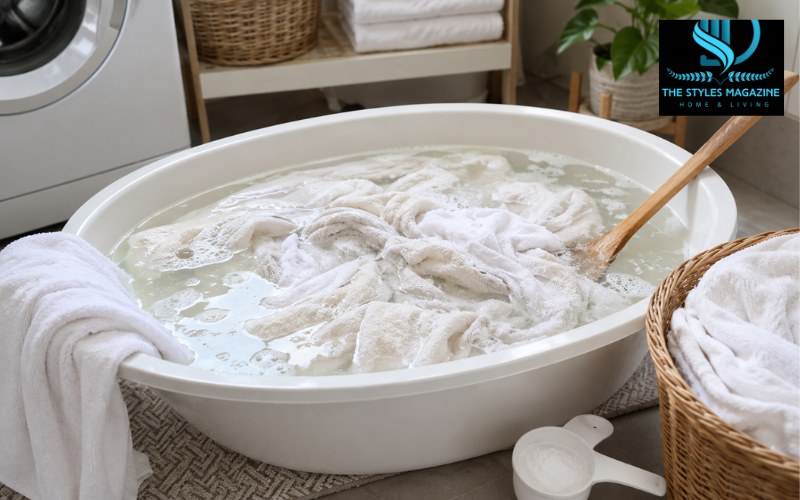
Laundry stripping is a long soaking process designed to loosen residue and embedded soil from washable fabrics. Unlike an ordinary wash cycle, which usually lasts less than an hour, stripping keeps fabric submerged in a concentrated cleaning solution for several hours.
The classic solution contains hot water, Borax, washing soda, and powdered laundry detergent. The detergent helps lift oils and soil. Washing soda increases the cleaning power of the water, while Borax is commonly used as a laundry booster. Together, these ingredients may loosen detergent, softener, mineral, and body-oil buildup trapped between fabric fibers. Laundry stripping is considered an aggressive cleaning method rather than a replacement for normal washing.
The soaking water often becomes brown, gray, or cloudy. This can look dramatic, but it does not always prove that the laundry was extremely dirty. Some of the color may come from soil and residue, while some may come from loose dye, fabric finishes, or particles released during the soak. Dark water should therefore not be treated as the only measure of success.
Signs Your Laundry May Need a Deep-Clean Soak
Laundry stripping may be worth considering when sturdy towels or sheets still feel unpleasant after being washed correctly. Towels may feel waxy, stiff, or less absorbent. Bed linens may hold a musty odor even after they have been washed and dried completely. Some fabrics may feel coated or unusually heavy.
Visible white marks or undissolved detergent can also suggest a washing problem. Before stripping, however, try rewashing the items without detergent and selecting an extra rinse. Appliance guidance notes that excess detergent residue can often be removed through rewashing and that an additional rinse can help flush detergent from fabric.
Also check the washing machine itself. A dirty drum, gasket, filter, or detergent dispenser can cause odors that return after every wash. If several types of clothing suddenly smell musty, cleaning the washer may solve the problem more safely than stripping each load.
The Standard Laundry Stripping Recipe
A commonly used laundry stripping recipe for a bathtub filled approximately halfway is:
- ¼ cup Borax
- ¼ cup washing soda
- ½ cup heavy-duty powdered laundry detergent
Washing soda is sodium carbonate. It is not the same as baking soda, which is sodium bicarbonate. Baking soda is milder and will not produce the same type of alkaline soaking solution. Do not increase the amount of washing soda in an attempt to improve the results, as a stronger solution may be harder on fabric and skin.
Choose a plain powdered laundry detergent that is suitable for the fabric. Avoid combining several boosters, bleaches, disinfectants, fragrance products, or stain removers unless their labels clearly state that they can be used together.
For a smaller sink or basin, reduce all three ingredients in the same proportion. For example, if the container holds roughly one-quarter of the water used in a half-full bathtub, use about one-quarter of each ingredient. The powders should be fully dissolved before any fabric is added.
Keep the products away from children and pets, avoid breathing loose powder, and wash exposed skin after handling Borax. Poison Control advises rinsing the skin with soap and water after contact and flushing the eyes with water if a borate product gets into them.
How to Strip Laundry Step by Step
Begin with laundry that has already completed a regular wash cycle. The items may be wet or dry, but they should not contain loose dirt, food, or heavy surface stains.
- Read every care label. Confirm that each item can tolerate soaking and warm or hot water. Care labels provide instructions about washing method, water temperature, bleaching, and drying, so they should take priority over a general online recipe.
- Separate the load. Strip only similar, colorfast items together. Never combine white towels with dark, bright, or untested fabrics.
- Fill the container. Add the hottest water that all items can safely tolerate. The water does not need to be dangerously hot.
- Dissolve the powders. Add the measured Borax, washing soda, and detergent. Stir until no powder remains at the bottom.
- Submerge the laundry. Add the items and press them under the water with a wooden spoon or another clean tool. Do not place your bare hands in very hot water.
- Soak for four to six hours. Stir the fabrics about once every hour so that the solution reaches the entire load.
- Drain and transfer. Once the water has cooled, drain the tub. Press out some water without twisting delicate seams or stretching the fabric.
- Rinse thoroughly. Place the items in the washing machine and run a complete rinse-only cycle using cold water and no additional detergent. Dry them according to their care labels.
Choosing the Best Laundry Stripping Recipe for Your Load
The best laundry stripping recipe is not necessarily the strongest one. It is the smallest correctly measured solution that suits the amount of water and fabric being treated.
A half-filled bathtub may require the standard ratio, but two towels in a basin need much less. Using the full bathtub recipe in a small container creates an unnecessarily concentrated solution and may leave more powder to rinse away.
Water temperature should also be based on the least heat-tolerant item in the load. Hot water may help dissolve powdered products and loosen oily buildup, but it can also encourage dye loss, shrinking, or damage. Use the warmest temperature permitted by the care label rather than automatically using boiling or scalding water.
Results may vary depending on water hardness, detergent concentration, previous fabric-softener use, and how thoroughly the washing machine normally rinses. Detergent amounts should be adjusted according to the product label, load size, soil level, and water hardness.
Fabrics That Are Usually Suitable for Laundry Stripping
The safest candidates are sturdy, washable, light-colored household linens. These may include white or colorfast cotton bath towels, cotton bed sheets, pillowcases, washable cotton bathrobes, and strong white clothing without elastic panels or special finishes.
Even these fabrics are not automatically safe. A cotton item may contain colored trim, elastic, decorative stitching, printed designs, or a finish that reacts poorly to heat and alkaline cleaners. Older towels may also have weak fibers that tear more easily after a long soak.
Check the care label, examine the item for damage, and test a hidden area when colorfastness is uncertain. When several items have different washing instructions, follow the most cautious instructions or treat them separately.
Fabrics and Items You Should Never Strip
Do not use the classic stripping method on silk, wool, lace, leather, suede, or dry-clean-only items. These materials can lose their shape, finish, color, or texture after prolonged exposure to hot water and strong cleaning agents.
Dark and brightly colored fabrics are also risky because dye may bleed into the water. Activewear, swimsuits, leggings, fitted sheets with elastic edges, and clothing containing spandex should generally be kept out of a stripping bath. Heat and a high-pH solution may affect stretch fibers and shorten their useful life.
Avoid waterproof clothing, flame-resistant garments, stain-resistant upholstery, and fabrics with antimicrobial or moisture-wicking treatments. Stripping may interfere with the finish that gives these products their special performance.
Anything marked cold wash, hand wash, do not soak, or dry clean only should be cleaned according to its label instead.
Laundry Stripping Couch Covers Safely
Laundry stripping couch covers requires more caution than stripping basic cotton towels. First, confirm that the covers are removable and machine washable. A zipper does not always mean a cover is designed to be removed or soaked.
Read the furniture manufacturer’s instructions and identify the fabric type, lining, backing, piping, zippers, and stain-resistant treatment. Test a hidden area with water before using any cleaning solution. If the test area changes color, texture, or shape, do not continue.
Avoid stripping fixed upholstery, foam cushions, leather covers, velvet, or covers labeled for professional cleaning. Soaking these items may cause uneven fading, shrinkage, damaged backing, or a poor fit when the cover is placed back on the cushion.
For washable couch covers, a normal gentle cycle with the correct detergent amount and an extra rinse is usually the safer first option. Large, expensive, or specially treated covers may be better handled by a professional upholstery cleaner.
Laundry Stripping Shoes: Risks and Safer Options
Laundry stripping shoes is rarely a good idea. Shoes contain more than fabric. They may include glue, foam, rubber, leather, suede, cardboard supports, metal parts, and shaped cushioning. A four-to-six-hour soak can weaken adhesive, warp the sole, damage padding, or change the shoe’s fit.
Leather, suede, structured athletic shoes, waterproof footwear, and shoes with glued decoration should never be stripped. Even machine-washable canvas shoes should only be cleaned according to the manufacturer’s instructions.
A safer method is to remove the laces and washable insoles, clean those parts separately, and use a soft brush with mild detergent on the fabric surface. Avoid soaking the entire shoe unless its care instructions clearly allow it. Let cleaned shoes air-dry away from direct heat, which can also affect glue and shape.
Laundry Stripping With Vinegar
Distilled white vinegar is sometimes suggested as a gentler way to manage odors or mineral residue, but laundry stripping with vinegar is not the same as the classic Borax-and-washing-soda method.
Vinegar is acidic, while washing soda and Borax create an alkaline solution. Adding vinegar directly to the stripping bath causes the ingredients to react and reduces the effect of both approaches. It may also produce extra bubbling without providing better cleaning.
When appropriate for the fabric, vinegar is better used as a separate soak or rinse, followed by thorough rinsing. Do not pour it into a washer unless the appliance manufacturer allows it. Some appliance and garment guidance warns that vinegar may not be suitable for elastic and recommends checking the care tag before use.
Never combine vinegar with chlorine bleach. The CDC warns against mixing bleach or disinfectants with other cleaning products because dangerous vapors may be released.
An extra water-only rinse is often a simpler choice when the main problem is excess detergent.
Laundry Stripping Without Washing Soda
Laundry stripping without washing soda produces a milder soak, but it is no longer the standard recipe. This may be useful when you are concerned about color loss, elastic, or fabric wear.
A simple alternative is to soak sturdy, washable items in warm water with a small, properly measured amount of detergent. After soaking, rinse them thoroughly and run a detergent-free machine cycle. This may remove some surface residue without exposing the fabric to the full alkaline mixture.
Another option is to rewash the load with no detergent and select an extra rinse. If hard water is contributing to stiffness, use a laundry product specifically designed for hard-water washing and follow its label rather than creating an untested chemical mixture.
Repeated normal washing may be safer than experimenting with substitutes, particularly when the item is valuable or its fiber content is uncertain.
Laundry Stripping With OxiClean or Oxygen Bleach
OxiClean and similar products are forms of oxygen-based stain remover. They are different from chlorine bleach and are commonly used as laundry boosters or presoaks for compatible washable fabrics.
They should not automatically be added to the classic laundry stripping recipe. Combining several strong products may create an overly concentrated solution, make rinsing more difficult, or go against the manufacturers’ directions.
When using an oxygen bleach, follow that product’s soaking measurements rather than guessing. OxiClean’s instructions recommend dissolving the powder before adding fabric, following the garment’s water-temperature guidance, and testing an inconspicuous area because a product may be described as color-safe even though not every fabric dye is colorfast.
Oxygen bleach may be useful for compatible white or colorfast sheets and towels with stains or dullness. It should not be used on wool, silk, leather, dry-clean-only fabric, or any material excluded by the label.
Laundry Stripping Advice on Reddit: Useful Tips and Common Myths
Reddit discussions can provide practical experiences from people who have tried laundry stripping, but personal results should not replace fabric labels or product directions.
One common online claim is that every towel and sheet needs stripping because ordinary washing cannot clean properly. That is not true. Most laundry can be maintained through correct detergent dosing, suitable wash cycles, complete rinsing, proper drying, and regular washer care.
Another myth is that dark soaking water always proves that years of dirt were trapped inside the fabric. The water may contain removed soil, but it can also contain dye, detergent color, fabric finishes, or minerals. A dramatic color change may sometimes be a warning that the fabric is fading.
Online advice is most useful when it encourages testing, measuring ingredients, separating colors, and starting with a normal rewash. Be cautious of recipes that combine several cleaning chemicals, ignore care labels, or recommend stripping delicate and expensive items.
How Often to Strip Laundry and Prevent Future Buildup
Laundry stripping should be used sparingly. For sturdy linens that genuinely need it, one to three treatments per year is usually more reasonable than monthly or weekly stripping. Some households may never need to do it.
Prevention begins with detergent. Follow the product’s measurement instructions and adjust for load size, soil level, washer type, and water hardness. More detergent does not mean cleaner laundry. It can create excess suds and leave material behind when the washer cannot rinse it away completely.
Avoid packing the drum too tightly because water and detergent need room to move through the fabric. Use an extra rinse when thick towels or bedding still feel soapy. Powdered detergent should dissolve properly, particularly when washing in cooler water.
Consider skipping liquid fabric softener on towels when absorbency is a priority. Dry laundry completely before folding it, and do not leave wet towels in the washer for long periods.
Finally, clean the washer’s drum, gasket, filter, dispenser, and other accessible parts according to the appliance manual. Residue and odors inside the machine can return to otherwise clean laundry.
Conclusion: Use Laundry Stripping Only When Your Linens Truly Need It
Laundry stripping can help refresh sturdy towels, sheets, and light-colored cotton linens when detergent, softener, body oils, or hard-water minerals have built up over time. It is most useful when ordinary washing and an extra rinse have failed to restore the fabric’s feel, smell, or absorbency.
However, it is an intensive treatment rather than an everyday laundry routine. Always read care labels, separate colors, measure the ingredients accurately, and use only the hottest water the fabric can safely tolerate. Avoid stripping delicate fibers, dark dyes, elastic materials, activewear, shoes, fixed upholstery, and specially treated fabrics.
In many cases, the best solution is also the simplest: use the correct amount of detergent, avoid overloading the washer, rinse thoroughly, skip unnecessary softener, dry items completely, and keep the washing machine clean. These habits can prevent buildup and reduce the need for laundry stripping in the future.
Frequently Asked Questions
What Is The Main Purpose Of Laundry Stripping?
Laundry stripping removes accumulated detergent, fabric softener, body oils, and hard-water minerals from sturdy washable fabrics that still feel stiff, smell musty, or absorb poorly after normal washing.
How Often Should You Strip Your Laundry?
Most towels and sheets do not need frequent stripping. Use the method only when clear buildup remains after normal washing, generally no more than one to three times per year.
Can I Use Baking Soda Instead Of Washing Soda?
No. Baking soda is milder and does not work the same way as washing soda. Replacing it changes the strength and cleaning action of the standard laundry stripping recipe.
Is Laundry Stripping Safe For Colored Clothes?
It can cause fading or dye bleeding, especially in dark and bright fabrics. Strip only colorfast items, keep colors separated, and test a hidden area before soaking valuable laundry.
Can I Add Vinegar Or Oxiclean To The Stripping Mixture?
Do not add extra products without checking their directions. Vinegar should not be mixed into the alkaline recipe, while oxygen bleach should only be used separately on compatible, colorfast fabrics.
Enjoyed it? Find more exclusive content on The Styles Magazine.
Disclaimer: This article is provided for general educational and household-cleaning purposes. Fabric materials, dyes, finishes, and appliance requirements vary. Always follow garment care labels, product instructions, and washing-machine guidance before using Borax, washing soda, detergent, vinegar, or oxygen bleach. Test uncertain fabrics in a hidden area, use protective gloves when appropriate, maintain good ventilation, and never mix cleaning products unless the manufacturers confirm that the combination is safe.