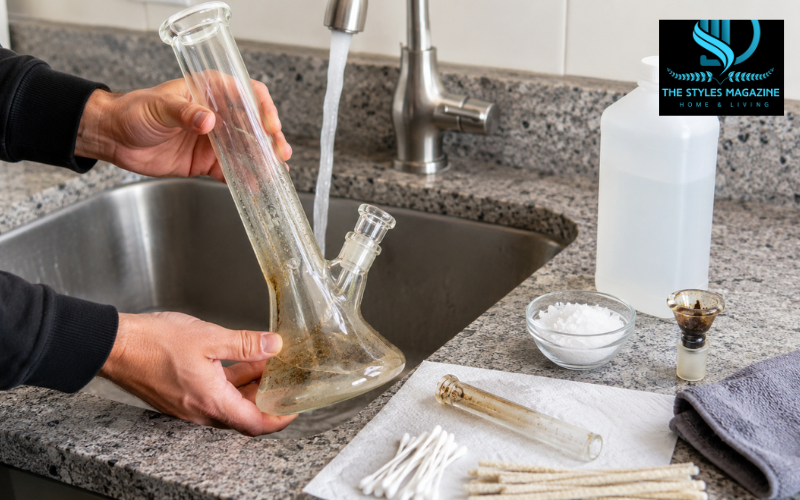
Cleaning a bong simply means removing dirty water, sticky resin, odor, stains, and buildup from the main chamber, bowl, downstem, and any small parts. A clean bong looks better, smells fresher, and allows smoother airflow. It also helps prevent old residue from affecting the taste and feel of each use.
The best way to clean a bong depends on what it is made of. A glass bong can usually be cleaned with high-percentage isopropyl alcohol and coarse salt because the alcohol helps loosen resin while the salt scrubs the inside surface. Silicone, acrylic, and plastic pieces need more care because strong alcohol or very hot water may damage them. The bowl and downstem also need separate attention because they collect thick buildup faster than the main chamber.
If you want to know how to clean a bong safely, the first step is not choosing the strongest cleaner. The first step is checking the material, removing loose parts, and using a method that cleans well without cracking, scratching, or damaging the piece.
Quick Guide Table: How to Clean a Bong
| Cleaning Need | Best Method | Safe For | Avoid |
| Heavy resin buildup | Isopropyl alcohol + coarse salt | Glass bongs | Acrylic or plastic |
| Light daily cleaning | Warm water rinse | Glass, silicone, acrylic | Boiling water |
| No-alcohol cleaning | Warm water + dish soap | Acrylic, plastic, silicone | Harsh chemicals |
| Cloudy hard-water stains | Vinegar or lemon juice rinse | Glass | Long soaking on sensitive materials |
| Bowl and downstem | Soak separately in bag | Glass accessories | Shaking loose parts inside bong |
Step-by-Step Quick Guide
- Empty the old water and rinse the bong with warm water.
- Remove the bowl and downstem carefully.
- Add coarse salt and isopropyl alcohol to a glass bong.
- Clean small parts separately in sealable bags.
- Plug the openings and shake gently but firmly.
- Scrub tight spots with cotton swabs or pipe cleaners.
- Rinse everything very well until no cleaner smell remains.
- Let all parts dry before reassembling.
Why Cleaning a Bong Regularly Matters
A bong collects resin, dirty water, ash, and odor over time. Even when it still works, old buildup can make the experience unpleasant. The water may smell stale, the glass may look cloudy, and the airflow can become restricted. In some cases, the bowl or downstem may become so clogged that pulling air through the piece feels difficult.
There is also a difference between a quick rinse and a deep clean. A quick rinse means emptying the old water and flushing the piece with warm water. This helps remove loose debris and keeps the bong fresher between uses. A deep clean removes sticky resin from the glass, clears the bowl and downstem, and gets rid of stains and odor that water alone cannot remove.
For best results, change the water daily if the bong is used often. A quick rinse after use can help prevent buildup from becoming harder. A full deep clean once a week is a good routine for regular users, while occasional users may only need a deep clean when they notice smell, stains, cloudy glass, or poor airflow.
Supplies You Need Before Cleaning
Before starting, gather everything you need so the process is smooth. For a glass bong, the most common supplies are 91% or 99% isopropyl alcohol, coarse salt, warm water, sealable plastic bags, and something to plug the openings. Silicone bong caps work well, but clean hands, paper towels, or plastic wrap can also help if used carefully.
Cotton swabs and pipe cleaners are useful for tight spaces, especially around the joint, bowl, downstem, and percolator openings. A soft brush can also help remove residue from smaller parts. Avoid metal tools because they can scratch glass or damage delicate areas.
A bong cleaning kit can be useful if you clean your piece often or if it has percolators and hard-to-reach chambers. Most kits include plugs, brushes, cleaning solution, and accessories made for small openings. However, you do not always need a full kit. For many glass pieces, alcohol, coarse salt, and warm water are enough.
For non-glass materials, safer alternatives include warm water, mild dish soap, vinegar, lemon juice, or baking soda. These options are gentler and less likely to damage acrylic, plastic, or certain silicone pieces.
Check the Bong Material First
The material of your bong decides which cleaning method is safest. Glass is the easiest material to deep clean because it can usually handle isopropyl alcohol and coarse salt. This method is effective for sticky resin, brown stains, and strong odor.
Silicone bongs are flexible and durable, but they should still be cleaned carefully. Many silicone pieces can be washed with warm water and mild dish soap. Some may be safe for alcohol, but it is better to check the product instructions first because not every silicone piece is made the same way. If you are unsure, use soap and warm water instead of strong alcohol.
Acrylic and plastic bongs need the most caution. Do not use isopropyl alcohol on acrylic or plastic because it can weaken, cloud, crack, or damage the material. For these pieces, use warm water, mild dish soap, and a soft brush. Vinegar or baking soda may help with odor and light stains, but avoid harsh cleaners and boiling water.
How to Clean a Glass Bong with Alcohol and Salt
The alcohol and salt method is one of the most effective ways to clean a glass bong. Start by emptying the old water into the sink. Rinse the bong with warm water to remove loose ash and debris. Do not use boiling water, especially if the glass is cold, because sudden temperature changes can crack it.
Next, remove the bowl and downstem. Set them aside so they do not hit the glass while you shake the main chamber. Pour coarse salt into the bong through the mouthpiece. Then add enough isopropyl alcohol to create a loose, slushy mixture. The liquid should move around easily, but the bong does not need to be filled completely.
Cover the mouthpiece and downstem opening tightly. Shake the bong for several minutes, moving the alcohol and salt mixture through the base and neck. The alcohol loosens the resin, while the salt rubs against the glass to remove buildup. If the bong has a lot of residue, let the mixture sit for a few minutes and shake again.
After the resin breaks loose, pour out the dirty mixture. Rinse the bong many times with warm water until there is no alcohol smell and no salt left inside. Let it air dry before adding fresh water and reassembling the parts.
How to Clean a Bong and Bowl Together
The bowl and downstem often become dirtier than the main chamber because they collect heat, ash, and sticky resin directly. Cleaning them separately is important because small glass pieces can break if they move around inside the bong during shaking.
Place the bowl and downstem in separate sealable plastic bags. Add coarse salt and enough isopropyl alcohol to cover each piece. Seal the bags tightly and shake gently. The salt should move around the surface of the glass, while the alcohol loosens the resin.
For stubborn buildup, let the pieces soak for 20 to 30 minutes. After soaking, shake again and use a cotton swab or pipe cleaner to clean narrow areas. Be gentle around thin glass, small holes, and decorative parts.
When the pieces look clean, rinse them thoroughly with warm water. Make sure no alcohol, salt, or loosened residue remains inside. Allow the bowl and downstem to dry fully before placing them back in the bong.
How to Clean a Bong with Salt
Salt is useful because it works as a gentle scrubber. It does not dissolve like sugar, and coarse grains can help scrape resin from the inside of glass without scratching it when used properly. This is why many people use salt with alcohol, warm water, or other mild cleaning liquids.
The best salt types for cleaning are coarse salt, kosher salt, rock salt, or Epsom salt. Fine table salt is less effective because the grains are too small and dissolve more quickly. Coarse salt moves around better inside the chamber and gives more scrubbing power.
Salt alone may help with light buildup, but it usually does not remove thick resin by itself. For heavy residue in a glass bong, salt works best when combined with isopropyl alcohol. For non-glass pieces, salt can be used with warm water, but you should shake gently to avoid scratching softer materials.
How to Clean a Glass Bong Without Alcohol
You can clean a glass bong without alcohol, especially if the buildup is light or if you prefer a gentler method. Warm water and mild dish soap can remove loose residue and odor. Vinegar or lemon juice can help with cloudy hard-water stains because they work well on mineral buildup.
To use this method, empty the bong and rinse it with warm water. Add warm water and a few drops of dish soap, then gently shake. For stains, add white vinegar or lemon juice and let it sit for a short time before rinsing. A soft brush, pipe cleaner, or cotton swab can help clean the joint, mouthpiece, and downstem area.
Alcohol-free cleaning is a good choice when you want a milder option or when you are cleaning around sensitive materials. However, it may not work as well on thick, sticky, hardened resin. If the glass has heavy buildup, you may need repeated cleaning or a stronger glass-safe method.
How to Clean a Bong Without Alcohol or Vinegar
If you want to clean a bong without alcohol or vinegar, use warm water, mild dish soap, and gentle scrubbing tools. This method is simple and safer for acrylic, plastic, and some silicone pieces. It is also helpful when you only need a basic clean.
Start by emptying the bong and rinsing it with warm water. Add a small amount of dish soap and warm water, then gently shake the piece. Use pipe cleaners or a soft brush for narrow areas. Rinse well until all soap is gone, because leftover soap can leave a taste or smell.
Baking soda can also help with light buildup and odor. Mix baking soda with a small amount of water to make a soft paste. Apply it to stained areas with a cotton swab or soft brush. This works best for mild residue, not thick resin. After cleaning, rinse thoroughly and let the bong dry completely.
How to Clean a Bong with Hot Water and Salt
Hot water and salt can help clean a bong when the buildup is fresh or light. The warm water softens residue, while the salt adds scrubbing power. This method is less powerful than alcohol and salt, but it can be useful for quick cleaning.
Use warm or hot tap water, not boiling water. The safest approach is to slowly warm the glass first with lukewarm water, then move to warmer water. Sudden heat can stress the glass, especially if the bong is cold or made with thin glass.
Add coarse salt and warm water to the chamber, cover the openings, and shake gently. If the piece is glass, you can shake a little more firmly, but still avoid hitting it against the sink or counter. Rinse well after cleaning. This method is best for routine maintenance, not old hardened resin.
How to Clean a Bong with Baking Soda
Baking soda is a gentle cleaner that can help with odor, light stains, and mild residue. It is not as strong as isopropyl alcohol for sticky resin, but it can be useful for people who want a softer cleaning method.
To clean with baking soda, rinse the bong first. Add warm water and a spoonful of baking soda, then shake gently. For stained spots, make a paste with baking soda and a little water. Apply it with a cotton swab or soft brush, then rinse thoroughly.
Baking soda works well for light odor and cloudy areas, but it should not replace deep cleaning when the bong has thick resin or blocked airflow. If the buildup has hardened inside the chamber, bowl, or downstem, you may need a stronger glass-safe cleaning method or repeated soaking.
Removing Stubborn Resin, Stains, and Smell
Stubborn resin usually collects in corners, percolators, the downstem opening, and the bowl. These areas may need soaking and extra attention. For glass, fresh isopropyl alcohol and coarse salt can be used again if the first cleaning does not remove everything. Letting the mixture sit for a short time can help loosen hardened residue before shaking.
Percolators and complex chambers can be harder to clean because resin gets trapped in small paths. Use warm water to rinse from different angles. Pipe cleaners may help if they can reach the area safely, but never force anything through a narrow glass opening.
Cloudy stains are often caused by hard-water minerals. If the glass still looks cloudy after the resin is gone, use white vinegar or lemon juice with warm water. Let it sit briefly, swirl it around, and rinse well. For odor, the most important step is removing all dirty water and resin, then rinsing until the cleaner smell is fully gone.
Common Bong Cleaning Mistakes to Avoid
One of the biggest mistakes is using alcohol on acrylic or plastic. Alcohol may clean the surface at first, but it can damage the material over time. Use mild soap and warm water for those pieces instead.
Another common mistake is pouring boiling water into cold glass. Sudden temperature changes can crack or weaken the glass. Warm water is safer and usually enough for rinsing and softening residue.
Many people also forget to rinse properly. Any leftover alcohol, salt, soap, vinegar, or baking soda can leave an unpleasant smell or taste. Rinse every part several times, especially the bowl and downstem.
It is also important not to shake loose parts inside the bong. The bowl and downstem should be removed and cleaned separately. If they clink against the glass chamber, they can chip or break.
Simple Maintenance Tips to Keep It Cleaner Longer
The easiest way to keep a bong clean is to avoid letting dirty water and resin sit for too long. Change the water daily if the bong is used regularly. Fresh water helps reduce odor and keeps the piece from becoming dirty too quickly.
A quick rinse after use can make deep cleaning much easier later. Even a simple warm-water rinse can remove loose ash and prevent some buildup from sticking hard to the glass.
A weekly deep clean is a good routine for regular use. Clean the chamber, bowl, and downstem together so every part stays fresh. If the bong has percolators, rinse carefully after each deep clean to make sure nothing is trapped inside.
After cleaning, let every piece dry before storing or reassembling. Storing pieces dry helps prevent stale smells and cloudy residue. Keep the bong in a safe place where it will not tip over or collect dust.
Conclusion
Learning how to clean a bong properly starts with choosing the right method for the material. For a glass bong, isopropyl alcohol and coarse salt are usually the most effective option for removing resin, odor, and buildup. For silicone, acrylic, or plastic pieces, gentler methods such as warm water, mild dish soap, vinegar, or baking soda are often safer.
The bowl and downstem should be removed and cleaned separately because they collect heavy residue and can break if shaken inside the main chamber. Warm water and salt can help with light buildup, while baking soda is useful for mild odor and stains. For cloudy hard-water marks, vinegar or lemon juice can make the glass look clearer again.
A clean bong gives better airflow, a fresher smell, and a smoother experience. With regular water changes, quick rinses, and occasional deep cleaning, you can keep the piece looking clear and working properly without using harsh or unsafe methods.
FAQs
How Often Should You Clean A Bong?
You should change bong water daily if used often and deep clean the bong about once a week. Clean sooner if you notice smell, cloudy glass, blocked airflow, or heavy resin.
What Is The Best Way To Clean A Glass Bong?
The most effective method for glass is using high-percentage isopropyl alcohol with coarse salt. Alcohol loosens sticky resin, while salt scrubs buildup from the inside without scratching the glass.
How Do You Clean A Bong Without Alcohol?
Use warm water, mild dish soap, and a soft brush for basic cleaning. For cloudy glass, vinegar or lemon juice may help. This method works best for light buildup.
Can I Clean A Bong With Boiling Water?
Boiling water is not recommended because sudden heat can crack glass, especially if the bong is cold. Use warm or hot tap water instead and increase temperature slowly.
How Do You Clean A Bong Bowl And Downstem?
Remove the bowl and downstem, place them in separate bags with cleaner, and shake gently. Use cotton swabs or pipe cleaners for tight spots, then rinse thoroughly.
Enjoyed it? Find more exclusive content on The Styles Magazine.
Disclaimer: This article is for cleaning and maintenance information only. Always follow local laws, use cleaning products safely, avoid mixing chemicals, and check your bong’s material before using alcohol, hot water, or vinegar.