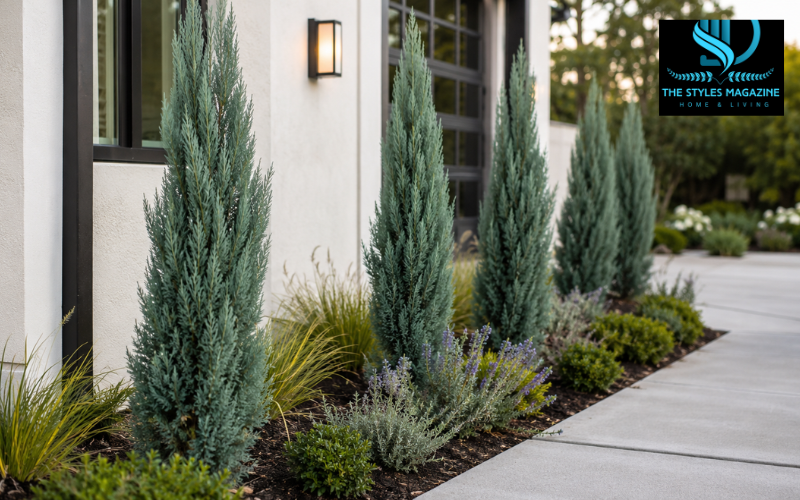
Blue Arrow Juniper is a narrow evergreen plant known for its slim, upright shape and cool blue-green color. Its botanical name is Juniperus scopulorum ‘Blue Arrow’, and it belongs to the Rocky Mountain juniper group. Homeowners often choose it when they want height, structure, and year-round color without using too much ground space.
The main reason Blue Arrow Juniper is so popular is its naturally tight form. Unlike many evergreen shrubs that spread wide as they mature, this plant grows almost like a living column. Its branches stay close to the trunk, giving it a neat and formal look without heavy pruning. The foliage has a blue-green to silvery-blue tone that stays attractive through the seasons, making it useful even in winter when many other plants look bare.
Blue Arrow Juniper works especially well in small yards, narrow side gardens, modern landscapes, entryways, and privacy plantings. It can also be used in large containers when given enough space for its roots. In this guide, you’ll learn about Blue Arrow Juniper size, growth rate, care needs, common problems, hedge ideas, comparisons with similar junipers, and practical buying tips before adding one to your landscape.
Quick Guide Table: Blue Arrow Juniper at a Glance
| Feature | Quick Details |
| Botanical Name | Juniperus scopulorum ‘Blue Arrow’ |
| Mature Size | About 12–15 feet tall and around 2 feet wide |
| Growth Rate | Moderate, often around 12–18 inches per year in good conditions |
| Sunlight | Full sun is best, at least 6 hours daily |
| Soil | Well-drained soil; avoid soggy ground |
| Best Uses | Narrow hedge, privacy screen, entryway accent, modern landscape feature |
| Common Problems | Browning, root rot, spider mites, bagworms, winter damage |
| Best For | Small yards, tight spaces, fence lines, driveways, and formal gardens |
Blue Arrow Juniper Size and Mature Shape
Blue Arrow Juniper is valued because it gives height without taking over the garden. In many landscapes, it grows about 12 to 15 feet tall and around 2 feet wide after several years, although mature size can vary slightly depending on climate, soil, and care. The American Conifer Society describes it as a narrow, upright Rocky Mountain juniper that can reach about 12 to 15 feet tall and only about 2 feet wide after 10 years, with dense branching and bright blue-green foliage.
This slim size makes it very useful where wider evergreens would feel too bulky. A traditional evergreen shrub may need 5, 6, or even 8 feet of width, but Blue Arrow Juniper can fit into narrow beds, along driveways, beside fences, and near entrances where space is limited. Its upright shape also makes it a good choice when you want a vertical accent without blocking walkways or windows.
For a single specimen, give the plant enough room to keep its natural outline. Avoid planting it directly against a wall or fence, because even narrow plants need airflow around their branches. For grouped plantings, spacing depends on the goal. If you want each plant to stand out as an individual column, wider spacing is better. If you want a hedge or privacy screen, closer spacing can create a fuller look over time.
Blue Arrow Juniper Growth Rate and Long-Term Expectations
The Blue Arrow Juniper growth rate is usually moderate to fairly fast for a narrow evergreen. Under good conditions, it may grow around 12 to 18 inches per year. Growth is often slower during the first year because the plant is settling into its new location and developing roots. Once established, it usually grows more steadily.
Most homeowners should think of Blue Arrow Juniper as a long-term landscape plant, not an instant screen. A small nursery plant may take several years to become a strong vertical feature. However, because its shape is naturally upright and dense, even young plants can add structure earlier than many loose-growing shrubs.
Sunlight, soil drainage, watering, and climate all affect growth. Blue Arrow Juniper grows best in full sun and well-drained soil. If it is planted in shade, it may become thinner and less colorful. If the soil stays wet, the roots can struggle, and growth may slow down. During the first few years, regular deep watering during dry periods helps the plant build a healthy root system. Once established, it becomes much more drought tolerant.
Best Growing Conditions for Blue Arrow Juniper
Blue Arrow Juniper performs best in full sun. A location with at least 6 hours of direct sunlight each day helps the plant stay dense, upright, and colorful. Too much shade can cause open growth, weak branching, and duller foliage. If your goal is a formal column shape, sunlight is one of the most important care factors.
The soil should drain well. Blue Arrow Juniper does not like soggy roots, standing water, or heavy soil that stays wet for long periods. It can grow in a range of soil types, including sandy or rocky soil, as long as water drains away properly. Clemson Extension notes that junipers generally do well in sunny sites and are often valued for drought tolerance once established, but drainage is important for healthy growth.
This plant is often listed for USDA Zones 4 to 9, making it suitable for many cold and warm regions. It also handles wind, heat, and dry periods better than many softer landscape plants once its roots are established. Still, “drought tolerant” does not mean “no water ever.” Young plants need steady moisture while they settle in, and even established plants may need extra water during long dry spells.
Conditions that can weaken Blue Arrow Juniper include deep shade, soggy soil, poor airflow, overwatering, and heavy snow or ice sitting on the branches. Choosing the right planting location from the beginning is the best way to avoid many future problems.
How to Plant Blue Arrow Juniper the Right Way
The best time to plant Blue Arrow Juniper is usually spring or fall, when temperatures are milder and the plant has time to establish roots before extreme heat or cold. In cooler areas, spring planting gives the roots a full growing season. In warmer areas, fall planting can work well if the plant is watered properly.
Before planting, choose a sunny spot with good drainage. Dig a hole about as deep as the root ball and wider than the container. The top of the root ball should sit level with the surrounding soil or slightly above it. Planting too deep can trap moisture around the trunk and increase the risk of rot.
If the soil is compacted, loosen the surrounding area so roots can move outward. Avoid adding too much rich compost directly into the hole, because this can create a soft pocket that holds water. Instead, focus on improving drainage and keeping the plant at the correct depth.
After planting, water deeply to settle the soil around the roots. Add a light layer of mulch around the base to help hold moisture and reduce weeds, but keep mulch away from the trunk. Mulch piled against the stem can hold moisture and create problems over time.
Blue Arrow Juniper Care and Maintenance
Blue Arrow Juniper is considered low maintenance once established, but it still benefits from proper early care. During the first growing season, water deeply when the top few inches of soil begin to dry. The goal is to keep the root zone lightly moist but never soggy. After the plant is established, watering can usually be reduced, except during long dry periods.
Fertilizer is not always necessary. If the plant is growing in average soil and looks healthy, it may not need regular feeding. If growth is weak and the soil is poor, a slow-release fertilizer for evergreens can be used in spring. Avoid over-fertilizing, because too much fast growth can make the plant softer and less naturally tight.
Pruning should be light. Blue Arrow Juniper already has a narrow shape, so heavy cutting is usually unnecessary. Remove dead, broken, or damaged branches as needed. If a branch sticks out awkwardly, trim it back carefully, but avoid cutting into old bare wood because junipers may not regrow well from those areas.
In winter, the plant usually needs little care. In areas with heavy snow, gently brush snow off the branches if it begins to bend them. Do not shake frozen branches harshly, as they may break. Keeping the plant healthy through proper sunlight, spacing, and watering is the best way to maintain its dense upright look.
Blue Arrow Juniper Hedge and Privacy Screen Ideas
A Blue Arrow Juniper hedge is a smart choice when you need privacy but do not have room for a wide screen. Because the plant stays narrow, it can create a vertical green-blue barrier along fences, property lines, driveways, or side yards without taking up too much space.
For privacy planting, spacing is important. If the plants are placed too far apart, the screen may look open for many years. If they are planted too close, they may compete for light, water, and airflow as they mature. In many home landscapes, spacing them around 2 to 3 feet apart can create a tighter hedge effect, while wider spacing gives each plant more individual definition. Some nursery guidance also recommends close spacing for tight screens in full sun locations.
Blue Arrow Juniper works well where a tall fence feels too harsh or where a softer evergreen screen is preferred. It can also be used to hide narrow views, soften blank walls, or create a formal line along a walkway. The key is to leave enough room for maintenance and airflow so the hedge stays healthy.
This plant is not the best choice for a broad, thick privacy wall if you have a large area to cover. In that case, wider evergreens may provide faster coverage. But for narrow spaces where every foot matters, Blue Arrow Juniper is one of the most practical evergreen options.
Landscape Uses for Blue Arrow Juniper
Blue Arrow Juniper has a strong architectural shape, which makes it useful in many landscape styles. Planted in pairs, it can frame a front door, garden gate, driveway entrance, or patio opening. Its upright form naturally draws the eye upward, giving the space a clean and finished look.
In modern landscapes, Blue Arrow Juniper adds vertical structure without looking messy. It pairs well with ornamental grasses, low shrubs, stone borders, and simple planting beds. Its blue-green color can also create contrast against dark mulch, light gravel, or warm-toned hardscape materials.
For small yards and narrow side yards, it offers height without crowding the space. It can be used where a round shrub would become too wide or where a tree canopy would interfere with buildings and walkways. Near foundations, it should still be planted with enough distance from the wall so the plant can grow naturally and air can move around it.
Blue Arrow Juniper can also grow in large containers, especially for patios, terraces, and formal entryways. The container must be large, stable, and well-draining. Container plants dry out faster than plants in the ground, so they need more careful watering, especially during hot weather.
Blue Arrow Juniper Problems to Watch For
Most Blue Arrow Juniper problems come from poor growing conditions rather than the plant being difficult to grow. The most common issue is root stress from wet soil. If the roots sit in soggy ground, the plant may begin to brown, thin out, or decline. Poor drainage can also increase the risk of root rot.
Browning can have several causes. It may happen because of drought stress, winter burn, transplant shock, spider mites, bagworms, or root problems. The location of the browning matters. If only one side is affected, wind, sun exposure, or winter damage may be involved. If the whole plant is fading, the problem may be related to roots, water, or pests.
Spider mites can attack junipers and may cause tiny yellow speckling, browning needles, and fine webbing during heavier infestations. Clemson Extension identifies spruce spider mites as serious pests of juniper and explains that their feeding can cause speckling, browning, and needle drop. Bagworms can also damage junipers by feeding on foliage, especially if they are not noticed early.
Heavy snow or ice may bend or break branches, especially if plants are crowded or already weak. If a Blue Arrow Juniper loses its central leader or becomes badly split, it may not return to its original shape. Minor browning can often be corrected by improving care, but a plant with severe root rot, major branch loss, or widespread dieback may need replacement.
Blue Arrow Juniper vs Blue Point Juniper
Blue Arrow Juniper and Blue Point Juniper are both popular evergreen choices, but they are not the same in shape or use. Blue Arrow Juniper is much narrower and more columnar. Blue Point Juniper is usually broader and more pyramidal, which means it takes up more width in the landscape.
Blue Point Juniper is often listed around 10 to 12 feet tall and 6 to 8 feet wide at maturity, giving it a fuller, wider appearance than Blue Arrow Juniper. That extra width can be useful when you want a larger privacy screen or a more traditional evergreen shape. However, it can be too wide for tight spaces near driveways, small entryways, or narrow garden beds.
Blue Arrow Juniper is usually better when space is limited and a slim vertical accent is needed. It is also a better fit for formal rows where a pencil-like shape is desired. Blue Point Juniper may be better when you want a fuller evergreen screen, a larger foundation plant, or a more substantial focal point.
The best choice depends on your space. If width is limited, Blue Arrow Juniper is usually the safer option. If you have more room and want a broader evergreen, Blue Point Juniper may provide a fuller look.
Blue Arrow Juniper vs Skyrocket Juniper
Blue Arrow Juniper and Skyrocket Juniper are often compared because both are narrow, upright forms of Rocky Mountain juniper. Both can be used for vertical accents, tight screens, and formal landscapes. Both prefer sun and well-drained soil, and both are useful where a tall, slim evergreen is needed.
The differences are often subtle, but they matter in design. Blue Arrow Juniper is commonly described as dense, rigid, and strongly upright, with bright blue-green foliage. Skyrocket Juniper is also very narrow, and the American Conifer Society describes it as a popular upright juniper reaching around 15 feet tall and 2 feet wide after 10 years.
Some gardeners prefer Blue Arrow Juniper for a slightly denser, more formal appearance. Skyrocket Juniper may have a similar narrow look but can appear a little softer or looser depending on growing conditions and nursery stock. Purdue Arboretum notes that Skyrocket has an extremely narrow form and silvery blue-green foliage, but it does not perform well in wet soils and may be susceptible to bagworms.
For very formal landscapes, Blue Arrow Juniper is often chosen for its tight shape. For narrow screens where either plant is available and healthy, both can work well. The practical choice should come down to local availability, plant quality, mature size expectations, and the exact look you prefer.
Buying Blue Arrow Juniper: For Sale and Near Me Tips
When looking for Blue Arrow Juniper for sale, focus on plant quality instead of simply choosing the tallest one. A healthy plant should have strong blue-green color, dense branching, and a straight central leader. Avoid plants with large brown sections, broken tops, circling roots, or soil that smells sour from staying too wet.
If you search for “Blue Arrow Juniper near me,” check local nurseries first when possible. Local garden centers often carry plants suited to your climate and can give advice based on your area’s soil, winter conditions, and watering needs. Online sellers can also be useful, but it is important to check plant size, shipping timing, return policies, and whether the plant is suitable for your USDA zone.
Container size matters. Smaller plants are usually cheaper and easier to plant, but they take longer to create height. Larger plants give a more immediate effect but cost more and need careful watering after planting. A well-rooted mid-size plant is often a good balance for homeowners.
Before buying, ask how tall and wide the plant is expected to grow in your region, whether it was grown locally, how often it should be watered after planting, and whether your soil drains well enough. These simple questions can help you avoid problems later.
Is Blue Arrow Juniper the Right Choice for Your Yard?
Blue Arrow Juniper is a good choice if you want a narrow evergreen with year-round color, strong vertical shape, and relatively simple care. It is especially useful in small yards, narrow planting beds, modern landscapes, formal entryways, and privacy screens where width is limited.
It may not be the best choice if your planting area is shady, wet, poorly drained, or too cramped for airflow. It is also not ideal if you want a soft, spreading shrub or a wide privacy wall. While it is low maintenance, it still needs the right location to perform well.
A simple decision checklist can help:
- Choose Blue Arrow Juniper if the site gets full sun.
- Choose it if the soil drains well and does not stay soggy.
- Choose it if you need height without much width.
- Avoid it if the area is heavily shaded or wet.
- Consider a wider evergreen if you need a thick screen quickly.
When matched to the right site, Blue Arrow Juniper can be a dependable and attractive landscape plant for many years.
Conclusion: A Narrow Evergreen with Big Landscape Value
Blue Arrow Juniper is useful because it solves a common landscape problem: how to add height, privacy, and year-round structure without using too much space. Its slim form, blue-green foliage, and naturally upright habit make it a strong choice for small yards, narrow beds, entryways, hedges, and modern garden designs.
The most important things to remember are simple. Plant Blue Arrow Juniper in full sun, give it well-drained soil, water it carefully while young, and avoid crowded or soggy conditions. Once established, it is generally drought tolerant, low maintenance, and easy to fit into many landscape styles.
For homeowners who want a clean, vertical evergreen that stays narrow and attractive through the seasons, Blue Arrow Juniper is a practical and beautiful option. It is not the right plant for every location, but in the right spot, it brings lasting structure, color, and elegance to the landscape.
FAQs
What is Blue Arrow Juniper used for?
Blue Arrow Juniper is used for narrow privacy screens, hedges, entryway framing, driveway borders, and vertical accents. Its slim shape makes it useful where wider evergreen shrubs would take up too much space.
How big does Blue Arrow Juniper get?
Blue Arrow Juniper usually grows about 12 to 15 feet tall and around 2 feet wide. Its narrow shape makes it a good choice for small yards and tight planting areas.
How fast does Blue Arrow Juniper grow?
Blue Arrow Juniper has a moderate growth rate. In good sunlight and well-drained soil, it may grow about 12 to 18 inches per year after it becomes established.
What are common Blue Arrow Juniper problems?
Common problems include browning, root rot from wet soil, spider mites, bagworms, winter burn, and branch damage from snow. Most issues happen when the plant is stressed or poorly placed.
Is Blue Arrow Juniper good for a hedge?
Yes, Blue Arrow Juniper works well as a narrow hedge or privacy screen. Planting it with proper spacing helps create a clean, upright evergreen barrier without using too much yard space.
Enjoyed it? Find more exclusive content on The Styles Magazine.
Disclaimer: This article is for general gardening and landscaping information only. Plant growth, size, and health can vary based on climate, soil, watering, and local conditions. For serious plant disease or landscape concerns, consult a local nursery, arborist, or extension expert.