Finding fleas in house areas can feel frustrating, especially when you are not sure where they came from or how quickly they spread. Fleas are small insects that feed on the blood of animals and, sometimes, humans. They are usually linked with pets, but a home can also get fleas from outdoor spaces, visiting animals, used furniture, rodents, wildlife, or even a previous infestation that was not fully removed. The CDC notes that fleas feed on animal or human blood, and their bites can cause itching and irritation.
The main problem with fleas is that they do not stay in one visible place. Adult fleas may live on dogs or cats, while eggs can fall into carpets, pet bedding, rugs, couches, floor cracks, and baseboards. This is why a few fleas can turn into a larger issue if the home is not cleaned and treated properly.
Getting rid of fleas in house spaces is not just about killing the fleas you can see. You need to treat pets, clean the home carefully, and break the flea life cycle at the same time. If one part is ignored, fleas can keep coming back even after vacuuming or spraying.
Quick Guide Table: Fleas in House
| Problem | What It Means | What to Do |
| Fleas on pets | Dogs or cats may be carrying adult fleas | Treat all pets with a safe vet-approved flea product |
| Fleas in carpets | Eggs and larvae may be hidden deep inside fibers | Vacuum daily and steam clean if possible |
| Flea bites on humans | Fleas may be active in floors, bedding, or furniture | Wash fabrics, vacuum floors, and check pets |
| Fleas with no pets | Fleas may come from wildlife, rodents, or old furniture | Clean the home and check entry points |
| Fleas keep returning | Pupae may still be hatching after treatment | Repeat cleaning and treatment for several weeks |
What It Means When You Have Fleas in House
When you have fleas in house areas, it usually means fleas are living, feeding, or developing somewhere inside the home. Adult fleas may be jumping on pets or people, but many more may be hidden in earlier life stages. Fleas go through four main stages: egg, larva, pupa, and adult. The CDC explains that the flea life cycle can be quick or may last much longer depending on conditions such as temperature, humidity, and available hosts.
This is why fleas can remain even after you clean once. You may remove many adult fleas and eggs, but some pupae can stay protected in their cocoons. Later, they can hatch when they sense warmth, movement, or vibration. This makes the problem feel like it disappeared for a few days and then suddenly returned.
A flea problem indoors should be handled as a whole-house issue. Even if fleas are first noticed in one room, they may already be in places where pets sleep, where people sit, or where carpets and furniture provide hiding spots.
Common Signs of Fleas in House
The most obvious sign of fleas in house areas is seeing tiny, dark insects jumping on floors, rugs, furniture, socks, or pet bedding. Fleas are small and fast, so you may only notice them for a second before they disappear into fabric or carpet fibers.
Another common sign is flea dirt. Flea dirt looks like tiny black or dark brown specks. It may appear on your pet’s fur, bedding, blankets, carpets, or furniture. A simple way to check it is to place the specks on a damp white tissue. If they turn reddish-brown, it may be digested blood from fleas.
Pets may also show signs before you see fleas yourself. Dogs and cats may scratch, lick, bite their skin, shake their head, or seem restless. In people, small itchy bites around the ankles or lower legs can also suggest fleas, especially if the bites appear after sitting on a carpet, couch, or bed where pets spend time.
Signs of Fleas in House on Humans
Signs of fleas in house on humans often appear as small red bumps that itch. Flea bites commonly show up around the ankles, feet, lower legs, and sometimes the waist or other areas where clothing fits tightly. The bites may appear in small groups or lines because fleas can bite more than once.
However, bites alone do not always confirm fleas. Other insects, skin irritation, allergies, or outdoor exposure can cause similar marks. The best way to confirm fleas is to look for other signs at the same time, such as jumping insects, flea dirt, pet scratching, or fleas caught in a trap.
If bites become painful, swollen, infected, or cause a strong reaction, it is better to speak with a healthcare professional. For most people, flea bites are mainly irritating, but scratching too much can damage the skin and increase the chance of infection.
Fleas in House on Dogs and Cats
Fleas in house on dogs and cats are very common because pets often become the main host. Adult fleas prefer to live on animals where they can feed and reproduce. After feeding, female fleas can lay eggs that fall off the pet into carpets, bedding, furniture, and floor gaps.
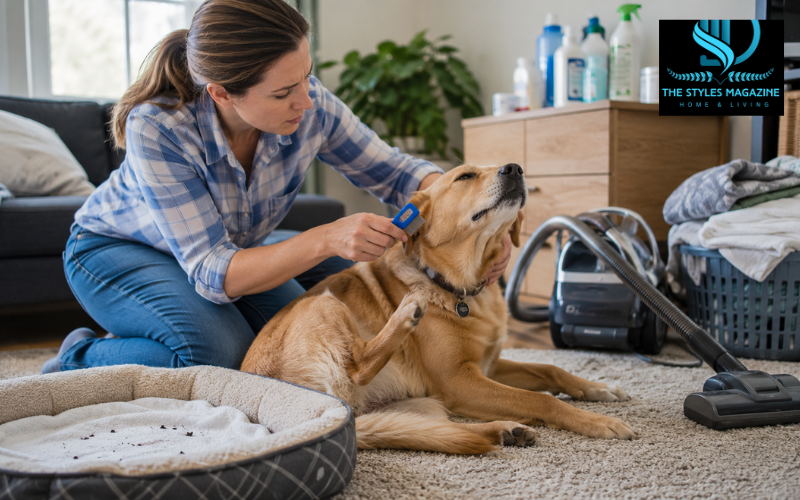
Dogs and cats with fleas may scratch more than usual, lick or bite certain areas, lose small patches of hair, or develop irritated skin. You may also see flea dirt near the base of the tail, around the neck, behind the ears, or on the belly. A flea comb can help find fleas and flea dirt, especially in thick fur.
All household pets should be checked and treated, not only the pet that seems itchy. If one dog or cat has fleas, others in the home may also be carrying them. The FDA advises pet owners to choose flea and tick products based on the pet’s species, age, weight, and health condition, and to never use a dog product on a cat unless the label clearly allows it.
For the safest results, use a veterinarian-recommended flea treatment, especially for young, elderly, pregnant, sick, or sensitive pets.
Fleas in House With No Pets
Fleas in house with no pets can still happen. Pets are a common source, but they are not the only one. Fleas can be brought in by rodents, raccoons, stray cats, squirrels, or other wildlife that spend time near the home. They can also come from used rugs, secondhand furniture, or a previous tenant’s untreated pet problem.
In some cases, fleas may already be in carpets or cracks before you move in. If no animal host is available, adult fleas may bite humans. Hidden pupae can also remain inactive for a period and hatch later when they sense vibration, body heat, or movement.
No-pet homes still need full cleaning and treatment because the problem is in the environment, not just on animals. Vacuuming, washing fabrics, sealing entry points, checking crawl spaces, and controlling rodents or wildlife around the property may all be part of the solution.
Why Fleas Keep Coming Back Indoors
Fleas often come back because the full life cycle was not broken. Adult fleas are only one part of the problem. Eggs, larvae, and pupae may be hidden deep in carpets, rugs, pet bedding, couches, under furniture, and along baseboards. Cornell IPM explains that pupae can be difficult to kill because their cocoons provide protection and can collect debris around them.
This is why one spray, one bath, or one vacuuming session is usually not enough. You may kill adult fleas today, but eggs and pupae may continue to develop. A few days or weeks later, new adult fleas can appear.
The key is consistency. A good flea treatment for house areas should continue long enough to catch newly emerging fleas before they reproduce again. This often means repeated cleaning, pet protection, and targeted treatment for several weeks.
How to Get Rid of Fleas in House Step by Step
If you want to know how to get rid of fleas in house areas, start with a complete plan instead of one quick action. First, treat all pets with a safe, suitable flea product. This prevents adult fleas from continuing to feed and lay eggs on your animals.
Next, wash pet bedding, blankets, removable cushion covers, and sheets in hot water when the fabric allows it. Dry them on high heat if the care label permits. Heat helps reduce fleas in fabrics and bedding.
Then vacuum the home carefully. Focus on carpets, rugs, furniture, pet resting areas, under beds, under couches, baseboards, and floor cracks. University of Kentucky Entomology notes that vacuuming can remove eggs, larvae, and pupae, and can also stimulate fleas to emerge from cocoons, making them more likely to contact treatments.
After vacuuming, empty the canister or remove the bag outside. Seal the contents in a plastic bag and place it in an outdoor bin. This helps prevent fleas from escaping back into the home.
Finally, apply a safe treatment where needed. This may be a household flea spray with an insect growth regulator, a professional treatment, steam cleaning, or careful use of a low-dust product such as food-grade diatomaceous earth. Repeat cleaning and monitoring for several weeks because fleas may continue to emerge from hidden stages.
Flea Treatment for House: Best Areas to Focus On
A good flea treatment for house areas should be targeted. Randomly spraying open floor space is not as useful as treating the places where fleas actually develop. Fleas are most likely to be found where pets rest, sleep, or spend long periods of time.
Focus on carpets, rugs, pet beds, couch cushions, furniture undersides, baseboards, floor gaps, corners, and shaded areas under furniture. If pets sleep on your bed, wash your bedding and vacuum around the bed frame and nearby floor.
Texas A&M AgriLife Extension explains that flea eggs can drop from pets into carpets, furniture, bedding, and floors, while larvae feed on organic material and dried blood from flea dirt. This is why pet resting spots are often the most important areas to clean and treat.
Targeted treatment also reduces unnecessary chemical use. Instead of overusing products across the whole house, you can focus on high-risk areas and follow label directions carefully.
How to Get Rid of Fleas in the House Fast Naturally
Many people want to know how to get rid of fleas in the house fast naturally, especially when they have children, pets, or sensitive family members. Natural methods can help, but it is important to be realistic. Fleas usually require repeated effort because eggs and pupae may not all be removed in one day.
Start with strong vacuuming and hot washing. These are two of the most useful non-chemical steps. Steam cleaning can also help because heat can reach fleas and larvae hidden in carpet fibers and upholstery. Pet bedding should be cleaned often, and washable items should be dried thoroughly.
Food-grade diatomaceous earth is sometimes used as a natural option for carpets, cracks, and baseboards. It works by drying out insects, but it must be used carefully. The National Pesticide Information Center notes that diatomaceous earth products are registered for use against fleas and other pests, but dust products should be handled in a way that avoids breathing them in or spreading them into the air.
If you use diatomaceous earth, apply only a very light layer in targeted areas, keep pets and children away during application, avoid creating dust clouds, and vacuum it up thoroughly after the recommended time. Natural does not always mean risk-free, so careful use is still important.
Safe Chemical Options for Serious Flea Problems
For serious flea problems, natural cleaning may not be enough by itself. In these cases, household flea sprays with insect growth regulators can help break the cycle. Insect growth regulators, often called IGRs, do not work like normal adult flea killers. Instead, they help stop eggs and larvae from developing into breeding adults.
Methoprene is one example of an insect growth regulator. The National Pesticide Information Center explains that methoprene interferes with insect growth and development, helping prevent immature insects from becoming adults and reproducing.
When using any chemical flea treatment indoors, always read the label first. Use the product only where it is meant to be used, keep children and pets away until the treated area is dry or safe according to the label, ventilate the room, and avoid applying household products directly to animals.
It is also important not to mix products or overapply them. More product does not mean better control, and misuse can create health risks for people and pets. When in doubt, ask a veterinarian for pet products and a licensed pest professional for indoor treatments.
Daily Cleaning Routine to Break the Flea Cycle
A daily cleaning routine can make a big difference when dealing with fleas in house spaces. Vacuum carpets, rugs, furniture, floor edges, and pet resting areas every day during an active infestation. Pay special attention to corners, baseboards, under furniture, and any place where pets sleep.
After each vacuuming session, dispose of the vacuum contents safely. For bagless vacuums, empty the canister outdoors into a sealed plastic bag. For bagged vacuums, remove and seal the bag before placing it in an outdoor trash bin.
Wash pet bedding often. If your pet sleeps on blankets, couch covers, or human bedding, those items should also be cleaned. Heat is helpful when the fabric allows it, but always follow care labels to avoid damage.
Continue this routine even after you stop seeing fleas. New fleas may still hatch from hidden pupae, so stopping too early is one of the most common reasons infestations return.
Mistakes That Make Fleas Harder to Remove
One major mistake is treating only one pet. If there are several dogs or cats in the home, all of them should be checked and protected with the right product. Otherwise, fleas may simply move between animals and continue reproducing.
Another mistake is vacuuming once and assuming the problem is solved. Flea eggs and pupae can stay hidden, so cleaning must be repeated. Skipping couches, pet bedding, cracks, and baseboards is also a common reason fleas survive indoors.
Using unsafe or incorrect products can create bigger problems. Dog flea products should not be used on cats unless the label specifically says they are safe for cats. Household sprays should not be used on pets. Outdoor pesticides should not be used indoors. These mistakes can be dangerous and may still fail to remove the infestation.
It is also unhelpful to rely only on strong smells, homemade sprays, or unproven remedies. Some may repel fleas for a short time, but they usually do not break the life cycle. A safer approach is to combine cleaning, pet treatment, and targeted flea control.
When to Call a Professional Exterminator
A professional exterminator may be needed when fleas are widespread, keep returning, or are causing heavy biting inside the home. Professional help can also be useful when fleas are in multiple rooms, rental properties, crawl spaces, basements, or homes with heavy carpeting.
You may also want expert help if you have young children, elderly family members, sensitive pets, or anyone with allergies or health concerns. A professional can identify high-risk areas and choose treatments that match the situation.
Before hiring someone, ask what products they use, whether the treatment includes insect growth regulators, how long people and pets should stay away from treated areas, and what follow-up steps are needed. Even after professional treatment, vacuuming and pet protection are still important.
Conclusion: Removing Fleas From Your House the Right Way
Removing fleas from your house takes patience, consistency, and the right plan. The most important thing to remember is that fleas are not only the tiny jumping insects you see. Eggs, larvae, and pupae may be hidden in carpets, bedding, couches, and floor cracks.
The best way to handle fleas in house areas is to treat pets safely, clean the home deeply, and break the flea life cycle with repeated action. Vacuum daily during an active problem, wash bedding with heat when possible, focus on pet resting areas, and use natural or chemical treatments carefully.
Acting early makes flea control easier. If you notice fleas, flea dirt, pet scratching, or bites on people, start cleaning and treatment right away. With steady effort over several weeks, most homes can get fleas under control and prevent them from coming back.
FAQs
What Causes Fleas In House Areas?
Fleas can enter through pets, wildlife, rodents, visitors, outdoor spaces, or used furniture. Once inside, they hide in carpets, bedding, furniture, and cracks where eggs and larvae can develop.
Can Fleas Live In A House Without Pets?
Yes, fleas can live in a house without pets. They may come from previous infestations, rodents, stray animals, or secondhand furniture and survive in carpets or cracks for some time.
How Do I Know If I Have Fleas In My House?
Common signs include tiny jumping insects, itchy bites on ankles or legs, flea dirt on bedding or carpets, and pets scratching, licking, or biting their fur more than usual.
How Long Does It Take To Remove Fleas From A House?
Flea removal can take several weeks because eggs, larvae, and pupae may stay hidden. Daily vacuuming, washing fabrics, treating pets, and repeating treatments help break the cycle.
What Is The Fastest Way To Get Rid Of Fleas In House Areas?
The fastest approach is to treat all pets, vacuum daily, wash bedding with heat, clean pet resting areas, and use a safe flea treatment that targets both adult fleas and developing stages.
Enjoyed it? Find more exclusive content on The Styles Magazine.
Disclaimer: This article is for general informational purposes only. Flea treatments should be used according to product labels, and pet products should be chosen based on your pet’s species, age, weight, and health. For severe infestations or pet health concerns, contact a veterinarian or licensed pest control professional.