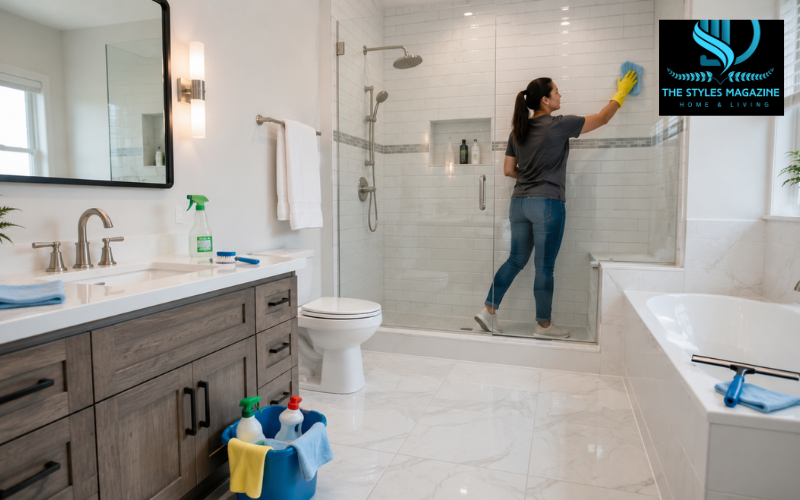
Learning how to deep clean bathroom areas properly is about more than making the room look neat. A true bathroom deep clean means removing the dirt, germs, stains, soap scum, water spots, and hidden buildup that regular wiping often leaves behind. Bathrooms collect moisture every day, so grime can settle into corners, grout lines, drains, faucet bases, toilet areas, shower glass, and even walls.
A quick wipe can help your bathroom look cleaner for a short time, but it usually does not remove deeper buildup. Soap scum can stick to shower walls and tubs. Hard water can leave cloudy stains on faucets and glass. Germs can stay around the toilet, sink, and floor. Dust and hair can gather behind items, under cabinets, and near baseboards. This is why a deep cleaning method is important.
The best way to deep clean a bathroom is to prepare the room first, work from top to bottom, give cleaning products time to sit, scrub the right areas, disinfect high-touch surfaces, and then reset the space with clean towels and fresh items. This simple order saves time and helps you avoid spreading dirt back onto areas you already cleaned.
Quick Guide Table: How to Deep Clean Bathroom Areas
| Bathroom Area | What to Clean | Best Simple Method |
| Walls | Dust, splash marks, humidity stains | Dust first, then wipe with a mild cleaner |
| Tiles and Grout | Soap scum, stains, dirt lines | Pre-treat, scrub grout, rinse well |
| Shower and Tub | Soap scum, water spots, drain area | Let cleaner sit 10–15 minutes, then scrub |
| Sink and Vanity | Toothpaste, faucet stains, counter dirt | Scrub basin, clean faucet base, wipe counters |
| Toilet | Bowl, rim, seat, handle, base | Clean inside first, then disinfect outside |
| Floor | Hair, dust, germs, corners | Sweep first, then mop from back to door |
Why Bathroom Deep Cleaning Matters More Than Regular Cleaning
Bathroom deep cleaning matters because the bathroom is one of the most used and moisture-heavy rooms in the home. Regular cleaning handles daily mess, but deep cleaning reaches the areas where dirt builds up slowly over time. These areas may not look dirty at first, but they can cause odors, stains, dull tiles, and a less fresh feeling.
Deep cleaning removes hidden grime, bacteria, soap scum, and hard water buildup. It also helps prevent mold and mildew from growing in damp places such as grout, shower corners, around the tub, and near the sink. When you deep clean bathroom surfaces, you are not only improving appearance. You are also making the room easier to maintain in the future.
A properly cleaned bathroom feels brighter, fresher, and more comfortable to use. Fixtures shine better, tiles look clearer, and the air smells cleaner. Once the deeper dirt is removed, weekly bathroom cleaning becomes much easier because there is less buildup to fight.
Deep Clean Bathroom Checklist Before You Start
Before you begin, prepare the room so you can clean without stopping again and again. A good deep clean bathroom checklist starts with removing towels, bath mats, trash cans, toiletries, shampoo bottles, toothbrush holders, and items from counters and shower ledges. Empty surfaces are much easier to clean properly.
Next, open a window or turn on the exhaust fan. Good airflow helps reduce strong smells from cleaning products and allows moisture to dry faster. Put on gloves to protect your hands, especially if you are using disinfectants or scrubbing tough stains.
Gather your supplies before starting. You may need microfiber cloths, a scrub brush, an old toothbrush, a toilet brush, a mop, a bucket, bathroom cleaner, disinfectant, glass cleaner, baking soda, and white vinegar if it is safe for your surfaces. Avoid using vinegar on natural stone because it can damage the finish.
The first cleaning step should be dry dusting or vacuuming. Remove hair, dust, and loose dirt from the floor, corners, shelves, and baseboards before adding water or cleaner. If you skip this step, hair and dust can turn into a sticky mess when wet.
How to Clean a Bathroom Step by Step From Top to Bottom
The smartest method for how to clean a bathroom step by step is to work from the highest areas down to the lowest areas. Start with ceiling corners, vents, light fixtures, upper walls, and shelves. Dust falls as you clean, so it makes sense to clean the lower surfaces later.
After the high areas, move to mirrors, cabinets, counters, sink, shower, bathtub, toilet, and finally the floor. This order helps prevent re-contaminating freshly cleaned areas. For example, if you mop the floor first and then scrub the toilet or shower, dirty water and dust may fall onto the clean floor again.
Another important step is letting your cleaners sit before scrubbing. Many people spray and wipe right away, but this makes cleaning harder. Bathroom cleaners need time to loosen soap scum, mineral buildup, and grime. Letting the product sit for a few minutes can reduce scrubbing and give better results.
How to Deep Clean Bathroom Walls Safely
Bathroom walls often collect moisture marks, fingerprints, dust, and small splashes from sinks or toilets. To deep clean bathroom walls safely, start by dusting them with a dry microfiber cloth or soft duster. This removes loose dust before moisture is added.
For painted walls, use a mild cleaner or a small amount of gentle dish soap mixed with warm water. Wipe with a soft cloth, working in small sections. Pay attention to areas near the sink, toilet, towel hooks, and light switches because these spots often collect marks and germs.
Avoid harsh scrubbing on delicate paint, wallpaper, or textured surfaces. Too much pressure can remove paint or leave shiny marks. If you are unsure, test your cleaner on a small hidden area first. After wiping, go over the wall with a clean damp cloth and dry the surface with a towel. This helps prevent water streaks and protects the finish.
How to Deep Clean Bathroom Tiles and Grout
Tiles can look clean from a distance, but soap scum, body oils, and minerals often build up on the surface. Grout lines are even more likely to hold dirt because they are slightly porous and sit lower than the tile surface. To deep clean bathroom tiles, start by spraying a suitable bathroom cleaner and letting it sit for several minutes.
Use a non-scratch sponge or soft scrub brush to clean the tile surface. For grout, use a small brush or old toothbrush. Scrub along the grout lines instead of only wiping across them. This helps lift stains and grime from the narrow spaces between tiles.
Choose your cleaner based on the tile type. Ceramic and porcelain tiles are usually easier to clean, but natural stone needs special care. Avoid vinegar, lemon juice, or strong acidic cleaners on marble, limestone, travertine, or other stone surfaces. After scrubbing, rinse the tiles well with clean water. Cleaner residue can leave streaks, dullness, or a sticky feel if it is not removed.
How to Deep Clean Bathroom Shower and Bathtub
The shower and bathtub usually need the most attention during a bathroom deep clean. These areas collect soap scum, shampoo residue, hard water stains, body oils, and sometimes mildew. Start by spraying the shower walls, tub, fixtures, doors, and corners with a bathroom-safe cleaner.
Let the cleaner sit for 10 to 15 minutes, but do not let it dry completely on the surface. This waiting time helps break down grime so scrubbing becomes easier. After that, scrub the walls, tub floor, ledges, corners, and drain area. Use a brush for textured surfaces and a non-abrasive sponge for smooth surfaces.
For shower glass, use a glass cleaner or a vinegar solution only if it is safe for nearby surfaces. Wipe from top to bottom and finish with a squeegee to reduce streaks and water spots. Clean the showerhead and faucet handles as well, because minerals often collect around them. Rinse everything thoroughly and dry the surfaces to leave the shower looking fresh.
How to Remove Hard Water Stains, Soap Scum, and Mineral Buildup
Hard water stains and mineral buildup often show up as white, cloudy, or chalky marks on faucets, showerheads, glass doors, tiles, and drains. Soap scum usually feels sticky or looks dull on shower walls and tubs. These problems are common, especially in bathrooms with frequent use and poor ventilation.
White vinegar can help with mineral deposits on many surfaces, but it should be used carefully. It is not safe for natural stone and should not be mixed with bleach. For faucets or showerheads, you can apply vinegar to a cloth and wrap it around the area for a short time, then scrub gently and rinse well.
For soap scum, a bathroom cleaner made for tubs and showers often works best. Let it sit long enough to loosen the buildup, then scrub and rinse. The most important final step is drying the surface. Water left behind can create new spots, so use a clean microfiber cloth or squeegee after cleaning.
How to Deep Clean the Sink, Vanity, Faucet, and Mirror
The sink and vanity area collect toothpaste, soap, makeup, hair, water spots, and bacteria from daily use. Start with the mirror, because overspray can fall onto the counter. Spray glass cleaner onto a cloth instead of directly onto the mirror if you want to avoid liquid dripping into the frame. Wipe in smooth motions until the mirror is clear and streak-free.
Next, clean the sink basin with an all-purpose bathroom cleaner or a cleaner suitable for the material. Scrub around the drain, overflow hole, and faucet base because these tight areas often collect grime. An old toothbrush works well for small spaces around handles and edges.
Wipe the faucet until it shines, then clean the vanity counter and cabinet fronts. Move items before wiping so you are not cleaning only around them. Before placing items back, wipe bottles, soap dispensers, toothbrush holders, and trays. This small step keeps the freshly cleaned vanity from becoming dirty again immediately.
How to Deep Clean the Toilet Without Spreading Germs
The toilet should be cleaned carefully because it can spread germs to nearby areas if you use the same cloth everywhere. Start inside the bowl by applying toilet cleaner under the rim and letting it sit. Scrub the bowl with a toilet brush, paying close attention to the hidden underside of the rim and the waterline. Flush after scrubbing.
For the outside, disinfect the handle, tank, lid, seat, hinges, base, and the floor area around the toilet. These areas are touched often or exposed to splashes. Use separate cloths, paper towels, or disinfecting wipes for the toilet area only. Do not use the same cloth on the sink, mirror, or counters.
After cleaning, rinse or replace your toilet brush if needed, remove gloves carefully, and wash your hands. Keeping toilet cleaning tools separate is one of the easiest ways to avoid spreading germs around the bathroom.
How to Deep Clean Bathroom Floor the Right Way
The bathroom floor collects hair, dust, water spots, product spills, and germs from shoes and daily use. Before mopping, vacuum or sweep the floor thoroughly. This is especially important around corners, behind the toilet, under the vanity edge, and near the bathtub.
Once loose dirt is removed, mop with a floor cleaner that is safe for your flooring type. Start from the farthest corner and work toward the doorway so you do not step on the clean floor. Pay extra attention to grout lines, baseboards, and the area around the toilet.
Avoid soaking the floor with too much water, especially if you have wood-look flooring, laminate, or older tile with weak grout. After mopping, let the floor dry completely before replacing rugs, trash cans, or storage baskets. Putting items back too soon can trap moisture and cause odors.
Bathroom Deep Cleaning Mistakes to Avoid
One of the biggest bathroom deep cleaning mistakes is mixing cleaning products. Never mix bleach with vinegar, ammonia, or other cleaners. These combinations can create dangerous fumes. Always read product labels and use one cleaner at a time.
Another mistake is scrubbing too quickly after spraying. Cleaners need time to work. If you spray and wipe immediately, you may work harder and still leave grime behind. It is also a mistake to use one cloth for every surface. A cloth used around the toilet should never be used on the sink or vanity.
Many people also forget hidden areas such as vents, baseboards, drains, behind the toilet, faucet bases, shower tracks, and under countertop items. These places may be small, but they can hold odor and buildup. Also, do not assume kitchen cleaning methods are always safe for the bathroom. Bathroom surfaces can include delicate stone, painted walls, glass, chrome, and grout, so the cleaner should match the surface.
Deep Clean Bathroom Price: DIY vs. Hiring a Professional
The deep clean bathroom price can vary depending on bathroom size, condition, location, and how much work is needed. A small bathroom with light buildup will usually cost less to clean than a large bathroom with heavy soap scum, stained grout, hard water buildup, or mildew problems.
DIY cleaning is often enough if the bathroom is generally in good condition and you have the time, tools, and energy to clean it properly. It can save money and lets you maintain the space on your own schedule. Most homeowners can handle basic deep cleaning tasks such as scrubbing the sink, toilet, tub, shower, mirror, tiles, and floor.
Hiring a professional may make more sense if the bathroom has heavy stains, stubborn grout discoloration, strong odors, mold concerns, or years of buildup. A professional cleaner may also be helpful before moving into a home, after renovation dust, before guests arrive, or when you simply do not have time to do a full deep clean yourself.
Simple Bathroom Maintenance Plan After Deep Cleaning
After you deep clean bathroom surfaces, a simple maintenance plan will keep the room fresh for longer. Daily habits can be very small. Wipe the sink and faucet after use, hang towels so they dry properly, and use a squeegee on shower glass or tiles when possible.
Weekly cleaning should include the toilet, mirror, sink, counters, shower, tub, and floor. This keeps soap scum, water spots, and bacteria from building up again. It also makes the bathroom feel clean without needing a full deep clean every week.
Once a month, focus on the hidden areas. Clean grout lines, drains, vents, baseboards, shower tracks, under storage items, and behind the toilet. This monthly routine helps reduce heavy scrubbing later. The goal is not to make cleaning complicated, but to stop dirt from reaching the point where it becomes hard to remove.
Conclusion: Keep Your Bathroom Fresh With a Simple Deep Cleaning Routine
Knowing how to deep clean bathroom areas the right way can make the whole room feel fresher, brighter, and easier to maintain. The key is to clean in the right order: prepare the space, remove loose dust and hair, work from top to bottom, let cleaners sit, scrub problem areas, disinfect high-touch surfaces, and finish with the floor.
A bathroom deep clean does not need to feel overwhelming when you follow a clear process. Focus on the places regular cleaning often misses, such as grout lines, faucet bases, shower corners, drains, vents, baseboards, and behind the toilet. These hidden areas are often the reason a bathroom still feels dirty even after a quick wipe.
With a practical routine, you can prevent heavy buildup and keep your bathroom cleaner for longer. A little daily and weekly care after deep cleaning will save time, reduce odors, and help your bathroom stay fresh without constant scrubbing.
FAQs
How Often Should I Deep Clean My Bathroom?
Most bathrooms should be deep cleaned every 2 to 4 weeks. If the bathroom is used daily by several people, deep cleaning every two weeks can help prevent stains and odors.
What Is The Best Order To Deep Clean A Bathroom?
The best order is top to bottom. Start with vents, walls, and mirrors, then clean the sink, shower, tub, toilet, and finish with the bathroom floor.
Can I Use Vinegar To Deep Clean Bathroom Surfaces?
Yes, vinegar can help remove hard water stains and mineral buildup, but do not use it on natural stone like marble, limestone, or travertine because it can damage the surface.
Why Does My Bathroom Still Smell After Cleaning?
Hidden odor often comes from drains, toilet base, damp rugs, dirty grout, trash cans, or poor ventilation. Deep cleaning these areas usually helps remove the smell.
Is It Better To Deep Clean A Bathroom Myself Or Hire A Professional?
DIY cleaning is enough for regular buildup. Hiring a professional is better for heavy stains, strong odors, mold concerns, old grout dirt, or bathrooms that have not been cleaned deeply in months.
Enjoyed it? Find more exclusive content on The Styles Magazine.
Disclaimer: This article is for general home cleaning information only. Always read product labels, test cleaners on a small hidden area first, and avoid mixing chemicals such as bleach, vinegar, or ammonia-based cleaners.