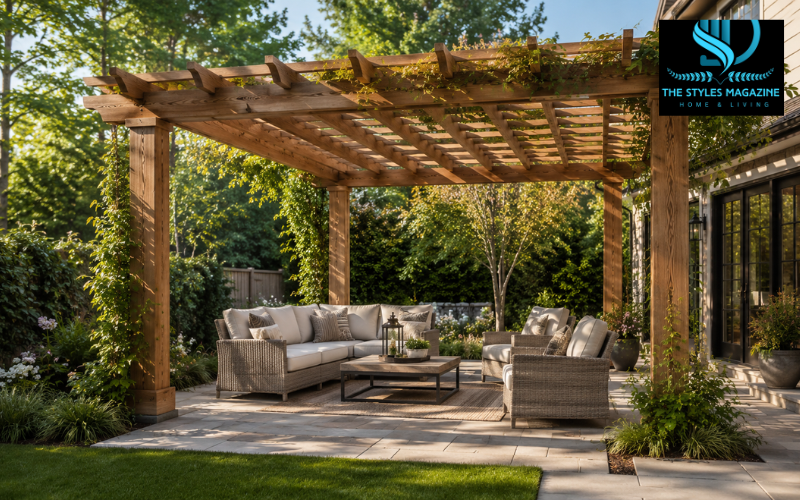
A pergola is an outdoor structure that creates a comfortable, stylish, and partly shaded space in a garden, patio, deck, or backyard. In simple words, it is usually made with vertical posts or columns that support an open roof frame above. This roof frame is often built with beams and rafters, giving it a clean grid-like appearance.
Unlike a fully covered outdoor room, a pergola is open to the air. It does not usually have solid walls or a complete roof. Instead, it gives you a balance of sunlight, airflow, and shade. This makes it useful for people who want to enjoy the outdoors without feeling completely exposed to direct sun.
Many homeowners use pergolas because they make outdoor areas feel more finished and inviting. A simple patio can become a relaxing sitting space. A garden corner can become a peaceful reading area. A deck can feel more like an outdoor living room. Whether it is used for dining, relaxing, growing climbing plants, or improving the look of a home, a pergola can add both function and beauty to an outdoor space.
Quick Guide Table: Pergola Basics
| Feature | Simple Explanation |
| Meaning | An open-air outdoor structure with posts and overhead beams |
| Main Use | Creates shade, style, and a defined outdoor living area |
| Roof Style | Usually open, but can include shade panels, fabric, or louvers |
| Best Places | Patios, decks, gardens, pool areas, and backyards |
| Plant Support | Great for vines like wisteria, roses, ivy, or grapevines |
| Pergola vs Gazebo | A pergola has an open roof; a gazebo usually has a solid roof |
| Pergola vs Trellis | A pergola is large enough to sit under; a trellis mainly supports plants |
What Is a Pergola?
A pergola is an open outdoor feature designed to provide structure, style, and partial shade. The meaning of pergola in English is usually connected with a garden structure where plants can grow over the top or where people can walk or sit underneath.
The main parts of a pergola are simple. It usually has posts or columns that stand upright, beams that run across the top, and rafters that create the open roof pattern. Because the roof is not fully closed, sunlight can still pass through. This is one of the main things that makes a pergola different from other backyard structures.
For someone hearing the word for the first time, think of a pergola as a frame for outdoor comfort. It does not completely block the sky, but it gives shape to an outdoor area. It can make a plain backyard feel more planned, organized, and enjoyable.
A pergola may be small and simple, covering a walkway or garden bench. It may also be large enough to cover a dining table, outdoor sofa set, or patio kitchen. Its purpose depends on the space and the way the homeowner wants to use it.
The Origin and Meaning of Pergola
The word “pergola” has a long history. It comes from old European garden design and is linked to structures that supported vines, greenery, and shaded walkways. Traditionally, pergolas were used in gardens to create pleasant paths where people could walk under climbing plants. They were also used to connect different parts of a garden or provide a cool place to rest.
In older gardens, pergolas often had grapevines, roses, ivy, or other climbing plants growing across the top. As the plants spread over the beams, they created a natural canopy. This gave shade while still keeping the area open and connected to nature.
Today, the basic idea is still the same, but pergolas are used in many more ways. Modern pergola design is not only about plants. It is also about outdoor living. Homeowners use pergolas to make patios, decks, pool areas, and backyards more useful and attractive. Even when no plants are added, a pergola can still create a strong design feature and a comfortable outdoor zone.
This mix of history, beauty, and practical use is one reason pergolas have stayed popular for so long.
What Is a Pergola Used For?
A pergola is used to make an outdoor space more comfortable, defined, and visually appealing. One of its most common uses is creating a clear outdoor sitting or dining area. Without a structure, a patio or garden space can sometimes feel empty or unfinished. A pergola gives that space a purpose.
For example, a pergola over a dining table can make the area feel like an outdoor dining room. A pergola above lounge chairs can create a peaceful place to relax. When placed near a pool, it can offer a shaded spot for resting between swims.
Pergolas are also useful for adding shade without closing off the outdoor area. Because the roof is usually open, it allows fresh air and some sunlight to come through. This is ideal for people who want relief from strong sun but do not want the heavy feel of a fully covered structure.
Another important use is plant support. Pergolas are excellent for climbing plants and vines. Wisteria, grapevines, climbing roses, jasmine, and ivy can grow across the roof frame and soften the look of the structure. Over time, the plants can create a beautiful natural shade cover.
A pergola can also improve curb appeal and backyard design. It adds height, shape, and character to the landscape. This makes patios, decks, and gardens feel more polished and thoughtfully designed.
Main Parts of a Pergola Structure
A pergola may look simple, but each part has a role. The vertical posts or columns are the main support. They hold the structure upright and carry the weight of the beams and roof frame. These posts can be made from wood, vinyl, aluminum, steel, or fiberglass, depending on the design and budget.
The crossbeams sit across the top of the posts. They help form the upper frame and give the pergola its strong architectural shape. Rafters are placed across the beams to create the open-lattice roof design. This pattern is what gives a pergola its classic look.
The open roof is one of the most important features. It creates filtered shade instead of full darkness. The amount of shade depends on how close the rafters are placed, the direction of the sun, and whether any extra covering is added.
Many pergolas also include optional features. Shade covers, curtains, privacy screens, string lights, fans, and outdoor lighting can make the space more comfortable. Curtains can soften the design and add privacy. Lights can make the pergola useful in the evening. A fan can improve airflow during warm weather.
Each part affects how the pergola looks and feels. A heavy wooden pergola may feel warm and rustic. A slim aluminum pergola may feel clean and modern. A pergola with curtains and lights may feel cozy and private.
What Is a Pergola Roof?
A pergola roof is the top part of the structure, but it is usually different from a normal roof. A traditional pergola roof is open, not solid. It is made from beams and rafters that allow sunlight and air to pass through. This is why pergolas are known for partial shade rather than complete cover.
Some pergolas have simple open beams with no extra covering. These are best for creating style, light shade, and plant support. Others may include shade panels, fabric covers, bamboo screens, or retractable canopies. These additions increase shade and comfort while keeping the pergola’s open feel.
Modern pergolas can also have louvered roofs. A louvered roof has adjustable slats that can open or close. When the slats are open, sunlight and air can pass through. When they are closed, they can provide more shade and, in some designs, better rain protection.
Motorized pergola roofs are becoming more common in modern outdoor spaces. These allow users to adjust the roof with a remote or switch. Some designs may also include rain sensors, lighting, or built-in drainage. These options are useful for people who want more control over sun, shade, and weather protection.
So, when someone asks, “What is a pergola roof?” the answer depends on the style. A traditional one is open and airy, while a modern one may be adjustable or partly covered.
Popular Pergola Design Styles
Pergola design can be simple, classic, modern, rustic, or luxurious. The best style depends on the home, outdoor space, and personal taste.
Traditional wooden pergolas are very popular because they feel natural and warm. They work well in gardens, patios, and backyards with plants, stone paths, or wooden decks. Wood can be stained or painted to match the home.
Modern pergolas often use aluminum, steel, or clean-lined materials. These designs usually have straight edges, neutral colors, and a minimal look. They are common in newer homes, pool areas, and outdoor kitchens.
Attached pergolas are connected to the house. They often extend from an exterior wall over a patio, deck, or terrace. This type can make the indoor and outdoor areas feel more connected. It is a good choice when the goal is to create an outdoor extension of the home.
Freestanding pergolas are separate structures. They can be placed in a garden, near a pool, beside a walkway, or in the middle of a backyard. This gives more freedom in design and placement.
Some pergolas are small and minimal, while others are large and designed like outdoor rooms. A rustic pergola may use rough wood and climbing plants. A luxury pergola may include lighting, curtains, fans, furniture, and a louvered roof.
Common Pergola Materials
Pergolas can be built from several materials, and each one has its own look, strength, and maintenance needs.
Wood is one of the most classic choices. It gives a natural, warm appearance and blends well with gardens and outdoor landscapes. Cedar, redwood, and pressure-treated wood are common options. Wood may need staining, sealing, or painting over time to protect it from weather.
Vinyl is popular for people who want a clean look with less maintenance. It does not need painting and is usually easy to clean. However, it may not have the same natural feel as wood.
Aluminum is lightweight, modern, and durable. It works well for sleek pergola designs and is often used in louvered roof systems. It resists rust better than some other metals and needs less care than wood.
Steel is strong and long-lasting. It is a good option for larger structures or areas that need extra strength. However, it may require proper coating to prevent rust, especially in wet climates.
Fiberglass is another modern option. It can have a smooth finish, resist weather damage, and span longer distances without needing many supports. It is often more expensive, but it can work well for a clean and high-end look.
Choosing the right material depends on budget, climate, design preference, and how much maintenance the homeowner is willing to do.
Pergola vs Gazebo
Pergola vs gazebo is a common comparison because both are outdoor structures. However, they are not the same.
A pergola usually has an open roof made of beams and rafters. It feels airy and allows light, breeze, and some sun to pass through. It gives partial shade and is often used over patios, decks, walkways, or garden sitting areas.
A gazebo usually has a solid roof. It may be round, square, rectangular, or octagonal. Because the roof is closed, a gazebo offers stronger protection from sun and rain. Some gazebos also have railings, screens, or partially enclosed sides.
The best choice depends on what the homeowner wants. If the goal is an open, stylish structure that adds partial shade and supports plants, a pergola may be better. If the goal is stronger weather protection and a more enclosed outdoor shelter, a gazebo may be a better fit.
For design, pergolas often look lighter and more connected to the landscape. Gazebos usually feel more like separate outdoor shelters. Both can be beautiful, but they serve slightly different purposes.
What Is a Gazebo?
A gazebo is a freestanding outdoor structure with a solid roof. It is often placed in gardens, parks, yards, or scenic areas where people want a sheltered place to sit and relax.
Gazebos are usually more covered than pergolas. Their solid roof can block direct sunlight and help protect people from light rain. Some gazebos have open sides, while others include screens or railings. This makes them useful for outdoor seating, small gatherings, or enjoying garden views.
People often compare gazebos with pergolas because both can improve outdoor spaces. The difference is mainly in the roof and overall feel. A pergola is more open and often used to define a space. A gazebo is more like a small outdoor shelter.
A gazebo may be a better choice when weather protection is more important than openness. For example, if someone wants a shaded place that can still be used during light rain, a gazebo may work better. If they want a modern, airy space that blends with a patio or garden, a pergola may be the better option.
Pergola vs Trellis
Pergola vs trellis is another common comparison. Both can support climbing plants, but they are different in size and purpose.
A pergola is a larger structure that people can walk, sit, or dine under. It creates an outdoor living area and adds shade, height, and design to a space. It has posts and an overhead frame.
A trellis is usually smaller and mainly used to support plants. It may be a flat panel, frame, or lattice placed against a wall, fence, or garden bed. Climbing plants can grow on it, but it is not designed as a space for people to sit underneath.
Both pergolas and trellises can be used with vines, flowers, and greenery. A trellis is best when the main goal is plant support in a small area. A pergola is best when the goal is to create a usable outdoor area with shade, beauty, and structure.
In some gardens, both can be used together. A trellis can add greenery to a wall or fence, while a pergola can create a shaded sitting area nearby.
Benefits of Adding a Pergola to an Outdoor Space
A pergola can make an outdoor space more useful and enjoyable. One of the biggest benefits is that it helps define an area. Without a pergola, outdoor furniture may feel like it is just placed in the yard. With a pergola, the same furniture can feel like part of a planned outdoor room.
It also adds beauty and architectural interest. The posts, beams, and roof pattern create shape and height. This can make a simple backyard feel more elegant and balanced.
A pergola can make outdoor living more comfortable. It provides partial shade, which can make a patio or deck easier to use during sunny parts of the day. When combined with curtains, screens, plants, or a canopy, it can also add privacy and comfort.
Pergolas are also flexible. They can support climbing plants, string lights, ceiling fans, hanging planters, or outdoor curtains. These features can change the mood of the space and make it useful during the day and evening.
Another benefit is overall home appeal. A well-designed pergola can make a property look more finished and inviting. While the value depends on the quality of the structure and the local housing market, many homeowners see pergolas as a strong lifestyle upgrade.
Things to Consider Before Building a Pergola
Before building a pergola, it is important to think about the space and purpose. A pergola should fit the area without making it feel crowded. A small patio may need a simple, light design, while a large backyard may handle a bigger structure.
Sun direction is also important. Since a traditional pergola has an open roof, the amount of shade will change during the day. Placing the pergola in the right direction can make it more comfortable. If strong shade is needed, a canopy, shade cloth, or louvered roof may be worth considering.
Material choice matters as well. Wood looks natural but needs more care. Vinyl and aluminum are easier to maintain. Steel is strong but may need protection from rust. Fiberglass can be durable and attractive but may cost more.
Local weather should also guide the decision. Areas with strong wind, heavy rain, snow, or intense sun may need stronger materials and proper installation. A pergola should be built safely and securely.
Budget is another key point. Costs can vary widely depending on size, material, design, and whether the pergola is custom-built or purchased as a kit. Homeowners should also check whether permits, local rules, or HOA approval are required before starting the project.
Planning these details first can help avoid problems and make the pergola more useful in the long run.
Conclusion: Is a Pergola Right for Your Outdoor Space?
A pergola is an open-air outdoor structure that adds shade, style, and purpose to a patio, deck, garden, or backyard. It usually has posts or columns, overhead beams, and an open roof grid that creates partial shade while still allowing air and sunlight to pass through.
For homeowners wondering what is a pergola, the simplest answer is that it is a beautiful and practical way to create an outdoor living area without fully closing it in. It can be used for relaxing, dining, entertaining, growing climbing plants, or making a yard feel more complete.
A pergola may be right for your outdoor space if you want a structure that feels open, natural, and flexible. It is not the same as a gazebo, which has a solid roof, or a trellis, which is mainly for plant support. A pergola sits somewhere in between beauty and function, giving you a defined space while keeping the outdoor feeling alive.
With the right size, material, roof style, and placement, a pergola can turn an ordinary outdoor area into a more comfortable and inviting part of the home.
FAQs
What Is A Pergola In Simple Words?
A pergola is an outdoor frame with posts and an open roof made of beams. It adds partial shade, style, and structure to patios, gardens, decks, or backyards.
What Is A Pergola Used For?
A pergola is used to create a comfortable outdoor sitting, dining, or relaxing area. It can also support climbing plants, add shade, and improve backyard design.
Does A Pergola Have A Roof?
Yes, but a traditional pergola roof is usually open, not fully solid. Some modern pergolas include shade panels, retractable covers, or adjustable louvered roofs.
What Is The Difference Between A Pergola And A Gazebo?
A pergola has an open roof and gives partial shade, while a gazebo usually has a solid roof that offers more protection from sun and rain.
Is A Pergola Worth It For A Backyard?
A pergola can be worth it if you want a more useful and attractive outdoor space. It adds shade, design, comfort, and a defined area for relaxing or entertaining.
Enjoyed it? Find more exclusive content on The Styles Magazine.
Disclaimer: This article is for general informational purposes only. Pergola design, installation, permits, and safety requirements may vary by location, property type, weather conditions, and local building rules. Always check with a qualified professional or local authority before building or installing a pergola.