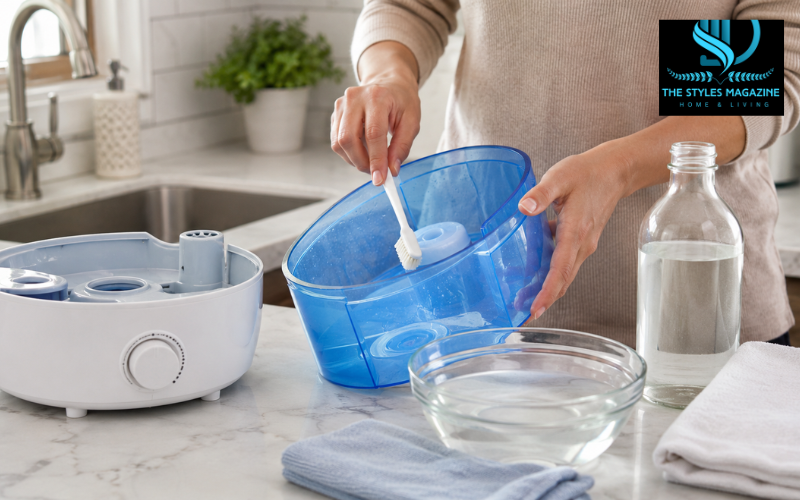
A humidifier can make your home feel more comfortable, especially when the air is dry. It adds moisture to the air, which may help with dryness in the nose, throat, skin, and indoor spaces. But a humidifier only helps when it is clean. If it is not cleaned regularly, the same machine that is meant to improve your air can start spreading unwanted particles, odors, and germs.
Learning how to clean a humidifier is important because water sits inside the tank and base every time you use it. When water is left standing for too long, it can become a place where bacteria, mold, and mildew grow. If you use tap water, minerals can also build up inside the humidifier. This buildup may appear as white crust, cloudy film, or rough deposits around the tank, base, nozzle, or ultrasonic plate.
A good cleaning routine does not have to be difficult. The main idea is simple: empty the humidifier daily, descale it weekly, sanitize it monthly, and let every part dry completely before putting it back together. In this guide, you will learn how to clean a humidifier with vinegar, without vinegar, with hydrogen peroxide, with baking soda, and how to handle mold, filters, cool mist models, and Vicks humidifiers safely.
Quick Guide Table: How to Clean a Humidifier
| Cleaning Step | What to Do | How Often |
| Empty the tank | Pour out leftover water after use | Daily |
| Rinse and wipe | Rinse the tank and base, then wipe wet areas | Daily |
| Descale with vinegar | Soak mineral buildup with white vinegar and scrub gently | Weekly |
| Sanitize safely | Use hydrogen peroxide or diluted bleach, then rinse well | Monthly |
| Clean the filter | Rinse reusable filters with cool water or replace disposable ones | As needed |
| Dry completely | Let all parts air-dry before reassembling | After every cleaning |
Why Cleaning a Humidifier Matters
Cleaning a humidifier matters because warm or room-temperature standing water can become dirty faster than many people expect. Even if the water looks clear, the inside of the tank or base may still have a thin film, mineral residue, or small areas where mold and bacteria can grow. When the humidifier runs, it can push mist into the air from that same water and those same parts.
Mineral buildup is another common problem. If you fill your humidifier with regular tap water, minerals in the water can collect inside the machine. Over time, this can affect how well the humidifier works. The mist may become weaker, the machine may sound louder, or white dust may appear around the room. In some models, scale can also build up around the heating element or ultrasonic disk.
A clean humidifier helps the machine run better and keeps the mist fresher. It also helps prevent musty smells and reduces the chance of mold growing inside hidden corners. Regular cleaning is not only about keeping the humidifier looking nice. It is about making sure the moisture being released into your room is coming from a clean tank, a clean base, and clean parts.
Supplies You Need Before Cleaning
Before you start cleaning, gather a few simple supplies. You do not need expensive products for most humidifiers. Distilled white vinegar is useful for removing mineral buildup and scale. Hydrogen peroxide or properly diluted bleach can be used for sanitizing, depending on what your humidifier manual allows. A soft-bristled brush or old clean toothbrush helps clean small corners, seams, caps, and nozzles.
You will also need a microfiber cloth or paper towels for wiping surfaces and drying parts. Clean water is needed for rinsing, and distilled water is a good choice if you want to reduce mineral buildup during regular use. Baking soda is optional. It can help with mild odor and light residue, but it should not be treated as a deep disinfectant or strong descaling solution.
Always check your humidifier’s user manual before using any cleaner. Some models have special parts that should not touch vinegar, bleach, or other solutions. Also, never mix cleaning products together. Vinegar and bleach should never be combined because the mixture can create dangerous fumes. Use one method at a time, rinse the parts well, and only move to another cleaner after the previous one is fully removed.
Daily Humidifier Care Before Deep Cleaning
Daily care is the easiest way to keep your humidifier cleaner for longer. After each use, turn off the machine and unplug it. Empty any leftover water from the tank and base. Do not let water sit inside the humidifier all day or overnight when the machine is not running. Stale water is one of the main reasons humidifiers develop bad smells, slime, or mold.
After emptying the water, rinse the tank and base with clean water. You do not need to deep clean every day, but a quick rinse helps remove loose residue before it sticks. Wipe wet areas with a clean cloth, especially around the tank opening, cap, and base reservoir. If your humidifier has a mist nozzle, remove it if possible and rinse it as well.
The most important daily habit is drying. Leave the tank open and let the parts air-dry before putting them back together. Closing a damp humidifier traps moisture inside, which can make mold grow faster. This small daily step makes weekly cleaning easier and helps your humidifier stay fresher between deep cleans.
How to Clean a Humidifier with Vinegar
White vinegar is one of the most common choices for cleaning a humidifier because it helps break down mineral scale. It is especially useful for weekly descaling if you use tap water or notice white crust inside the tank or base. To clean with vinegar, first unplug the humidifier, empty all water, and remove detachable parts such as the tank cap, nozzle, or tray.
Pour undiluted distilled white vinegar into the tank. One to two cups is usually enough for many home humidifiers, but larger tanks may need more. Swish the vinegar around so it touches the inside surfaces. Then pour enough vinegar into the base reservoir to cover areas with mineral buildup. Be careful around electrical sections, and do not allow liquid to enter the motor housing.
Let the vinegar sit for about 20 to 30 minutes. This gives it time to loosen scale and cloudy residue. After soaking, use a soft brush or toothbrush to gently scrub tight areas, corners, valves, and the mist outlet. Avoid using sharp tools because they can scratch or damage the humidifier. When the buildup is removed, pour out the vinegar and rinse every part several times with clean water. The humidifier should not smell like vinegar when you are finished.
How to Clean a Humidifier Without Vinegar
Some people do not like the smell of vinegar, and some manufacturers may not recommend it for certain parts. If you want to know how to clean a humidifier without vinegar, you still have safe options. For light cleaning, warm water and gentle brushing can remove loose film, dust, and mild residue. This works best when the humidifier is cleaned often and does not have heavy scale.
Hydrogen peroxide can be used as an alternative for sanitizing and light cleaning. It is especially helpful when you want to reduce germs without using bleach. Always dilute it properly and rinse the humidifier well afterward. Another option is to use a cleaning method recommended in your humidifier’s manual. Some brands suggest specific cleaners or steps for their models.
Avoid harsh cleaners, strong fragrances, dish soap residue, or random chemical mixtures. A humidifier releases mist into the air, so anything left inside the machine may also affect the smell or quality of the mist. If you skip vinegar, focus on regular rinsing, brushing, proper sanitizing, and complete drying. This routine can still keep your humidifier clean and safe to use.
How to Clean a Humidifier with Hydrogen Peroxide
Hydrogen peroxide is a helpful option for sanitizing a humidifier. It can reduce germs and help clean areas that may not be fully cleaned by water alone. Many people prefer it because it does not have the strong smell of bleach. However, it still needs to be used carefully and rinsed completely before the humidifier is used again.
To clean a humidifier with hydrogen peroxide, unplug the unit and empty the tank and base. Mix hydrogen peroxide with water according to a safe, mild cleaning approach or your manufacturer’s instructions. Pour the solution into the tank and let it sit for about 15 to 20 minutes. You can also add some to the base reservoir if the manual says it is safe for that area.
After soaking, gently scrub small parts, corners, and the tank opening with a soft brush. Pour out the solution and rinse the tank and base several times with clean water. Keep rinsing until there is no cleaner smell left. Let all parts air-dry fully before reassembling. Hydrogen peroxide is a good choice for monthly sanitizing, especially for people who want to avoid bleach.
How to Clean a Humidifier with Mold Safely
If you see mold inside your humidifier, clean it before using the machine again. Mold may appear as black, green, pink, or slimy patches in the tank, base, cap, nozzle, or around hidden seams. Sometimes the first sign is a musty smell, even if you cannot see much mold. Do not ignore it, because the humidifier can spread mist through those same parts.
Start by unplugging the humidifier and taking it apart. Empty all water and rinse loose residue away. For visible mold, use a disinfecting solution such as hydrogen peroxide or diluted bleach if your manual allows it. Do not use bleach right after vinegar unless you have completely rinsed the vinegar away first. Never mix vinegar and bleach.
Let the disinfecting solution sit in the tank for about 15 to 20 minutes, then scrub hidden corners, seams, caps, and nozzles with a soft brush. Mold often hides in small areas that are easy to miss. After cleaning, rinse everything several times until there is no smell left. Then dry every part completely. If mold keeps returning quickly, check whether you are leaving water in the tank, storing the machine damp, or missing a hidden removable part during cleaning.
How to Clean a Humidifier Filter
Not every humidifier has a filter, but many evaporative and some cool mist models do. The filter needs special care because it is different from the plastic tank or base. Before cleaning the humidifier, remove the filter and check whether it is reusable or disposable. This matters because some filters should only be rinsed, while others should be replaced when they become dirty.
If your humidifier uses a wicking filter, rinse it with cool clean water only. Do not use vinegar, bleach, dish soap, or hydrogen peroxide on this type of filter unless the manual clearly says it is safe. Chemicals can damage the filter or leave residue behind. After rinsing, gently shake off extra water and let it air-dry if the manual recommends drying.
Replace disposable filters when they become stiff, smelly, discolored, clogged, or crusty with minerals. A dirty filter can reduce mist output and may create an unpleasant odor. If you use the humidifier often or have hard water, the filter may need replacement more often. Keeping the filter clean is just as important as cleaning the tank because air and moisture pass through it during use.
How to Clean a Cool Mist Humidifier
A cool mist humidifier needs careful cleaning because its mist comes from water in the tank and base. Many cool mist models have a mist nozzle, an ultrasonic plate, or a small disk that helps create mist. These areas can collect mineral dust and scale, especially when tap water is used. If they are not cleaned, the mist may become weak or uneven.
To clean a cool mist humidifier, unplug it and remove the tank. Empty all water from the tank and base. Use vinegar for weekly descaling if your manual allows it. Let the vinegar sit on areas with mineral buildup, then gently scrub the ultrasonic plate, nozzle, and base reservoir with a soft brush. Do not press too hard on delicate parts.
Avoid getting water into electrical openings, buttons, cords, or the motor area. When rinsing the base, pour carefully and keep the electrical side dry. After rinsing, wipe the parts with a clean cloth and let them air-dry. Using distilled water in a cool mist humidifier can also reduce white dust and slow down mineral buildup.
How to Clean a Vicks Humidifier
Vicks humidifiers come in different types, so the safest cleaning method depends on the exact model. Some are cool mist humidifiers, while others are warm mist units. Some may also include a medicine cup, scent pad area, or removable mist parts. Before cleaning, check the model manual so you know which parts can be removed and which cleaners are approved.
In most cases, you can follow the same basic cleaning steps. Unplug the humidifier, empty the tank and base, remove detachable parts, and clean mineral buildup with vinegar if the manual allows it. Rinse the tank, cap, and nozzle well. If the model has a medicine cup or scent pad area, clean that section carefully because residue can collect there.
Do not use cleaning methods that are not approved for your specific Vicks humidifier. Avoid placing parts in the dishwasher unless the manual says it is safe. Also avoid soaking electrical bases or using strong cleaners inside areas that release mist. After cleaning, rinse well and let everything dry completely before using the humidifier again.
How to Clean a Humidifier with Baking Soda
Baking soda can help clean mild residue and reduce light odors, but it is not the best choice for heavy mineral scale or deep sanitizing. It works well as a gentle cleaner when the humidifier smells slightly stale or has light film inside the tank. If the machine has thick white crust, vinegar is usually better for descaling. If the machine has mold, a proper disinfecting method is better.
To use baking soda, mix a small amount with water to make a gentle paste or cleaning solution. Apply it to areas with light residue and scrub softly with a cloth or toothbrush. Do not use too much powder, because it can be hard to rinse from small spaces. Baking soda should not be packed into valves, nozzles, or tiny openings.
After cleaning, rinse the humidifier carefully several times. Make sure no powder remains inside the tank, base, cap, or mist outlet. Leftover baking soda can create cloudy water or leave residue when the humidifier runs. Use baking soda as a light freshening method, not as a replacement for weekly descaling or monthly sanitizing.
Weekly and Monthly Cleaning Schedule
A simple schedule makes humidifier care easier. Daily cleaning should include emptying leftover water, rinsing the tank and base, wiping wet areas, and leaving parts open to dry. This prevents stale water from sitting inside the machine and keeps the tank fresher between deeper cleanings.
Weekly cleaning should focus on descaling. This is when you remove mineral buildup using vinegar or another approved method. If you use distilled water, you may notice less buildup, but weekly cleaning is still a good habit if the humidifier is used often. Pay close attention to the base reservoir, tank cap, mist nozzle, and ultrasonic plate.
Monthly cleaning should include sanitizing. Hydrogen peroxide or diluted bleach can help reduce germs and mold, but only use them safely and according to the manual. Before storing your humidifier for the season, give it a full deep clean. Then let every part dry completely. A humidifier stored with moisture inside can smell bad or grow mold before the next season.
Common Mistakes to Avoid When Cleaning a Humidifier
One of the most common mistakes is letting water sit in the tank when the humidifier is not being used. Even clean-looking water can become stale. Emptying the tank daily is one of the simplest ways to prevent odors and buildup.
Another serious mistake is mixing cleaning products. Never mix vinegar and bleach. If you use vinegar for descaling, rinse it out completely before using any disinfecting solution. Mixing chemicals can create unsafe fumes, and it is not necessary for proper cleaning.
Many people also forget to clean the base, nozzle, cap, or filter. The tank is important, but it is not the only part that touches water. Mold and mineral buildup often hide in smaller areas. Reassembling the humidifier while parts are still wet is another mistake. Always let everything air-dry before closing the machine. Also avoid using harsh cleaners on filters, especially wicking filters, because they can become damaged or hold chemical residue.
Conclusion
Knowing how to clean a humidifier the right way helps keep the machine fresher, safer, and more effective. A clean humidifier can release better-quality mist, smell fresher, and work more smoothly. The routine is simple when you break it down into daily, weekly, and monthly steps.
Empty and rinse the humidifier every day, descale it weekly with vinegar or an approved alternative, and sanitize it monthly with hydrogen peroxide or properly diluted bleach if your manual allows it. Clean the filter correctly, pay attention to hidden areas, and let all parts dry fully before reassembling.
With regular care, your humidifier can continue adding comfortable moisture to your room without becoming a source of stale water, mineral buildup, or mold. A few minutes of cleaning can make a big difference in keeping your indoor air feeling fresher and healthier.
FAQs
How Often Should I Clean A Humidifier?
You should empty and rinse your humidifier daily, descale it weekly, and sanitize it monthly. Regular cleaning helps prevent mold, bacteria, bad smells, and mineral buildup inside the machine.
Can I Clean A Humidifier Without Vinegar?
Yes, you can clean a humidifier without vinegar by using hydrogen peroxide, warm water, and gentle brushing. Always follow the manufacturer’s instructions and avoid mixing cleaning chemicals.
Is Vinegar Safe For Cleaning A Humidifier?
White vinegar is safe for many humidifiers and works well for removing mineral buildup. However, always check your user manual first, and rinse thoroughly before using the humidifier again.
How Do I Clean Mold From A Humidifier?
To clean mold from a humidifier, unplug it, empty the water, scrub visible mold, sanitize with hydrogen peroxide or diluted bleach, rinse several times, and dry all parts completely.
Can I Use Baking Soda To Clean A Humidifier?
Baking soda can help remove mild odors and light residue, but it is not strong enough for heavy mineral scale or deep sanitizing. Rinse carefully so no powder remains.
Enjoyed it? Find more exclusive content on The Styles Magazine.
Disclaimer: This article is for general cleaning and home-care information only. Always check your humidifier’s user manual before using vinegar, bleach, hydrogen peroxide, baking soda, or any cleaning method, because instructions may vary by model.