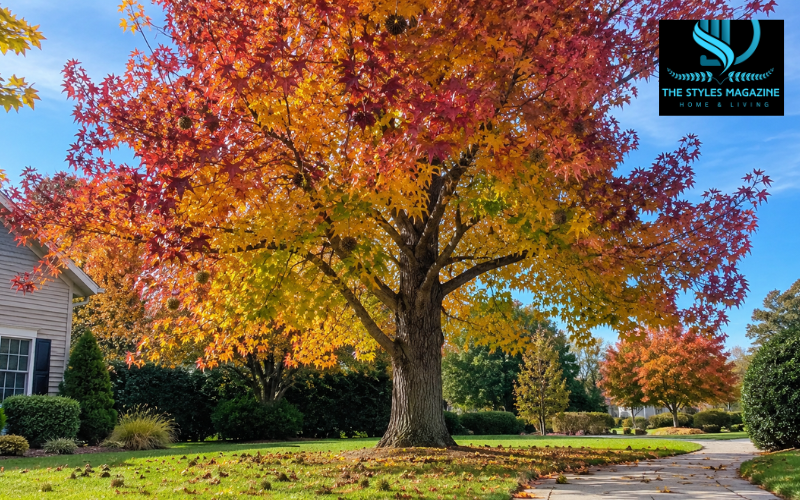
The sweet gum tree is a large deciduous tree known for its beautiful star-shaped leaves, strong upright growth, and bright fall color. Its scientific name is Liquidambar styraciflua, but most people simply call it sweet gum, sweetgum, redgum, or gum tree. It is one of those trees that can look stunning in the right place, especially in autumn when the leaves turn shades of yellow, orange, red, burgundy, and purple.
A mature sweet gum tree can become a tall shade tree with a broad crown, making it useful for large yards, parks, streets, and open landscapes. Homeowners often love it because it grows into an impressive tree and brings strong seasonal beauty. Its glossy green leaves in summer and colorful foliage in fall make it easy to notice from a distance.
However, the sweet gum tree is also famous for its spiky fruit, often called gumballs. These hard, round seed balls can drop in large numbers and create a mess on lawns, driveways, sidewalks, and patios. Some people enjoy the tree for its beauty, while others avoid it because of the cleanup. That is why understanding this tree before planting it is important.
Quick Guide Table: Sweet Gum Tree at a Glance
| Feature | Quick Answer |
| Common Name | Sweet gum tree |
| Scientific Name | Liquidambar styraciflua |
| Tree Type | Deciduous hardwood shade tree |
| Best Known For | Star-shaped leaves, colorful fall foliage, and spiky gumballs |
| Growing Zone | Usually USDA zones 5–9 |
| Sunlight | Full sun is best |
| Soil Preference | Moist, acidic, well-drained soil |
| Mature Size | Often 60–75 feet tall in landscapes |
| Fruit Issue | Spiky balls can be messy and hard to walk on |
| Best Yard Choice | Large open yards, parks, and natural landscapes |
What Makes the Sweet Gum Tree Unique
The sweet gum tree is unique because it combines beauty, size, wildlife value, and practical wood use in one tree. It is a native North American deciduous tree, which means it loses its leaves in winter and grows fresh foliage again in spring. In landscapes, it is mainly valued for its ornamental appearance, especially its fall color and bold shape.
One of the most recognizable features of the sweet gum tree is its star-shaped leaf. The leaves usually have five pointed lobes, though some may have more. This shape gives the tree a distinct look compared with many other common shade trees. Its fruit is also easy to recognize because it forms hard, round, spiky balls that hang from the branches before falling.
Beyond landscaping, the sweet gum tree has value for wildlife and timber. Birds and small animals may feed on the seeds, and the tree can support insects that are part of a healthy local ecosystem. Its wood is also used in furniture, veneer, plywood, paper pulp, and other products. This makes the sweet gum tree both attractive and useful, even though it can be troublesome in small yards.
Sweet Gum Tree Native Range and Natural Habitat
The sweet gum tree is native to many parts of the eastern and southeastern United States. Its natural range extends from areas of the Northeast down through the South and west toward Texas. It is also found in parts of Mexico and Central America. In the wild, it often grows in moist bottomlands, along streams, in low woods, and near floodplain areas.
This tree is well adapted to places where the soil holds moisture but still allows the roots to breathe. It can grow in wet sites better than many common landscape trees, which is one reason it is often seen near lowland forests and damp open ground. At the same time, it can also grow in upland areas when conditions are suitable.
Knowing the sweet gum tree native range helps homeowners understand where the tree is most likely to perform well. If you live in a region with warm summers, enough rainfall, and soil that is not too alkaline, sweet gum may grow strongly. If your climate is too cold, too dry, or the soil is very poor, the tree may struggle or develop weak growth.
Sweet Gum Tree Leaves and Seasonal Color
Sweet gum tree leaves are one of the easiest ways to identify this tree. They are simple, glossy, and shaped like a star, usually with five pointed lobes. The edges of the leaves are finely toothed, and when crushed, they may release a fresh, pleasant scent. In summer, the leaves are usually a rich green and create a dense canopy.
The real show begins in fall. A healthy sweet gum tree can turn many colors at once, including yellow, orange, bright red, deep burgundy, and purple. Sometimes one tree may show several colors on different branches, which gives it a striking look in the landscape. This colorful display is one of the main reasons people plant sweet gum trees.
The leaves also help separate sweet gum from similar-looking trees. Some people may confuse it with maple because both can have lobed leaves, but sweet gum leaves are more star-like and grow alternately along the stem rather than opposite each other. If you combine the star-shaped leaves with the spiky fruit and corky twigs, identification becomes much easier.
Sweet Gum Tree Bark, Twigs, and Overall Shape
A young sweet gum tree usually has smoother gray bark, but as it matures, the bark becomes darker, rougher, and deeply furrowed. Older trees often develop a strong, textured trunk that gives them a rugged appearance. This bark can be gray to grayish brown and may look almost blocky or ridged on mature trees.
The twigs are another special feature. Young branches often develop corky ridges, sometimes called wings. These raised strips of bark can grow along the sides of the twigs and make the tree easy to recognize in winter, even after the leaves have fallen. Not every twig will show strong wings, but when present, they are a helpful identification clue.
In shape, the sweet gum tree often starts with a straight central trunk and a narrow, pyramidal form. As it ages, the crown becomes broader and more rounded. In home landscapes, it commonly reaches about 60 to 75 feet tall with a spread of 40 to 50 feet. In ideal wild conditions, it can grow even taller. Because of this size, it needs room to develop properly.
Sweet Gum Tree Fruit: The Famous Spiky Gumballs
The fruit of the sweet gum tree is one of its most talked-about features. These fruits are round, hard, woody balls covered with small spikes. They are often about one to one and a half inches across and hang from the tree before dropping to the ground. Many people call them gumballs, even though they are actually seed capsules.
Sweet gum tree fruit usually becomes noticeable in fall and may continue dropping from winter into spring. When many of them fall at once, they can cover the ground under the tree. On a natural woodland floor, this is not much of a problem. In a yard, driveway, patio, or sidewalk, however, the gumballs can become annoying.
The main issue is safety and cleanup. The spiky balls can be painful to step on barefoot, difficult to mow over, and easy to slip or trip on. They may also collect in gutters, garden beds, and walkways. For this reason, planting a regular sweet gum tree near high-traffic areas is often not the best choice. The tree is beautiful, but its fruit should be considered before planting.
Sweet Gum Tree Growing Zone and Climate Needs
The sweet gum tree growing zone is generally USDA zones 5 through 9, though local conditions can affect performance. It grows best in areas with warm summers and enough moisture in the soil. In colder parts of its range, young trees may need protection while they establish, especially during harsh winters.
This tree prefers full sun, which means it should receive at least six hours of direct sunlight each day. It can tolerate light shade, but dense shade may reduce growth and weaken the tree’s shape. A sunny, open location gives the sweet gum tree the best chance to develop strong branches, a full crown, and bright fall color.
Sweet gum handles heat and humidity well, especially in regions where it is native or commonly planted. It can also tolerate occasional wet soil better than many trees. Once established, it may handle short dry periods, but long droughts can stress it. For the best growth, plant it where the soil stays moderately moist but does not remain constantly compacted or lifeless.
Soil, Water, and Sunlight Requirements
The best soil for a sweet gum tree is moist, slightly acidic, and well drained. It can grow in loam, clay, and some wetter soils, but it does not perform well in very alkaline soil. When the soil is too alkaline, the leaves may turn yellow because the tree cannot take up nutrients properly. This problem is often called chlorosis.
Water is especially important during the first few years after planting. A young sweet gum tree needs regular watering so its roots can settle into the surrounding soil. Deep watering is better than light, shallow watering because it encourages roots to grow downward and outward. Mulch can also help keep the soil cool and moist, but it should not be piled against the trunk.
Sunlight is another key factor. A sweet gum tree planted in full sun usually develops better color, stronger growth, and a fuller shape. It may survive in partial shade, but it will not look its best if it is crowded by larger trees or buildings. Before planting, choose a location with open sky, enough root space, and soil that can hold steady moisture.
How Fast and How Large a Sweet Gum Tree Grows
The sweet gum tree is considered a medium to fast-growing tree. In good conditions, it may grow more than one foot per year, and sometimes faster when young. Its growth rate depends on sunlight, soil quality, water, climate, and how well it is cared for after planting.
In a typical landscape, the tree can grow 60 to 75 feet tall and 40 to 50 feet wide. This makes it suitable for large yards, parks, campuses, and open public spaces. It is not usually a good choice for tiny yards, narrow strips, or areas close to homes, power lines, pavement, or underground utilities.
Planning for size is very important. A small nursery tree may look harmless when first planted, but sweet gum becomes large over time. Its roots can be shallow and may push against sidewalks, driveways, or curbs if planted too close. Giving the tree enough space from the beginning helps prevent future problems and allows it to grow into a healthy, attractive shade tree.
Sweet Gum Tree Pros and Cons for Landscaping
The sweet gum tree has several strong benefits for landscaping. It provides dense shade, attractive summer leaves, and some of the most colorful fall foliage of any large native tree. It can also support wildlife, tolerate urban conditions better than some trees, and grow in moist areas where other landscape trees may struggle.
Another advantage is that sweet gum is generally not difficult to grow when planted in the right place. It does not usually need heavy pruning, and mature trees can become strong focal points in a landscape. For large properties, it can be a beautiful long-term tree that adds seasonal interest and habitat value.
The disadvantages are mostly related to its fruit, roots, and size. The gumballs can create litter and make walking uncomfortable. The shallow roots may interfere with pavement or lawn areas. The tree can also become too large for small spaces. For homeowners who want a neat, low-maintenance front yard, a regular sweet gum tree may not be the easiest option.
Fruitless Sweet Gum Tree Options for Cleaner Yards
For people who like the look of a sweet gum tree but do not want the messy fruit, fruitless cultivars are worth considering. The best-known option is ‘Rotundiloba’, a cultivar with rounded leaf tips and little to no fruit production. It offers the beauty of sweet gum foliage without the heavy gumball problem that many homeowners dislike.
‘Rotundiloba’ can be a better choice near lawns, sidewalks, patios, driveways, and other places where fallen fruit would cause trouble. Its fall color may range from yellow and orange to burgundy or purple, depending on the climate and growing conditions. It still needs space, sunlight, and proper soil, but it can reduce one of the biggest complaints about the species.
When buying a fruitless sweet gum tree, it is important to choose a reliable nursery and confirm the cultivar name. Seed-grown sweet gum trees are not fruitless, so buying the correct named cultivar matters. Even with a cleaner cultivar, the tree should still be planted far enough from pavement because roots can still become an issue as it matures.
Sweet Gum Tree Wood: Hardwood or Softwood?
A common question is whether the sweet gum tree is hardwood or softwood. The answer is that sweet gum is a hardwood because it comes from a deciduous broadleaf tree. However, the terms hardwood and softwood do not always describe how hard the wood feels. They refer more to the type of tree the wood comes from.
Sweet gum tree wood is commonly known in the wood industry as sweetgum, redgum, or sometimes satin walnut. The heartwood can have a reddish-brown color, while the sapwood is usually lighter. The wood can be attractive, but it may warp if not dried and handled properly. Because of this, it is often processed for uses where stability can be managed.
Sweet gum tree wood is used for veneer, plywood, furniture parts, cabinets, interior trim, crates, pallets, paper pulp, and other wood products. It has commercial value, especially in areas where the tree grows naturally in large numbers. While most homeowners think of sweet gum as a shade tree, it is also an important timber tree in parts of the United States.
Buying a Sweet Gum Tree for Sale
When looking for a sweet gum tree for sale, do not choose only by price or size. First, think about where the tree will be planted. Sweet gum needs room above ground for its crown and room below ground for its roots. It should not be crowded close to sidewalks, patios, foundations, septic systems, or overhead wires.
A healthy nursery tree should have a straight central leader, balanced branching, fresh leaves, and no major wounds on the trunk. The root ball should be firm and moist, not dry, broken, or circling badly inside the pot. A smaller, healthy young tree often establishes better than a large stressed tree.
Also decide whether you want the regular species or a fruitless cultivar such as ‘Rotundiloba’. If the tree will be planted in a lawn or public area, a fruitless option may save a lot of cleanup later. Always check the plant tag carefully and ask the nursery about mature size, growing zone, fruit production, and care needs before buying.
Final Thoughts on Growing a Sweet Gum Tree
The sweet gum tree is a beautiful native shade tree with strong character. It offers star-shaped leaves, brilliant fall color, wildlife value, and useful hardwood. In the right location, it can become a long-lasting and impressive part of the landscape.
At the same time, it is not perfect for every yard. The spiky gumballs can be messy, the roots need space, and the mature tree can become very large. These issues do not make the tree bad, but they do mean it should be planted with care and planning.
If you have a large open space, moist soil, and a love for bold fall color, a sweet gum tree may be a great choice. If you have a small yard, lots of pavement, or want a very clean lawn, a fruitless cultivar or another shade tree may be better. The key is to match the tree to the space, so you can enjoy its beauty without fighting its natural habits.
FAQs
What Is A Sweet Gum Tree?
A sweet gum tree is a large native shade tree with star-shaped leaves, colorful fall foliage, and hard spiky fruit balls. It is popular in landscapes but needs plenty of space.
Are Sweet Gum Trees Messy?
Yes, sweet gum trees can be messy because they drop many hard, spiky gumballs. These fruits can cover lawns, sidewalks, and driveways, making cleanup difficult.
Is Sweet Gum Tree Hardwood Or Softwood?
Sweet gum tree is a hardwood because it comes from a broadleaf deciduous tree. Its wood is used for veneer, plywood, furniture parts, pulp, and general wood products.
Where Does A Sweet Gum Tree Grow Best?
A sweet gum tree grows best in full sun with moist, slightly acidic, well-drained soil. It performs well in many areas within USDA growing zones 5 to 9.
Can I Buy A Fruitless Sweet Gum Tree?
Yes, fruitless sweet gum trees are available. ‘Rotundiloba’ is a popular cultivar that produces little to no fruit, making it better for lawns, sidewalks, patios, and driveways.
Enjoyed it? Find more exclusive content on The Styles Magazine.
Disclaimer: This article is for general gardening and educational information only. Tree growth, care needs, and performance may vary by climate, soil, location, and local conditions. For serious tree health or safety concerns, consult a certified arborist or local extension expert.