Baseboards may seem like a small part of a room, but they can change how clean your home looks. These narrow trim pieces run along the bottom of your walls, where they protect the wall from bumps, marks, and everyday wear. Because they sit close to the floor, they easily collect dust, pet hair, crumbs, stains, shoe marks, and sticky grime. Even when the floor is clean, dirty baseboards can make the whole room look dull.
Learning how to clean baseboards the right way can save time and effort. Many people start by wiping them with a wet cloth, but this often makes the job harder. When dry dust mixes with water, it turns into muddy streaks that spread across the trim. The better method is to remove loose dust first, then use a gentle damp cleaning solution.
In this guide, you will learn simple and safe ways to clean baseboards without damaging paint or wood. You will also find helpful tips for cleaning while standing up, using a mop, removing scuff marks, choosing a baseboard cleaner, and preparing baseboards for painting. The goal is to make the job easier, not more tiring.
Quick Guide Table
| Cleaning Need | Best Method | Helpful Tip |
| Light dust | Vacuum with brush attachment | Clean the top edge and floor line first |
| Everyday grime | Warm water + mild dish soap | Use a damp cloth, not a wet one |
| Scuff marks | Soft cloth or gentle melamine sponge | Test first to avoid paint damage |
| Cleaning while standing | Flat mop or cloth-wrapped broom | Great for avoiding bending or kneeling |
| Before painting | Dust, wash, dry, and lightly sand | Paint sticks better to a clean surface |
| Natural wood baseboards | Wood-safe cleaner | Avoid too much water or vinegar |
Best Supplies for Cleaning Baseboards
You do not need expensive tools to clean baseboards well. Most of the items are already available in many homes. A microfiber cloth is one of the best choices because it traps dust instead of pushing it around. A vacuum with a soft brush attachment is also helpful, especially if your baseboards have a lot of loose dust or pet hair.
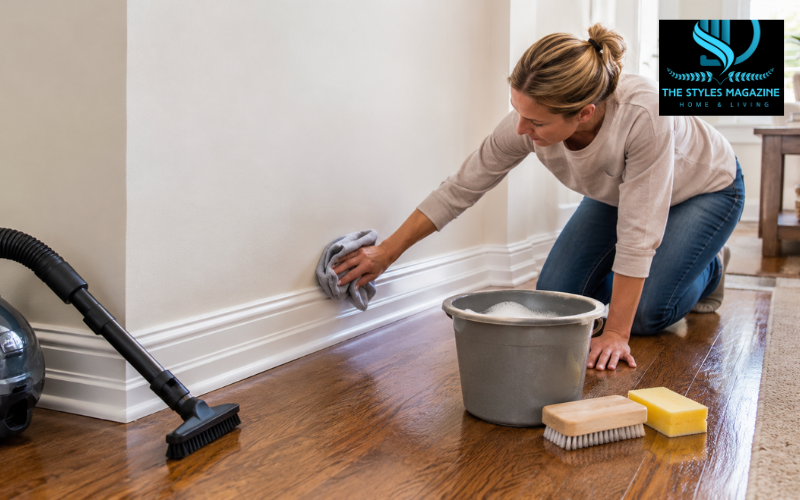
For washing, warm water and a few drops of mild dish soap work well on most painted baseboards. A soft sponge can help clean larger flat areas, while a soft toothbrush is useful for corners, grooves, and detailed trim. If you want to clean without bending too much, a mop or flat mop can make the job easier.
Some people like using a baseboard cleaner spray for quick touch-ups. This can be useful, but it is still important to choose a cleaner that is safe for your surface. If your baseboards are painted, avoid strong cleaners that may dull or weaken the paint. If your baseboards are natural wood, use a wood-safe cleaner and keep moisture very light. A diluted vinegar solution can also be helpful in some cases, but it should be used carefully and never on surfaces that may react badly to acid.
Start by Removing Loose Dust
The first and most important step in how to clean baseboards is removing dry dust. This step makes the rest of the cleaning much easier. If you skip it and start with a wet cloth, the dust can turn into dirty paste and leave streaks behind.
The easiest way to clean baseboards with vacuum is to use a vacuum cleaner with a soft brush attachment. Move slowly along the top edge of the baseboard, then clean the front face and the small line where the baseboard meets the floor. This area often holds the most dust because it is close to foot traffic.
If you do not want to use a vacuum, you can use a dry microfiber cloth, a handheld duster, or an extendable duster. Work from one side of the room to the other so you do not miss any sections. For homes with pets, this dry dusting step is especially useful because pet hair can cling to baseboards and corners.
Once the loose dust is gone, the baseboards are ready for damp cleaning. This simple order makes a big difference and helps prevent muddy grime.
Simple Soap-and-Water Method for Everyday Cleaning
For everyday cleaning, mild soap and warm water are usually enough. Fill a small bucket or bowl with warm water and add only a few drops of mild dish soap. You do not need a strong mixture. Too much soap can leave a sticky film that attracts more dust later.
Dip a microfiber cloth or soft sponge into the water, then wring it out very well. The cloth should be damp, not dripping. This is important because too much water can damage painted trim, seep into gaps, or affect wood baseboards.
Wipe the baseboards in small sections. Start at one end of the wall and move steadily across the room. Pay attention to the top ledge, the flat front area, and the bottom edge near the floor. If the cloth becomes dirty, rinse it before continuing. Using a dirty cloth can spread grime instead of removing it.
After cleaning each section, wipe it with a dry microfiber cloth. Drying helps remove leftover soap, prevents water spots, and keeps moisture from sitting on the trim. This method is simple, safe, and effective for regular home cleaning.
How to Clean Baseboards Without Removing Paint
If your baseboards are painted, you need to clean them gently. The goal is to remove dust and stains without rubbing away the paint or leaving dull spots. This is why knowing how to clean baseboards without removing paint is important, especially in older homes or rooms where the trim has been painted many times.
Start with gentle pressure. Let the damp cloth and mild soap do most of the work. Avoid rough scrub pads, steel wool, or hard brushes because they can scratch or weaken the paint. If you see a stain that does not come off right away, do not attack it with force. Instead, dampen the area slightly, wait a short time, and wipe again.
Before using any new cleaner, test it on a hidden spot. This can be behind furniture or inside a corner where it is not easy to see. If the paint looks dull, sticky, or faded after testing, do not use that cleaner on the rest of the baseboards.
Strong chemical cleaners are not needed for normal baseboard cleaning. They may remove grime, but they can also damage the finish. A mild soap solution is usually the safer choice. After wiping, always dry the baseboards quickly with a clean cloth. This protects both the paint and the surface underneath.
How to Clean Baseboards with Vinegar Safely
Vinegar is a popular cleaning option because it can help cut through light grime and odors. However, it should not be used carelessly. If you want to learn how to clean baseboards with vinegar, the key is dilution and surface safety.
A simple mixture is one part white vinegar with several parts warm water. The solution should be mild, not strong. Use a microfiber cloth, dip it into the mixture, and wring it out well before wiping the baseboards. As with soap and water, the cloth should only be lightly damp.
Vinegar may be useful for sealed painted baseboards that have light dirt or mild buildup. However, it is not the best choice for every surface. Avoid using vinegar on natural wood, waxed surfaces, stone trim, or any baseboard with a delicate finish. Vinegar is acidic, and over time it may dull or damage some materials.
If you are unsure, test a small hidden area first. After using vinegar, wipe the surface with a cloth dampened with plain water, then dry it completely. This helps remove any leftover vinegar smell or residue.
How to Clean Baseboards with a Mop
If bending or kneeling is uncomfortable, learning how to clean baseboards with mop can make the job much easier. A flat mop works best because it has a wide, smooth surface that can press gently against the trim. You can also use a regular mop if it is clean and not too wet, but a flat mop gives you better control.
Wrap a clean microfiber cloth around the mop head. If needed, secure it with rubber bands or clips so it does not slide off. Lightly dampen the cloth with warm soapy water, then move the mop along the baseboards while standing. Keep the mop close to the wall and guide it slowly so it reaches the top edge and front face of the baseboard.
This method is helpful for long walls, hallways, and larger rooms. It allows you to clean more area in less time. The main rule is to avoid using too much water. If the cloth is dripping, it is too wet. Baseboards need gentle damp cleaning, not soaking.
After cleaning, you can attach a dry microfiber cloth to the mop and go over the baseboards again. This helps dry the trim and leaves it looking cleaner.
Easy Way to Clean Baseboards Standing Up
The easy way to clean baseboards standing up is to use tools that give you extra reach. This is helpful for people who have knee pain, back discomfort, or simply do not want to crawl around the room.
One simple method is to wrap a microfiber cloth around the bristles of a broom. Lightly dampen the cloth, wring it well, and secure it with rubber bands. Then move the broom along the baseboards while standing. This works well for quick cleaning and dust removal.
A flat mop is another easy option. It gives a smoother wipe and can cover more surface area. You can use one cloth for damp cleaning and another dry cloth for finishing. An extendable duster is also useful for dry dusting before washing. It reaches behind furniture and into corners without much effort.
Standing methods may not remove every small scuff or stain, but they are excellent for regular maintenance. If you clean your baseboards often, you may only need to bend down occasionally for detailed spots.
Cleaning Scuff Marks, Corners, and Grooves
Baseboards often collect marks from shoes, furniture, toys, and vacuum cleaners. These scuff marks can make clean trim look dirty. To remove them, start gently. A damp microfiber cloth with a small amount of dish soap may be enough for light marks.
For tougher shoe marks, a melamine sponge can work well on some painted baseboards. However, it should be used carefully. Melamine sponges can act like very fine sandpaper, so rubbing too hard may dull paint or damage a finish. Always test first and use light pressure. Avoid using melamine sponges on natural wood or delicate painted surfaces.
Corners and grooves need extra attention because dust settles into small spaces. A soft toothbrush is useful for these areas. Dip it lightly into your cleaning solution, shake off extra moisture, and gently scrub the corner or detailed trim line. Cotton swabs can also help with very tight spots.
After cleaning scuffs, corners, and grooves, wipe the area with a clean damp cloth and then dry it. This prevents cleaner from sitting in small spaces and keeps the baseboards looking fresh.
Choosing the Right Baseboard Cleaner
Choosing the right baseboard cleaner depends on the type of baseboard you have. For most painted baseboards, mild dish soap and warm water are enough. This simple mixture is affordable, safe, and effective for normal dust and grime.
A baseboard cleaner spray can be useful for quick cleaning, especially if you want something ready to use. When choosing one, look for a gentle cleaner that is safe for painted surfaces. Avoid sprays with strong bleach, harsh solvents, or heavy fragrance if you are sensitive to smells.
For wood baseboards, a general cleaner may not be the best option. Natural wood needs a wood-safe cleaner because too much moisture or the wrong product can damage the finish. Use as little liquid as possible and dry the surface right away.
Mild cleaners are usually best because baseboards do not need aggressive treatment. Strong products can create more problems than they solve. A safe cleaner should remove dirt without harming paint, wood, or the finish.
How to Clean Baseboards for Painting
Knowing how to clean baseboards for painting is important because paint sticks better to a clean surface. Dust, grease, and grime can stop paint from applying smoothly. If you paint over dirty baseboards, the finish may look uneven or may not last as long.
Start by removing all loose dust with a vacuum, dry cloth, or duster. Pay close attention to the top ledge and the floor line. After dusting, wash the baseboards with warm water and mild dish soap. This helps remove fingerprints, grease, and general buildup.
If there are sticky spots or stains, clean them carefully with a soft sponge or cloth. Do not leave soap behind. Wipe the baseboards again with a cloth dampened with plain water, then let them dry fully. Painting over damp trim can cause poor results.
Once the baseboards are clean and dry, light sanding may be needed if the surface is glossy or rough. After sanding, remove the dust with a clean cloth. This final wipe-down gives you a better surface for painting and helps the new paint look smooth.
Common Baseboard Cleaning Mistakes to Avoid
One of the most common mistakes is using a wet cloth before dusting. This turns loose dust into muddy streaks and makes the job harder. Always remove dry dust first, then wash.
Another mistake is using too much water. Baseboards are close to walls and floors, so extra water can seep into gaps. This may damage paint, wood, or flooring. A damp cloth is enough for most cleaning tasks.
Scrubbing too hard is also a problem. Baseboards may look strong, but paint and finishes can wear down when cleaned roughly. Gentle pressure is safer and usually works better over time. If a mark does not come off easily, try a mild cleaner and patience before using anything abrasive.
Using harsh cleaners without testing is another risk. A product that works on one surface may damage another. Always test in a hidden area first. Finally, do not forget to dry the baseboards after cleaning. Drying helps prevent spots, streaks, and moisture damage.
How Often Baseboards Should Be Cleaned
How often you clean baseboards depends on your home. In most homes, a quick dusting every one or two weeks can keep them looking good. This does not have to be a deep cleaning. A vacuum brush attachment, microfiber cloth, or extendable duster can remove surface dust quickly.
A deeper cleaning can be done every month or every few months, depending on how dirty the baseboards get. Homes with pets, children, or heavy foot traffic may need more frequent cleaning. Pet hair, fingerprints, and shoe marks can build up faster in busy rooms.
High-traffic areas like hallways, entryways, kitchens, and living rooms usually need more attention. Bedrooms, guest rooms, and low-use spaces may stay clean longer. The best approach is to include baseboards in your regular cleaning routine so they never become a big job.
If you keep up with light dusting, deep cleaning becomes faster and easier. Regular care also helps protect paint and keeps your rooms looking brighter.
Conclusion
Learning how to clean baseboards does not have to be difficult. The most important rule is to clean in the right order. Start by removing dry dust, then use a gentle damp cloth or mild cleaner to wash away grime. This prevents muddy streaks and gives better results.
For painted baseboards, use light pressure and avoid harsh scrubbing. If you want an easier method, try cleaning with a mop, broom-wrapped cloth, or extendable duster so you can work while standing. For stains, corners, and grooves, use small tools like a soft toothbrush and clean carefully.
The best baseboard cleaner is usually a mild one that is safe for your surface. Whether you use soap and water, a baseboard cleaner spray, or a diluted vinegar solution, always test first and avoid too much moisture. With the right method, your baseboards can stay clean, fresh, and neat without making the job harder than it needs to be.
FAQs
What Is The Easiest Way To Clean Baseboards?
The easiest way is to vacuum or dust them first, then wipe with a damp microfiber cloth and mild soapy water. This prevents dust from turning into muddy streaks.
How Do You Clean Baseboards While Standing Up?
Use a flat mop, extendable duster, or a broom wrapped with a microfiber cloth. This lets you clean the trim without bending, kneeling, or crawling around the room.
Can I Clean Baseboards With Vinegar?
Yes, but only if the surface is safe for vinegar. Dilute it with water, test a hidden spot first, and avoid using vinegar on natural wood or delicate finishes.
How Do I Clean Baseboards Without Removing Paint?
Use a soft cloth, mild cleaner, and gentle pressure. Avoid rough scrubbers, strong chemicals, and too much water because they can weaken, dull, or lift painted trim.
Should Baseboards Be Cleaned Before Painting?
Yes, baseboards should be dusted, washed, dried, and lightly sanded before painting. A clean surface helps paint stick better and gives a smoother, longer-lasting finish.
Enjoyed it? Find more exclusive content on The Styles Magazine.
Disclaimer: This article is for general home-cleaning guidance only. Always test any cleaner on a hidden area first, especially on painted, stained, antique, or natural wood baseboards. Follow product labels and manufacturer care instructions when available.