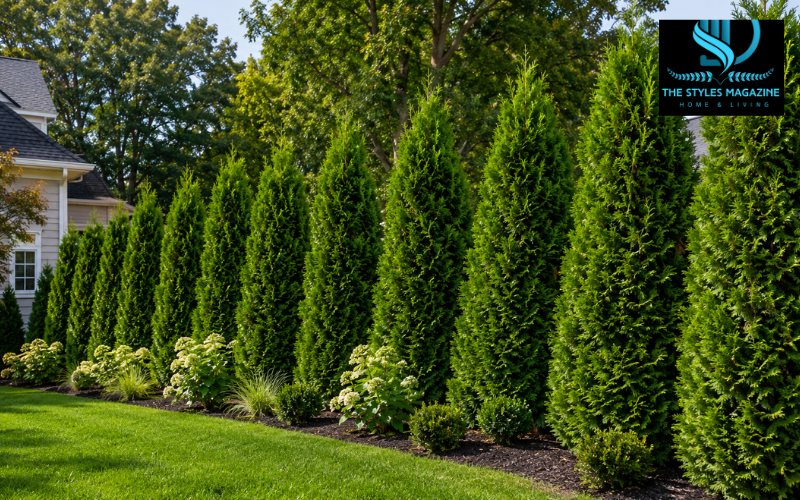
Arborvitae is a popular evergreen plant often used to create privacy, structure, and year-round greenery in home landscapes. In simple words, arborvitae is a tree or shrub that stays green through every season and grows in a naturally neat, upright shape. Many homeowners choose it because it looks clean, grows thick, and can make a yard feel more private without needing a fence.
The name arborvitae means “tree of life,” which gives this plant a special place in garden history. Today, most people know arborvitae as a reliable evergreen for privacy screens, hedges, windbreaks, foundation planting, property borders, and small garden accents. Some types grow tall and wide, while others stay compact and rounded. This makes it easy to find an arborvitae variety for both large landscapes and small yards.
Before planting arborvitae, it is important to understand its growth rate, mature height, sunlight needs, watering habits, and common problems. Some varieties grow quickly and can become very large, while others grow slowly and stay narrow. In this guide, you will learn what arborvitae is, how to pronounce it, which varieties are popular, how fast it grows, where to plant it, how to care for it, and what to check before buying arborvitae for sale.
Quick Arborvitae Guide Table
| Arborvitae Type | Average Height | Growth Rate | Best Use | Quick Note |
| Emerald Green Arborvitae | 12–15 ft | Moderate | Narrow privacy screens, small yards | Stays slim and neat with bright green foliage |
| Green Giant Arborvitae | 40–60 ft | Fast | Tall privacy screens, windbreaks | Best for large open spaces |
| American Arborvitae | 30–60 ft | Moderate | Hedges, cold-climate landscapes | Cold-hardy but often attractive to deer |
| Dwarf Arborvitae | 1–3 ft | Slow | Borders, containers, rock gardens | Compact and easy to maintain |
What Is Arborvitae?
Arborvitae is an evergreen conifer from the Thuja group. It belongs to the cypress family and is known for its soft, flat, scale-like green foliage. Unlike plants that lose their leaves in fall, arborvitae keeps its color through winter, which is one reason it is so useful in landscaping.
Most arborvitae plants have a naturally upright shape. Some look like tall, narrow trees, while others grow as short, rounded shrubs. The taller forms are often planted in rows to create privacy screens or windbreaks. The smaller forms are used near walkways, garden beds, patios, and containers.
An arborvitae tree usually refers to the taller types that can reach 10 feet, 20 feet, or even much higher depending on the variety. An arborvitae shrub usually refers to compact or dwarf forms that stay shorter and are easier to use in smaller spaces. Both forms are evergreen and both can add year-round beauty when planted in the right place.
Arborvitae Pronunciation and Common Names
Many people search for arborvitae pronunciation because the word looks unusual at first. A simple way to say it is “ar-bor-VY-tee.” Some gardeners may say it slightly differently, but this pronunciation is widely understood.
Arborvitae is also commonly called Thuja. Depending on the species or variety, you may also see names like white cedar, northern white cedar, eastern arborvitae, western red cedar, Emerald Green arborvitae, or Green Giant arborvitae. In garden centers and nurseries, the label often includes both the common name and the botanical name, which helps buyers choose the right plant.
The reason pronunciation matters is simple: arborvitae is one of the most searched evergreen plants for landscaping. Homeowners often hear the name at a nursery, from a landscaper, or while searching for privacy trees online, then want to know how to say it correctly before asking for it in person.
Popular Arborvitae Varieties
There are several popular arborvitae varieties, and each one serves a different purpose in the landscape. Choosing the right one is important because size, shape, and growth rate can vary a lot.
Emerald Green arborvitae is one of the most common choices for residential yards. It has a narrow, upright shape and stays fairly compact compared with larger types. It is often used for privacy rows, side yards, and small landscapes where space is limited.
Green Giant arborvitae is a much larger and faster-growing option. It is often chosen for tall privacy screens, windbreaks, and large property borders. Because it can grow very tall and wide, it is better for open spaces than tight foundation beds.
American arborvitae, also known as northern white cedar, is a cold-hardy type often used in traditional hedges and natural screens. It can handle cold climates well, but it may be attractive to deer in some areas.
Dwarf arborvitae varieties are ideal for small spaces. These compact plants may grow in rounded, globe-like, or mounded shapes. They are useful for borders, rock gardens, containers, and front-yard accents where a large tree would be too much.
Emerald Green Arborvitae
Emerald Green arborvitae is popular because it offers a clean, narrow shape without taking over the yard. Its bright green color, dense foliage, and formal appearance make it a favorite for homeowners who want privacy but do not have room for a huge evergreen.
At maturity, Emerald Green arborvitae commonly reaches about 12 to 15 feet tall and around 3 to 4 feet wide. This makes it a smart choice for small yards, narrow side areas, and property lines where a tall but slim screen is needed. It can be planted in a row to create a living wall, but it should not be crowded too tightly.
For best results, Emerald Green arborvitae should receive full sun or at least several hours of direct sunlight each day. It also needs well-drained soil and steady moisture during the first year after planting. Spacing matters because good airflow and room for root growth help the plants stay healthier over time. For a dense privacy row, many homeowners plant them a few feet apart, but exact spacing should depend on plant size and the look you want as they mature.
Arborvitae Growth Rate
Arborvitae growth rate depends mainly on the variety, planting conditions, and care. Some types grow slowly, while others grow very quickly once established. This is why it is important to know the expected growth rate before buying.
Green Giant arborvitae is one of the fastest-growing types. In good conditions, it can add several feet of growth per year and eventually become a very large tree. Emerald Green arborvitae grows more moderately. It may grow faster when young, then slow down as it matures. Dwarf arborvitae varieties grow slowly and may only add a few inches per year.
Sunlight, soil quality, watering, spacing, and fertilizer all affect growth. Arborvitae planted in full sun with moist, well-drained soil usually grows fuller and stronger. Plants in heavy shade may become thin. Plants in soggy soil may develop root problems. Plants that are too close together may compete for water and nutrients.
Homeowners should also understand that newly planted arborvitae may not grow much in the first year. During that time, the plant is focusing on roots. Once it settles into the soil, top growth usually becomes more noticeable.
Arborvitae Height and Mature Size
Arborvitae height can range from very small to very tall depending on the variety. Some dwarf types stay only 1 to 3 feet tall, while Emerald Green arborvitae usually stays in the medium range. Green Giant arborvitae can grow 40 to 60 feet tall in the right conditions, which makes it a serious landscape tree rather than a small hedge plant.
Width is just as important as height. A narrow arborvitae may fit well along a driveway or fence line, while a wide variety needs more open space. If you plant a large arborvitae too close to a house, sidewalk, fence, or utility area, it may become difficult to manage later.
Before planting, think about the mature size, not just the size of the plant at the nursery. A small container plant may look perfect today, but in a few years it can outgrow the space. Choosing the right variety from the beginning saves time, money, and pruning problems later.
Best Places to Plant Arborvitae
Arborvitae works best in places where you need evergreen structure, privacy, or a clean vertical look. A row of arborvitae along a property line can create a natural screen between homes. Taller types can help block wind in open areas. Narrow types can soften fences, frame walkways, or add greenery near patios.
Foundation areas can also work, but only if the variety matches the space. A compact or narrow arborvitae is better near a house than a large tree that will eventually press against walls or windows. Dwarf forms are good choices for containers, low borders, and small garden beds.
Avoid planting arborvitae in soggy soil, heavy shade, or places where water stands after rain. These plants like moisture, but they do not like wet roots for long periods. Too much shade can also cause weak, open growth instead of thick green foliage.
Arborvitae Planting Guide
The best time to plant arborvitae is usually spring or fall, when temperatures are milder and the plant has time to establish roots. In very hot weather, new plants may struggle unless they are watered carefully. Fall planting can be especially helpful because roots can begin settling before the stress of summer heat.
Start by choosing a location with enough sunlight and good drainage. Dig a hole about twice as wide as the root ball, but not deeper than the root ball. The top of the root ball should sit level with the surrounding soil or slightly above it. Planting too deep is a common mistake and can lead to poor growth or root trouble.
After placing the arborvitae in the hole, backfill with soil and gently firm it with your hands. Water deeply after planting so the soil settles around the roots. Add a layer of mulch around the base to help hold moisture and reduce weeds, but keep mulch away from the trunk. Mulch piled against the stem can trap moisture and create problems.
Spacing depends on the variety and purpose. A privacy hedge may need closer spacing than individual specimen trees, but plants still need room to grow. Always consider mature width before setting the final distance.
Arborvitae Care Requirements
Arborvitae care is fairly simple when the plant is placed in the right location. Sunlight is one of the most important needs. Most arborvitae plants grow best in full sun, although some can handle light afternoon shade. More sun usually means denser foliage and a stronger shape.
Watering is especially important during the first year after planting. New arborvitae should be watered deeply and regularly so the root ball does not dry out. Mature plants can handle short dry periods better, but they may still need deep watering during long hot spells. Because arborvitae has a relatively shallow root system, drought stress can lead to browning later in the season.
Soil should be moist but well-drained. If your soil is heavy clay, mixing in organic matter may help improve structure, but drainage problems should be fixed before planting. Arborvitae does not perform well where water collects around the roots.
Winter care may be needed in cold or windy areas. Snow and ice can bend or split upright branches. In exposed sites, winter wind can dry the foliage. Mulch, proper watering before winter, and light tying of tall plants in snowy areas can help reduce damage.
Arborvitae Fertilizer
Arborvitae fertilizer is not always necessary, especially if the plant is growing well and has healthy green foliage. However, fertilizer may help when the soil is poor, growth is weak, or the plant shows signs of nutrient stress.
A slow-release evergreen or tree-and-shrub fertilizer is usually a good choice. Spring is often the best time to fertilize because the plant is entering its active growth season. Avoid heavy late-season fertilizing because it may encourage tender new growth that can be damaged by cold weather.
It is also wise not to overfertilize. Too much fertilizer can burn roots or push weak growth. If the arborvitae is yellowing, thinning, or growing poorly, do not assume fertilizer is always the answer. The real issue may be poor drainage, drought stress, compacted soil, pests, or too much shade.
For the best results, water the plant well after fertilizing and follow the product label carefully. A soil test can also help you understand whether nutrients are actually missing.
Pruning and Shaping Arborvitae
Arborvitae usually needs only light pruning. Its natural shape is one reason people like it. The best time to prune is often late winter to early spring, before strong new growth begins. Light trimming can also be done to keep a hedge neat or remove small uneven tips.
The most important rule is to avoid cutting back into old brown wood. Arborvitae does not regrow well from bare branches that no longer have green foliage. If you cut too deeply, the plant may be left with permanent bare patches.
For a hedge, trim gently and keep the shape slightly wider at the bottom than at the top if possible. This allows sunlight to reach the lower branches and helps reduce thinning near the base. Heavy pruning should be avoided unless absolutely necessary. It is better to choose the right mature size from the beginning than to constantly fight a plant that is too large for the space.
Common Arborvitae Problems
Arborvitae is generally dependable, but it can still develop problems. Browning or yellowing foliage is one of the most common concerns. This can happen because of drought stress, winter burn, poor drainage, transplant shock, pests, or natural inner shedding. Some older inner foliage may brown and drop as part of normal growth, but widespread browning should be checked carefully.
Deer damage is another major issue in many areas. Deer may feed on the lower branches, especially in winter when food is limited. This can leave plants bare from the ground up. Fencing is usually more reliable than repellents for serious deer pressure.
Bagworms can also attack arborvitae. These pests create small hanging bags that may look like cones or bits of plant material. If ignored, they can remove a lot of foliage. Spider mites may cause a gray or dull look on the foliage, especially during dry conditions.
Root rot is often linked to poor drainage or overwatering. If an arborvitae suddenly declines in wet soil, the roots may not be getting enough air. Inner thinning can also happen when plants are too shaded, crowded, or old. Good spacing, proper watering, and enough sunlight are the best ways to reduce many common problems.
Arborvitae for Sale: What to Check Before Buying
When searching for arborvitae for sale, you may find plants at local nurseries, garden centers, home improvement stores, and retailers such as Lowe’s. Buying locally can be helpful because plants sold in your area are often selected for your climate. Still, it is important to check the plant carefully before buying.
Look for healthy green foliage, a strong shape, and moist but not soggy soil in the container. Avoid plants with large brown sections, dry root balls, broken branches, or signs of pests. A few small brown interior pieces may not be serious, but widespread browning can be a warning sign.
Check the label for the exact variety, mature height, mature width, growth rate, and sunlight needs. Do not buy based only on the current size. A small Green Giant arborvitae may look easy to place, but it can become very large. If you only need a 12-foot privacy screen, a variety like Emerald Green arborvitae may be more practical.
Also think about your purpose before buying. For a tall screen, choose a variety that naturally reaches the height you want. For a small border or container, choose a dwarf type. The healthiest arborvitae is the one that fits both the site and the long-term design.
Conclusion
Arborvitae is a useful evergreen for homeowners who want year-round color, privacy, and structure in the landscape. It can work as a tall privacy screen, a neat hedge, a windbreak, a foundation plant, or a small garden accent, depending on the variety you choose.
The key to success is matching the arborvitae to your space. Emerald Green arborvitae is a strong choice for narrow privacy rows and smaller yards. Green Giant arborvitae is better for large spaces where a fast-growing, tall screen is needed. Dwarf arborvitae varieties are ideal for compact areas, borders, and containers.
With the right sunlight, well-drained soil, steady watering, careful pruning, and proper spacing, arborvitae can stay healthy and attractive for many years. Before buying, always check mature size, plant health, and your site conditions. A little planning at the beginning helps you choose the right arborvitae and grow it with confidence.
FAQs
What Is Arborvitae Used For?
Arborvitae is mainly used for privacy screens, hedges, windbreaks, borders, and foundation planting. Its dense evergreen foliage makes it useful for adding year-round greenery and structure to landscapes.
How Fast Does Arborvitae Grow?
Arborvitae growth rate depends on the variety. Green Giant grows fast, often several feet per year, while Emerald Green grows moderately. Dwarf arborvitae grows much more slowly.
How Tall Does Arborvitae Get?
Arborvitae height varies by type. Dwarf varieties may stay under 3 feet, Emerald Green usually reaches 12–15 feet, and Green Giant can grow 40–60 feet tall.
Is Emerald Green Arborvitae Good For Privacy?
Yes, Emerald Green arborvitae is excellent for privacy in smaller yards. It grows in a narrow, upright shape and creates a clean green screen when planted with proper spacing.
Does Arborvitae Need Fertilizer?
Arborvitae may need fertilizer if growth is weak or soil is poor. A slow-release evergreen fertilizer in spring can help, but overfertilizing should be avoided.
Enjoyed it? Find more exclusive content on The Styles Magazine.
Disclaimer: This article is for general gardening and landscaping information only. Arborvitae growth, care needs, and plant health may vary depending on climate, soil, watering, sunlight, and local conditions. For serious plant disease or site-specific problems, consult a local nursery, certified arborist, or extension gardening expert.