Hardwood floors can make a home feel warm, clean, and beautiful, but they need the right care to stay that way. If you want to know how to clean hardwood floors safely, the most important rule is simple: remove loose dirt first, then clean with very little moisture. Hardwood can handle daily life, but it does not handle standing water, harsh chemicals, or rough scrubbing very well.
The safest way to clean hardwood floors is to start with a dry vacuum or microfiber dust mop. This removes dust, grit, crumbs, pet hair, and tiny pieces of dirt that can scratch the surface. After that, you can use a barely damp microfiber mop with a safe hardwood floor cleaner, preferably one that is pH-neutral and made for finished wood floors.
Hardwood floors should never be soaked. Too much water can seep between the boards, cause swelling, leave streaks, or slowly damage the finish. Strong cleaners can also make the floor look dull over time. In this guide, you will learn how to clean hardwood floors for daily care, how to deep clean wooden floors, how to clean hardwood floors naturally, what products are safe, what mistakes to avoid, and how to keep your floor looking clean and shiny without damaging it.
Quick Guide Table: How to Clean Hardwood Floors Safely
| Step | What to Do | Why It Matters |
| 1. Remove loose dirt | Vacuum with hard-floor setting or use a microfiber dust mop | Prevents grit from scratching the finish |
| 2. Pick a safe cleaner | Use a pH-neutral hardwood floor cleaner | Cleans without dulling or damaging the surface |
| 3. Damp mop lightly | Use a barely damp microfiber mop | Prevents water from soaking into the wood |
| 4. Follow the grain | Mop in the direction of the wood boards | Helps reduce streaks and lifts dirt from seams |
| 5. Dry right away | Buff with a clean dry microfiber cloth | Stops water marks, swelling, and streaking |
Understanding the Right Way to Clean Hardwood Floors
Hardwood floors are strong, but they are not the same as tile, vinyl, or stone. Wood is a natural material, and even when it has a protective finish, it can still react badly to too much water or the wrong cleaner. That is why cleaning hardwood floors is more about gentle care than heavy scrubbing.
The finish on your floor matters just as much as the wood itself. Most modern hardwood floors have a surface finish, such as polyurethane, that protects the wood from normal wear. When you clean the floor, you are really cleaning that protective layer. If you use harsh chemicals, acidic liquids, or abrasive tools, you may damage the finish before you damage the wood.
The most important rule is to use less water. Your mop should be barely damp, not wet. If you can see puddles, heavy moisture, or water sitting in the seams, the mop is too wet. Light, regular cleaning is also better than waiting until the floor looks very dirty. Dust and grit can slowly scratch the finish, so removing them often helps prevent dullness and keeps the floor looking newer for longer.
Tools You Need Before Cleaning Hardwood Floors
Before you start cleaning, it helps to have the right tools ready. A microfiber dust mop is one of the best tools for daily or weekly care because it traps dust instead of spreading it around. A vacuum can also work well, but it should have a hard-floor setting. This setting turns off the rotating brush roll, which can sometimes scratch or mark wood floors.
For mopping, use a flat microfiber mop instead of a traditional string mop. String mops usually hold too much water, and too much water is risky for hardwood. A flat mop gives you better control and helps spread cleaner evenly across the surface.
You will also need a pH-neutral hardwood floor cleaner. This type of cleaner is gentle and made to clean finished wood without leaving a sticky or cloudy layer behind. Soft cloths or dry microfiber pads are helpful for drying the floor after mopping. A spray bottle can also be useful because it lets you apply a small amount of cleaner instead of soaking the floor. For small sticky spots, a soft-bristle brush may help, but it should be used gently.
Remove Dust, Dirt, and Grit First
The first step in learning how to clean hardwood floors is removing loose dirt before any liquid touches the floor. This step may seem simple, but it is very important. Dust, sand, tiny stones, and dry debris can act like sandpaper when pushed around with a mop. If you skip this step, you may create light scratches while trying to clean.
Use a vacuum with the brush roll turned off, or use a soft floor attachment. Do not use a stiff rotating brush on hardwood because it can leave marks, especially on softer wood or older finishes. Move slowly along the floor so the vacuum can pick up dirt from corners, edges, and gaps near baseboards.
A microfiber dust mop is another safe option. Glide it across the floor without lifting it too often, so it can collect dust and small particles. Pay extra attention to high-traffic areas, such as hallways, kitchens, entryways, and spaces around sofas or dining tables. These areas collect more grit and usually need cleaning more often.
Choose a Safe Hardwood Floor Cleaner
Choosing the right cleaner is one of the most important parts of cleaning hardwood floors. The best choice is usually a pH-neutral cleaner made especially for finished hardwood. These cleaners are gentle, easy to use, and designed to clean without damaging the protective layer.
The best products to clean hardwood floors are often water-based, residue-free, and clearly labeled safe for hardwood or finished wood. A good cleaner should remove dirt without leaving a waxy, oily, or sticky film. If a cleaner leaves residue behind, the floor may look cloudy, dull, or streaky after it dries.
Avoid cleaners that promise a heavy shine unless they are made for your exact floor finish. Some products can create buildup over time, especially if they contain wax or oil. Wax may be fine for certain older floors, but it is usually not recommended for modern polyurethane-finished hardwood unless the manufacturer says it is safe.
Before using any new cleaner on the full floor, test it in a hidden area, such as behind a door or under furniture. Let it dry fully and check if it leaves streaks, dullness, or stickiness.
How to Damp Mop Hardwood Floors Correctly
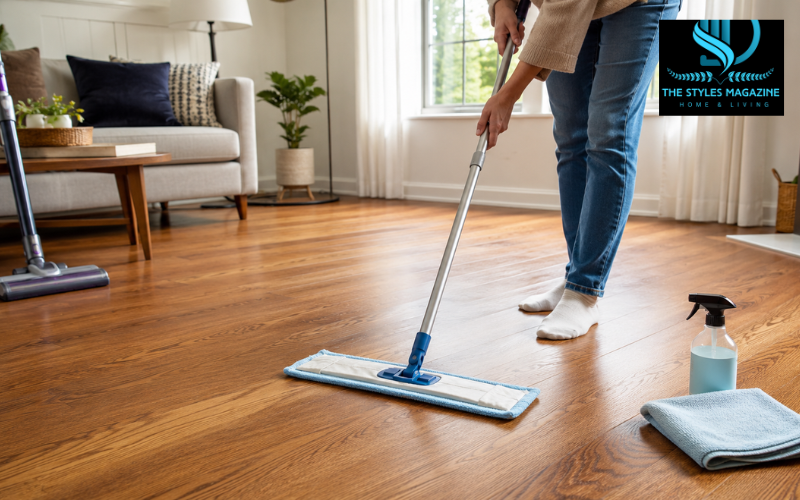
Damp mopping is the safest way to clean hardwood floors when dry dusting is not enough. The goal is to use enough moisture to lift dirt, but not enough to soak the wood. A flat microfiber mop is best because it spreads cleaner lightly and evenly.
Instead of pouring cleaner directly onto the floor, lightly mist a small section or spray the mop pad. Work in small areas so the floor does not stay wet for long. A section about a few feet wide is enough. Mop in the direction of the wood grain or along the boards. This helps reduce streaks and makes the floor look smoother when it dries.
Keep checking the mop pad as you clean. If it becomes dirty, rinse it well and wring it out until it is barely damp, or replace it with a clean pad. A dirty mop pad can spread grime across the floor and leave streaks behind. After mopping each section, use a dry microfiber cloth or dry mop pad to remove any leftover moisture.
How to Clean Hardwood Floors Without Damaging Them
If you want to know how to clean hardwood floors without damaging them, focus on moisture control and gentle products. Standing water is one of the biggest risks for wood floors. It can move into seams, cause boards to swell, or leave dark marks over time. Even small amounts of water can be a problem if they are left sitting too long.
Never pour cleaner directly onto hardwood. Spray the mop or lightly mist the floor instead. Do not use abrasive scrub pads, steel wool, or rough brushes. These can scratch the finish and make the floor collect dirt faster in the future.
Harsh chemicals should also be avoided. Bleach, ammonia, strong degreasers, and highly acidic cleaners can dull or weaken the finish. Steam mops are another common mistake. They may seem clean and chemical-free, but the heat and moisture can enter the seams and damage the floor from inside.
The safest habit is to dry each section right after cleaning. A clean microfiber cloth can remove leftover moisture and help prevent streaks.
How to Clean Hardwood Floors Naturally
Many people prefer natural cleaning methods, but natural does not always mean safe for hardwood. The goal is still to protect the finish. For routine natural cleaning, a lightly damp microfiber mop may be enough, especially if the floor is cleaned often.
For occasional cleaning, you can use a very small amount of mild dish soap mixed with warm water. The mixture should be weak, not soapy. Too much soap can leave residue that makes the floor look cloudy or feel sticky. After using any soap mixture, wipe the area with a clean barely damp cloth and then dry it well.
When cleaning hardwood floors naturally, avoid using strong homemade mixtures. Some popular natural ingredients are too acidic or too oily for wood finishes. Using too much homemade cleaner can leave a dull film or slowly affect the protective coating. A gentle, minimal approach is usually best.
Should You Clean Hardwood Floors With Vinegar?
Many people search for how to clean hardwood floors vinegar because vinegar is often recommended as a natural cleaner. However, vinegar is acidic, and that is why it must be used very carefully on hardwood floors. While it may cut through dirt in some situations, repeated use can dull or weaken the finish, especially on polyurethane-coated floors.
For regular cleaning, a pH-neutral hardwood floor cleaner is a safer choice. It is made to clean without slowly wearing down the finish. Vinegar may seem harmless because it is natural, but natural acids can still affect the floor’s protective layer over time.
If someone still chooses to use vinegar, it should be rare, heavily diluted, and tested in a hidden area first. It should never be used full strength. Even then, it is not the best everyday option for hardwood floors. If your goal is to protect the floor and keep it looking good for years, a cleaner made for hardwood is the better choice.
How to Deep Clean Wooden Floors
Deep cleaning wooden floors does not mean soaking them or scrubbing them hard. It means cleaning more carefully and thoroughly than usual while still protecting the wood. Start by vacuuming or dust mopping the entire floor. Move small rugs, chairs, and light furniture so you can reach hidden dust and dirt.
Next, use a hardwood-safe cleaner with a microfiber mop. Work slowly in small sections. Lightly mist the floor or mop pad, then wipe with the grain. Pay extra attention to sticky spots, entryways, kitchen areas, and other places that collect more dirt.
For stubborn marks, use a soft cloth with a small amount of hardwood cleaner. Rub gently instead of scrubbing hard. If the spot does not come off, avoid using strong chemicals without checking whether they are safe for your floor finish.
After each section, dry the floor fully. This final step is very important. Deep cleaning should leave the floor fresh, not wet. If the floor still looks dull after deep cleaning, the issue may be worn finish, not dirt.
How to Clean Hardwood Floors by Hand
Cleaning hardwood floors by hand is useful for small areas, corners, stairs, edges, and sticky spots. It gives you more control than a mop and helps you clean places that larger tools may miss.
Use a soft microfiber cloth instead of a rough sponge. Lightly dampen the cloth with a hardwood-safe cleaner. The cloth should not drip. Wipe in the direction of the wood grain and use gentle pressure. This is especially helpful around baseboards, under cabinets, near doorways, and on stairs.
After cleaning, dry the area immediately with another soft cloth. Avoid placing open buckets directly on the wood, especially if they may spill. If you need to kneel, make sure any knee pads or tools do not scratch the floor. Hand cleaning takes more time, but it is a safe method for detailed care.
How to Clean Hardwood Floors to Make Them Shine
If you want to know how to clean hardwood floors to make them shine, start with dust removal. Dust can make floors look dull even when they are not truly dirty. A clean microfiber dust mop can make a big difference before you use any cleaner.
Next, use a residue-free hardwood floor cleaner. If a cleaner leaves a film, the floor may look streaky or cloudy instead of shiny. Mop lightly and dry the floor with a clean microfiber cloth. Buffing the floor dry can help bring out a clean, natural shine.
Avoid oily cleaners unless they are recommended for your specific floor. Oil-based products can create slippery buildup and attract more dust. Also, remember that shine depends on the condition of the finish. If the protective layer is worn, scratched, or old, no cleaner can fully restore it. Very dull floors may need professional recoating rather than stronger cleaning.
Common Mistakes That Make Hardwood Floors Look Dull
One of the most common mistakes is using too much water. A wet mop may seem like it is cleaning better, but it can leave streaks and damage the wood over time. Another mistake is mopping before removing dirt. When dust and grit are pushed around, they can scratch the finish and make the floor look dull.
Using the wrong cleaner is also a major problem. Vinegar, bleach, ammonia, strong chemicals, and steam can all harm hardwood floors in different ways. Some leave the finish dull, while others may weaken it or push moisture into the seams.
Leaving cleaner residue behind can also make floors look cloudy. This often happens when too much soap is used or when the mop pad is dirty. Rough scrub pads are another issue because they can leave fine scratches. Letting spills sit too long can also stain or damage the wood. To avoid these problems, use gentle products, clean regularly, and dry the floor after mopping.
Simple Long-Term Care Tips for Hardwood Floors
Good hardwood care is not only about mopping. Small daily habits can protect the floor and reduce how often deep cleaning is needed. Place mats near entry doors to catch dirt before it reaches the wood. A no-shoe habit indoors can also help because shoes bring in grit, small stones, and moisture.
Add felt pads under chairs, tables, and heavy furniture. This helps prevent scratches when furniture moves. Avoid dragging furniture across the floor. Lift it carefully or use proper furniture sliders made for hardwood.
Clean spills as soon as they happen. Liquids should not sit on wood, even if the floor has a strong finish. If you have pets, keeping their nails trimmed can reduce scratches. It also helps to dust mop busy areas regularly, especially hallways and kitchens.
Indoor humidity can also affect hardwood. When the air is too dry or too humid, wood can shrink or expand. Keeping the home’s humidity balanced when possible helps reduce gaps, cupping, or movement in the boards.
Conclusion
Learning how to clean hardwood floors the right way is mostly about being gentle and careful. The safest method is to remove dust, dirt, and grit first, then use a barely damp microfiber mop with a pH-neutral hardwood floor cleaner. Always clean in small sections, avoid soaking the floor, and dry the surface right away.
Water, harsh chemicals, rough tools, and steam are the biggest risks for hardwood floors. They can dull the finish, leave streaks, or cause long-term damage. Natural methods can be helpful, but they still need to be used carefully because not every homemade cleaner is safe for wood.
With regular dusting, safe damp mopping, quick spill cleanup, and simple protection habits, hardwood floors can stay clean, smooth, and beautiful for many years. A gentle routine is the best way to keep them shining without damaging the finish.
FAQs
How Often Should I Clean Hardwood Floors?
Dust mop or vacuum hardwood floors daily or a few times a week in busy areas. Damp mop once a week or only when the floor looks dirty.
What Is The Safest Cleaner For Hardwood Floors?
A pH-neutral hardwood floor cleaner is usually the safest choice. It cleans gently without leaving residue or damaging the protective finish on the wood.
Can I Use Vinegar To Clean Hardwood Floors?
Vinegar is not the best regular option because it is acidic. Repeated use can dull or weaken the floor finish, especially on polyurethane-coated hardwood.
How Do I Make Hardwood Floors Shine After Cleaning?
Remove dust first, use a residue-free hardwood cleaner, and buff the floor dry with a microfiber cloth. If the finish is worn, cleaning alone may not restore shine.
What Should I Avoid When Cleaning Hardwood Floors?
Avoid soaking wet mops, steam mops, bleach, ammonia, rough scrubbers, and strong acidic cleaners. These can dull the finish or damage the wood over time.
Enjoyed it? Find more exclusive content on The Styles Magazine.
Disclaimer: This article is for general home-cleaning information only. Always check your flooring manufacturer’s care instructions before using any cleaner or method, especially on older, unfinished, waxed, or specialty hardwood floors.