Storing soft toys is more than just putting plushies in a basket or hiding them inside a cupboard. It is about keeping them clean, easy to find, safe from damage, and arranged in a way that does not make the bedroom feel messy. Soft toys are often loved by children, kept as memories by adults, or collected as decorative pieces, so the right storage method should protect them while also keeping the room comfortable and organized.
Soft toys can quickly take over beds, floors, shelves, wardrobes, and bedroom corners if they do not have a proper place. A few teddy bears may look cute on the bed, but when the collection grows, the room can start feeling crowded. This is especially true in small bedrooms where every bit of floor space matters.
The best method for storing soft toys depends on how often they are used, how many toys need storing, and how much space is available. Toys used every day need to be easy to reach, while sentimental toys or seasonal plushies need safer long-term storage. Some soft toys are meant for play, some are for display, and others are kept as keepsakes. This article will help you choose practical, space-saving, and safe storage ideas for both everyday use and long-term storage.
Quick Guide Table for Storing Soft Toys
| Storage Need | Best Storage Option | Why It Works |
| Daily-use soft toys | Open baskets or fabric bins | Easy for kids to grab and put back |
| Small bedrooms | Over-door organizers, hammocks, under-bed boxes | Saves floor space and uses unused areas |
| Large plush toys | Oversized baskets, toy chests, bean bag covers | Keeps big toys contained without clutter |
| Display plushies | Wall shelves, toy ladders, hammocks | Keeps favorite toys visible and decorative |
| Long-term storage | Plastic bins with lids or labeled boxes | Protects toys from dust, pests, and moisture |
| Sentimental toys | Clean, dry, sealed containers | Keeps special toys safe for years |
Why Storing Soft Toys Properly Matters
Properly storing soft toys helps keep a bedroom cleaner and easier to manage. Plush toys are soft, fluffy, and often made from materials that collect dust. When they are left on the floor or piled on the bed, they can make cleaning harder and create a messy look, even in an otherwise tidy room.
Good storage also helps children find their favorite toys quickly. Instead of searching under blankets, beds, or piles of other toys, children can see where their plushies belong. This makes playtime easier and cleanup less stressful. When storage is simple enough for children to use, they are more likely to put toys back on their own.
Another reason storage matters is protection. Some soft toys are sentimental, expensive, handmade, or linked to childhood memories. If they are stored carelessly, they may become dusty, stained, flattened, or damaged. A smart storage setup helps protect these toys while keeping the room open, calm, and comfortable.
Start by Sorting the Soft Toy Collection
Before buying any soft toy storage organiser, it is important to sort the collection first. Many people make the mistake of buying baskets, bins, or shelves before checking how many toys actually need to be stored. This can lead to wasted space or storage that does not suit the collection.
Start by separating daily-use soft toys from rarely used ones. The toys that are played with often should stay in easy-to-reach places. These may include favorite teddy bears, bedtime plushies, or comfort toys. Rarely used plushies can be placed in higher storage, under-bed boxes, or sealed containers.
It also helps to keep favorite and sentimental plushies aside. These should not be mixed with damaged or unwanted toys. If some soft toys are torn, stained beyond cleaning, or no longer wanted, decide whether they can be repaired, donated, recycled, or removed. This step keeps the storage system useful instead of simply hiding clutter.
Grouping toys by size is also helpful. Small soft toys can fit into baskets, shelf bins, or a soft toy storage cylinder. Medium plushies may work better in fabric bins or open storage. Large stuffed animals need more space, such as oversized baskets, toy chests, wide shelves, or floor corners. Sentimental or display-only toys should be stored more carefully so they stay clean and protected.
Everyday Soft Toy Storage Ideas for Easy Access
For soft toys used every day, the best storage is open, simple, and easy to reach. Children should be able to grab their favorite plushies without needing help and put them back without making a mess. Everyday storage should feel natural, not complicated.
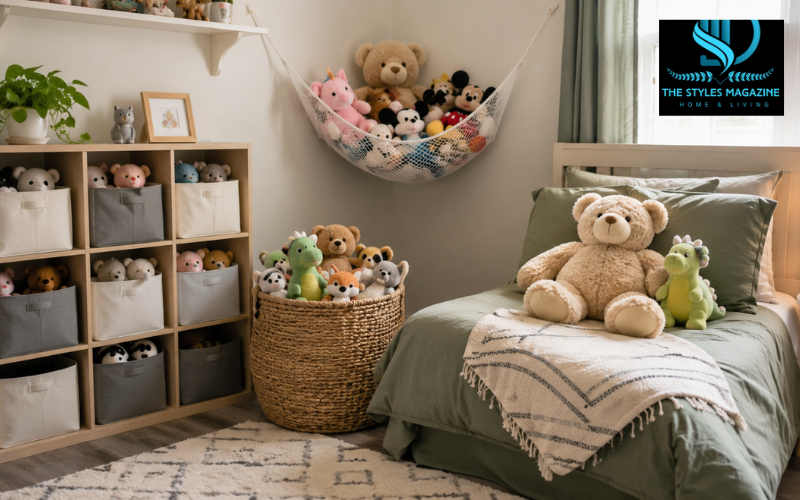
Open baskets are one of the easiest options for quick clean-up. They allow children to toss toys inside at the end of the day. Fabric bins are also useful, especially when placed on shelves, inside wardrobes, or under low tables. They keep toys grouped together while still being easy to pull out.
Low toy boxes work well for younger children because they are close to the floor and simple to use. However, it is better to avoid deep boxes where small plushies disappear at the bottom. Rolling carts are another flexible option because they can be moved around the bedroom, playroom, or living area.
A soft toy storage cylinder can be useful for small and medium plushies. These storage cylinders are usually lightweight and can fit into corners or near the bed. Some have clear sides or soft fabric designs, making them practical for children’s rooms. The main goal is to choose storage that makes cleanup easy and keeps favorite toys visible.
Creative Ways to Store Stuffed Animals in a Bedroom
There are many creative ways to store stuffed animals without making the bedroom look crowded. Instead of treating soft toys as clutter, you can turn them into part of the room’s decor. This works especially well when children love seeing their plushies displayed.
A plush toy bean bag cover is a smart idea for large collections. It is an empty bean bag cover that is filled with soft toys instead of foam beads. This turns a pile of plushies into a comfortable seat while freeing up floor and bed space. It works best for soft toys that are not needed every day, because the toys inside are not always easy to access quickly.
Stuffed animal zoo-style storage is another playful option. It usually has a wooden or plastic frame with flexible bars or cords that hold plushies in place. Children can see their toys and pull them out when needed. This type of storage adds a fun look to the room while keeping toys contained.
Wall-mounted baskets, decorative crates, display shelves, soft toy ladders, and tiered stands are also useful. These ideas keep plushies off the floor and make the room feel more organized. Favorite toys can be displayed where children can see them, while less-used toys can be stored elsewhere.
Stuffed Animal Storage Ideas for Small Spaces
Small bedrooms need storage that uses space wisely. When floor space is limited, it is better to think vertically. Walls, doors, corners, and under-bed areas can all become useful storage zones.
Over-the-door organizers are helpful because they use space that is often ignored. Deep pockets can hold small and medium soft toys, and clear or mesh pockets make it easier to see what is inside. This is one of the best stuffed animal storage ideas for small spaces because it does not take up floor space.
Under-bed storage boxes are another practical choice. They are useful for toys that are not used daily but still need to stay nearby. Choose boxes with lids to protect the toys from dust. Corner shelves and hanging baskets also work well because they use empty wall areas instead of crowded floor space.
Stackable bins and narrow storage towers can help when the room has little width but enough height. These options are good for organizing toys by size, type, or how often they are used. In a small space, the best storage is not always the biggest one. It is the one that uses unused areas in a smart way.
Using a Stuffed Animal Storage Hammock
A stuffed animal storage hammock is a simple and popular way to store lightweight plushies. It is usually placed in a bedroom corner, above a reading nook, or near a play area. The hammock holds soft toys off the floor while keeping them visible.
This storage idea works best for plushies that are not too heavy. Small and medium soft toys sit well in a hammock, but very large stuffed animals may stretch it or make it unsafe. A hammock is also better for display than for rough daily play. If children need to pull toys out several times a day, lower baskets or bins may be easier.
The biggest benefit of a stuffed animal storage hammock is that it saves floor space. It also gives the room a soft, playful look. However, it should always be installed securely. The hooks or wall fittings should be strong enough to hold the weight of the toys, and the hammock should be placed at a safe height.
Large Stuffed Animal Storage Ideas
Large stuffed animals can be harder to store because they take up more room than smaller plushies. They often do not fit well in standard bins or shelves, so they need a different approach. The best large stuffed animal storage ideas focus on keeping these toys visible, protected, and out of the way.
Oversized baskets are one of the easiest options. They can hold big plushies while keeping them accessible. A toy chest can also work, especially if it is wide enough and not overfilled. However, very large plushies may lose shape if they are pressed tightly inside a box.
Corner floor storage is useful for oversized toys that children still enjoy seeing. Instead of leaving them scattered around the room, choose one corner where large plushies can sit neatly. Wide shelves can also work if the toys are mainly for display.
A plushie bean bag cover is another smart option for a big collection. It can hold many soft toys and turn them into useful seating. If space is still limited, consider rotating large stuffed animals. Keep a few favorites out and store the rest in clean containers. This keeps the room from feeling crowded while still allowing children to enjoy their collection.
Long-Term Storage for Soft Toys
Long-term storage is important when soft toys are not used often but still need to be kept safe. This may include sentimental toys, baby keepsakes, seasonal plushies, or extra toys from a large collection. Storing soft toys long term requires more care than everyday storage because the goal is protection, not just organization.
Plastic storage bins with secure lids are one of the safest options for long-term storage. They help protect soft toys from dust, insects, moisture, and accidental spills. Clean fabric storage bags can also work if the storage area is dry and safe. Wardrobe boxes are useful for larger or delicate plushies that should not be crushed.
Labeling containers is a simple but helpful step. It allows you to know what is inside without opening every box. For example, one bin can be labeled “baby keepsake toys,” while another can be labeled “seasonal plushies.” This makes it easier to find toys later.
The main goal of long-term storage is to protect soft toys from dust, pests, mold, mildew, and fabric damage. Choose a dry, clean, and stable storage area. A wardrobe, bedroom cupboard, or climate-controlled storage space is usually better than a damp basement or hot attic.
What to Avoid When Storing Soft Toys
Some storage mistakes can damage soft toys over time. One of the most important things to avoid is storing damp plushies. Even a little moisture can lead to bad smells, mold, or mildew inside the toy. Always make sure every soft toy is fully dry before packing it away.
Humid basements are not ideal for plush storage because moisture can collect inside containers. Hot attics can also be risky because temperature changes may affect fabric, stuffing, and glue details. If possible, store soft toys in a room with a stable temperature and low moisture.
Avoid overstuffing containers. When too many plushies are pressed together, they can lose shape, become wrinkled, or have flattened stuffing. It is better to use two containers than force everything into one.
Long-term vacuum sealing should also be used with caution. Although it saves space, keeping soft toys tightly compressed for a long time may flatten their shape and make them harder to restore. Plastic bags that trap moisture without airflow should also be avoided, especially if the toys are not completely dry.
Cleaning Soft Toys Before Storage
Cleaning is an important step before storing soft toys. Plush materials can hold dust, crumbs, stains, and allergens, so packing toys away without cleaning them can create problems later. A clean toy is much safer to store than one that has been left on the floor or bed for months.
Always check the care label first. Some soft toys can be machine washed, while others need gentle spot cleaning. Machine-safe toys should be washed according to the label instructions and dried completely before storage. Delicate plushies, battery-operated toys, or toys with glued details should usually be spot-cleaned instead.
Drying is one of the most important parts of the process. Never store a toy that feels even slightly damp. Moisture trapped inside stuffing can cause unpleasant smells and mold. After drying, gently brush or fluff the fabric to restore softness. You can also massage the stuffing lightly to help the toy regain its shape.
Before packing, check that no toy has food crumbs, sticky marks, stains, or hidden damp areas. Clean storage starts with clean toys.
Choosing the Right Soft Toy Storage Organiser
The right soft toy storage organiser depends on the size of the collection, the room layout, and how the toys are used. There is no single best option for every home. A child with ten favorite plushies needs a different setup from someone storing a large sentimental collection.
For daily-use plushies, open storage is usually best. Baskets, low bins, storage cylinders, and easy-access shelves make cleanup simple. For long-term storage, sealed containers are better because they protect toys from dust and moisture.
Child-friendly access is also important. If storage is too high, too heavy, or too difficult to open, children may not use it. The best organizer is one that fits naturally into the bedroom routine. It should be easy to reach, easy to clean, and suitable for the child’s age.
Common options include baskets, hammocks, storage cylinders, over-door organizers, fabric bins, plastic tubs, and shelf storage. Each option has a different purpose. Baskets are good for quick access, hammocks are good for display, plastic tubs are good for long-term storage, and shelves are good for keeping favorites visible.
Soft Toy Storage IKEA and Similar Space-Saving Options
Many readers search for soft toy storage IKEA ideas because they want simple, modular, and space-saving solutions. This does not mean one brand is the only option. It simply shows that people are looking for storage that is practical, clean-looking, and easy to fit into a bedroom.
Cube shelves are a popular choice because they can hold fabric boxes, baskets, or displayed plushies. They work well in children’s rooms because they are simple and flexible. Fabric boxes can hide clutter while still keeping toys grouped together. Under-bed storage is useful when the room has limited visible space.
Hanging organizers, toy storage benches, and wall shelves are also helpful. A storage bench can provide seating and hidden toy space at the same time. Wall shelves can display favorite soft toys without using floor space. Hanging organizers are useful for small plushies and accessories.
The best option is not always the most expensive or stylish one. It is the option that fits the room, the number of toys, and the child’s access needs. A good storage setup should make the bedroom easier to use, not more complicated.
Simple Storage Setup Based on Collection Size
A small soft toy collection may only need one basket, shelf bin, or soft toy storage cylinder. This keeps everything in one place without taking up too much space. For a child who only has a few favorite plushies, simple storage is usually enough.
A medium collection may need a combination of baskets, shelves, and a stuffed animal storage hammock. Daily-use toys can stay in baskets, while display toys can go on shelves or in a hammock. This gives each toy a clear place without overcrowding one storage area.
A large collection usually needs a rotation system. Keep favorite plushies out and store the rest in labeled bins. Every few weeks or months, toys can be swapped. This keeps the bedroom fresh and prevents all the toys from being out at once.
Sentimental collections should be cleaned, dried, labeled, and stored in sealed long-term containers. These toys may not be used often, but they still need protection. For small bedrooms, focus on over-door, wall, corner, and under-bed storage. These areas help save floor space while keeping soft toys organized.
Conclusion
Storing soft toys becomes much easier when the collection is sorted by use, size, and importance. Daily-use plushies should be easy to reach, while sentimental or rarely used toys should be stored more carefully. The right method depends on the room size, the number of toys, and whether the toys are for play, display, rotation, or long-term protection.
A tidy bedroom does not mean soft toys have to disappear. With baskets, shelves, hammocks, storage cylinders, under-bed boxes, and sealed containers, plushies can stay organized without creating clutter. The key is to choose storage that matches real daily habits.
For everyday toys, choose open and child-friendly storage. For storing soft toys long term, choose clean, dry, labeled, and protective containers. A good storage setup keeps the room neat, protects the toys, and makes cleanup easier for everyone.
FAQs
What Is The Best Way Of Storing Soft Toys?
The best way depends on how often the toys are used. Daily-use soft toys work best in open baskets, while sentimental or long-term plushies should be stored in clean, sealed containers.
How Do I Store Soft Toys In A Small Bedroom?
Use vertical and hidden spaces such as wall shelves, over-door organizers, corner hammocks, under-bed boxes, and stackable bins. These options keep plushies organized without taking over the floor.
Is It Safe To Vacuum Seal Soft Toys?
Vacuum sealing can save space, but it is not ideal for long-term storage. Heavy compression may flatten stuffing, wrinkle fabric, and change the toy’s original shape over time.
Should Soft Toys Be Washed Before Storage?
Yes, soft toys should be cleaned before storage. Wash machine-safe toys, spot-clean delicate ones, and make sure every toy is completely dry to prevent odor, mold, or mildew.
How Do I Store Large Stuffed Animals Neatly?
Large stuffed animals can be stored in oversized baskets, toy chests, wide shelves, bedroom corners, or plushie bean bag covers. Rotating them also helps reduce clutter in small rooms.
Enjoyed it? Find more exclusive content on The Styles Magazine.
Disclaimer: This article is for general home organization and storage guidance only. Always check each soft toy’s care label before washing or storing it. For valuable, antique, handmade, or delicate plush toys, consider using extra protective storage methods.