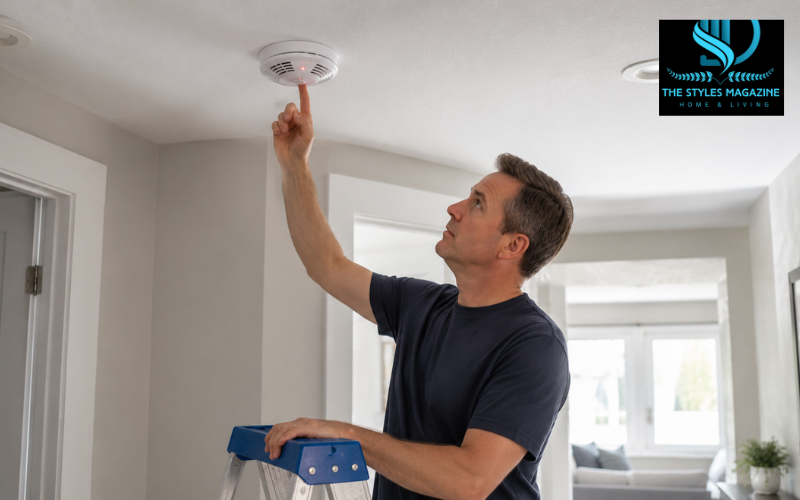
A hardwired smoke alarm is connected to your home’s electrical system, so it may feel confusing when it starts beeping or chirping. Many people assume that a hardwired alarm should not make a low-battery sound because it is not fully battery-powered. In reality, most hardwired smoke alarms still have a backup battery. This battery keeps the alarm working during a power outage, and when it gets weak, the alarm may start chirping.
If you are dealing with a smoke alarm beeping hardwired, the sound is usually a warning that something needs attention. It may be a low backup battery, dust inside the alarm, a power issue, an old unit, or an internal fault. The good news is that the beep pattern often gives you a clue about what is wrong.
A single chirp every 30 to 40 seconds usually means something different from a full alarm sound. A hardwired smoke alarm beeping with no smoke nearby may not mean there is a fire, but it should never be ignored. The same is true if the chirping happens at night, stops on its own, or keeps coming back after you replace the battery.
According to the National Fire Protection Association, hardwired smoke alarms are powered by the home’s AC electrical system, often include battery backup, should be tested monthly, and should generally be replaced after 10 years.
Why Your Hardwired Smoke Alarm Is Beeping
| Beep or Chirp Pattern | Possible Reason | What to Check First |
| One chirp every 30 seconds | Low battery, fault, or end-of-life warning | Replace battery and check manufacture date |
| One chirp every 40 seconds | Weak battery or internal issue | Install a fresh backup battery |
| Beeping with no smoke | Dust, humidity, cooking steam, or sensor issue | Clean vents and check location |
| Beeping then stops | Temporary power change, weak battery, or temperature shift | Check battery, power, and age |
| Chirping at night | Weak battery reacting to cooler temperature | Replace battery before sleeping |
| Still chirping after battery change | Alarm needs reset or has expired | Reset unit and check 10-year date |
Hardwired Smoke Alarm Beeping vs. Full Alarm Sound
Before trying to fix the problem, it helps to understand the difference between a chirp and a full alarm. A chirp is usually short, sharp, and spaced out. It may happen once every 30 seconds, every 40 seconds, or every minute. This type of sound usually means the alarm needs service.
A full alarm is much louder and more urgent. It often sounds in a repeating pattern and is designed to warn you about smoke, fire, or sometimes carbon monoxide if the unit is a combination alarm. If the sound is a full alarm and you see or smell smoke, leave the home immediately and call emergency services.
When a hardwired smoke alarm chirps, it is usually not trying to alert you to active smoke. Instead, it is telling you that the device itself needs attention. Still, you should always check your surroundings first. Do not assume it is only a battery issue until you are sure there is no smoke, burning smell, or fire danger.
Common Reasons a Hardwired Smoke Alarm Keeps Beeping
A hardwired smoke alarm can keep beeping for several common reasons. The most frequent cause is a weak backup battery. Even though the alarm is connected to house power, the backup battery still needs to be working.
Another common reason is dust. Smoke alarms are sensitive devices, and dust, cobwebs, or tiny insects can collect inside the sensing chamber. This can cause false warnings, random chirps, or error signals.
Power problems can also cause chirping. If the breaker has tripped, a wire connection is loose, or the alarm is not receiving proper AC power, it may warn you by beeping. Some alarms also chirp when they are near the end of their life.
Kidde notes that consistent chirping may be caused by a low battery, malfunction, hush mode, or end-of-life condition, depending on the model and chirp pattern. Some Kidde alarms chirp every 30 to 40 seconds for low battery, while some models use similar timing for other conditions.
Why a Hardwired Smoke Alarm Beeps When There Is No Smoke
A smoke alarm beeping hardwired but no smoke nearby can be frustrating, especially when everything in the home seems normal. In many cases, the alarm is not detecting smoke at all. It is reporting a maintenance problem.
The backup battery may be weak, the alarm may need cleaning, or the unit may be too old. Steam from a bathroom, cooking smoke, high humidity, or dust may also confuse the sensor. If the alarm is near a kitchen, bathroom, air vent, or very dusty area, it may be more likely to beep or trigger false alerts.
Sometimes the sound may not even be coming from the smoke alarm you think it is. In homes with several interconnected hardwired alarms, one unit can cause others to sound. It is also possible to confuse a smoke alarm chirp with a carbon monoxide alarm, security system, appliance, or old battery-powered detector stored nearby.
Hardwired Smoke Detector Chirping No Battery: What It Usually Means
The phrase hardwired smoke detector chirping no battery is common because many homeowners remove the battery and expect the noise to stop. If the alarm keeps chirping with no battery installed, there are a few possible explanations.
First, the alarm may still be receiving power from the home’s electrical system. Since it is hardwired, removing the battery does not fully turn it off. Second, the device may have stored a small electrical charge. This can sometimes cause chirping for a short time after the battery is removed.
Third, the chirping may be coming from a different alarm nearby. Sound can bounce around hallways and ceilings, making it hard to identify the correct unit.
If a hardwired alarm is chirping with no battery, do not leave it that way. The backup battery is an important safety feature. Replace it with the correct battery type listed in the user manual. If the alarm still chirps after that, reset the unit and check its age.
Why Your Hardwired Smoke Alarm Beeps Every 30 or 40 Seconds
If you are asking, “Why is my hardwired smoke alarm beeping every 30 seconds?” the most likely answer is a low battery, a fault, or an end-of-life warning. Many alarms use a short chirp every 30 to 60 seconds to signal that something is wrong.
Kidde says a low-battery chirp may occur every 30 to 40 seconds on many smoke alarms, while some models chirp every 60 seconds. The company also notes that certain end-of-life or malfunction warnings can use similar chirp timing, so checking the manual for your exact model is important.
A smoke alarm beeping every 40 seconds should not be ignored. Start by replacing the backup battery with a fresh one. Then press the test button to make sure the alarm responds correctly. If the chirp continues, check the date on the back of the unit. If it is close to or past 10 years old, replacement is usually the safest choice.
Smoke Alarm Beeping Hardwired Then Stops
Sometimes a hardwired smoke alarm beeps for a while and then stops. This may happen when the battery is weak but not completely dead, when the temperature changes, or when the alarm has a temporary issue.
For example, a weak battery may chirp more at night when the air is cooler. Later, when the temperature rises slightly, the chirping may stop. Dust or humidity can also cause temporary chirps. A brief power interruption may cause the alarm to beep and then return to normal.
Even if the beeping stops, you should still investigate it. Check the battery, clean the alarm, confirm it has AC power, and look at the manufacture date. A smoke alarm that chirps once and then goes quiet may still be warning you that a problem is starting.
Hardwired Smoke Detector Chirping at Night
A hardwired smoke detector chirping at night is very common. It can feel like the alarm waits until everyone is asleep, but there is a reason it often happens then.
At night, the temperature inside a home may drop. A weak battery can become less stable in cooler air, which may trigger the low-battery chirp. The house is also quieter at night, so a chirp that was easy to miss during the day suddenly becomes very noticeable.
If your smoke alarm chirps at night, do not simply remove the battery and go back to sleep. Replace the backup battery, reset the alarm if needed, and test it. If the unit is old or the chirping continues, replace the alarm.
How to Check the Backup Battery in a Hardwired Smoke Alarm
To check the backup battery, first make sure there is no smoke or fire danger. Then locate the alarm that is chirping. Some hardwired units twist off the mounting plate, while others have a battery drawer on the side or front.
Use the battery type recommended by the manufacturer. Do not mix old and new batteries, and do not use a battery that has been sitting in a drawer for years. Install the battery firmly and make sure the battery door closes fully. Some alarms will chirp if the battery door is not properly shut.
After replacing the battery, press and hold the test button. You should hear a loud test sound. If the alarm still chirps after a new battery is installed, it may need resetting, cleaning, or replacement.
How to Reset a Hardwired Smoke Alarm After It Beeps
A reset can help when a hardwired smoke alarm continues chirping after you replace the battery. This often happens because the alarm still holds a small electrical charge or has not cleared its warning signal.
A common reset method is to turn off power to the alarm circuit at the breaker, remove the alarm from its bracket, unplug the wiring harness, remove the backup battery, and press the test button for 15 to 30 seconds. After that, install a fresh battery, reconnect the wiring harness, mount the alarm, and turn the breaker back on.
Only do this if you are comfortable working safely around a hardwired device. If the wiring looks damaged, loose, burned, or unfamiliar, stop and call a qualified electrician.
Cleaning Dust and Debris From a Hardwired Smoke Alarm
Dust is one of the easiest problems to overlook. A hardwired smoke alarm may look clean from the outside but still have dust inside the vents. This can interfere with the sensor and lead to chirping or false alarms.
Remove the alarm according to the manufacturer’s instructions. Use a vacuum brush attachment or compressed air to clean around the vents and openings. Be gentle. Do not spray cleaners, water, or chemicals into the alarm. Moisture can damage the sensor.
It is a good habit to clean smoke alarms when you clean ceiling fans, vents, or high shelves. A clean alarm is more likely to work properly and less likely to chirp for no clear reason.
Checking Power Problems in a Hardwired Smoke Detector
A hardwired alarm depends on your home’s electrical power. If that power is interrupted, the alarm may switch to battery backup and begin chirping. Start by checking your breaker panel. If the breaker for the smoke alarm circuit has tripped, reset it only if it is safe to do so.
Next, look at the indicator light on the alarm. Many hardwired alarms show a steady green light when AC power is present, but this can vary by brand and model. If the light is off, flashing in an unusual way, or showing an error signal, check the manual.
Loose wiring can also cause problems. If the alarm has been recently replaced, painted around, bumped, or removed from the ceiling, the wiring harness may not be fully connected. If you suspect a wiring issue, use caution and contact an electrician.
When a Hardwired Smoke Alarm Is Reaching End of Life
Smoke alarms do not last forever. Even if they still look fine, the internal sensor becomes less reliable over time. Most smoke alarms should be replaced after 10 years.
The NFPA states that smoke alarms need to be replaced after 10 years, and hardwired alarms should be tested at least monthly. This is important because an old alarm may chirp even after you replace the battery and reset it.
To check the age, remove the alarm from its mounting bracket and look for the manufacture date on the back. If it is 10 years old or older, replace the whole unit. Do not rely on a new battery to fix an expired alarm.
Kidde Smoke Alarm Beeping Hardwired: What to Check
If you have a Kidde smoke alarm beeping hardwired, first check the chirp pattern. Kidde explains that a chirp every 30 to 40 seconds can mean low battery on many models. It can also mean hush mode, malfunction, or end of life depending on the alarm type.
Replace the backup battery first if your model uses one. Then test the alarm. If the chirp continues, reset it and clean the sensor area. Also check the date on the back of the unit.
If the alarm gives a fault signal or does not sound during testing, replace it or contact Kidde support. A smoke alarm that cannot pass a basic test should not be trusted.
First Alert Smoke Alarm Beeping Hardwired: What to Check
If you have a First Alert smoke alarm beeping hardwired, the steps are similar. A single chirp every 30 to 60 seconds often points to a low battery. First Alert guidance also notes that alarm age, malfunction signals, dust, debris, loose wiring, or the need for a reset can cause chirping.
Start with a fresh battery. Then press the test button. If the chirping continues, remove dust from the alarm and check whether the unit is near or past its recommended lifespan. Some First Alert or BRK models may use different chirp patterns for battery, malfunction, or end-of-life warnings, so the model manual is the best source for exact meanings.
When to Replace a Beeping Hardwired Smoke Alarm
You should replace a hardwired smoke alarm if it is 10 years old or older, if it fails the test button check, if it keeps chirping after a new battery and reset, or if it shows a malfunction warning.
You should also replace it if the plastic is damaged, yellowed from age, cracked, or if the alarm has been exposed to heavy dust, paint, water, or insects. Never paint a smoke alarm. Paint can block the vents and stop it from sensing smoke correctly.
When replacing a hardwired alarm, use a compatible model if the alarms are interconnected. Mixing models or brands without checking compatibility can cause problems. If you are unsure, ask an electrician or follow the manufacturer’s instructions closely.
Safety Steps Before Troubleshooting a Hardwired Smoke Alarm
Before touching a hardwired smoke alarm, check for real danger first. Look for smoke, flames, burning smells, or heat. If anything seems unsafe, leave the home and call emergency services.
If you are troubleshooting the alarm itself, turn off power at the breaker before disconnecting the unit. Use a stable ladder and avoid working alone if the alarm is high on the ceiling. Do not touch exposed wires. Do not remove an alarm and leave the ceiling opening uncovered for days.
If multiple alarms are connected together, remember that one faulty alarm can cause confusion across the system. Try to identify the unit that is actually chirping by standing nearby and listening carefully.
Mistakes to Avoid When Trying to Stop the Beeping
The biggest mistake is removing the battery and forgetting to replace it. A hardwired alarm still needs its backup battery during a power outage. Another mistake is ignoring a chirp because it stops on its own. A temporary stop does not always mean the issue is fixed.
Avoid using water, sprays, or household cleaners inside the alarm. Also avoid covering the alarm with tape, cloth, or plastic to silence it. That can stop it from detecting smoke and put people in danger.
Do not assume every beep means the same thing. A chirp every 30 seconds, a chirp every 40 seconds, several chirps per minute, and a full alarm can all point to different issues. The safest approach is to check the battery, power, cleanliness, age, and model instructions.
Conclusion
A smoke alarm beeping hardwired is usually trying to tell you that something needs attention. The most common causes are a weak backup battery, dust in the sensor area, a power problem, the need for a reset, an internal fault, or an alarm that has reached the end of its life.
The best way to solve the problem is to pay attention to the beep pattern, replace the backup battery, confirm the alarm has AC power, clean the vents, reset the unit, and check the manufacture date. If the alarm is 10 years old or older, replacement is usually the right answer.
Never ignore repeated chirping. A smoke alarm is one of the most important safety devices in your home. If it keeps beeping after basic troubleshooting, replace it or get help from a qualified professional so your home stays protected.
FAQs
Why Is My Hardwired Smoke Alarm Beeping Every 30 Seconds?
A hardwired smoke alarm beeping every 30 seconds often means the backup battery is weak, the alarm has a fault, or the unit is near the end of its life.
Can A Hardwired Smoke Alarm Beep Without A Battery?
Yes. Since it is connected to home power, it may still chirp without a battery. It may also hold a small electrical charge or signal a fault.
Why Does My Hardwired Smoke Detector Chirp At Night?
Night chirping often happens because cooler temperatures affect a weak backup battery. The sound is also easier to notice when the house is quiet.
Why Is My Smoke Alarm Beeping Hardwired But No Smoke Is Present?
It may be caused by dust, humidity, steam, a weak battery, a power issue, or an old sensor. Always check for real fire danger first.
Should I Replace My Hardwired Smoke Alarm If It Keeps Beeping?
Yes, if it keeps beeping after a new battery, cleaning, and reset, or if it is 10 years old or older, replacement is usually safest.
Enjoyed it? Find more exclusive content on The Styles Magazine.
Disclaimer: This article is for general informational purposes only and does not replace professional electrical, fire safety, or manufacturer-specific advice. Always follow your smoke alarm’s user manual. If you suspect wiring problems, fire risk, or a faulty alarm, contact a qualified electrician or fire safety professional.