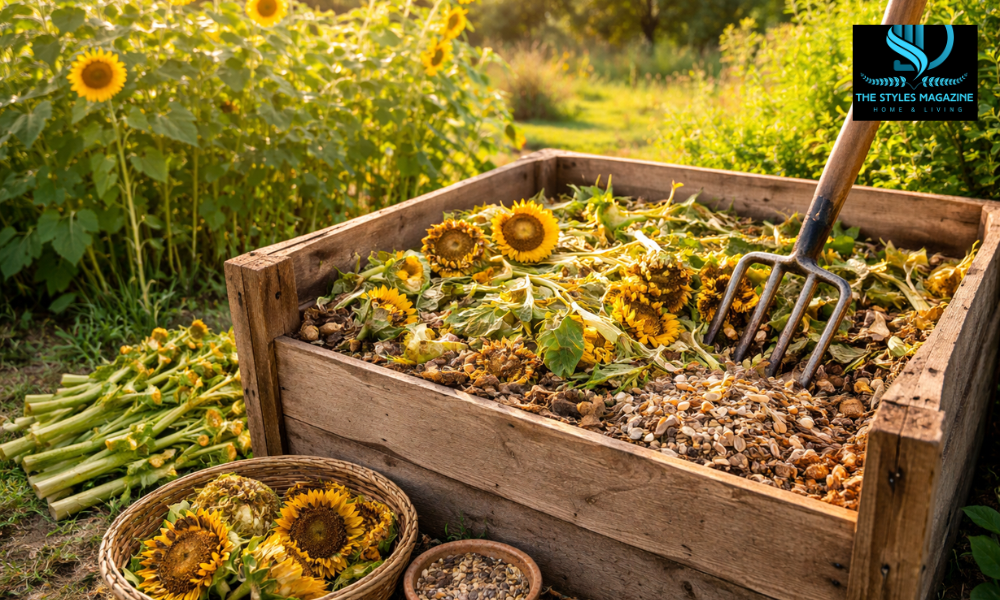
Sunflower compost is a simple and effective way to recycle sunflower plants after the growing season while improving your garden at the same time. Instead of throwing away stalks, leaves, seed heads, and shells, gardeners can turn these natural materials into rich organic matter that supports healthier soil. As more people look for environmentally friendly gardening methods, composting sunflowers has become a smart and sustainable practice.
Many gardeners choose to compost sunflowers because these plants produce a large amount of biomass. Once the flowers fade, the thick stalks and heavy seed heads can take up space in the garden or end up as waste. Composting allows this material to break down and return valuable nutrients to the soil. It is also a cost-effective way to reduce garden waste while creating a natural soil amendment that can replace some store-bought fertilizers.
Sunflower compost fits well into sustainable gardening because it closes the natural cycle of growth and decay. Plants grow by taking minerals and nutrients from the soil, and composting returns those materials back where they belong. This process helps reduce landfill waste, improves soil structure, and supports soil life such as worms and microbes. When done correctly, composting sunflowers is not only practical but also beneficial for the long-term health of a garden.
In this guide, you will learn what sunflower compost is, which parts of the sunflower can be composted, and how these materials break down inside a compost pile. You will also discover preparation tips, safety considerations, and the best ways to use finished compost. By the end, you will have a clear understanding of how to compost sunflowers effectively and use them to build stronger, healthier soil.
Understanding Sunflower Compost
Sunflower compost refers to compost made from the remains of sunflower plants, including stalks, leaves, roots, seed heads, and shells. Like other organic compost, it forms through a natural process where bacteria, fungi, and other microorganisms break down plant materials into dark, crumbly humus. This finished compost can then be added to garden beds or containers to improve soil quality.
One of the advantages of sunflower compost is that almost the entire plant can be recycled. Leaves and petals decompose relatively quickly, while stems and stalks take longer because they are dense and fibrous. Roots can also be composted or left in the ground to break down naturally. Even sunflower seed shells can be added, as long as they are not heavily salted or processed in a way that could harm soil life.
Inside a compost pile, sunflower material behaves differently depending on its thickness and moisture level. Soft green parts break down quickly and provide nitrogen, while dry stalks act as a carbon-rich material that helps balance the pile. Because sunflower stalks are sturdy, they often help create airflow inside compost, which supports healthy aerobic decomposition. However, if they are added whole, they may take much longer to decompose, which is why preparation is important.
Understanding how sunflower compost works helps gardeners manage their compost piles more effectively. A good balance of green and brown materials, proper moisture, and regular turning allows sunflower waste to break down more efficiently and safely.
Preparing Sunflowers Before Composting
Proper preparation is one of the most important steps in successful sunflower composting. Sunflower plants can be large and fibrous, which means they decompose slowly if added to compost in big pieces. Cutting and shredding stalks into smaller sections greatly increases the surface area available for microbes. Many gardeners cut stalks into short lengths, making them easier to mix into the pile and speeding up decomposition.
Another useful method is exposing the inner stalk material, often called the pith. The outer layer of sunflower stalks is tough and resistant to breakdown, but the inside is softer and decomposes faster. Splitting stalks lengthwise or chopping them more aggressively helps moisture and microorganisms reach the interior, reducing composting time significantly.
Seed heads require careful handling because mature seeds may survive the composting process and sprout later in garden beds. Gardeners who want to avoid unwanted sunflower seedlings can remove seeds before composting and use them for bird feed or storage. If seed heads are added to the compost, maintaining high compost temperatures is important to prevent seeds from germinating later.
Sunflower seed shells from snacks can also be composted, but they should be checked for excess salt. High levels of salt can harm soil microbes and reduce compost quality. Rinsing salted shells before adding them to the compost pile helps prevent this issue and keeps the compost safe for future garden use.
Preparing sunflower materials carefully reduces problems and ensures that sunflower compost breaks down efficiently while maintaining good soil health.
Benefits of Adding Sunflowers to Compost
Adding sunflowers to compost offers several valuable benefits for both the compost pile and the garden soil. One of the main advantages is nutrient contribution. Sunflowers have deep root systems that draw minerals from lower soil layers. When these plants decompose, those nutrients are released back into the compost and eventually returned to the garden, helping enrich the soil naturally.
Another benefit is improved compost structure. The rigid pieces of sunflower stalk create small air pockets inside the compost pile, preventing it from becoming dense or compacted. Good airflow is essential because composting microbes need oxygen to function effectively. When airflow is improved, decomposition becomes faster and more efficient, resulting in better-quality compost.
Sunflower compost also supports soil health by encouraging microbial activity. Organic matter feeds beneficial bacteria and fungi, which play a major role in breaking down nutrients and improving soil fertility. Healthy soil life can lead to stronger plant growth, better moisture retention, and improved resistance to stress.
Some gardeners and researchers suggest that sunflowers may contribute to disease management in soil. Certain natural compounds in sunflowers may help suppress harmful organisms during decomposition. While these effects are not guaranteed and usually fade once compost fully matures, they may provide an additional benefit when sunflowers are included as part of a diverse compost mix.
Overall, sunflower compost adds both structure and nutrition, making it a valuable addition to sustainable gardening practices.
Composting Sunflowers Safely and Correctly
Composting sunflowers safely requires understanding a few key principles. One important factor is whether you are using a hot or cold composting method. Hot composting involves maintaining higher temperatures, which speeds up decomposition and helps kill weed seeds and plant pathogens. This method is especially useful when composting sunflower seed heads, as high heat reduces the chance of seeds surviving.
Cold composting is slower and requires less maintenance, but it may not destroy seeds effectively. Gardeners using this method should consider removing seeds before adding plant material to the pile. Patience is also necessary, as thick sunflower stalks may take longer to fully decompose in a cooler environment.
Another consideration is phytoremediation, a process where sunflowers absorb heavy metals from the soil. This characteristic makes them useful for cleaning contaminated areas, but it also means caution is needed. If sunflowers were grown in soil that may contain pollutants, it is safer not to use that plant material in compost intended for food gardens. In such cases, disposing of the plants may be the better option.
Common mistakes include adding whole stalks without chopping, allowing the compost to dry out completely, or creating a pile that lacks balance between green and brown materials. These problems can slow decomposition or create unpleasant odors. Maintaining proper moisture and regularly turning the pile helps avoid these issues.
By following safe composting practices, gardeners can ensure that sunflower compost remains healthy, effective, and beneficial for long-term garden use.
Best Ways to Use Finished Sunflower Compost
Once sunflower compost has fully matured, it becomes a dark, earthy material that can greatly improve soil quality. One of the most common uses is mixing compost into garden beds before planting. This improves soil texture, helps retain moisture, and provides a steady release of nutrients that plants can use throughout the growing season.
Finished sunflower compost is particularly helpful for heavy-demand plants such as tomatoes, squash, and even new sunflowers. These plants require nutrient-rich soil, and compost provides a gentle, natural source of fertility without overwhelming roots. Working compost into the top layer of soil or using it as a surface dressing can support healthy growth.
Timing also matters when applying compost. Many gardeners spread compost in early spring to prepare beds for planting or in autumn to allow nutrients to settle into the soil over winter. Seasonal application helps maintain soil health year after year and supports long-term fertility.
Sunflower compost can also be mixed with other organic amendments such as leaf mold, aged manure, or general garden compost. Combining materials creates a more balanced soil conditioner and increases the diversity of nutrients available to plants. Using compost in this way helps build resilient, living soil that supports healthier gardens over time.
Alternative Uses for Sunflower Plant Material
Not all sunflower material needs to go directly into a compost pile. Some gardeners prefer in-situ composting, which involves cutting sunflower stalks at the base and leaving the roots in the soil. As the roots decompose naturally, they create channels that improve soil structure and aeration. This method is simple and reduces the labor involved in removing large plants.
Partially decomposed sunflower stalks can also be used as mulch around shrubs or perennial plants. The coarse texture helps suppress weeds and slows moisture loss from the soil. Over time, the material continues to break down and adds organic matter to the surrounding area.
There are situations where composting may not be the best choice. If plants show signs of serious disease or if they were grown in contaminated soil, disposing of them safely may be wiser to prevent potential problems. Knowing when to compost and when to remove plant material helps maintain a healthy garden environment.
Exploring these alternatives allows gardeners to use sunflower plants in flexible and practical ways, reducing waste while supporting soil health.
Conclusion
Sunflower compost is a valuable and sustainable way to recycle sunflower plants while improving garden soil naturally. By understanding how sunflower material breaks down, preparing stalks properly, and managing seeds carefully, gardeners can create high-quality compost that supports healthy plant growth. From improved soil structure to increased nutrient cycling, the benefits of sunflower compost make it a smart choice for both beginner and experienced gardeners.
Composting sunflowers safely means paying attention to factors like compost temperature, soil contamination risks, and balanced materials. When done correctly, the process is simple and rewarding, turning what might be garden waste into a long-term resource.
Whether you choose to compost stalks, leave roots in the soil, or use partially decomposed material as mulch, sunflower plants offer many ways to contribute to sustainable gardening. Applying sunflower compost thoughtfully helps build healthier soil, supports strong plant growth, and keeps your garden working in harmony with nature.
FAQs
Can Sunflower Stalks Be Composted?
Yes, sunflower stalks can be composted, but chopping or shredding them helps them break down faster.
Will Sunflower Seeds Grow In Compost?
They can if the compost pile does not get hot enough, so remove seeds or use hot composting.
Are Sunflower Seed Shells Safe For Compost?
Yes, but rinse them first if they are heavily salted.
How Long Does Sunflower Compost Take To Break Down?
It usually takes a few months, depending on compost temperature, moisture, and how small the pieces are.
Can Sunflower Compost Be Used For Vegetables?
Yes, fully finished sunflower compost is safe and beneficial for vegetable gardens.
Disclaimer: This article is for general gardening information only. Results may vary depending on soil conditions, climate, and composting methods. Always observe your plants and garden environment before applying compost, especially if soil contamination is suspected.
Loved Reading This? Discover More Exclusive Stories And Updates At The Styles Magazine!