Mold is a common problem in many homes, especially in areas with high moisture or poor ventilation. It appears as dark spots or patches and can grow on a wide range of surfaces, including walls, wood, concrete, and even plastic. Mold thrives in damp environments, which is why it often shows up in bathrooms, basements, and kitchens.
Understanding what kills mold is important not only for keeping your home clean but also for protecting your health. Mold can trigger allergies, breathing issues, and unpleasant odors. If left untreated, it can also damage surfaces and spread quickly throughout your living space.
One important thing to remember is that not all surfaces are the same. What kills mold on wood may not work the same way on concrete or plastic. Porous materials absorb moisture and allow mold to grow deeper, while non-porous surfaces are easier to clean. This guide explains the most effective and safe ways to deal with mold, helping you choose the right solution for each area of your home.
What Kills Mold on Different Surfaces
| Surface Type | Best Mold Killer | Why It Works |
| Wood (Porous) | Vinegar / Hydrogen Peroxide | Penetrates surface and kills roots |
| Walls (Drywall) | Vinegar / Mild Peroxide | Safe and prevents surface damage |
| Concrete | Peroxide / Strong Cleaner | Reaches into small pores |
| Bathroom Tiles | Bleach / Peroxide | Removes stains and kills surface mold |
| Plastic / Glass | Bleach / Peroxide | Easy to clean non-porous surfaces |
Understanding What Kills Mold and How It Works
To deal with mold properly, it helps to understand how it works. Mold is a type of fungus that grows from tiny spores. These spores are always present in the air, but they only grow when they find moisture and a suitable surface.
When we talk about what kills mold, there are two key processes involved. The first is killing the mold itself using a cleaning solution. The second is removing it completely from the surface. Killing mold is not enough on its own, because even dead mold can still cause allergic reactions and leave stains behind.
There is also a difference between surface mold and deeper growth. On non-porous surfaces like tiles, mold usually stays on the surface and is easier to remove. On porous materials like wood or drywall, mold can grow below the surface, making it harder to eliminate completely.
Using the right method is important for long-term results. If you only clean the surface without addressing the root of the problem, mold can return quickly. That’s why both proper cleaning and moisture control are essential.
Most Effective Mold Killers You Can Use at Home
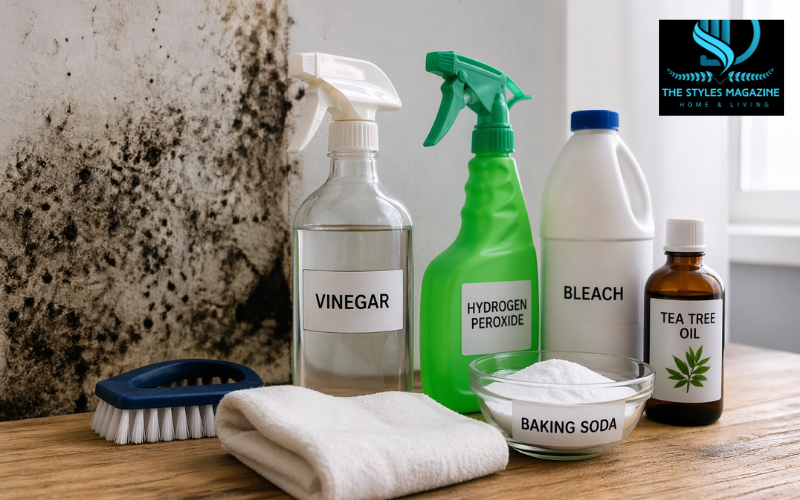
There are several household products that are known to kill mold effectively. These are easy to find and can be used safely when handled properly.
White vinegar is one of the most popular natural mold killers. It is slightly acidic, which allows it to break down mold and stop its growth. It works well on many surfaces and is especially useful for porous materials.
Hydrogen peroxide is another strong option. It works by releasing oxygen, which breaks down mold at a cellular level. It is effective on both porous and non-porous surfaces and is often considered safer than harsh chemicals.
Bleach is widely used for cleaning mold, especially on hard surfaces like tiles and sinks. It is very effective at removing stains and killing surface mold. However, it does not penetrate deeply, which means it may not work well on materials like wood or drywall.
Baking soda is a mild and safe option that helps control mold while also absorbing moisture and odors. It is often used as a supportive cleaner rather than a strong mold killer.
Tea tree oil is a natural antifungal solution. Even in small amounts, it can help kill mold and prevent it from coming back. While it is more expensive than other options, it is known for its long-lasting effect.
Each of these options works differently, which is why choosing the right one depends on the surface and the severity of the mold problem.
What Kills Mold on Wood and Other Porous Surfaces
Porous materials like wood, drywall, and fabric are more difficult to clean because mold can grow below the surface. This makes it harder to remove completely and increases the risk of regrowth.
When dealing with mold on wood, solutions like vinegar and hydrogen peroxide are often more effective. These can penetrate the surface and reach deeper layers where mold roots may be present. Borax is another useful option, as it helps kill mold while also preventing future growth.
One important thing to avoid on porous materials is relying only on bleach. While bleach may remove visible stains, it does not reach deep enough to kill the mold completely. In some cases, it can even add moisture, which may make the problem worse.
Proper cleaning often involves applying the solution, allowing it time to work, and then gently scrubbing the surface. In severe cases, sanding or replacing the material may be necessary.
What Kills Mold on Walls Safely and Effectively
Walls can be tricky because they are often made from materials like drywall, which is porous. Painted walls may offer some protection, but mold can still grow if moisture gets inside.
To kill mold on walls safely, mild solutions like vinegar or hydrogen peroxide are usually recommended. These are less likely to damage paint or the surface underneath. It is important to avoid soaking the wall, as too much moisture can cause further problems.
If the mold is on wallpaper, cleaning must be done carefully to avoid tearing or peeling. In some cases, removing the affected section may be the best option.
Preventing damage is just as important as removing mold. Gentle cleaning, proper drying, and good ventilation can help ensure that the wall stays in good condition after treatment.
What Kills Mold on Concrete and Hard Surfaces
Concrete may seem solid, but it is actually slightly porous. This means it can trap moisture and allow mold to grow, especially in basements or outdoor areas.
To kill mold on concrete, stronger cleaning methods may be needed. Solutions like hydrogen peroxide or specialized cleaners can help break down mold and remove stains. Scrubbing is often required to reach into small pores and clean thoroughly.
In some cases, repeated cleaning may be necessary if the mold has been present for a long time. Sealing the concrete after cleaning can also help prevent future growth by reducing moisture absorption.
What Kills Mold in the Bathroom and High-Moisture Areas
Bathrooms are one of the most common places for mold growth because of constant moisture and limited airflow. Mold often appears on tiles, grout lines, shower curtains, and around sinks.
To deal with bathroom mold, products like bleach and hydrogen peroxide are commonly used. These work well on tiles and grout, where mold tends to stay on the surface. Vinegar can also be effective, especially for regular cleaning and maintenance.
However, killing mold is only part of the solution. Controlling moisture is the key to preventing it from coming back. Using exhaust fans, opening windows, and drying surfaces after use can make a big difference.
What Kills Mold on Plastic, Tiles, and Non-Porous Materials
Non-porous surfaces like plastic, glass, and tiles are easier to clean because mold does not grow beneath the surface. This makes it easier to fully remove both the mold and its stains.
Bleach is often used in these situations because it quickly kills mold and restores the appearance of the surface. Hydrogen peroxide is another effective option that works well without leaving strong fumes.
Proper cleaning involves applying the solution, allowing it to sit for a short time, and then wiping or scrubbing the surface. Rinsing and drying the area afterward helps prevent new mold from forming.
What Kills Mold Instantly vs What Prevents It from Coming Back
Many people look for solutions that kill mold instantly, but it is important to understand that quick results do not always mean long-term success. Some products can kill mold on contact, but if the underlying moisture problem is not fixed, mold can return quickly.
Instant mold killers are useful for cleaning visible spots, but they should be part of a larger plan. True mold control involves removing the mold completely and preventing the conditions that allow it to grow.
Ventilation, reducing humidity, and fixing leaks are just as important as cleaning. Without these steps, even the best mold killer will only provide temporary relief.
What Kills Mold in a House Long-Term
Long-term mold control requires a combination of cleaning and prevention. While it is important to know what kills mold, it is equally important to create an environment where mold cannot grow.
Keeping indoor humidity low is one of the most effective strategies. This can be done using dehumidifiers, proper ventilation, and regular airflow. Fixing leaks in pipes, roofs, or windows also helps eliminate sources of moisture.
Regular cleaning and inspection can catch small problems before they become serious. By staying proactive, you can keep your home free from mold and maintain a healthier living space.
Safety Tips to Follow Before and During Mold Removal
Cleaning mold requires some basic safety precautions. Mold spores can become airborne during cleaning, and some cleaning products can produce strong fumes.
Wearing protective gear such as gloves, a mask, and eye protection can help reduce exposure. Good ventilation is also important, so opening windows or using fans is recommended.
It is also important to avoid mixing certain chemicals. For example, combining bleach with other cleaners can produce harmful gases. Always use one product at a time and follow safety guidelines.
When Mold Requires Professional Removal
In some situations, mold problems are too large or complex to handle on your own. If the affected area is large or if mold has spread into hidden spaces, professional help may be necessary.
Mold in heating or cooling systems is another case where experts should be involved. These systems can spread mold throughout the house, making the problem more serious.
If mold keeps returning despite cleaning, it may be a sign of a deeper issue. Professionals have the tools and experience to identify the cause and remove mold safely and effectively.
Conclusion
Knowing what kills mold is essential for maintaining a clean and healthy home. Different surfaces require different approaches, whether it is wood, walls, concrete, or plastic. Choosing the right solution helps ensure that mold is not only removed but also prevented from coming back.
It is important to remember that killing mold is only one part of the process. Proper removal, moisture control, and regular maintenance all play a role in long-term results.
By using the right methods and staying consistent with prevention, you can protect your home and create a safer living environment for yourself and your family.
FAQs
What Kills Mold Instantly At Home?
Some products like bleach and hydrogen peroxide can kill mold quickly on contact, especially on hard surfaces. However, complete removal and moisture control are needed to stop it from returning.
Does Vinegar Really Kill Mold?
Yes, vinegar is effective against many types of mold. It can penetrate porous surfaces and kill mold at the root, making it a reliable and natural cleaning option.
What Kills Mold On Walls Without Damage?
Mild solutions like vinegar or diluted hydrogen peroxide are best for walls. They help remove mold safely without damaging paint or drywall when used carefully.
Can Mold Come Back After Cleaning?
Yes, mold can return if moisture is still present. Killing mold is only part of the process. Proper drying, ventilation, and fixing leaks are necessary to prevent regrowth.
What Kills Mold In A House Long-term?
Long-term mold control involves reducing humidity, improving airflow, and fixing water issues. Cleaning alone is not enough; preventing moisture is the key to keeping mold away.
Enjoyed it? Find more exclusive content on The Styles Magazine.
Disclaimer: This content is for informational purposes only. Results may vary depending on the severity of mold and surface type. For large or harmful mold problems, consider consulting a professional for safe and effective removal.