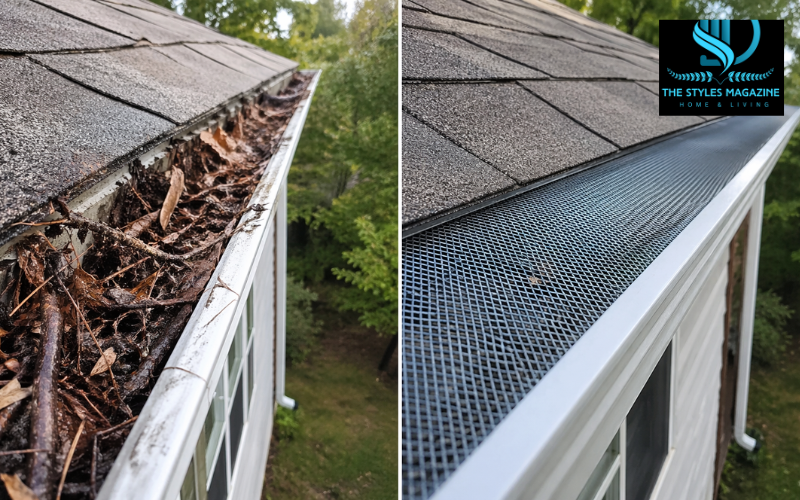
If you own a home, you already know how important gutters are. They guide rainwater away from your roof, walls, and foundation. But keeping gutters clean can be messy, time-consuming, and even dangerous. That’s where gutter guards come in. These are protective covers or inserts designed to keep leaves, twigs, and debris out while still allowing water to flow through.
Many homeowners start asking the same question at some point: are gutter guards worth it? The idea sounds simple—install them once and avoid frequent cleaning. But the reality is a bit more complex. Gutter guards can reduce maintenance, but they do not completely eliminate it.
This article will help you understand how gutter guards work, what types are available, and whether they are a smart investment for your home. By the end, you’ll have a clear, practical answer based on real-world use, not just marketing claims.
Quick Comparison
| Factor | With Gutter Guards | Without Gutter Guards |
| Cleaning Frequency | Once every 1–2 years | Every 3–6 months |
| Upfront Cost | High ($1,500–$2,500 installed) | Low (no installation cost) |
| Long-Term Cost | Lower over time | Higher due to repeated cleaning |
| Maintenance Effort | Low to moderate | Moderate to high |
| Risk of Clogs | Reduced, not eliminated | High if not cleaned regularly |
| Safety | Safer (less ladder use) | Risky (frequent climbing) |
What Gutter Guards Actually Do and How They Work
Gutter guards are designed to act as a barrier over your gutters. Their main job is to block debris like leaves, pine needles, and dirt while allowing rainwater to pass through. This helps prevent clogs that can lead to water overflow, which may damage your roof or foundation.
Instead of letting debris collect inside the gutter, guards keep most of it on the surface. Wind or rain can then blow or wash it away. In theory, this reduces how often you need to clean your gutters.
However, it’s important to understand that gutter guards do not make your system maintenance-free. Smaller particles like dust, pollen, and roof grit can still get through. Over time, these can build up and require occasional cleaning.
Types of Gutter Guards and How They Compare
There are several types of gutter guards available, and each works differently. Choosing the right one depends on your environment, budget, and expectations.
Micro-mesh gutter guards are often considered the most effective. They have very fine holes that block even small debris like pine needles and shingle grit. This makes them a strong option for homes surrounded by trees. However, they are usually more expensive than other types.
Reverse curve guards use a curved surface to guide rainwater into the gutter while allowing leaves to slide off. They rely on water tension to work properly. These are effective for larger debris like oak or maple leaves, but in heavy rain, some water may overshoot the gutter.
Screen guards are one of the simplest and most affordable options. They have larger holes and are easy to install, making them popular for DIY projects. While they can block leaves and twigs, smaller debris can still pass through, which means more frequent maintenance.
Foam and brush-style guards sit inside the gutter rather than on top. They are easy to install but tend to trap debris instead of keeping it out. Over time, they can become clogged or even develop mold, making them more of a temporary solution than a long-term fix.
Pros and Cons of Gutter Guards You Should Know
When deciding if gutter guards are worth it, it’s important to look at both sides.
One of the biggest advantages is reduced cleaning. Instead of cleaning your gutters multiple times a year, you may only need to check them once every year or two. This can save time and effort, especially for busy homeowners.
Safety is another major benefit. Climbing ladders to clean gutters can be risky, particularly for multi-story homes. Gutter guards reduce how often you need to take that risk.
They also help protect your home from water damage. By preventing clogs, they reduce the chances of water overflowing and damaging your foundation, siding, or landscaping.
On the downside, gutter guards come with an upfront cost. Professional installation can be expensive, and even DIY options require time and effort.
Another drawback is that they are not perfect. Debris can still collect on top of the guards, and small particles can enter the system. This means you still need occasional maintenance.
Some homeowners also report issues with certain types of guards during heavy rain, where water does not flow into the gutter as expected.
Situations Where Gutter Guards Are Worth the Investment
Gutter guards tend to be most useful in homes with heavy tree coverage. If your property is surrounded by pine, oak, or other debris-producing trees, your gutters can fill up quickly. In these cases, guards can significantly reduce cleaning frequency.
They are also a good choice for multi-story homes where cleaning gutters can be dangerous or difficult. Reducing the need to climb ladders can make a big difference in safety and convenience.
Homes that have experienced water overflow issues may benefit as well. By keeping gutters clear, guards can help protect against costly problems like foundation damage or wood rot.
In these situations, the answer to are gutter guards worth it is often yes, because they provide clear, practical benefits.
When Gutter Guards May Not Be Worth It
Not every home needs gutter guards. If you live in an area with very few trees, your gutters may not collect much debris in the first place. In this case, occasional cleaning might be simpler and more cost-effective.
Homes with steep metal roofs may also see less benefit. These roofs naturally shed debris, which reduces the chance of clogs.
Another situation where gutter guards may not be worth it is if you expect them to completely eliminate maintenance. This is a common misunderstanding. Even the best systems require occasional checks and cleaning.
For some homeowners, especially those on a tight budget, the upfront cost may not justify the long-term savings.
Do Gutter Guards Work in Heavy Rain and Storm Conditions
A common concern is how gutter guards perform during heavy rain. The answer depends on the type and quality of the guard.
High-quality micro-mesh systems usually handle heavy rain well because they allow water to pass through quickly. However, solid-top or reverse curve designs can sometimes struggle during intense downpours. In these cases, water may flow over the edge instead of entering the gutter.
Storm conditions can also bring large amounts of debris, which may temporarily block the surface of the guards. This can reduce water flow until the debris is cleared.
Overall, gutter guards do work in heavy rain, but they are not perfect. Choosing the right type for your climate is important.
Installation: Are Gutter Guards Easy to Install or Better Left to Professionals
Some gutter guards are designed for easy installation, especially screen or foam types. These can often be installed by homeowners with basic tools.
However, more advanced systems like micro-mesh or reverse curve guards usually require professional installation. Proper fitting is important to ensure they work correctly and do not void any roof warranties.
Professional installation also adds to the cost, but it can provide better performance and long-term reliability.
Cost vs Long-Term Savings: Are Gutter Guards a Smart Financial Choice
One of the main reasons homeowners consider gutter guards is to save money over time. Regular gutter cleaning can cost between $150 and $300 per visit. If you clean your gutters twice a year, that adds up quickly.
Installing gutter guards can cost anywhere from $1,500 to $2,500 for an average home. Based on these numbers, the payback period is often around three to five years.
In addition to cleaning costs, gutter guards can help prevent expensive repairs. Water damage to your foundation or roof can cost thousands of dollars. In this sense, they act as a form of protection or insurance.
For many homeowners, this makes gutter guards a worthwhile investment in the long run.
Maintenance Reality: What You Still Need to Do After Installation
Even with gutter guards, some maintenance is still required. Leaves and debris can collect on top of the guards and may need to be brushed off occasionally.
Small particles can enter the system and settle in downspouts, which may require flushing every few years.
Checking your gutters after heavy storms is also a good idea to make sure everything is working properly.
Understanding this maintenance reality is key to deciding if gutter guards are worth it for your home.
Common Problems and Why Some Homeowners Regret Installing Gutter Guards
Some homeowners feel disappointed after installing gutter guards because they expected a completely maintenance-free solution. When they still need to clean or check their gutters, it can feel like the investment was not worth it.
Other issues include improper installation, which can reduce effectiveness, and choosing the wrong type of guard for the environment.
In some cases, debris buildup on top of the guards can create a layer of dirt or “mud,” which requires cleaning.
These problems highlight the importance of realistic expectations and proper product selection.
What Consumer Reports and Real Users Say About Gutter Guards
When looking at reviews and feedback, opinions on gutter guards are mixed. Many homeowners report that they significantly reduce cleaning frequency and make maintenance easier.
However, others point out that they do not eliminate maintenance entirely and may not perform well in all conditions.
Consumer-style reviews often emphasize that the value of gutter guards depends on the specific situation. Homes with heavy debris tend to benefit the most, while others may see limited improvement.
Choosing the Best Gutter Guards for Your Home
Selecting the right gutter guard depends on your environment and needs. If you have a lot of small debris like pine needles, micro-mesh guards are often the best choice.
For larger leaves, reverse curve or screen guards may be sufficient. Budget also plays a role, as some options are more affordable but less effective.
It’s important to consider long-term performance rather than just upfront cost. A higher-quality system may provide better results and fewer issues over time.
Gutter Guards vs Regular Cleaning: Which Option Makes More Sense
For some homeowners, regular cleaning may be enough. If your gutters do not collect much debris, paying for occasional cleaning can be simpler and cheaper.
For others, especially those dealing with frequent clogs, gutter guards can reduce effort and improve safety.
The choice depends on your home, location, and how much maintenance you are willing to handle.
Final Verdict: Are Gutter Guards Worth It for Most Homeowners
So, are gutter guards worth it? The answer depends on your situation. For homes with heavy tree coverage, multi-story layouts, or recurring clogging issues, they can be a smart and practical investment.
They reduce cleaning frequency, improve safety, and help protect your home from water damage. However, they are not a one-time solution. Some maintenance is still required, and performance can vary based on the type of guard you choose.
Conclusion
Gutter guards can be a valuable addition to your home, but they are not a perfect solution for everyone. They work best in situations where gutters are frequently clogged or difficult to maintain.
The key takeaway is to set realistic expectations. They reduce maintenance but do not eliminate it. They can save money over time, but only if they match your home’s needs.
Before deciding, consider your environment, budget, and how much effort you want to spend on maintenance. With the right choice, gutter guards can offer convenience, protection, and peace of mind.
FAQs
Are Gutter Guards Really Worth The Money?
Yes, gutter guards can be worth it if you deal with frequent clogs or want to reduce cleaning. They save time and improve safety, but they don’t completely eliminate maintenance.
Do Gutter Guards Work In Heavy Rain?
Most high-quality gutter guards handle heavy rain well, but some designs may overflow during extreme downpours if water cannot enter the gutter fast enough.
How Long Do Gutter Guards Last?
Good-quality gutter guards can last 10 to 20 years, depending on the material and installation. Regular checks help maintain their performance over time.
Are Gutter Guards Easy To Install?
Some types are DIY-friendly, like screens or foam inserts. However, advanced systems usually require professional installation for better performance and proper fit.
Do Gutter Guards Completely Stop Cleaning?
No, gutter guards reduce cleaning but don’t eliminate it. You may still need to remove debris from the surface and occasionally check downspouts.
Enjoyed it? Find more exclusive content on The Styles Magazine.
Disclaimer: This content is for informational purposes only and based on general homeowner experiences and research. Results may vary depending on property conditions, installation quality, and local environment. Always consult a professional before making major decisions.