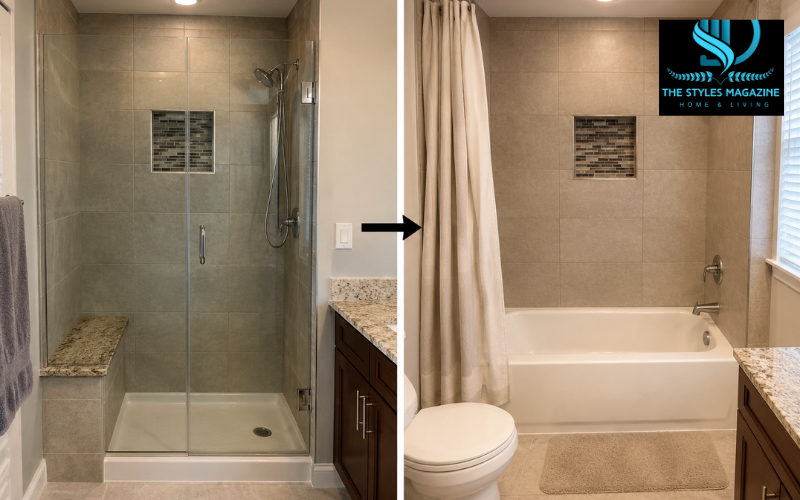
A walk in shower to tub conversion is a bathroom upgrade where an existing shower space is transformed into a bathtub area. This type of renovation is becoming more common as homeowners rethink how they use their bathrooms. While walk-in showers are modern and convenient, bathtubs still offer benefits that many people value, especially families with young children or those who enjoy relaxing baths.
There are several reasons why homeowners consider this change. For some, it’s about comfort and lifestyle. A bathtub can make daily routines easier, especially when bathing kids or pets. For others, it’s about increasing home value, since many buyers prefer having at least one bathtub in the house. At the same time, some homeowners simply want a more versatile bathroom setup.
However, converting a shower into a tub is not as simple as swapping fixtures. It involves plumbing adjustments, structural considerations, and proper waterproofing. The cost typically ranges from moderate to significant, depending on the materials and labor involved. Understanding these factors early can help you plan your project more effectively and avoid unexpected issues.
Walk-In Shower to Tub Conversion
| Aspect | Basic Option (Kit/Insert) | Full Custom Conversion |
| Cost | Lower ($1,200–$2,500) | Higher ($3,000–$5,000+) |
| Installation Time | 1–2 days | Several days |
| Design Flexibility | Limited | High |
| Plumbing Changes | Minimal | Extensive |
| Durability | متوسط (Moderate) | High |
| Best For | Quick upgrades | Long-term remodeling |
Understanding a Walk-In Shower to Tub Conversion
A walk-in shower to tub conversion involves removing the existing shower base and installing a bathtub in its place. This process often requires changes to plumbing, wall structures, and flooring. While it may sound straightforward, each bathroom has its own layout, which can affect how complex the conversion becomes.
There are generally two ways to approach this renovation. One is a full remodel, where the shower is completely removed and replaced with a new bathtub, along with updated plumbing and wall finishes. The other option is using a walk-in shower to tub conversion kit, which is designed to fit into the existing space with minimal changes. These kits are often quicker to install but may not offer the same level of customization.
This type of renovation makes the most sense when your current bathroom lacks a bathtub or when your needs have changed over time. For example, families with small children often find a tub more practical. It can also be a smart choice if you’re planning to sell your home, as many buyers expect at least one bathtub in the property.
Walk-In Shower to Tub Conversion Cost Breakdown
The cost of a walk-in shower to tub conversion can vary widely, but most projects fall between $1,200 and $5,000. Simpler installations with basic materials are usually on the lower end, while custom designs and structural changes can push the cost higher.
Labor and materials both play a major role in the final price. Labor costs include demolition, plumbing work, installation, and finishing. Materials include the bathtub itself, fixtures, wall panels or tiles, and waterproofing systems. In many cases, labor can account for a large portion of the total expense, especially if plumbing needs to be relocated.
Basic installations, such as using a shower to tub insert or a conversion kit, are generally more affordable. On the other hand, custom builds that involve changing the layout, reinforcing the floor, or installing high-end tubs can be more expensive. When compared to general shower to tub conversion cost estimates, walk-in shower conversions often fall within a similar range but may require additional adjustments depending on the existing setup.
Planning your budget carefully and getting professional estimates can help you avoid surprises and keep your project on track.
Types of Conversion Options Available
There are several ways to approach a walk-in shower to tub conversion, and the right choice depends on your budget, timeline, and design preferences.
A full bathtub installation is the traditional method. This involves removing the entire shower and building a new tub area from scratch. It allows for complete customization but takes more time and effort.
Walk-in shower to tub conversion kits are a more convenient option. These kits are designed to fit standard shower spaces and often come with pre-made components that simplify installation. They are a good choice for homeowners who want a quicker and more affordable solution.
Another option is a shower to tub insert. This is placed directly into the existing shower area, reducing the need for major structural changes. While this method can save time and money, it may limit design flexibility and may not fit all spaces perfectly.
Each option has its own advantages and limitations. Full installations offer more control over the final result, while kits and inserts provide speed and simplicity.
Plumbing and Structural Requirements You Need to Know
One of the most important aspects of a walk-in shower to tub conversion is understanding the plumbing and structural requirements involved. These factors can significantly impact both the cost and the complexity of the project.
In many cases, the drain location for a shower is different from that of a bathtub. This means the drain may need to be moved to align with the new tub. Additionally, tubs often require different water controls, including a tub spout and diverter valve, which may need to be installed or upgraded.
Structural support is another key consideration. A bathtub filled with water can weigh several hundred pounds, which is much more than a typical shower setup. The floor beneath the tub must be strong enough to handle this weight. In some cases, reinforcing the floor joists may be necessary.
These requirements are not just technical details—they directly affect how long the project will take and how much it will cost. Proper planning and professional assessment can help ensure that everything is done safely and correctly.
Step-by-Step Process of Converting a Shower Into a Tub
The process of converting a shower into a tub usually begins with demolition. The existing shower door, base, and surrounding materials are removed to make space for the new installation. This step can reveal hidden issues, such as water damage, that need to be addressed.
Next comes plumbing modification. This involves adjusting the drain location, installing new pipes if needed, and setting up the appropriate fixtures for a bathtub. This step is critical to ensure proper water flow and drainage.
After plumbing, the subfloor is inspected. If there is any damage or weakness, it must be repaired or reinforced before moving forward. This ensures that the new tub has a solid and stable base.
The bathtub is then installed and carefully leveled. Proper alignment is important to prevent water from pooling or leaking. Once the tub is in place, the walls are restored using waterproof materials, such as backer boards and membranes, followed by tiles or wall panels.
Each step must be completed with attention to detail to ensure a durable and long-lasting result.
Walk-In Shower to Tub Conversion Before and After: What Changes to Expect
A walk-in shower to tub conversion can bring noticeable changes to both the look and function of your bathroom. Before the conversion, the space may feel more open and modern, especially if the shower was designed with minimal barriers. After the conversion, the room may feel more traditional but also more versatile.
The way you use the space will also change. A bathtub allows for soaking and can make bathing children easier. However, it may take up more space than a walk-in shower, which can affect movement within the bathroom.
In terms of layout, some adjustments may be needed to accommodate the tub. This can include repositioning fixtures or updating surrounding elements. It’s important to have realistic expectations and understand that while the bathroom may lose some open space, it gains functionality.
Looking at shower to tub conversion before and after results can help you visualize the outcome and decide if the change aligns with your needs.
Choosing the Right Tub for Your Space and Needs
Selecting the right tub is an important part of the conversion process. Standard alcove tubs are the most common choice, as they fit neatly into typical shower spaces and are widely available.
For homeowners with specific needs, there are also specialty tubs to consider. Families may look for options that make it easier to convert a shower to a tub for baby care, such as tubs with gentle slopes or built-in seating. These features can make daily routines more convenient and safe.
Space is another factor to consider. In smaller bathrooms, compact tubs can help maximize available space without compromising functionality. Accessibility is also important, especially for older adults or those with mobility concerns. In such cases, walk-in tubs or low-threshold designs may be worth exploring.
Choosing a tub that fits both your space and your lifestyle can make a big difference in the overall success of your project.
Conversion Kits vs Custom Installation: Which One Is Better?
When deciding between a conversion kit and a custom installation, it’s important to consider your priorities. A shower to tub conversion kit is often the faster and more affordable option. It is designed for easy installation and can sometimes be completed in a short time.
Custom installation, on the other hand, offers more flexibility. It allows you to choose specific materials, designs, and features that match your preferences. However, it usually requires more time and a higher budget.
Conversion kits are ideal for straightforward projects where the existing layout can be used with minimal changes. Custom installations are better suited for more complex renovations or when you want a unique design.
Both options have their place, and the best choice depends on your budget, timeline, and desired outcome.
Common Mistakes to Avoid During a Shower to Tub Conversion
While a walk-in shower to tub conversion can be a rewarding project, there are common mistakes that homeowners should avoid. One of the most important is overlooking structural support. Failing to ensure that the floor can handle the weight of a full tub can lead to serious problems.
Another mistake is skipping proper waterproofing. Without a reliable waterproof barrier, water can seep into walls and floors, causing damage over time. Choosing the wrong tub size or type can also create issues, especially if it doesn’t fit well within the available space.
Underestimating total costs is another common challenge. Unexpected expenses can arise during demolition or plumbing work, so it’s important to plan for some flexibility in your budget.
Being aware of these potential pitfalls can help you make better decisions and achieve a smoother renovation process.
Is a Shower to Tub Conversion Worth It?
Whether a shower to tub conversion is worth it depends on your personal needs and goals. For many homeowners, the added functionality and comfort make it a valuable investment. It can also increase the appeal of your home to potential buyers.
This type of conversion is especially beneficial for families, as it provides a practical solution for bathing children. It can also enhance relaxation and create a more versatile bathroom environment.
However, it may not be the right choice for everyone. In smaller bathrooms, losing a walk-in shower can make the space feel more crowded. For individuals who prefer quick and easy showers, a tub may not offer the same level of convenience.
Carefully considering your lifestyle and long-term plans can help you decide if this renovation is the right fit for you.
Conclusion
A walk-in shower to tub conversion is a meaningful upgrade that can transform both the function and feel of your bathroom. From understanding the process and costs to choosing the right materials and avoiding common mistakes, every step plays a role in achieving a successful result.
This type of project requires thoughtful planning, especially when it comes to plumbing, structural support, and design choices. While it may involve time and investment, the benefits can be significant for the right homeowner.
Before starting your conversion, take the time to assess your needs, budget, and long-term goals. With the right approach, you can create a bathroom that is both practical and comfortable, making your daily routine more enjoyable.
FAQs
How Much Does A Walk In Shower To Tub Conversion Cost?
Most conversions cost between $1,200 and $5,000, depending on materials, labor, and plumbing changes. Simple kits cost less, while custom installations are more expensive.
Can I Convert A Shower To A Tub In A Small Bathroom?
Yes, but space is limited. Choosing a compact or alcove tub helps. Proper planning is important to maintain usability and avoid making the bathroom feel crowded.
Are Conversion Kits A Good Option?
Conversion kits are great for quick and budget-friendly upgrades. However, they offer less customization compared to full remodels and may not fit every bathroom perfectly.
How Long Does A Shower To Tub Conversion Take?
Basic conversions can take 1–2 days, especially with kits. Full remodels with plumbing and structural work may take several days to complete.
Is Converting A Shower To A Tub Worth It?
It depends on your needs. It’s useful for families and can increase home value, but may not suit those who prefer modern walk-in showers.
Enjoyed it? Find more exclusive content on The Styles Magazine.
Disclaimer: This content is for informational purposes only. Costs, timelines, and requirements may vary depending on location and project conditions. Always consult a qualified professional before starting any renovation work.