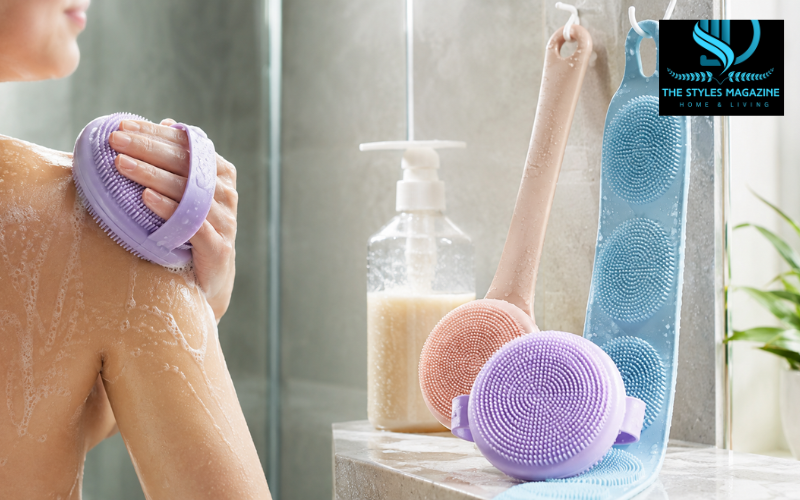
A silicone loofah is a reusable bathing tool made with soft silicone or a similar flexible material. It is often called a silicone body scrubber because its main purpose is to help spread body wash, clean the skin, and provide light physical exfoliation. Unlike a natural loofah, it does not come from the dried Luffa plant. It is a manufactured shower accessory designed with small bristles, textured bumps, or flexible cleaning surfaces.
Many people consider a silicone loofah because it is easy to rinse, dries quickly, and usually lasts longer than a traditional mesh puff. Its soft texture can also feel less scratchy than rough natural loofahs, which may make it more comfortable for regular use. However, silicone scrubbers are not automatically bacteria-free, and they are not the best choice for every skin type.
This guide explains the main silicone loofah benefits, common designs, hygiene concerns, skin-sensitivity issues, correct use, cleaning, and buying points. It also compares silicone scrubbers with mesh puffs, natural loofahs, and washcloths so you can decide which option fits your routine.
Quick Guide: Silicone Loofah Comparison
| Feature | Silicone Loofah | Mesh Loofah | Natural Loofah | Washcloth |
| Texture | Soft to medium | Soft | Rougher | Soft |
| Exfoliation | Gentle to moderate | Mild | Moderate to strong | Gentle |
| Drying Speed | Usually fast | Moderate | Slower | Depends on fabric |
| Cleaning | Easy to rinse | Can trap residue | Needs careful drying | Machine washable |
| Durability | Generally long-lasting | May unravel | Wears over time | Reusable |
| Best For | Everyday cleansing | Lathering | Stronger exfoliation | Sensitive routines |
Simple Steps for Using a Silicone Loofah
- Wet your skin and the silicone loofah.
- Apply a small amount of body wash to wet skin or the scrubber.
- Gently move the scrubber over your body without pressing hard.
- Avoid cuts, irritated skin, and freshly damaged areas.
- Rinse the scrubber thoroughly after use.
- Hang or store it somewhere with good airflow so it can dry.
Silicone Loofah Materials and How the Design Works
Most silicone loofahs use a flexible rubber-like material with short bristles or raised nodes. Some are flat discs with a hand strap, while others have long handles, back straps, or hollow sections for body wash. Drainage holes may help water and soap leave the scrubber after use.
The smooth surface of silicone does not absorb water in the same way as natural plant fibers or fabric. This can make it easier to rinse away soap and visible residue. The open bristle design of many scrubbers also allows water to run through more freely, helping the tool dry faster between showers.
It is important to check the material description before buying. Some products that look like silicone are actually made from thermoplastic elastomer, often called TPE. TPE can also be flexible and soft, but it is a different material. Buyers should rely on the manufacturer’s stated specifications rather than appearance alone.
Terms such as “food-grade,” “antimicrobial,” and “hypoallergenic” should not be assumed to apply to every silicone loofah. These claims need to be supported by the specific product information.
Silicone Loofah Benefits for Everyday Showering
The main silicone loofah benefits are convenience, quick rinsing, fast drying, and reusable construction. Because the surface is smooth and flexible, body wash can be spread across the skin without the rough pulling that some mesh or natural loofahs can cause.
Soft silicone bristles can also provide mild physical exfoliation. This may help lift loose surface skin cells and everyday buildup, but the effect depends on the bristle shape and how much pressure you use. A silicone loofah does not need to be pressed hard against the skin to work effectively.
Durability is another reason people choose silicone. Mesh puffs can stretch, loosen, or unravel, while a well-made silicone body scrubber may stay intact much longer with proper care. This can suit people who prefer one washable shower tool instead of frequent replacements.
Even so, easier cleaning does not mean perfect hygiene. Any shower tool can collect soap residue, skin cells, or microorganisms if it is not washed and dried properly.
Silicone Loofah vs Mesh Loofah, Natural Loofah, and Washcloth
A silicone loofah feels quite different from a mesh puff or natural loofah. Mesh puffs usually create a large amount of foam quickly because the netted material holds air and soap well. However, the folds can also trap moisture and residue. Natural loofahs provide stronger exfoliation, but their fibrous structure can remain damp and may feel too rough for some users.
Silicone scrubbers usually produce less instant lather than mesh puffs, although this varies by design and body wash. Their main advantage is that they are easy to rinse and tend to dry faster. They also offer more control over pressure because the bristles bend instead of scraping like a rough plant fiber.
Washcloths are another practical option. They can clean the skin gently and are easy to wash in a washing machine when used correctly. For some people, a clean washcloth may be more comfortable than any type of exfoliating scrubber.
There is no single best choice for everyone. A person who likes strong exfoliation may prefer a natural loofah, while someone who values quick drying may prefer silicone. People with very sensitive skin may be more comfortable with their hands or a soft washcloth. The right choice depends on skin comfort, cleaning habits, and how often the bathing tool is washed and dried.
Hygiene and Bacteria: What a Silicone Loofah Can and Cannot Do
One of the biggest reasons people switch to silicone is hygiene. Traditional loofahs can stay damp for long periods, especially when they are left inside a warm shower. Natural fibers and mesh folds can also hold skin debris and soap residue. Research on used natural loofahs has shown that bacteria can grow when the sponge remains moist and is not cared for properly.
A silicone loofah can reduce some of these problems because it is easier to rinse and usually dries faster, but it still needs regular cleaning. Soap film, oils, and dead skin can remain between bristles or grooves. Rinse it thoroughly after every shower and leave it where air can circulate.
Do not share your personal body scrubber with other people. It is also better to avoid scrubbing over cuts, rashes, freshly shaved areas, or broken skin. When the skin barrier is damaged, friction can cause more irritation and may increase the chance of problems.
A silicone loofah should be seen as easier to maintain, not as a tool that can never carry germs.
Silicone Loofahs, Exfoliation, and Sensitive Skin
Silicone bristles provide physical, or mechanical, exfoliation. In simple terms, the bristles remove loose surface buildup through gentle rubbing. The amount of exfoliation depends on the firmness of the bristles, the pressure you apply, and how often you use the scrubber.
For most people, gentle pressure is enough. Scrubbing harder does not necessarily make the skin cleaner. Too much friction can cause redness, dryness, tenderness, or stinging. This is especially important for people with dry, sensitive, or acne-prone skin, who may tolerate less mechanical exfoliation.
If your skin is already irritated, itchy, sunburned, or inflamed, using your hands with a gentle cleanser may be more comfortable than using a silicone body scrubber. The same is true for areas with active rashes or broken skin.
Pay attention to how your skin feels after showering. If you notice lasting redness, tightness, burning, or unusual dryness, reduce the pressure or frequency of scrubbing. A softer silicone loofah may also be a better choice than one with firm, widely spaced nodes.
How to Use a Silicone Loofah Properly
Start by wetting both your skin and the silicone loofah. Add a small amount of body wash either to the scrubber or directly to wet skin. Some silicone scrubbers do not hold soap in the same way as mesh puffs, so you may get better lather by spreading body wash over the skin first and then moving the scrubber across it.
Use gentle circular or sweeping motions instead of pressing hard. Spend only a short time on each area and avoid repeatedly rubbing the same spot. Use lighter pressure around the chest, neck, inner arms, or any other area that feels more sensitive.
Do not use the scrubber over cuts, raw skin, or active irritation. After washing, rinse your body and the silicone scrubber thoroughly. Check between the bristles for trapped residue, shake off excess water, and leave the scrubber somewhere it can dry fully before the next use.
Common Silicone Loofah Styles and Their Best Uses
Silicone loofahs come in several designs, and the best style depends on how you shower. Hand-pad scrubbers are among the most common. They fit into the palm and usually include a finger loop or strap, making them easy to control on the arms, legs, chest, and torso.
Dual-sided models often have softer bristles on one side and thicker massage-style nodes on the other. These can be useful for people who like different textures, although the firmer side should still be used gently.
Soap-dispenser scrubbers have a small chamber for body wash. They can be convenient, but the inside of the dispenser also needs cleaning so old product does not collect there.
A silicone loofah with handle can help people who want more reach, while long back straps or flexible belts are useful for cleaning across the upper back and shoulders. The most useful design is not always the one with the most features. Comfort, grip, reach, and easy cleaning matter more in daily use.
Choosing the Best Silicone Loofah for Your Skin and Routine
The best silicone loofah is the one that matches your skin, grip, shower habits, and cleaning routine. People with sensitive skin may prefer fine, soft bristles that bend easily. Those who want stronger exfoliation may choose slightly firmer bristles, but aggressive pressure should still be avoided.
Look closely at the material description, bristle spacing, flexibility, drainage, size, and grip. A scrubber that looks comfortable when dry may become slippery once covered with soap, so a secure palm strap or textured handle can make a noticeable difference.
Think about reach as well. A small hand scrubber may be ideal for most of the body but difficult to use on the middle of the back. A handle or long strap may be more practical if back cleansing is important to you.
Cleaning instructions are another useful buying point. A good product should be simple to rinse and dry. Be cautious with claims such as “100% germ-free,” “permanently antibacterial,” or other statements that sound absolute. Practical design and easy maintenance are more useful than exaggerated promises.
Silicone Loofah With Handle and Back-Scrubber Designs
A silicone loofah with handle is useful when a palm-sized scrubber does not provide enough reach. Long fixed handles can help with the back, lower legs, and feet, especially for people who do not want to bend or twist as much in the shower.
Flexible back straps work differently. They usually have handles at both ends, allowing you to pull the scrubber across the back in a side-to-side motion. Double-ended designs can cover a wider area and may feel easier to control than a stiff handle.
Grip matters because soap and water make surfaces slippery. Look for a handle that feels secure and does not require excessive force. Also check where the handle joins the scrubber, because grooves, hinges, and attachment points can collect residue.
Extra reach should not lead to extra pressure. Long handles create leverage, so it is easy to scrub harder than intended. Gentle pressure is still the better approach.
Cleaning, Drying, and Knowing When to Replace a Silicone Loofah
After every shower, rinse the silicone loofah thoroughly under running water. Separate the bristles with your fingers if needed so soap, body wash, and skin residue do not stay trapped near the base. Shake off excess water and store the scrubber where air can move around it.
From time to time, wash it more carefully with soap and warm water, paying attention to grooves, handle joints, textured areas, and any soap-dispenser chamber. Avoid assuming that every silicone scrubber can be boiled, placed in a dishwasher, or cleaned with strong disinfectants. Heat tolerance and care instructions can vary by product, so follow the manufacturer’s directions.
There is no universal replacement schedule for every silicone loofah. Some products may last a long time, while others wear sooner. Replace yours if the material tears, cracks, becomes sticky, develops a persistent odor, holds residue that no longer washes away, or has damaged bristles that make cleaning uncomfortable.
Good care can extend useful life, but keeping a worn-out scrubber indefinitely is not a hygiene advantage.
Buying a Silicone Loofah: Amazon, Nearby Stores, Reviews, and Reddit
When shopping for a silicone loofah on Amazon or another marketplace, read beyond the product title. Check the stated material, dimensions, bristle design, grip style, cleaning instructions, and seller information. Product photos can be helpful, but they do not always show how firm the bristles are or how large the scrubber feels in the hand.
If you prefer to buy a silicone loofah nearby, look in beauty stores, pharmacies, department stores, bath-accessory sections, and personal-care shops. Buying in person can make it easier to judge size, flexibility, and grip before paying.
Silicone loofah reviews are most useful when they discuss lather, softness, slipperiness, drying time, durability, and handle comfort. Reviews that only say “good” or “bad” offer much less value.
Silicone loofah Reddit discussions can also reveal real-world experiences, especially about long-term use. However, Reddit comments are personal opinions, not scientific evidence. Use them as one source of practical feedback rather than proof of health or hygiene claims.
Cost, Reusability, and the Environmental Trade-Off
A reusable silicone body scrubber may offer better long-term value than a mesh puff that needs frequent replacement. The real cost depends on the purchase price, how long the scrubber stays usable, and how well it is cared for.
It is also reasonable to consider waste. If one durable scrubber replaces several short-lived bath puffs, it may reduce how often you throw shower accessories away. However, calling every silicone loofah “eco-friendly” would be too simple.
Silicone is a synthetic material, and it is not readily biodegradable like plant fibers. Recycling options also vary by location, and many standard household recycling programs do not accept silicone bath products. This means the environmental picture involves trade-offs.
A more balanced way to judge sustainability is to consider durability, how often the product must be replaced, packaging, local disposal options, and whether you actually use the item for a long time. Reusability can be a benefit, but it does not make a product automatically zero-waste.
Conclusion
A silicone loofah can be a practical choice for people who want a reusable body scrubber that is easy to rinse, quick to dry, and simple to control. Soft bristles can provide light cleansing and exfoliation, while handle and back-strap designs can improve reach.
Its benefits depend on proper care. Rinsing, drying, cleaning, and replacing the scrubber when it becomes worn are still important. People with sensitive or irritated skin should also choose softer textures and use gentle pressure.
When comparing options, focus on material quality, grip, bristle softness, reach, drainage, cleaning ease, and durability rather than bold marketing claims. A silicone body scrubber can fit many shower routines well, but the best choice is ultimately the one that keeps your skin comfortable and is easy for you to maintain.
FAQs
Is A Silicone Loofah Better Than A Regular Loofah?
A silicone loofah can be easier to rinse and dry than many natural or mesh loofahs. However, the better option depends on your skin sensitivity, preferred exfoliation, and cleaning habits.
Can I Use A Silicone Loofah Every Day?
Many people can use a soft silicone scrubber regularly, but daily exfoliation may irritate sensitive or dry skin. Use gentle pressure and reduce frequency if redness, dryness, or stinging develops.
Does A Silicone Loofah Collect Bacteria?
Silicone scrubbers are often easier to clean and dry, but they are not bacteria-proof. Soap residue, skin cells, and microorganisms can still remain if the scrubber is not rinsed and dried properly.
How Often Should I Replace A Silicone Loofah?
There is no universal replacement schedule. Replace it when the silicone cracks, tears, develops persistent odor or residue, loses its shape, or the bristles become damaged and uncomfortable to use.
Is A Silicone Loofah Good For Sensitive Skin?
A soft-bristled silicone loofah may suit some sensitive skin types when used gently. Stop or reduce use if it causes irritation, and avoid scrubbing inflamed, broken, or already irritated skin.
Enjoyed it? Find more exclusive content on The Styles Magazine.
Disclaimer: This article provides general information about silicone loofahs and body-cleansing routines. Skin needs vary from person to person, and product materials and care instructions can differ. If you have persistent irritation, a skin condition, or concerns about exfoliation, consider seeking advice from a qualified healthcare or dermatology professional.