A blocked or damaged drain can be difficult to understand because most of the plumbing system is hidden underground, behind walls, or beneath floors. In the past, finding the cause of a problem often involved guesswork. A plumber might need to remove fittings, open a wall, or dig around a sewer line before discovering what had gone wrong.
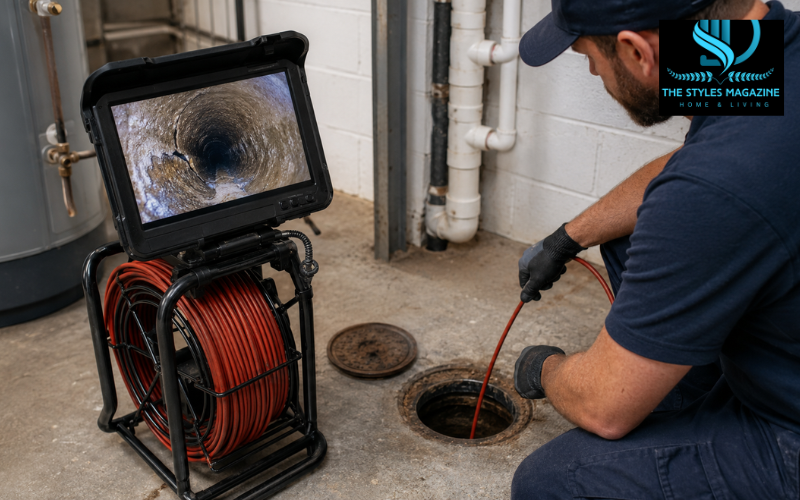
A plumbing camera provides a much easier way to investigate the problem. It is a small waterproof camera attached to a cable that can be guided through a drain or sewer pipe. As the camera moves through the line, it sends live video to a screen. This allows the person carrying out the inspection to see clogs, cracks, roots, corrosion, and other issues without immediately opening the pipe.
Plumbers use these cameras to diagnose difficult drain problems. Home inspectors may use them to examine the main sewer line before a property is purchased. Homeowners and experienced DIY users may also use compact models to inspect short household drains.
A plumbing camera does not repair or clear a pipe by itself. Its main purpose is to show what is happening inside the line. That information can help prevent unnecessary digging, reduce guesswork, and support a more suitable repair plan.
Plumbing Camera Quick Guide
| Camera type | Best for | Typical features |
| Handheld borescope | Sinks, P-traps, and short drains | Thin camera head, LED lights, flexible cable |
| Reel sewer camera | Main drains and underground pipes | Long push cable, monitor, recording |
| Self-leveling camera | Professional inspections | Upright image, clearer pipe orientation |
| Camera with locator | Finding underground damage | 512Hz sonde and surface receiver |
Basic Steps for Using a Plumbing Camera
- Choose a camera head that fits the pipe.
- Inspect and clean the lens before use.
- Insert the cable slowly through a safe access point.
- Watch the screen for blockages or pipe damage.
- Record important findings and their distance from the entry point.
- Clean and disinfect the camera after inspection.
What a Plumbing Camera Is and How It Works
A basic plumbing camera system has four main parts: a camera head, a cable, a lighting system, and a viewing screen. The camera head is designed to resist water and moisture. Small LED lights around the lens illuminate the inside of the pipe, where natural light cannot reach.
The camera is connected to either a flexible or semi-rigid cable. Small inspection cameras may have a thin cable that can move through tight spaces. Larger sewer cameras use a stronger push cable stored on a reel. This stronger cable allows the operator to guide the camera through longer underground lines.
The camera sends live video through the cable to a monitor. Depending on the model, the operator may also be able to take photographs, record videos, add voice notes, or save inspection files to a memory card. Professional systems may display the distance the camera has travelled and the angle or slope of the pipe.
Several similar terms are used for these tools. A drain borescope is usually a compact camera with a thin head and a short or medium-length cable. It is useful for sinks, wall cavities, appliances, and other confined spaces. A sewer camera normally has a larger head, a strong push rod, and a reel designed for longer drain and sewer lines. “Plumbing camera” is a broad term that may describe either type. Teslong, for example, describes drain inspection cameras as plumbing borescopes with longer, semi-rigid probes, while RIDGID offers full reel systems for larger and longer pipes.
Main Types of Plumbing Cameras
Handheld inspection cameras are the smallest and most affordable option. They normally include a compact screen or connect to a smartphone. Their thin camera heads can fit into narrow openings, making them useful for checking sink drains, empty P-traps, wall cavities, ducts, and short sections of pipe.
These cameras are convenient, but they have limits. A thin cable may bend or coil instead of moving forward through a long drain. Handheld models also may not have a locating sonde, distance counter, self-leveling view, or strong reel cable. DEPSTECH and Teslong currently offer compact inspection cameras with narrow heads and cables suited to short plumbing and general inspection work. Many of these models use IP67-rated probes rather than the heavier construction found on professional sewer reels.
Reel-mounted cameras are designed for longer drains and underground sewer lines. The push cable is wound around a frame or drum, allowing it to be stored and controlled more easily. Cable lengths vary widely, so the correct choice depends on how far the camera must travel.
Professional systems often include a self-leveling camera head. This feature keeps the picture upright even when the camera rotates inside the pipe. Some professional cameras also include video recording, digital zoom, a distance counter, pipe-slope information, and a built-in transmitter that works with an above-ground locator.
The RIDGID SeeSnake and Milwaukee pipeline inspection ranges are examples of professional reel-based systems. Current Milwaukee options include compact equipment for 1.5- to 4-inch drains and larger systems intended for longer 2- to 10-inch sewer lines.
Problems a Plumbing Camera Can Detect
One of the most common reasons to use a plumbing camera is to investigate a blockage. The camera may reveal grease, food waste, soap deposits, paper products, mineral buildup, or an object trapped inside the pipe. It can also show whether an attempted cleaning has removed the full blockage or only created a small opening through it.
A camera inspection can reveal structural damage as well. Common findings include cracks, broken sections, corrosion, separated joints, and pipes that no longer line up correctly. A section of pipe may also have collapsed or developed a low area where water and waste repeatedly collect.
Tree-root intrusion is another serious problem that can be identified visually. Roots often enter through damaged joints or small cracks in older underground pipes. Once inside, they may grow into a dense mass that catches waste and restricts flow. A camera can show the location and extent of the root growth, although a locating system may be needed to mark the exact position above ground.
A plumbing camera may also reveal signs of poor installation, including sharp changes in direction, damaged connections, or debris left inside a new line. After a repair or cleaning service, another inspection can confirm whether the pipe is open and whether the visible work appears complete.
However, camera footage must be interpreted carefully. Dirty water, steam, grease, and a submerged lens can hide damage. A camera may show where water is collecting without proving why it is collecting. Difficult or costly repair decisions should therefore be based on the full condition of the line, not one unclear image.
Essential Features That Affect Inspection Quality
Camera-head size is one of the first details to check. A small head can enter narrow drains and move through tighter bends, but it may not provide the strength, lighting, or stability needed for a large sewer. A larger head can offer a wider and more stable view, but it may not pass through small traps or sharp turns.
Resolution also matters, although the largest advertised number does not always produce the clearest inspection. Lighting, focus distance, lens cleanliness, pipe movement, and screen quality all affect what the operator can see. Adjustable LEDs are useful because too little light creates dark footage, while too much light can reflect from wet pipe walls and wash out important details.
A self-leveling head is especially valuable during long inspections. Without it, the picture may rotate as the camera twists, making it harder to understand the position of cracks, joints, and branches. Current professional RIDGID and Milwaukee systems offer self-leveling models, with some systems also providing digital zoom, pan, pitch sensing, or enhanced high-dynamic-range imaging.
Water resistance should be checked carefully. Many full sewer cameras advertise IP68 protection, while compact borescopes may use IP67-rated probes. These ratings should not be treated as permission to use every part of the device underwater. Usually, only the probe and cable are designed for wet conditions. The monitor, connectors, reel electronics, and control unit may require protection. The manufacturer’s stated depth, duration, and cleaning instructions should always be followed.
Recording is another useful feature. DVR systems can save videos and photographs to internal storage or a memory card. This helps plumbers explain damage to customers, allows homeowners to compare the pipe before and after work, and provides useful records for property inspections. A clear recording should ideally include the date, pipe location, direction of travel, and distance from the access point.
Plumbing Camera With Locator Technology
A plumbing camera with locator is useful when an underground defect must be marked from the surface. The camera head or a nearby part of the cable contains a small transmitter called a sonde. A common frequency for sewer inspection systems is 512Hz.
The sonde sends a radio signal while the camera is inside the pipe. An operator moves a compatible receiver across the ground until it detects the strongest signal. This helps identify the camera’s location, allowing the suspected crack, blockage, root entry point, or collapsed section to be marked above ground.
Some locator systems can also estimate depth, but this feature should not be assumed. Depth capability depends on the receiver, signal quality, operating method, and surrounding conditions. Even some products sold with a 512Hz locator do not automatically provide a reliable depth reading. Frequency compatibility should be confirmed before buying a camera and receiver separately.
A locator is most valuable for underground main lines, repeated root problems, collapsed pipes, and repairs that may require excavation. It may not be necessary for a short sink drain where the pipe route is already visible.
Models from RIDGID, Sanyipace, VEVOR, Milwaukee, and other manufacturers may include a sonde or support locating equipment, but the locator itself is not always included. Product descriptions should be checked to confirm whether the package contains the transmitter, receiver, both items, or neither.
How to Choose the Best Plumbing Camera
The best plumbing camera is not necessarily the model with the largest screen or longest cable. It is the camera that fits the pipe and the type of work being performed.
Start by identifying the smallest pipe that will be inspected. The camera head must fit comfortably without becoming trapped. Bends also matter. A head that fits inside a straight section may still be unable to pass through a tight elbow or P-trap.
Cable length should be based on the distance between the access point and the area that must be inspected. Buying an extremely long cable for short household drains can make the system heavier and more difficult to manage. However, a cable that is too short may not reach the main sewer connection.
Cable stiffness is just as important as length. A flexible cable handles turns more easily but may be difficult to push over a long distance. A stiff cable travels farther through straight lines but may struggle with multiple bends. Milwaukee, for example, offers high-flex, mid-stiff, and stiff systems for different pipe sizes and inspection distances.
For occasional DIY work, a compact camera with a clear screen, adjustable lighting, and a suitable head size may be enough. Home inspectors and residential technicians may benefit from a reel, recording, a distance counter, and self-leveling video. Commercial plumbers who inspect long sewer lines usually need a durable push cable, serviceable parts, locating support, strong battery performance, and a reliable file-sharing system.
Warranty terms, replacement camera heads, cable repair, and local service support should also be considered. A cheaper system can become expensive if one damaged connector makes the entire unit unusable.
Plumbing Camera Rental and Nearby Services
A plumbing camera rental can make more sense than buying when the tool is needed for one inspection. Renting also allows a user to access a longer, more capable sewer camera without paying the full purchase cost.
Rental cost and availability can depend on the equipment, cable length, rental period, store location, deposit rules, and whether a locator is included. The Home Depot currently lists drain-camera rentals in parts of the United States, including equipment designed to inspect 3- to 10-inch lines for distances of up to 200 feet. Availability must be checked with the local store because not every rental location carries the same tools.
Before renting, ask what pipe sizes the camera supports, whether it records footage, whether the camera is self-leveling, and whether locating equipment is included. The renter should also understand the cleaning rules and damage policy.
People searching for a plumbing camera nearby may find rental shops, plumbing companies, drain-cleaning services, sewer specialists, or home inspectors. Hiring a professional is often the better choice when the line is badly blocked, the access point is difficult to reach, the property has an older sewer system, or the footage will affect a major repair or home purchase.
When booking a service, ask whether the price includes a recorded video, a written explanation, locating the defect, and a post-cleaning inspection. These details make it easier to compare services fairly.
Plumbing Cameras at Amazon, Harbor Freight, and Home Depot
A search for a plumbing camera on Amazon returns many different products, from inexpensive phone-connected borescopes to long reel systems with screens, recording, self-leveling heads, sondes, and locators. The wide selection can be useful, but similar-looking products may have very different cable quality, waterproof limits, warranties, and replacement-part support.
Buyers should read the full specifications instead of relying only on the product title. Important details include the actual camera-head diameter, usable cable length, supported pipe size, sonde frequency, battery type, included memory card, and whether the locator shown in photographs is part of the package.
People searching for a plumbing camera at Harbor Freight will mainly find compact handheld inspection cameras rather than large professional sewer reels. Current Harbor Freight listings include CEN-TECH, AMES INSTRUMENTS, and ICON inspection cameras intended for hard-to-reach areas, including some plumbing applications. These tools may be useful for short, accessible spaces, but they should not automatically be treated as substitutes for long push-rod sewer cameras.
A plumbing camera at Home Depot may be available for purchase or rental, depending on the location. Its current online categories include handheld inspection cameras, sewer cameras, and brands such as Milwaukee, RIDGID, VEVOR, Klein Tools, and General Tools. Product selection and rental stock can change, so local availability should be confirmed before travelling to a store.
Milwaukee Plumbing Cameras and Other Brand Options
A Milwaukee plumbing camera is mainly aimed at trade users who want a battery-powered system that works with the company’s wider tool platform. Its current pipeline inspection range includes compact high-flex cameras and larger modular reels. Professional systems can offer self-leveling video, internal recording, wireless viewing, digital zoom, pan, pitch sensing, and swappable reel sizes.
RIDGID SeeSnake remains another major professional option. The product range includes small drain cameras, compact reels, and long-run systems. Some models use TruSense technology, self-leveling heads, high-dynamic-range imaging, and built-in sondes. The SeeSnake Standard is available with cable lengths of up to 325 feet and is intended for longer runs in larger pipes with fewer turns.
Sanyipace offers mid-range and advanced systems with features such as self-leveling views, recording, distance counters, and 512Hz locating on selected models. VEVOR also sells reel-based cameras in several cable lengths, including systems with self-leveling heads and built-in sondes. Buyers should confirm whether the above-ground receiver is included.
Teslong and DEPSTECH are better known for compact borescopes and smaller inspection cameras. These can be practical for short household drains, wall spaces, ducts, and general inspection work. They are less suitable for long underground sewer runs where strong pushability, distance measurement, and precise locating are required.
No single brand is best for every user. Pipe size, cable length, frequency of use, repair support, and budget should guide the decision.
Using a Plumbing Camera Safely and Correctly
Before inserting the camera, identify the pipe size, likely route, and safest access point. Remove standing waste where possible and never place the camera into a pipe containing an unknown chemical drain cleaner. The camera may resist water, but harsh chemicals can damage seals, cable coatings, connectors, and the lens.
Inspect the camera head and cable before every use. A loose camera head, cracked cable, damaged connector, or missing lens cover can allow water to enter the equipment. Confirm that the battery is charged and that the memory card has enough space if the inspection needs to be recorded.
Feed the camera slowly. Forcing it through a tight bend can trap the head, kink the cable, or damage the pipe. When resistance is felt, pull back slightly and try a different angle. A camera should not be used as a drain-cleaning tool or pushed aggressively through a solid blockage.
Watch the distance counter and note important branches, fittings, and changes in pipe material. Moving too quickly can make cracks and small root entries easy to miss. If the view becomes unclear, pull the camera back and clean the lens rather than continuing with unusable footage.
After the inspection, retrieve the cable gradually and wipe it as it returns to the reel. Clean and disinfect the wet parts according to the manufacturer’s instructions. Do not spray water directly into the monitor, control hub, battery area, or electrical connectors unless those parts are specifically rated for it.
Review the recording before choosing a repair. Where the footage is unclear or the problem is serious, a licensed plumber or sewer specialist should interpret the results.
Conclusion
A plumbing camera makes it possible to examine drains and sewer lines without immediately digging, cutting into walls, or taking pipes apart. It can reveal blockages, root intrusion, corrosion, broken joints, collapsed sections, and other visible problems that would otherwise remain hidden.
The right equipment depends on the job. A small borescope may be suitable for a sink, wall cavity, or short household drain. A reel-based sewer camera is better for longer underground lines. Self-leveling video, recording, a distance counter, and a 512Hz sonde become increasingly valuable when inspections are frequent or repairs may require excavation.
Buying is practical for plumbers and inspectors who use the equipment regularly. Plumbing camera rental may be more sensible for a one-time project, while hiring a professional is usually safest when the pipe is inaccessible, badly damaged, or connected to an expensive property decision.
By matching the camera head, cable length, push-cable stiffness, waterproof protection, and locator features to the actual pipe, users can obtain clearer information and make better repair decisions before a small plumbing problem becomes a costly one.
Frequently Asked Questions
Can A Plumbing Camera Find Every Type Of Leak?
A plumbing camera can reveal cracks, broken joints, corrosion, and standing water. However, it may not confirm small hidden leaks, so pressure testing or professional diagnosis may still be necessary.
How far can a plumbing camera travel?
The distance depends on the cable length and stiffness. Small borescopes may cover only a few feet, while professional sewer cameras can inspect lines measuring 100 feet or more.
Is a plumbing camera with locator worth buying?
A locator is valuable when underground damage may require digging. It helps identify the camera’s position from above ground, reducing unnecessary excavation and making targeted repairs easier.
Can homeowners use a plumbing camera themselves?
Homeowners can use compact cameras for accessible drains, but long sewer lines and serious damage are better inspected by professionals who can safely operate the equipment and interpret the footage.
Does a plumbing camera remove a blockage?
No. A plumbing camera only shows the condition inside a pipe. Removing a blockage normally requires a drain snake, hydro jet, root-cutting tool, or another suitable cleaning method.
Enjoyed it? Find more exclusive content on The Styles Magazine.
Disclaimer: This information is for general guidance only. Plumbing camera footage may be difficult to interpret, so consult a qualified plumber before making major repairs or excavation decisions.