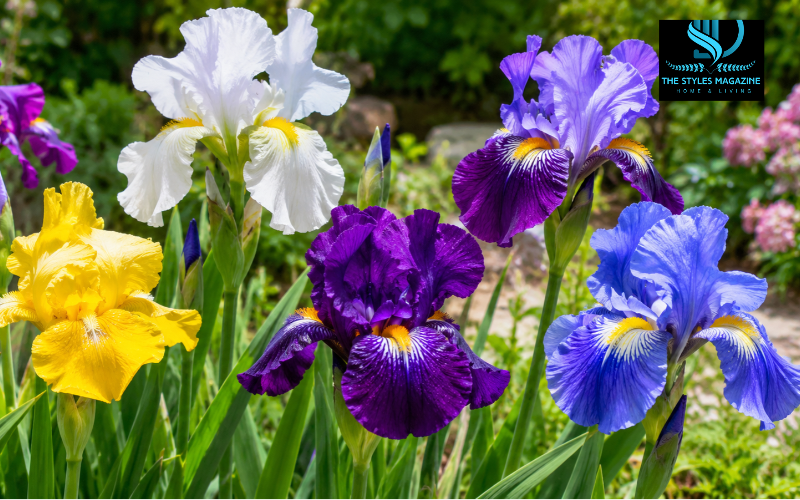
The iris flower is one of the most beautiful and recognisable flowers found in gardens. Its delicate petals, striking colours, and unusual shape make it a favourite among gardeners and flower lovers. From deep blue and rich purple to soft pink and pure white, iris flowers bring elegance and natural colour to outdoor spaces.
Irises are perennial plants, meaning many varieties return year after year with proper care. They are popular in garden borders, flower beds, and floral arrangements because of their attractive blooms and distinctive appearance. Some varieties prefer sunny, well-drained soil, while others flourish in moist conditions near ponds.
Beyond their beauty, iris flowers have interesting cultural meanings and a long history. Understanding their different varieties, flowering seasons, and growing requirements can help you choose the right iris for your garden.
Quick Answer:
The iris flower is a colourful perennial plant known for its elegant petals and sword-shaped leaves. Available in blue, purple, white, and yellow, irises symbolise hope, wisdom, and trust and grow in various garden conditions.
Iris Flower Quick Guide Table
| Feature | Details |
| Botanical Name | Iris |
| Plant Family | Iridaceae |
| Plant Type | Perennial |
| Flower Colours | Blue, purple, white, yellow, pink, orange |
| Blooming Season | Late winter to summer, depending on variety |
| Sunlight | Full sun; some tolerate partial shade |
| Soil | Well-drained or moist, depending on variety |
| Watering | Moderate; depends on soil and iris type |
| Planting Time | Usually autumn for bulbs; late summer for bearded iris rhizomes |
| Toxicity | Toxic to cats, dogs, and humans if ingested |
Simple Steps to Grow Iris Flowers
- Choose the right variety: Select an iris suitable for your garden’s sunlight and soil moisture.
- Prepare the soil: Ensure good drainage for bearded irises and adequate moisture for moisture-loving varieties.
- Plant correctly: Keep the upper surface of bearded iris rhizomes exposed and plant bulb irises at their recommended depth.
- Water carefully: Water newly planted irises regularly without overwatering.
- Maintain the plants: Remove faded flower stalks, retain healthy foliage, and divide overcrowded clumps when necessary.
What Makes the Iris Flower So Distinctive?
The iris belongs to the Iridaceae family, a group of flowering plants that includes crocuses and gladioli. Its botanical name comes from Iris, the Greek goddess of the rainbow, reflecting the remarkable range of colours found among these flowers.
One of the most interesting features of an iris is its unusual flower structure. Each typical iris bloom has six colourful, petal-like parts arranged in two groups. The three upright inner petals are called standards, while the three outer parts, known as falls, usually spread outward or curve downward. These falls are actually modified sepals and often feature coloured markings that help attract pollinating insects.
Iris plants are also recognised by their long, narrow, sword-shaped leaves. These leaves commonly grow in upright fans, creating an attractive display even when the plants are not flowering.
Another important characteristic is their underground growth system. Some irises grow from thick stems called rhizomes, which spread horizontally near or beneath the soil surface. Others develop from bulbs that store nutrients for future growth.
These differences affect how each variety should be planted and maintained.
Popular Types of Iris Flowers
There are many iris species and cultivated varieties, each with its own appearance and growing preferences. Choosing the right type depends on the space available, soil conditions, and the colours you want in your garden.
Bearded iris is among the most familiar garden varieties. Its flowers have a soft, fuzzy strip along the centre of each fall, giving the plant its name. Bearded irises are available in numerous colours and grow particularly well in sunny locations with free-draining soil.
Siberian iris produces elegant flowers with narrower petals and attractive grassy foliage. These plants usually grow in neat clumps and prefer soil that retains some moisture. They can also tolerate light shade, although flowering is generally better in sunny conditions.
Dutch iris grows from bulbs rather than exposed rhizomes. Its slender stems and graceful flowers make it a popular choice for cut-flower arrangements. Blue, yellow, white, and purple varieties are commonly grown.
Japanese iris, especially Iris ensata, is known for its large, often flattened blooms. It prefers rich, consistently moist soil and can grow successfully in damp garden borders. However, its crown should not remain submerged in standing water.
Blue flag iris, particularly Iris versicolor, is a North American species suited to wet ground. Its blue-violet flowers make it an attractive choice for suitable pond margins and rain gardens.
Sometimes, people also search for a “lily iris flower” because the blooms appear similar. However, irises and true lilies belong to different botanical families. Their growing habits and flower structures are not the same.
Iris Flower Colours: From Deep Blue to Pure White
One of the greatest attractions of iris flowers is their impressive variety of colours. Different species and cultivated varieties offer shades suitable for almost every garden design.
The blue iris flower is especially popular for its cool, elegant appearance. Blue irises range from pale lavender-blue to intense violet-blue, and some varieties feature contrasting yellow or white markings.
A white iris flower creates a softer, more peaceful appearance. White varieties, such as Iris albicans, can brighten garden borders and blend beautifully with green foliage and colourful neighbouring plants.
Purple irises are another classic choice, ranging from gentle lilac to deep violet. Yellow varieties bring warmth to flower beds, while pink, peach, orange, and maroon-toned blooms offer additional options.
Some iris flowers are multicoloured, with upper petals in one shade and lower petals in another. These combinations can create striking patterns and contrasts.
Although certain varieties appear reddish, a clear, true-red iris remains uncommon in traditional garden iris breeding. Flower colour also varies with the species, cultivar, and growing conditions.
Iris Flower Meaning and Symbolism
The iris flower has held cultural significance for centuries. Its name comes from Greek mythology, where Iris was the goddess associated with rainbows and a messenger between the gods and humanity. This connection helps explain why the flower is traditionally associated with communication, hope, and positive feelings.
The iris flower meaning can also change depending on its colour. Purple irises are often associated with wisdom, admiration, and royalty. Blue irises commonly represent faith, trust, and hope, while white irises are connected with purity, remembrance, and sincerity. Yellow irises are frequently associated with happiness and friendship.
These meanings are traditional interpretations rather than fixed rules. Personal experiences and cultural backgrounds can give the flowers different significance.
Irises have also influenced decorative art and historical symbols. The French fleur-de-lis is sometimes associated with a stylised iris, although its exact botanical inspiration remains debated.
In Arabic, the iris flower is commonly called sawsan (سوسن), a name also used for certain other lily-like flowers in some contexts.
When Do Iris Flowers Bloom?
Iris flowering seasons depend on the variety, local climate, and growing conditions. In the UK, different types can produce flowers from late winter through summer.
Early-flowering varieties, such as Iris reticulata, often bloom in February or March. These smaller plants are particularly useful for adding colour when many other garden flowers are still dormant.
Bearded irises generally flower in late spring and early summer, with many varieties reaching their peak during May and June. Dutch irises also commonly bloom between May and June.
Siberian irises usually flower during late spring and early summer, while Japanese irises often bloom slightly later, extending the display into summer.
Weather can influence the exact timing. A warm spring may encourage earlier flowering, while unusually cold conditions can delay the development of buds.
Individual iris flowers do not last throughout the entire season, but choosing several varieties with different blooming periods can provide a longer display of colour.
Choosing the Right Location for Iris Flowers
Finding a suitable planting location is one of the most important steps in growing healthy iris flowers.
Most garden irises prefer plenty of sunlight. Bearded irises perform particularly well in locations receiving at least six hours of direct sunlight daily. Adequate light supports strong growth and encourages flower production.
Soil conditions are equally important. Bearded irises prefer well-drained ground because their rhizomes can rot when exposed to prolonged moisture. Heavy soil may need improvement to prevent water from collecting around the plants.
Siberian irises prefer soil that retains moisture without remaining permanently waterlogged. Japanese irises require consistently damp conditions and are suitable for moist borders.
Gardeners can also grow irises in containers, provided the pots offer enough growing space and appropriate drainage.
For pond edges, moisture-loving varieties such as blue flag iris or yellow flag iris are more suitable than bearded irises. However, their spreading habits should be considered before planting.
Understanding these differences helps prevent many common growing problems.
How to Plant Iris Flowers Successfully
The correct planting method depends on whether the iris grows from a rhizome or a bulb.
Bearded iris rhizomes are generally planted between July and October in the UK. This gives the plants time to establish roots before the next growing season. Container-grown irises can be planted across a wider period when conditions are suitable.
Before planting, loosen the soil and remove weeds. Choose a sunny position with good drainage.
Place a bearded iris rhizome horizontally, spreading its roots into the surrounding soil. The upper surface should remain visible or only very lightly covered, depending on the soil type. Burying these rhizomes too deeply can reduce flowering and increase the risk of rot.
Larger bearded irises generally need around 30 cm of spacing to allow healthy development.
Bulb-grown varieties, including Dutch irises, are normally planted in autumn. Their planting depth depends on the bulb type and size, with some varieties planted up to approximately 15 cm deep.
Position bulbs with their pointed ends facing upward and cover them with soil. Follow the recommended spacing for the particular variety.
Water newly planted irises to help the soil settle around their roots. Avoid keeping the ground excessively wet, especially for varieties that require good drainage.
These planting practices follow established recommendations from the Royal Horticultural Society.
Caring for Iris Flowers Throughout the Year
Once established, many iris varieties require relatively little maintenance. However, regular attention can improve their appearance and help maintain healthy growth.
Watering requirements vary between species. Newly planted irises need enough moisture to establish their roots. Mature bearded irises generally require additional watering only during prolonged dry periods, while moisture-loving varieties need consistently damp soil.
Potted irises may need more frequent watering because containers dry out faster than garden beds.
Feeding should be moderate. Adding well-rotted garden compost around established plants in early spring can help maintain soil quality. Keep compost away from exposed bearded iris rhizomes.
After flowering, remove faded flower stalks to keep plants tidy and prevent unnecessary seed production.
Avoid cutting healthy green leaves immediately after blooming. These leaves continue producing energy that supports future growth.
For bulb irises, allow the foliage to turn yellow and die back naturally before removing it.
During autumn, clear away dead or damaged leaves to maintain good airflow around the plants.
Most hardy garden irises survive normal UK winters without special protection, provided their soil conditions suit the variety.
Dividing and Propagating Iris Plants
Over time, established iris plants can become overcrowded, producing fewer flowers and weaker growth. Dividing mature clumps helps restore their appearance and provides additional plants for other parts of the garden.
Bearded irises generally benefit from division every three to five years. The best time is after flowering, often around six weeks later, when the plants have enough time to establish new roots before winter.
Carefully lift the clump using a garden fork and remove loose soil. Examine the rhizomes and select healthy, firm sections that have attached roots and at least one fan of leaves.
Using a clean, sharp knife, separate these sections from the older growth. Remove any soft, damaged, or decaying pieces.
Trim the leaves to approximately 15 cm to reduce moisture loss, then replant the healthy divisions in suitable soil.
Siberian irises can also be divided when their clumps become too large. Unlike bearded varieties, they should be replanted at approximately their original growing depth.
Bulb irises reproduce differently, often producing smaller bulbs that can be separated during dormancy.
Division is a practical way to maintain vigorous plants without continually buying replacements.
Common Iris Flower Problems and How to Prevent Them
Although iris flowers are generally dependable garden plants, unsuitable growing conditions can sometimes affect their health and flowering.
One common problem is healthy-looking foliage without flowers. This can happen when plants receive insufficient sunlight, become overcrowded, or have rhizomes buried too deeply.
Excessive nitrogen-rich fertiliser may also encourage leafy growth rather than flowers.
Rhizome rot is another concern, particularly for bearded irises growing in poorly drained soil. Affected rhizomes may become soft and begin to decay. Removing damaged material and improving drainage can help protect nearby healthy plants.
Iris leaf spot, a fungal disease, can cause brown or dark markings on foliage. Removing affected leaves, clearing fallen plant material, and improving airflow may help limit its spread.
Slugs and snails occasionally damage young iris growth, especially in damp weather. Regularly inspecting plants makes it easier to identify these problems before damage becomes extensive.
Not every yellowing leaf indicates disease. Some foliage naturally dies back as the growing season ends.
Observing the plants regularly and correcting unsuitable conditions are often the most effective ways to maintain healthy irises.
Are Iris Flowers Toxic to Pets and Humans?
Iris flowers are attractive additions to gardens, but they should not be treated as edible plants.
Different parts of the iris contain substances that can cause irritation or illness if swallowed. The rhizomes and other underground storage structures are of particular concern because they contain higher concentrations of harmful compounds.
According to the ASPCA, irises are toxic to cats and dogs. Possible symptoms after ingestion include drooling, vomiting, diarrhoea, and tiredness.
Humans may also experience digestive discomfort or irritation after consuming parts of the plant.
Gardeners should avoid placing iris rhizomes where pets are likely to dig or chew them. Children should also be taught not to eat unfamiliar garden plants.
Wearing gardening gloves when handling or dividing irises is a sensible precaution, particularly for people with sensitive skin.
If a pet or person swallows any part of an iris, seek advice promptly from a veterinarian or medical professional rather than attempting home treatment.
Iris Flowers in Photography, Drawings, and Tattoos
The distinctive appearance of iris flowers has made them a popular subject in photography, illustration, and decorative art.
People searching for iris flower photos often want to explore different colours or identify a variety growing in their garden. Clear photographs showing the upright standards, downward-facing falls, and foliage can make identification easier.
For garden photography, soft natural daylight helps reveal delicate markings and colour variations. Close-up photographs are particularly effective at capturing the intricate patterns on the falls.
An iris flower drawing can highlight the elegant curves and balanced structure of the blossom. Artists often begin with the three upright petals before adding the spreading lower sections and narrow leaves.
Iris flowers are also popular tattoo subjects. An iris flower tattoo may represent hope, strength, wisdom, or a meaningful personal memory. The interpretation depends on the person choosing the design.
In home decoration, botanical iris illustrations, framed photographs, and floral prints can introduce gentle colour and a natural atmosphere.
Their recognisable shape makes irises suitable for both traditional artwork and modern decorative designs.
Conclusion
The iris flower offers a beautiful combination of colour, interesting structure, and cultural significance. Its many varieties make it suitable for different garden settings, from sunny borders to carefully planned areas with moist soil.
Understanding the differences between bearded, Siberian, Dutch, and water-loving irises makes choosing and caring for these plants much easier.
Good sunlight, suitable soil, correct planting depth, and occasional division can help many varieties remain healthy and flower year after year.
Whether you admire a blue iris flower for its rich colour, choose a white variety for a peaceful garden setting, or appreciate the symbolism behind its blooms, the iris remains a rewarding flower to grow and enjoy.
Frequently Asked Questions
What Does The Iris Flower Symbolise?
The iris flower traditionally symbolises hope, wisdom, courage, and trust. Different colours have their own meanings, with purple representing wisdom, blue associated with faith, and white commonly symbolising purity and remembrance.
Do Iris Flowers Come Back Every Year?
Yes, most garden irises are perennial plants that return each year when grown in suitable conditions. Adequate sunlight, proper drainage, and occasional division help maintain healthy growth and encourage regular flowering.
What Is The Best Month To Plant Iris Flowers?
In the UK, bearded iris rhizomes are usually planted from July to October, while many bulb irises are planted in autumn. The ideal planting time depends on the iris variety.
Can Iris Flowers Grow In Pots?
Yes, many iris varieties grow successfully in containers. Choose a pot with drainage holes, use suitable compost, and provide adequate sunlight. Watering requirements depend on the variety and growing conditions.
Are Iris Flowers Poisonous To Cats And Dogs?
Yes, iris plants are toxic to cats and dogs if eaten. Their underground parts are particularly harmful and may cause vomiting, drooling, and diarrhoea. Contact a veterinarian promptly if ingestion is suspected.
Disclaimer: The information in this article is provided for general educational and gardening purposes. Iris growing requirements, flowering periods, and maintenance needs may vary depending on the species, local climate, soil conditions, and individual garden environment. Always check the specific care instructions for your iris variety before planting. Iris plants can be harmful if ingested, so keep them away from pets and young children. If accidental ingestion occurs, seek appropriate veterinary or medical advice promptly.
Enjoyed it? Find more exclusive content on The Styles Magazine.