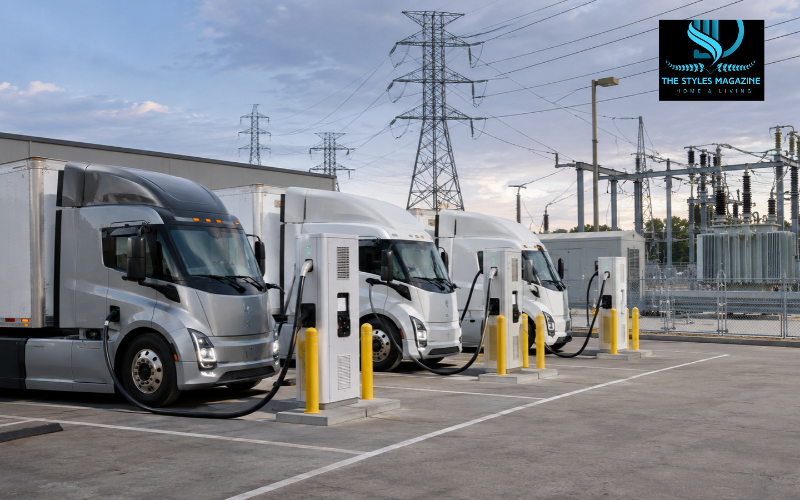
A depot can face strong demand peaks when several electric trucks return from routes at approximately the same time. For electric truck charging infrastructure, system interfaces shape the real outcome. Huawei FusionCharge identifies fleet charging for commercial vehicles and heavy trucks as one of its scenario-specific solutions. High-power liquid-cooled charging and shared DC power can support this application, but a fleet depot must also satisfy vehicle routes, battery acceptance rates, and available electrical supply.
Start with route and energy demand
A truck charging plan begins with daily mileage, vehicle energy consumption, return times, and how long each vehicle can remain connected. The required total energy is often more useful than specifying charger power in isolation.
Fleet operators should map routes to depot dwell windows and identify trucks that cannot wait until overnight charging. This separates genuinely time-critical fast charging from sessions that can run at lower power.
Coordinate shared DC power with the fleet
The FusionCharge DC power unit and liquid-cooled dispensers are designed for high-power operation and power sharing. Such an architecture can distribute available capacity between trucks whose battery charging requests change over time.
Dynamic allocation allows depot operators to prioritize a truck due to depart soon while another vehicle continues at a lower rate. The scheduling policy should be transparent to dispatch staff and remain within charging equipment limits.

Assess grid and local energy options
High-energy fleet charging can require significant transformer and switchgear capacity. Grid engagement should begin before construction so the project schedule reflects connection upgrades and protection requirements.
Huawei describes reserved DC-bus interfaces for coupling its FusionCharge power unit with energy storage. Storage may assist with short coincident peaks, but long charging periods still require substantial energy from the grid or other sources.
Load scheduling can distribute charging across the overnight window and reduce peak import. The available time, minimum state of charge, vehicle priority, and tariff structure determine whether the dispatch plan is practical.
During validation, operators can compare requested current, actual output, and temperature-related derating across consecutive sessions. The results show whether the power electronics and liquid-cooling system behave as intended.
Run a depot as an operational system
Fleet systems should connect charging records with vehicle IDs, planned departures, maintenance alerts, and delivered energy. Without accurate data, a truck may appear charged at the station while still lacking the range for its assignment.
Operators can track energy per route, charging completion before departure, peak demand, and failed sessions. These measures link infrastructure performance directly to fleet availability rather than only to total kilowatt-hours sold.
Electric truck charging infrastructure is a joint fleet and power-system design task. Liquid-cooled dispensers and shared DC power are relevant building blocks, but route planning, grid capacity, energy scheduling, and safe depot operations establish the real charging capability. For electric truck charging infrastructure, Commissioning records and a clear service plan provide a sound basis for evaluating ongoing performance.
Enjoyed it? Find more exclusive content on The Styles Magazine.