Learning how to remove wallpaper the right way can save you time, money, and frustration. While wallpaper can make a room look stylish and attractive, removing it is often a difficult task if you do not use the correct method. Some wallpaper peels away easily in large sheets, while others stick tightly to the wall and leave behind stubborn glue residue.
The difficulty usually depends on the type of wallpaper, the adhesive used, and how long it has been on the wall. Older wallpaper, painted wallpaper, or wallpaper installed in multiple layers can take more effort to remove. Many homeowners also worry about damaging the drywall or peeling off paint during the process.
Common problems include torn drywall, leftover adhesive, uneven wall surfaces, and wallpaper that refuses to come off. Fortunately, with the right tools and techniques, wallpaper removal can become much easier and safer.
This guide explains how to remove wallpaper step by step, including methods that work with and without a wallpaper steamer. You will also learn how professionals handle wallpaper removal, how to protect painted walls, and how to remove wallpaper settings on iPhone, Android, and even in Stardew Valley.
Quick Guide Table
| Wallpaper Type | Best Removal Method | Difficulty Level |
| Peel-and-Stick Wallpaper | Pull slowly from corners | Easy |
| Vinyl Wallpaper | Score + soak with hot water | Medium |
| Traditional Wallpaper | Warm water + scraper | Medium |
| Painted Wallpaper | Steamer + careful scraping | Hard |
| Multi-Layer Wallpaper | Steaming and repeated soaking | Hard |
Types of Wallpaper You May Need to Remove
Before starting the removal process, it is important to understand what type of wallpaper is on your wall. Different materials react differently to water, steam, and wallpaper remover solutions.
Peel-and-stick wallpaper is usually the easiest to remove. It is designed to come off without damaging the wall, making it popular for renters and temporary decoration projects. In many cases, you can simply pull it off slowly from one corner.
Vinyl wallpaper is more durable and resistant to moisture. However, its protective surface can make it harder for water to penetrate the adhesive underneath. This type often requires scoring before applying any remover solution.
Traditional pasted wallpaper is attached directly with wallpaper glue. Over time, the adhesive can become very strong, especially in older homes. This type usually needs soaking and scraping.
Painted wallpaper creates additional challenges because the paint seals the surface and prevents water from soaking through easily. Multi-layer wallpaper can also be difficult because several layers must be removed separately.
Knowing the wallpaper type helps you choose the safest and most effective removal method.
Tools Needed for Wallpaper Removal
Using the right tools makes wallpaper removal much easier and reduces the risk of wall damage. Basic household supplies are often enough for smaller jobs, but stubborn wallpaper may require special equipment.
Wallpaper remover solutions help soften old adhesive and loosen the paper from the wall. Some people use commercial wallpaper remover products, while others prefer homemade mixtures using vinegar or fabric softener.
A putty knife or scraper is useful for lifting wallpaper edges and removing softened backing. Plastic scrapers are safer for painted drywall because they are less likely to scratch the surface.
Spray bottles and sponges help apply water or remover solutions evenly across the wallpaper. Warm water is usually more effective than cold water because it activates the glue more quickly.
A wallpaper steamer can make difficult jobs much easier. Steam penetrates thick wallpaper and loosens adhesive without excessive scraping. Protective sheets, towels, and gloves are also important for keeping floors clean and protecting your hands during the process.
How to Remove Wallpaper Step by Step
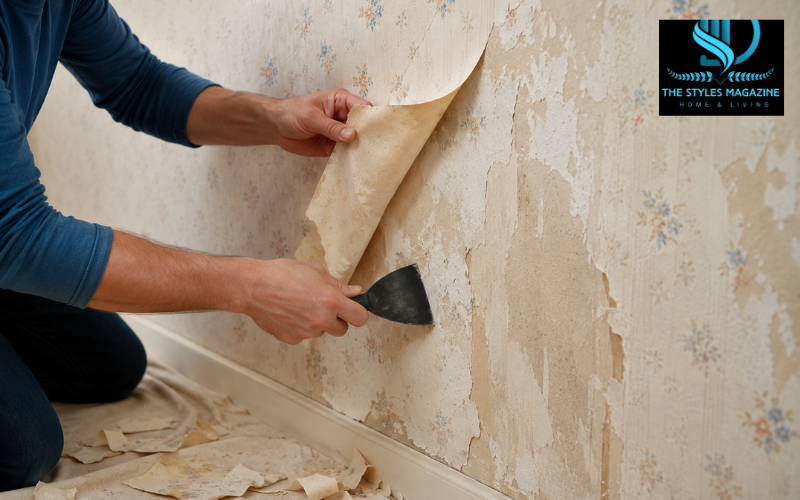
The first step in wallpaper removal is peeling away as much of the top layer as possible. Start from a loose corner near the bottom or edge of the wall. Pull gently and slowly to avoid tearing the drywall underneath.
If the wallpaper has a waterproof surface, you may need to score it first. A scoring tool creates tiny holes that allow water or remover solution to reach the adhesive. Avoid pressing too hard because deep scratches can damage the wall surface.
Next, apply warm water or wallpaper remover solution generously using a spray bottle or sponge. Let the wallpaper soak for several minutes so the adhesive softens properly. Older wallpaper may need repeated soaking before it loosens completely.
Once the paper begins to bubble or peel easily, use a scraper to remove it carefully. Keep the scraper flat against the wall to reduce the risk of gouges or scratches. Work slowly in small sections rather than trying to remove everything at once.
After removing the wallpaper, clean the wall thoroughly to remove leftover adhesive residue. This final step is important because leftover glue can affect paint or new wallpaper later.
How to Remove Wallpaper Without a Steamer
Many people successfully remove wallpaper without using a wallpaper steamer. Simple household solutions can often loosen wallpaper glue effectively.
One common method uses hot water mixed with a small amount of dish soap. The soap helps break down grease and adhesive while the hot water softens the paper backing.
Another popular solution combines equal parts warm water and white vinegar. Vinegar naturally helps dissolve wallpaper glue and works especially well for older wallpaper. The smell may be strong at first, but it usually disappears after drying.
Some homeowners also use fabric softener mixed with water. This solution helps soften stubborn adhesive and can make scraping easier.
The best DIY method depends on the wallpaper type and adhesive strength. For extremely stubborn wallpaper, repeated soaking may still be necessary. Patience is important because rushing often causes wall damage.
How to Remove Wallpaper From Wall Without Damaging Paint
Many homeowners want to know how to remove wallpaper from wall surfaces without harming the paint underneath. While it is possible, the process requires extra care.
Using a plastic scraper instead of a metal one reduces the risk of scratches and gouges. Plastic tools are gentler on painted drywall and still effective for lifting softened wallpaper.
Avoid oversaturating the wall with water. Too much moisture can weaken drywall or cause paint to peel away. Apply remover solutions gradually and only to small sections at a time.
Removing wallpaper slowly is another important step. Pulling aggressively may tear away paint or even sections of drywall paper. Gentle and steady pressure usually works best.
After the wallpaper comes off, clean any remaining adhesive carefully using a sponge and warm water. Scrubbing too hard can also damage painted surfaces, so use light pressure until the wall feels smooth.
Using a Wallpaper Steamer Correctly
A wallpaper steamer is one of the most effective tools for removing old or stubborn wallpaper. It works by heating water to create steam, which softens the wallpaper glue underneath the surface.
To use a wallpaper steamer properly, hold the steaming plate against the wall for several seconds before moving to the next section. The steam needs time to penetrate the wallpaper and loosen the adhesive fully.
Steaming works especially well on thick vinyl wallpaper or wallpaper installed in multiple layers. However, too much steam in one area can damage drywall or loosen joint compound underneath.
Safety is important while using a wallpaper steamer. The steam becomes extremely hot and can cause burns if handled carelessly. Wearing gloves and working carefully around electrical outlets helps prevent accidents.
One common mistake is steaming large sections without scraping immediately afterward. Wallpaper often becomes difficult again once it cools, so work in small sections for the best results.
How Professionals Remove Wallpaper
Professional wallpaper removal experts usually begin by preparing the room carefully. Furniture is covered or moved away, floors are protected, and electrical outlets are sealed before any water or steam is applied.
Professionals commonly use scoring tools, steamers, industrial wallpaper removers, and flexible scrapers. They also know how to identify different wallpaper materials quickly, allowing them to choose the best removal method.
One reason professionals often achieve better results is their ability to protect drywall. They understand how much moisture the wall can handle and how much scraping pressure is safe.
Glue residue removal is another area where professionals pay close attention. Even a thin layer of leftover adhesive can cause paint problems later. Experts thoroughly wash and smooth the wall before finishing the job.
Hiring a professional may be worthwhile for large rooms, delicate walls, or extremely old wallpaper that has become difficult to remove safely.
Removing Wallpaper Glue and Adhesive Residue
After the wallpaper is removed, adhesive residue often remains on the wall. This glue can feel sticky or rough and must be cleaned before painting or installing new wallpaper.
One sign that glue is still present is a shiny or tacky surface after the wall dries. Running your hand across the wall can help identify rough areas.
Warm water and mild soap often work well for cleaning adhesive residue. Vinegar solutions may also help dissolve stubborn glue spots. Some homeowners use sugar soap or commercial adhesive removers for stronger results.
Use a sponge or soft cloth to wash the walls gently. Rinse frequently with clean water to avoid spreading glue around the surface.
Once the wall dries, sanding rough spots lightly can create a smoother finish. Proper wall preparation improves the final appearance of paint or new wallpaper significantly.
Common Wallpaper Removal Mistakes
Many wallpaper removal problems happen because people rush the process or skip important preparation steps.
Scraping too aggressively is one of the most common mistakes. Sharp or forceful scraping can tear drywall paper and create expensive repairs. Gentle scraping is usually more effective.
Skipping wall preparation can also cause unnecessary mess and damage. Covering floors and protecting electrical outlets helps avoid accidents during removal.
Using too much water is another common issue. Excess moisture may weaken drywall, damage paint, or even encourage mold growth if the wall does not dry properly.
Leaving glue behind is a mistake many people notice only after painting. Adhesive residue can cause uneven paint texture, peeling, or discoloration later.
Taking your time and following proper removal methods helps prevent these problems.
How to Remove Wallpaper on iPhone
The term “wallpaper” is also used for smartphone backgrounds. On an iPhone, removing wallpaper is simple and only takes a few moments.
To remove lock screen wallpaper, press and hold the lock screen until the wallpaper gallery appears. Swipe to the wallpaper you want to remove, then swipe upward and tap the delete option.
You can also change the home screen wallpaper through the Settings app. Open Settings, choose Wallpaper, and select a new background image or color.
If you want to restore default settings, you can simply select one of Apple’s standard wallpapers instead of a custom image.
How to Remove Wallpaper on Android
Android devices also allow users to change or remove wallpaper settings easily. The exact steps may vary slightly depending on the phone brand and Android version.
Usually, you can press and hold the home screen to open wallpaper settings. From there, choose a different image, color background, or default wallpaper.
To remove lock screen wallpaper, open the wallpaper settings section and select a new option for the lock screen background.
Many Android devices also offer dynamic wallpapers and theme customization for additional personalization.
How to Remove Wallpaper From Wall in Stardew Valley
In Stardew Valley, wallpaper is used to decorate rooms inside the player’s home. Removing wallpaper is much easier in the game than in real life.
Players can remove or replace wallpaper by selecting a different wallpaper design from their inventory and applying it to the wall. The old wallpaper disappears automatically when replaced.
Experimenting with different wallpaper combinations allows players to personalize rooms and create unique interior styles. Matching wallpaper with flooring and furniture can improve the appearance of the farmhouse significantly.
Conclusion
Learning how to remove wallpaper correctly can make home improvement projects much less stressful. Whether you are dealing with peel-and-stick wallpaper, traditional pasted wallpaper, or stubborn vinyl surfaces, using the proper method helps protect your walls and save time.
DIY wallpaper removal methods often work well for smaller projects and newer wallpaper installations. Warm water, vinegar solutions, and careful scraping can produce excellent results without expensive tools.
However, preparation is always important. Protecting floors, avoiding excessive water, and removing glue residue completely all contribute to smoother and cleaner walls.
For difficult wallpaper or delicate drywall, using a wallpaper steamer or hiring professionals may provide safer and faster results. With patience and the right approach, you can remove wallpaper successfully while keeping your walls in excellent condition.
FAQs
What Is The Easiest Way To Remove Wallpaper?
The easiest method is using warm water mixed with dish soap or vinegar. Let the wallpaper soak properly before scraping to reduce wall damage.
Can I Remove Wallpaper Without A Steamer?
Yes, wallpaper can be removed using hot water, vinegar solution, or fabric softener without needing a wallpaper steamer.
Does Removing Wallpaper Damage Walls?
Wallpaper removal can damage walls if you scrape aggressively or use too much water. Using gentle methods helps protect paint and drywall.
How Do Professionals Remove Wallpaper?
Professionals use scoring tools, steamers, wallpaper removers, and careful scraping techniques to remove wallpaper safely and efficiently.
Should I Remove Wallpaper Glue Before Painting?
Yes, leftover adhesive should always be cleaned because glue can cause uneven paint texture and poor paint adhesion later.
Enjoyed it? Find more exclusive content on The Styles Magazine.
Disclaimer: This article is for informational purposes only. Wallpaper removal methods may vary depending on wall condition, wallpaper type, and adhesive strength. Always test removal methods on a small hidden area first and follow proper safety precautions during DIY work.