Learning how to preserve flowers can help you keep a meaningful bouquet long after fresh petals would normally fade. People often save flowers from weddings, anniversaries, birthdays, funerals, graduations, or other important moments. Others simply preserve flowers from their garden for crafts and home decoration.
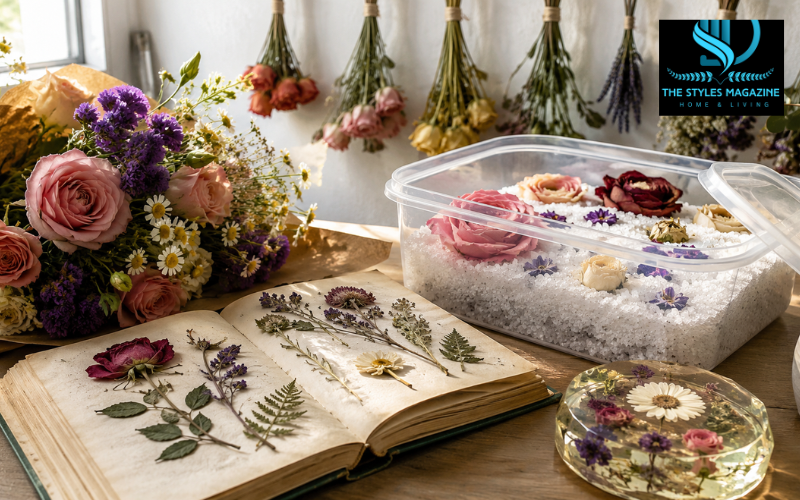
There is no single preservation method that works best for every flower. Air drying is simple and works well for many sturdy stems. Pressing turns flowers flat, making them useful for frames, cards, and artwork. Silica gel removes moisture while helping blooms keep more of their original three-dimensional shape. Resin can then be used to turn completely dried flowers into decorative keepsakes.
The goal is not to keep a flower looking exactly fresh forever. Drying naturally changes some color and texture. Instead, choosing the right method can help retain as much of the flower’s shape and appearance as possible.
Whether you’re preserving flowers from a special occasion or creating a decorative keepsake, bouquets from Avas Flowers can provide a beautiful starting point for a variety of preservation projects.
Quick Guide Table
| Method | Best For | Typical Time | Result |
| Air Drying | Roses, lavender, sturdy stems | 2–4 weeks | Natural dried look |
| Pressing | Daisies, pansies, petals | 2–4 weeks | Flat flowers |
| Silica Gel | Roses and 3D blooms | 2–7 days | Better shape and color |
| Resin | Decorative keepsakes | Varies | Sealed display piece |
Quick Steps to Preserve Flowers
- Choose fresh, healthy flowers.
- Remove damaged petals and extra leaves.
- Select air drying, pressing, or silica gel based on the desired result.
- Let flowers dry completely.
- Store them away from moisture, heat, and direct sunlight.
- Use only fully dried flowers for resin projects.
What to Know Before Preserving Fresh Flowers
Good results begin with good flowers. Try to start preservation while the blooms are still firm and attractive rather than waiting until they become badly wilted. University of Florida and Illinois Extension guidance recommends choosing flowers in good condition because damaged or poorly shaped blooms will not improve during drying.
Remove brown or damaged petals before you begin. Leaves that are not needed in the finished display can also be removed, especially when air drying. This reduces extra plant material around the stems and makes arranging the flowers easier.
The tools you need depend on the method. Air drying may require only rubber bands and a place to hang the stems. If possible, consider using a grow tent dehumidifier. Pressing requires absorbent paper and a heavy book or flower press. Silica drying requires flower-drying silica gel and an airtight container. Resin projects require completely dried flowers, a suitable casting resin, a mold, and the safety equipment recommended by the product manufacturer.
Starting early usually gives you a better chance of preserving an attractive shape and color.
How to Preserve Flowers Naturally with Air Drying
Air drying is one of the easiest ways to preserve flowers naturally because it does not require special drying equipment. It works especially well with flowers and plant materials that hold their structure as moisture leaves them. Statice, strawflower, globe amaranth, yarrow, ornamental grasses, and similar sturdy plants are commonly suited to this method.
Remove unwanted leaves and divide the stems into small, loose bundles. Secure each bundle with a rubber band or similar tie. A rubber band is useful because stems become smaller as they dry.
Hang the bundles upside down in a dark, dry place with good airflow. Keeping them out of direct sunlight helps reduce unnecessary fading. Avoid humid rooms because slow drying can increase the chance of poor results.
Air drying commonly takes around two to three weeks, although thicker flowers, room humidity, and other conditions can change the drying time. The flowers are ready when the plant material feels thoroughly dry rather than soft or moist.
How to Preserve Flowers in a Book
If you want to learn how to preserve flowers in a book, pressing is one of the simplest traditional methods. It is especially suitable for naturally flat flowers, individual petals, small sprays of flowers, ferns, and thin leaves. Thick or very fleshy blooms are more difficult because they can retain moisture for too long.
Start with flowers that are clean and dry on the surface. Arrange them carefully between sheets of absorbent, non-glossy paper so the petals are positioned the way you want them to appear later. Place the paper inside a large, heavy book and close it gently. Additional books or another flat weight can be placed on top.
Keep the book in a dry location while the flowers lose their moisture. Check the paper if necessary and replace it if it becomes damp.
University of Florida guidance notes that many pressed flowers can dry in roughly two weeks, although thicker material may need longer. Once fully dry, handle the pressed flowers gently because thin petals can tear easily.
Using Silica Gel for Drying Flowers
Using silica gel for drying flowers is a useful option when retaining more of a bloom’s natural three-dimensional form matters. Silica gel acts as a drying material that draws moisture from the flower. It can work particularly well for flowers that would become too flat when pressed.
Choose an airtight container large enough to hold the blooms without crowding them. Add a shallow base layer of flower-drying silica gel. Place the flowers carefully on top. Flat-faced blooms can sometimes be positioned face down, while many other flowers are placed upright. Slowly add more silica around and between the petals until the flower is supported and covered without being crushed.
Seal the container while the flowers dry. University of Florida guidance gives minimum silica-gel drying times of approximately two days for thin material, three to four days for medium material, and five to seven days for heavier flowers.
When finished, remove the flower gently and use a soft brush to clear away remaining crystals.
Air Drying vs Pressing vs Silica Gel: Which Method Is Best?
The best method depends mainly on what you want the finished flowers to look like.
Air drying is usually the simplest choice when you want to keep stems or create dried bouquets for vases. It requires little equipment, but flowers may shrink and colors can change during the process. Illinois Extension notes that some flowers, including roses and peonies, may shrink when air dried.
Pressing is better when a flat result is useful. It works well for framed botanical art, greeting cards, bookmarks, scrapbooks, and other crafts. The trade-off is that the original three-dimensional shape is intentionally lost.
Silica gel requires more materials and careful handling, but it is often the better choice when maintaining the fuller form of a rose, zinnia, or another dimensional bloom. Fast-acting drying methods such as silica gel can also provide better color retention than slower methods, although some natural color change should still be expected.
How to Preserve Fresh Flowers Permanently with Resin
People searching for how to preserve fresh flowers permanently often consider epoxy resin. However, resin should be viewed as a way to encase an already preserved flower, not as a method for drying fresh flowers.
A flower should be completely dry before it goes into resin. Trapped moisture can lead to discoloration, cloudiness, or deterioration inside the finished piece. You can first air dry the flower or use silica gel if maintaining its shape is important.
For a basic project, a small amount of mixed resin is usually added to a suitable mold. The dried flower is carefully positioned, and additional resin is added according to the product directions. Mixing ratios, layer thickness, working time, and curing time vary between products, so there is no universal set of instructions.
Safety is also important. CDC/NIOSH advises people using epoxies and resins to follow the product label or safety data sheet, increase ventilation, and use the correct protective equipment. Appropriate gloves and eye protection may be needed depending on the product.
How to Preserve Flowers for Decoration
Knowing how to preserve flowers for decoration starts with deciding how you want to display them.
For a traditional vase arrangement, air-dried stems are often the easiest option. Flowers with strong stems, seed heads, grasses, and naturally papery petals can create attractive dried arrangements without being flattened.
Pressed flowers are better for decorations where depth is unnecessary. They can be arranged on cards, framed artwork, handmade invitations, journals, or other flat craft projects.
For a more natural-looking bloom, silica gel can help maintain more of the original shape. These dried flowers can be placed in shadow boxes, display cases, glass containers, or other protected arrangements.
Resin offers another decorative option once the flowers have been completely dried. Small flowers or petals can be incorporated into suitable resin crafts.
Whatever display you choose, remember that preserved flowers remain natural plant material. Their colors and textures can continue changing slowly, especially if they are exposed to strong sunlight, moisture, or frequent handling.
How to Preserve Flowers in a Frame
For anyone wondering how to preserve flowers in a frame, pressing is usually the most practical home method because the flowers become thin enough to sit neatly behind glass.
Press the flowers until they are completely dry before arranging them. Any remaining moisture can create problems after the frame has been closed. Flat blooms, petals, leaves, and small flower sprays generally work better than thick flower heads.
Arrange the dried pieces on clean, dry backing paper or another material suitable for your chosen frame. Work slowly because pressed flowers can become fragile. Tweezers may make it easier to position delicate petals without touching them too much.
Once framed, choose the display location carefully. Direct sunlight can gradually fade natural plant colors, while damp conditions can expose the preserved material to unwanted moisture. A dry interior wall away from strong sunlight, heaters, and humid areas such as bathrooms is usually a more suitable location.
How to Preserve Flowers in a Jar
Learning how to preserve flowers in a jar is simple, but one rule matters more than anything else: dry the flowers first.
Putting fresh flowers directly into a sealed decorative jar traps their natural moisture. Instead, air dry, press, or use silica gel before assembling the display. For a jar containing whole flower heads, silica-dried blooms may provide a fuller appearance. Air-dried petals and small stems can also work well.
Choose a clean jar that is completely dry inside. Make sure it is large enough to hold the flowers without forcing petals against the sides. Place the flowers gently rather than tightly packing them together.
After arranging the display, store it somewhere dry and away from strong sunlight. Preserved plant materials need protection from moisture after drying, and dried flowers should also be handled carefully because their petals and stems can become brittle.
A jar can turn a small bouquet or collection of petals into a simple decorative memory piece.
How to Preserve Flowers from a Funeral or Memorial
Flowers from a funeral or memorial often have emotional value, so preserving them carefully can create a meaningful keepsake.
If possible, choose the flowers you want to save while they are still in good condition. Do not wait until every bloom has wilted. You also do not have to preserve the entire arrangement. Selecting a few important flowers can make the process easier and gives you several display choices.
For a flat framed memorial, carefully press individual flowers or petals. If you want a rose or another full bloom to retain more depth, silica gel may be a better option. Air-dried flowers can be displayed in a vase, while smaller preserved pieces can be placed in a memory jar or shadow box.
Fully dried flowers can also be incorporated into resin keepsakes when appropriate safety directions are followed.
There is no need to change the flowers more than necessary. A simple frame, jar, or dried arrangement can preserve the connection to the occasion while allowing the original flowers to remain the main focus.
Common Flower Preservation Mistakes to Avoid
One of the biggest mistakes is waiting too long. A flower that is badly wilted, moldy, bruised, or falling apart is unlikely to regain an attractive shape during preservation. Starting with flowers that are close to their best gives you more control over the finished result.
Another common problem is moisture. Air-dried flowers need good ventilation, while silica gel must be used in an airtight container so it does not absorb unnecessary moisture from the surrounding air.
Pressing thick flowers without enough absorbent material can also lead to poor drying. Choose thinner blooms whenever possible or separate thick flowers into individual petals.
Do not rush resin projects by putting fresh flowers directly into the mixture. Dry them completely first.
Finally, avoid expecting any method to freeze a flower’s appearance forever. Natural materials can fade and become more fragile over time. Proper drying and careful storage can slow those changes, but cannot stop them completely.
How to Store Preserved Flowers So They Last Longer
Correct storage matters after the flowers have been preserved. Dried plant materials should stay protected from moisture because they can absorb humidity from the surrounding environment. University of Florida recommends keeping preserved plant materials protected and dry during storage.
Keep open dried arrangements away from direct sunlight and damp rooms. Strong sunlight can fade colors, while frequent touching can break brittle petals and stems. If dust collects, clean the arrangement gently rather than rubbing the flowers.
Pressed flowers should remain dry inside their frames, books, or craft displays. Jarred flowers should be checked occasionally for signs of moisture. If condensation appears inside a container, the flowers may not have been fully dry before they were sealed.
Resin pieces should be cared for according to the resin manufacturer’s recommendations.
Good preservation does not end when the drying process is complete. Careful placement, gentle handling, and protection from moisture can help your flowers remain attractive for much longer.
Conclusion
Understanding how to preserve flowers becomes much easier once you decide what you want the finished keepsake to look like. There is no single method that is best for every bouquet.
Air drying is an easy and natural choice for sturdy stems and dried arrangements. Pressing works well when you want flat flowers for books, crafts, or frames. Silica gel is useful when keeping more of a bloom’s three-dimensional shape and color is important. Resin can turn completely dried flowers into long-term decorative keepsakes, but it should be used carefully and according to the manufacturer’s safety instructions.
Whichever method you choose, begin while the flowers are still in good condition and make sure they are thoroughly dry before storing, framing, sealing, or embedding them.
With the right preservation method and proper care afterward, meaningful flowers from a garden, gift, wedding, funeral, or special occasion can remain part of your home and memories long after the original bouquet has faded.
FAQs
What Is The Easiest Way To Preserve Flowers?
Air drying is one of the easiest methods. Tie small bundles of sturdy flowers and hang them upside down in a dark, dry, well-ventilated place until completely dry.
How Can I Preserve Flowers Without Losing Their Shape?
Silica gel is a good choice for preserving more of a flower’s three-dimensional shape. The crystals remove moisture while supporting delicate petals during the drying process.
Can Fresh Flowers Be Preserved Permanently?
Fresh flowers cannot remain unchanged forever. However, properly dried flowers can last much longer, and fully dried blooms can be sealed in resin to create decorative keepsakes.
How Do You Preserve Flowers In A Book?
Place dry, flat flowers between absorbent paper inside a heavy book. Add weight on top and leave them for about two to four weeks until completely dry.
How Long Do Preserved Flowers Last?
There is no fixed lifespan. Preserved flowers can remain attractive much longer when kept dry, protected from direct sunlight, and handled gently, although natural fading and brittleness may occur over time.
Enjoyed it? Find more exclusive content on The Styles Magazine.
Disclaimer: Flower preservation results vary by flower type, condition, humidity, and method. When using silica gel or resin, always follow the manufacturer’s handling and safety instructions.